Artwork
Fetiță la pupitru
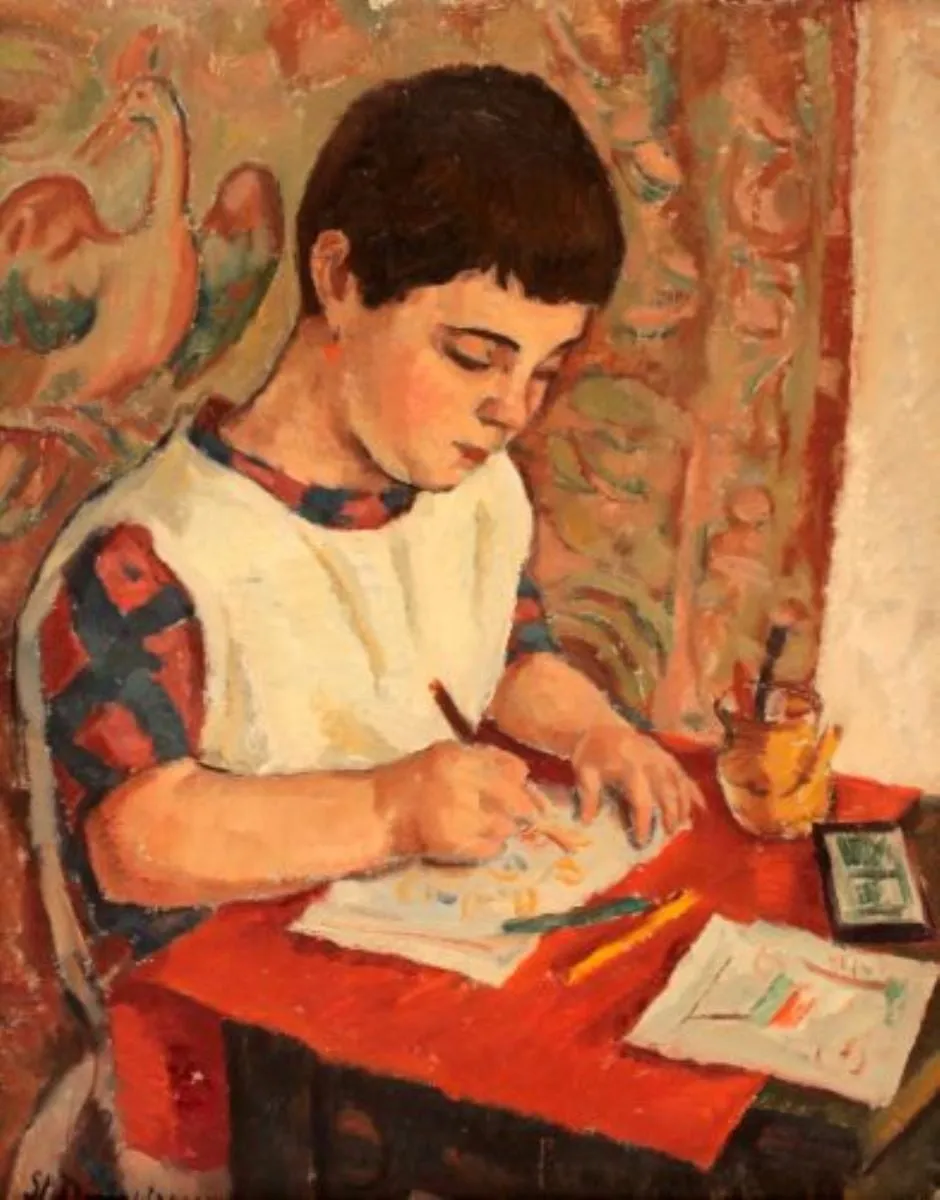
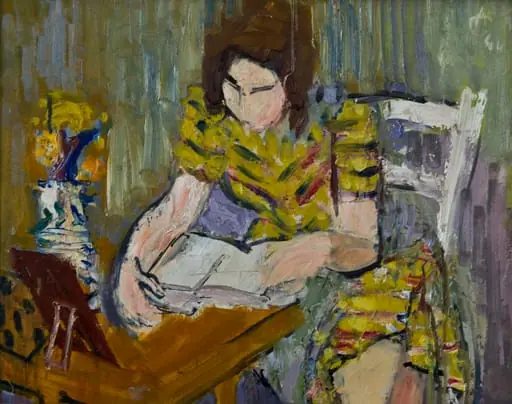
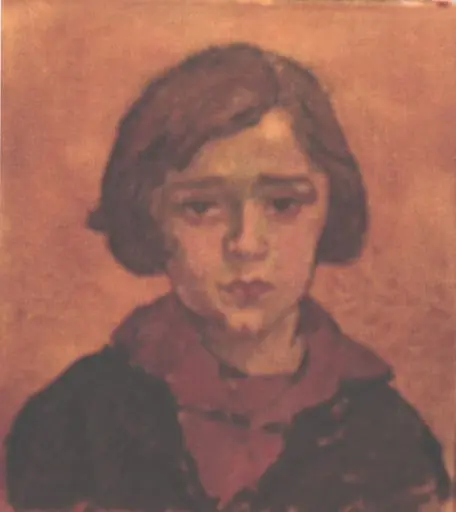
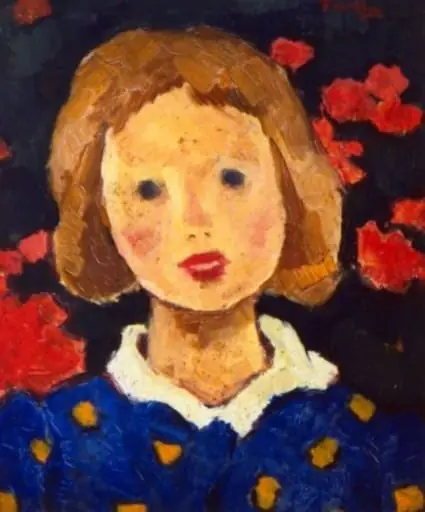
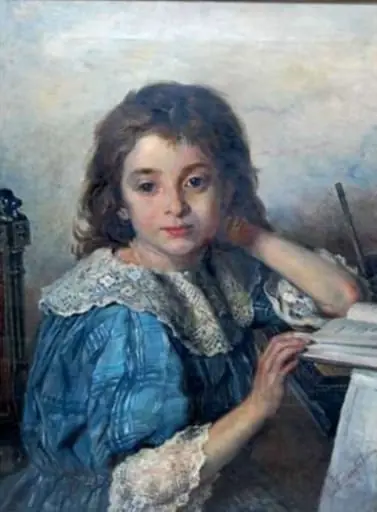
Fetiță la pupitru is an unspecified painting by Ștefan Dimitrescu. It dates from 1919 and is held in the collection of the Art Museum of Constanta.
About this work
Overview
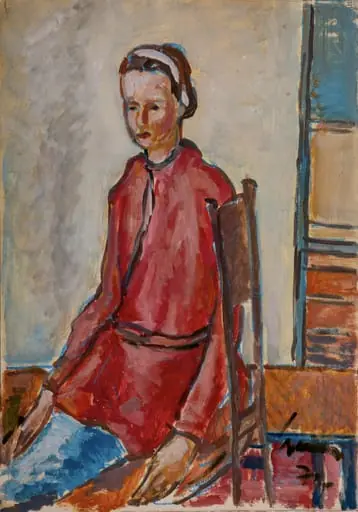
Painted around 1919 by Ștefan Dimitrescu, Fetiță la pupitru depicts a child engaged in quiet concentration at a simple desk. The work is part of the collection at the Museum of Ethnography and reflects the artist’s interest in everyday domestic and educational moments. Rendered with visible brushwork, the scene captures a fleeting, intimate gesture rather than a formal portrait.
Subject & Meaning
The presence of crumpled paper and scattered pencils hints at trial and error, emphasizing the process of learning over its outcome.
The subject is a young girl, her short dark hair and focused expression suggesting a moment of solitary learning. Her striped shirt and the modest desk setup imply a humble, possibly home-based environment. The presence of crumpled paper and scattered pencils hints at trial and error, emphasizing the process of learning over its outcome. The scene avoids sentimentality, presenting childhood as a quiet, grounded experience.
Technique & Style
Dimitrescu employs thick, textured brushstrokes to build form and atmosphere, particularly in the girl’s shirt and the wall behind her. The impasto technique lends physicality to the surface, contrasting with the softer rendering of the paper and pencil. Colors are muted but deliberate—red and blue accents on the shirt draw attention without dominating. The background’s uneven paint suggests worn surfaces, reinforcing the setting’s authenticity.
History & Provenance
The painting entered the Museum of Ethnography’s collection in the early 20th century, likely through acquisition or donation following its completion. Its preservation in an ethnographic context, rather than a fine arts institution, reflects its perceived value as a document of daily life. No significant alterations or restorations are recorded, and its provenance remains consistent since its acquisition.
Context
Created in post-World War I Romania, the work aligns with a broader cultural interest in documenting ordinary life amid national reconstruction. Artists like Dimitrescu turned away from grand narratives toward intimate, unidealized scenes. The depiction of a child at a desk resonates with contemporary educational reforms and the rising emphasis on childhood as a distinct, worthy subject of observation.
Legacy
Fetiță la pupitru remains a quiet example of Romanian interwar realism, valued for its unembellished portrayal of childhood. It contributes to a body of work that prioritizes authenticity over ornamentation. While not widely reproduced, it continues to inform scholarly discussions on domestic representation in Romanian art and the role of the everyday in modernist practice.
Artist & collection