Artwork
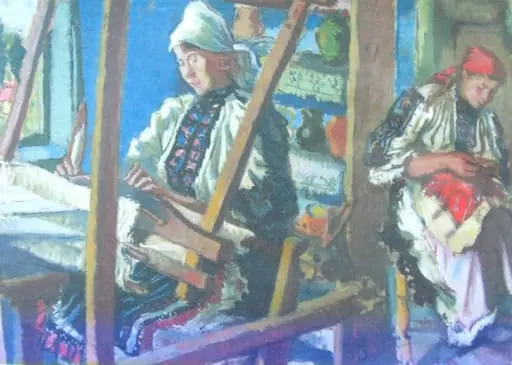
Țărănci țesând la război
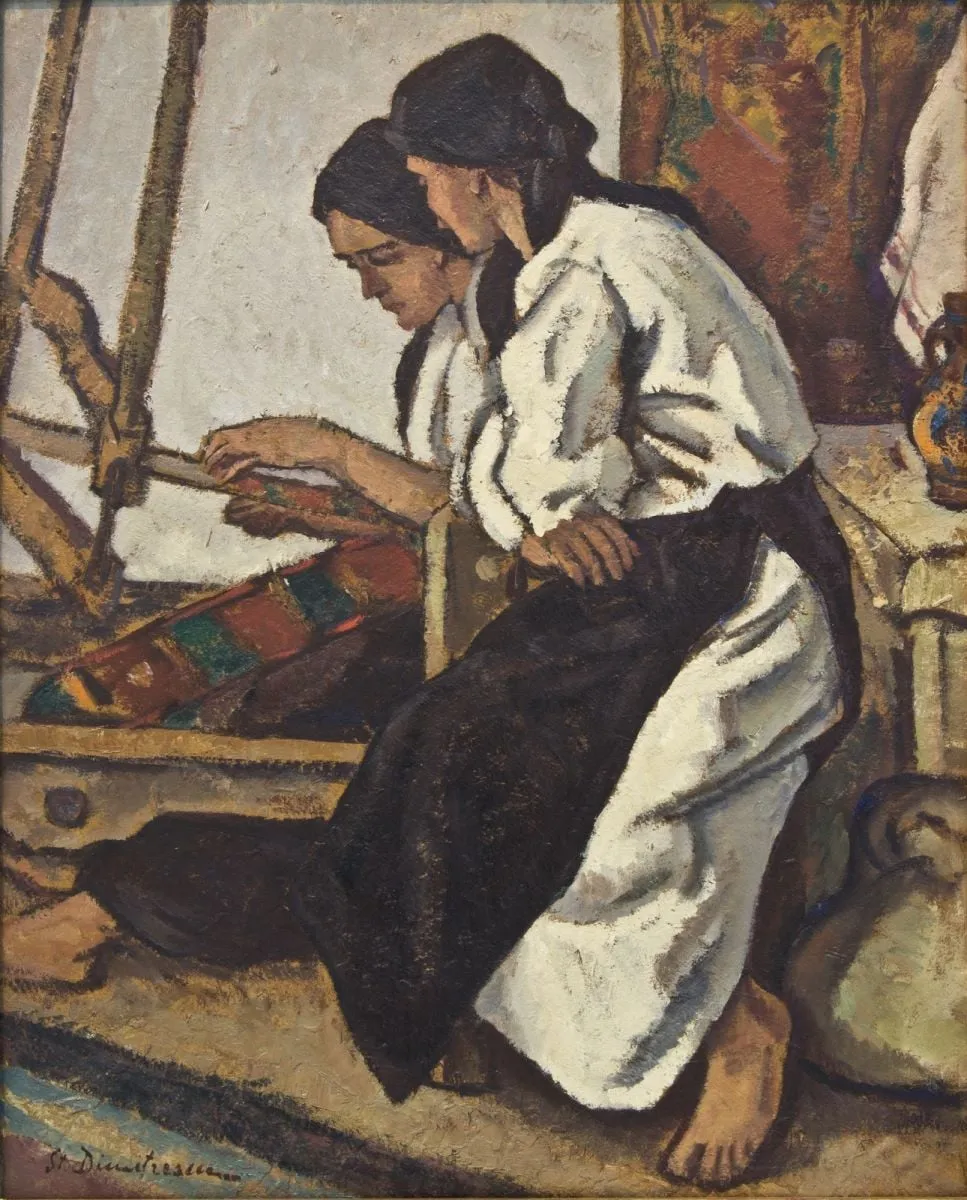
Țărănci țesând la război is a print by Ștefan Dimitrescu. It dates from 1925 and is held in the collection of the National Museum of Art of Romania.
About this work
Overview
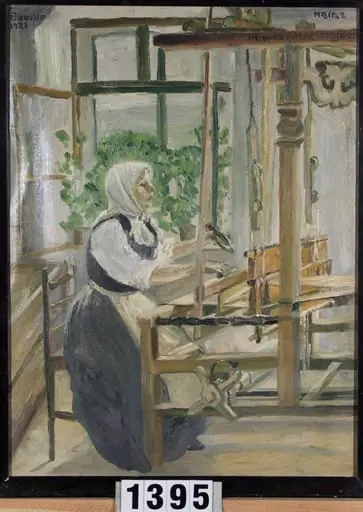
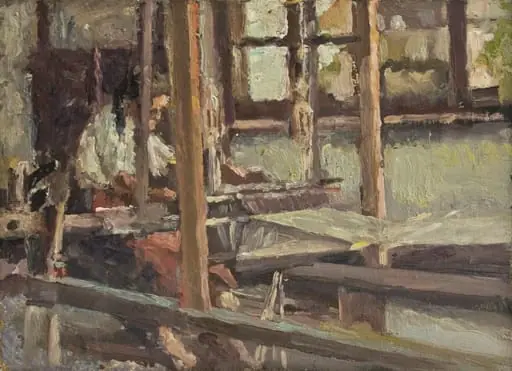
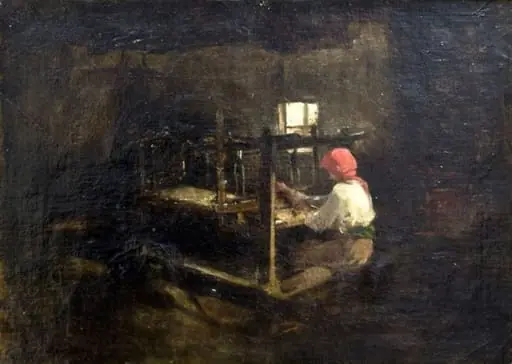
Painted in 1925 by Ștefan Dimitrescu, Țărănci țesând la război portrays two women engaged in the daily act of weaving. The scene is confined to a modest interior, where the focus remains on the rhythmic motion of their hands and the loom. No dramatic action interrupts the quiet labor; instead, the painting emphasizes the dignity of routine work through restrained composition and muted tones.
Subject & Meaning
The two figures, dressed in regional garments, represent rural women whose labor sustains household and community. Their concentration suggests a deep connection to tradition and craft. The loom becomes a symbol of continuity, linking personal effort to cultural heritage. The absence of narrative or external context invites contemplation of unseen histories embedded in textile production.
Technique & Style
Dimitrescu employs a subdued palette of earth tones and soft whites, enhancing the intimacy of the setting. Brushwork is deliberate yet unobtrusive, modeling forms with gentle transitions rather than sharp outlines. Light enters from a window on the right, casting subtle gradients across fabric and wall, reinforcing the quiet realism of the moment without theatricality.
History & Provenance
It was likely exhibited in early 20th-century Romanian salons, though specific early ownership records remain sparse.
Created during a period when Romanian artists were redefining national identity through depictions of peasant life, this work emerged from Dimitrescu’s engagement with rural communities. It was likely exhibited in early 20th-century Romanian salons, though specific early ownership records remain sparse. The painting has since been held in public collections, reflecting its recognition within national art discourse.
Context
In interwar Romania, artists turned to folk themes as a means of cultural affirmation amid modernization. Dimitrescu, influenced by Post-Impressionism and local traditions, avoided idealization, instead capturing the physicality and solitude of labor. This painting aligns with broader efforts to elevate everyday rural existence as worthy of artistic attention, distinct from romanticized or exoticized portrayals.
Legacy
The work endures as a quiet testament to the artistic value of domestic labor in Romanian modernism. It influenced later generations who sought to represent working-class life with empathy rather than sentimentality. Though not widely reproduced, it remains a reference point in studies of interwar Romanian painting for its restrained emotional depth and formal clarity.
Artist & collection