Artwork
Bluecoat School, Caxton Street, Westminster
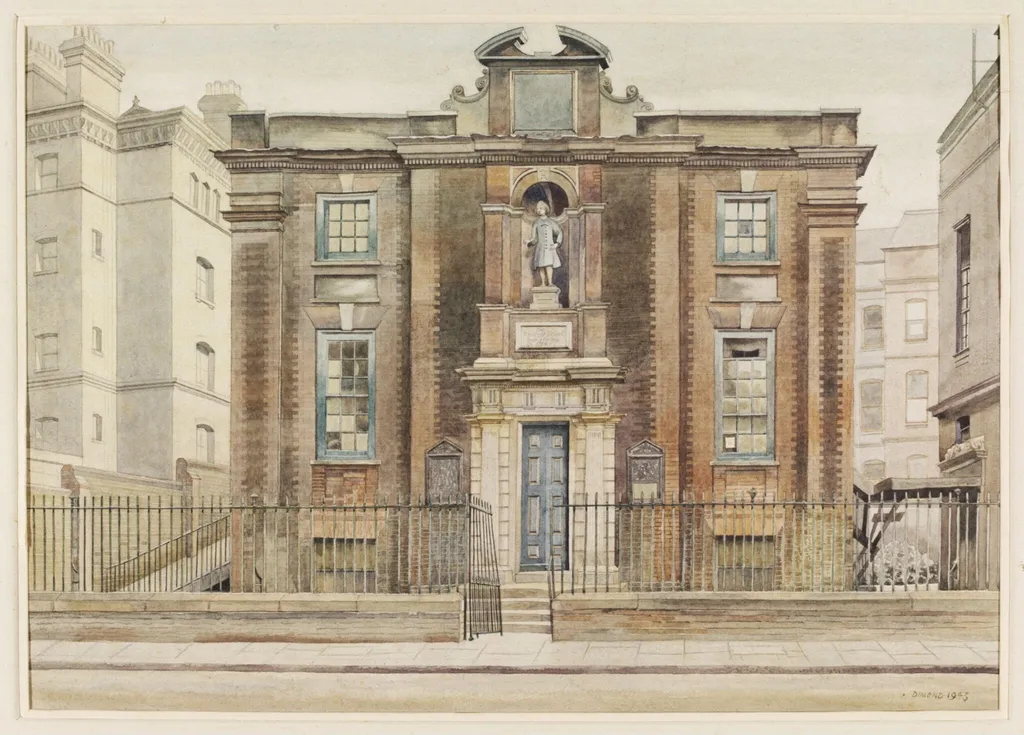
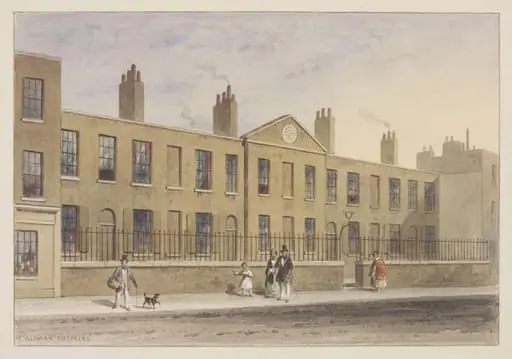
Bluecoat School, Caxton Street, Westminster is a watercolor work on paper by the Social Realist artist Phyllis Dimond. It dates from 1943 and is held in the collection of the Victoria and Albert Museum. This watercolour, created in 1943, portrays the Bluecoat School on Caxton Street in Westminster.
About this work
Overview
Executed as part of the Recording Britain project, it captures a modest yet historically significant building during a time of national uncertainty.
This watercolour, created in 1943, portrays the Bluecoat School on Caxton Street in Westminster. Executed as part of the Recording Britain project, it captures a modest yet historically significant building during a time of national uncertainty. The work reflects the initiative’s goal to visually archive structures at risk from wartime destruction, using quiet observation rather than dramatic emphasis to convey their presence.
Subject & Meaning
The building, originally founded as a charitable school for boys, is distinguished by its Wren-inspired architecture and a statue of a man in a blue coat above the entrance. The figure, likely a reference to the school’s benefactor, anchors the composition symbolically. The absence of people or movement suggests a contemplative pause, emphasizing the building’s endurance and quiet dignity amid the upheaval of war.
Technique & Style
The artist employs watercolour with restrained tonality, using soft washes to suggest the textures of brick and stone. Subtle contrasts define architectural details without harsh lines, while the iron fence and windows are rendered with delicate precision. The medium’s translucency lends a hushed, atmospheric quality, reinforcing the scene’s stillness and evoking a sense of temporal suspension.
History & Provenance
Commissioned under the Recording Britain project, this work was one of over 1,500 created by 97 artists between 1939 and 1945. Funded by the Pilgrim Trust and overseen by Sir Kenneth Clark, the project aimed to preserve visual records of vulnerable landscapes and buildings. The painting entered the Victoria and Albert Museum’s collection as part of this national archive, ensuring its preservation for historical study.
Context
Created during the Blitz and amid fears of cultural loss, the Recording Britain project responded to both physical threats and the erosion of traditional environments. Artists were sent across the country to document vernacular architecture and public spaces. This watercolour, like others in the series, reflects a deliberate choice to record ordinary heritage—not grand monuments—as worthy of preservation.
Legacy
The Recording Britain collection remains a vital resource for understanding Britain’s architectural landscape during wartime. This watercolour contributes to a broader archive that shifted focus toward everyday structures, influencing later efforts in heritage documentation. Its quiet realism continues to inform how cultural memory is visually sustained in times of crisis.
Artist & collection
Artist
Phyllis Dimond painted quiet London scenes in watercolor straight from city life.

 The Greyhound Hotel, Blandford
 35, Beaumont Street, Oxford
 The Bank House, Kings Staithes Quay, Kings Lynn
 "Wrencote," High Street, Croydon
 Untitled
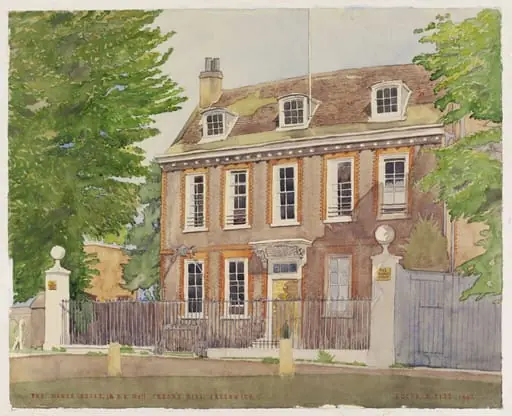 The Manor House, Croom's Hill, Greenwich
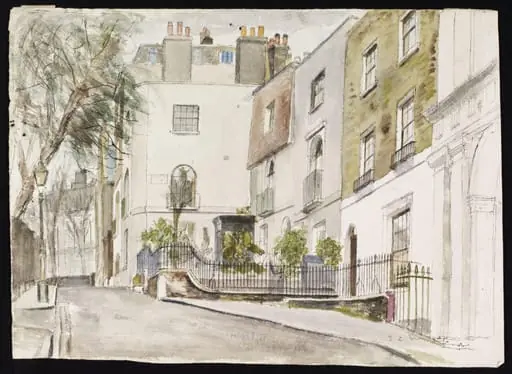 Hollyberry Walk, N.W.3.
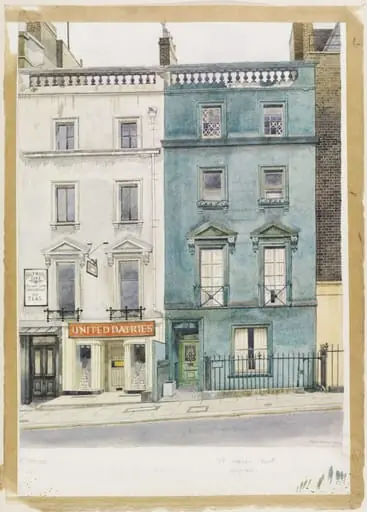 39 & 40 Curzon Street, Mayfair
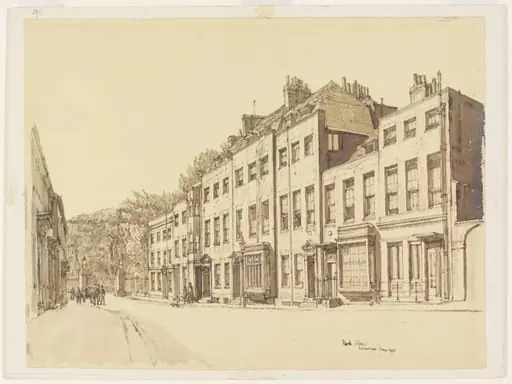 Park Street, Windsor
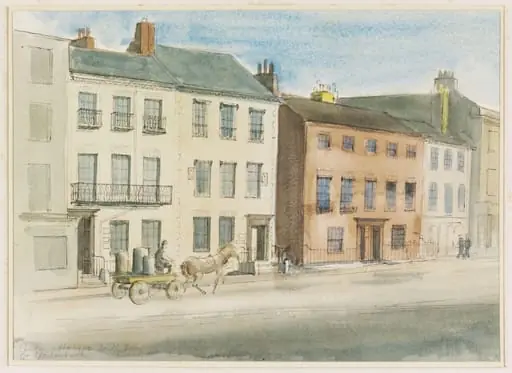 18th Century Houses, South Quay, Great Yarmouth
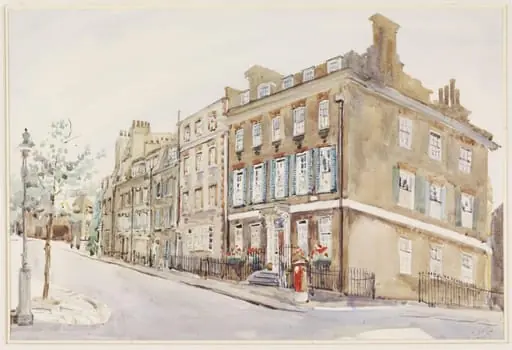 Buckingham Place, Westminster