Artwork
The Geffrye Museum, Kingsland Road, London, E2
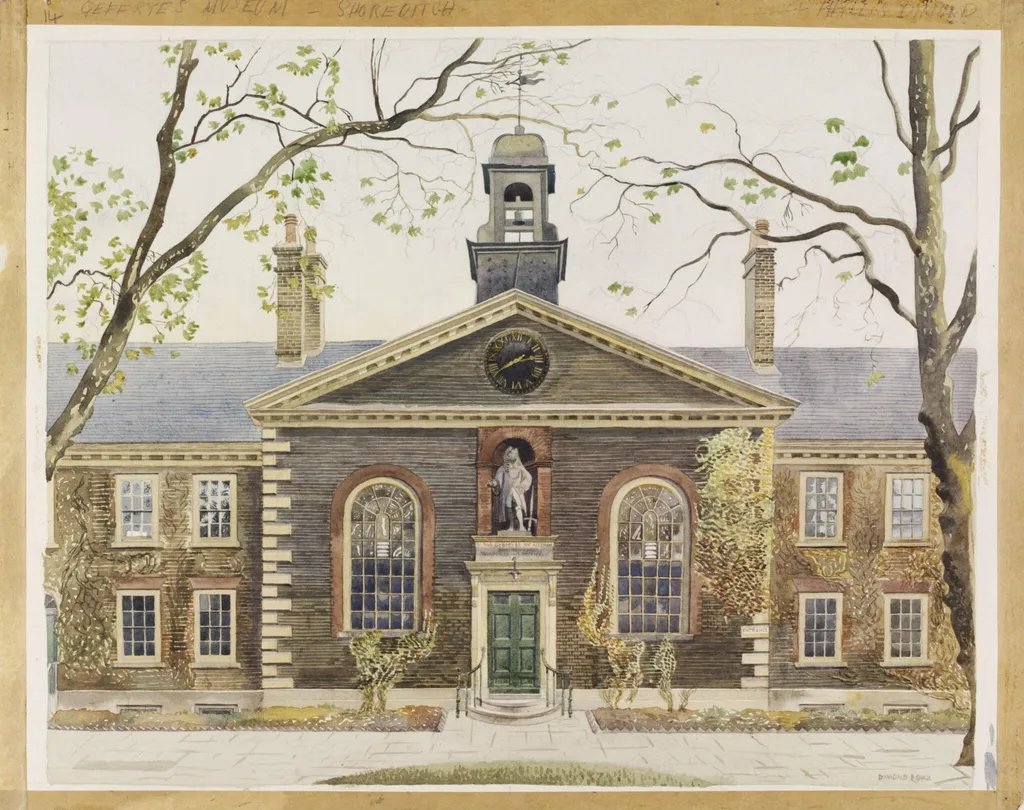
The Geffrye Museum, Kingsland Road, London, E2 is a watercolor work on paper by the British Romanticist artist Phyllis Dimond. It dates from 1942 and is held in the collection of the Victoria and Albert Museum.
About this work
Overview
Originally built as almshouses in the early 18th century, the building was the subject of a wartime project to record Britain’s architectural heritage.
Painted in 1942 by Phyllis Dimond, this watercolour captures the exterior of the Geffrye Museum on Kingsland Road, London. Originally built as almshouses in the early 18th century, the building was the subject of a wartime project to record Britain’s architectural heritage. Dimond’s work belongs to the 'Recording Britain' collection, a government-backed initiative that commissioned artists to document landscapes and structures deemed vulnerable during the Second World War.
Subject & Meaning
The painting portrays a substantial brick structure with a prominent clock tower, a central green door, and a statue above it, flanked by arched windows. Surrounded by trees and under a pale sky, the scene conveys quiet endurance. The choice of subject reflects the project’s aim to preserve images of civic and historical buildings that might be lost to conflict or neglect, emphasizing continuity amid disruption.
Technique & Style
Dimond employed watercolour to achieve a restrained, atmospheric effect. Soft washes of gray and brown unify the building with its surroundings, while the muted palette enhances the sense of stillness. The delicate handling of light and shadow, along with subtle variations in tone, avoids sharp definition, lending the scene a contemplative, almost ethereal quality consistent with the medium’s inherent delicacy.
History & Provenance
Created as part of the 'Recording Britain' project, the work was commissioned under the direction of Sir Kenneth Clark. The initiative, active between 1939 and 1943, gathered over 1,500 works by nearly 100 artists to safeguard visual records of Britain’s heritage. Dimond’s watercolour entered the collection of the Victoria and Albert Museum, where it remains as part of a broader archive of wartime cultural documentation.
Context
During the Second World War, Britain faced widespread destruction and social upheaval. The 'Recording Britain' project emerged as a cultural response, seeking to preserve the visual identity of places that symbolized continuity and community. Artists like Dimond were sent across the country to capture rural and urban scenes, from churches to almshouses, ensuring these images would survive even if the originals did not.
Legacy
Dimond’s watercolour contributes to a significant archive that continues to inform historical and architectural studies. The 'Recording Britain' collection is now a vital resource for understanding how wartime Britain perceived its own heritage. The work stands as a quiet testament to the role of art in preserving memory, offering a restrained yet enduring record of a building that still stands today.
Artist & collection
Artist
Phyllis Dimond painted quiet London scenes in watercolor straight from city life.

 Buckingham Place, Westminster
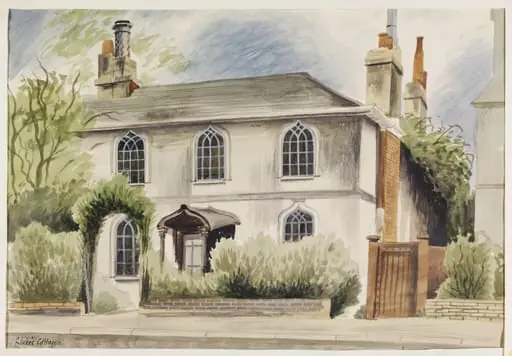 Blake's Cottages, Park Lane, Croydon
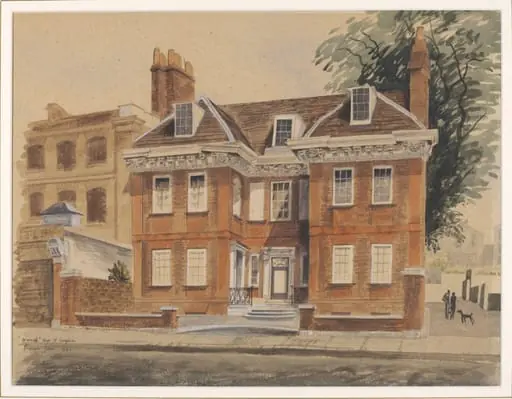 "Wrencote," High Street, Croydon
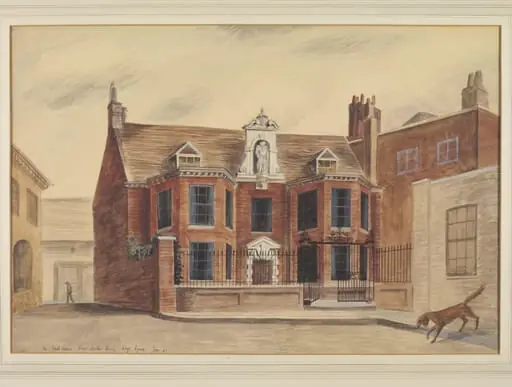 The Bank House, Kings Staithes Quay, Kings Lynn
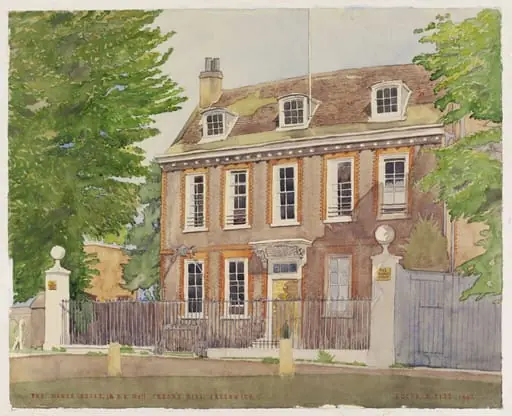 The Manor House, Croom's Hill, Greenwich
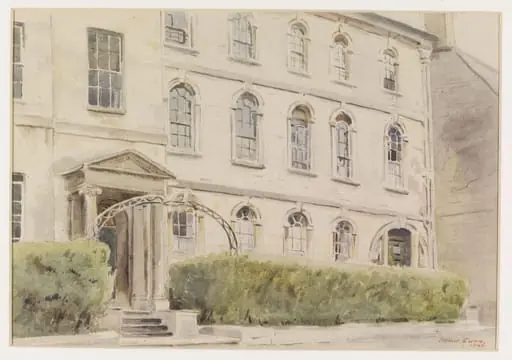 Park House, Cirencester
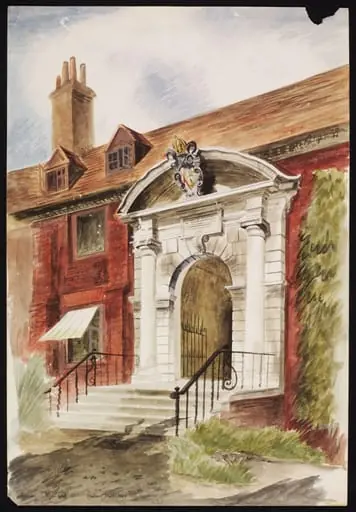 Entrance to Bromley College
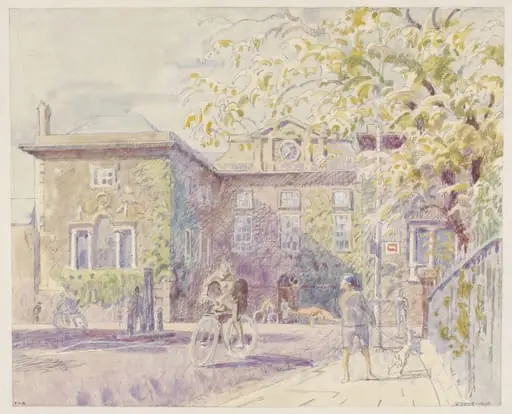 Worcester College, Oxford
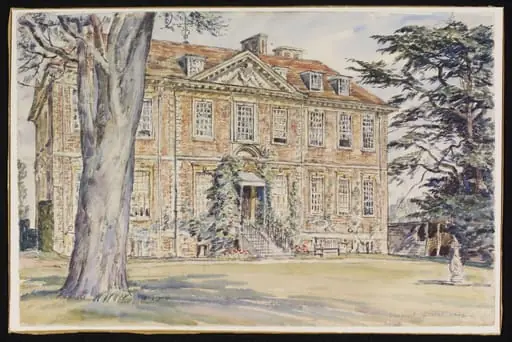 Ramsbury Manor
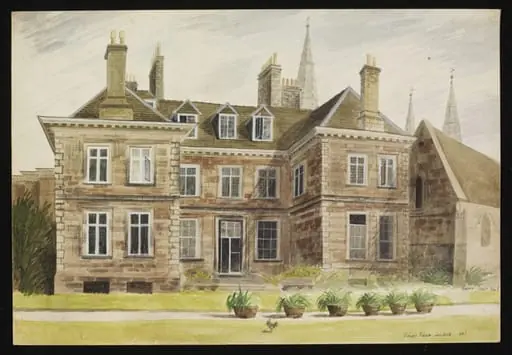 Bishop's Palace, Lichfield (South or Garden Front)
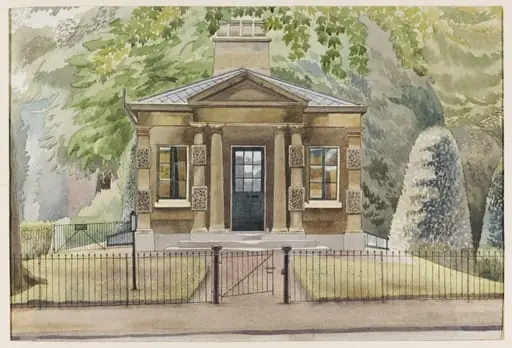 Queen's Gate, Kensington Gardens