Artwork
The Manor House, Croom's Hill, Greenwich
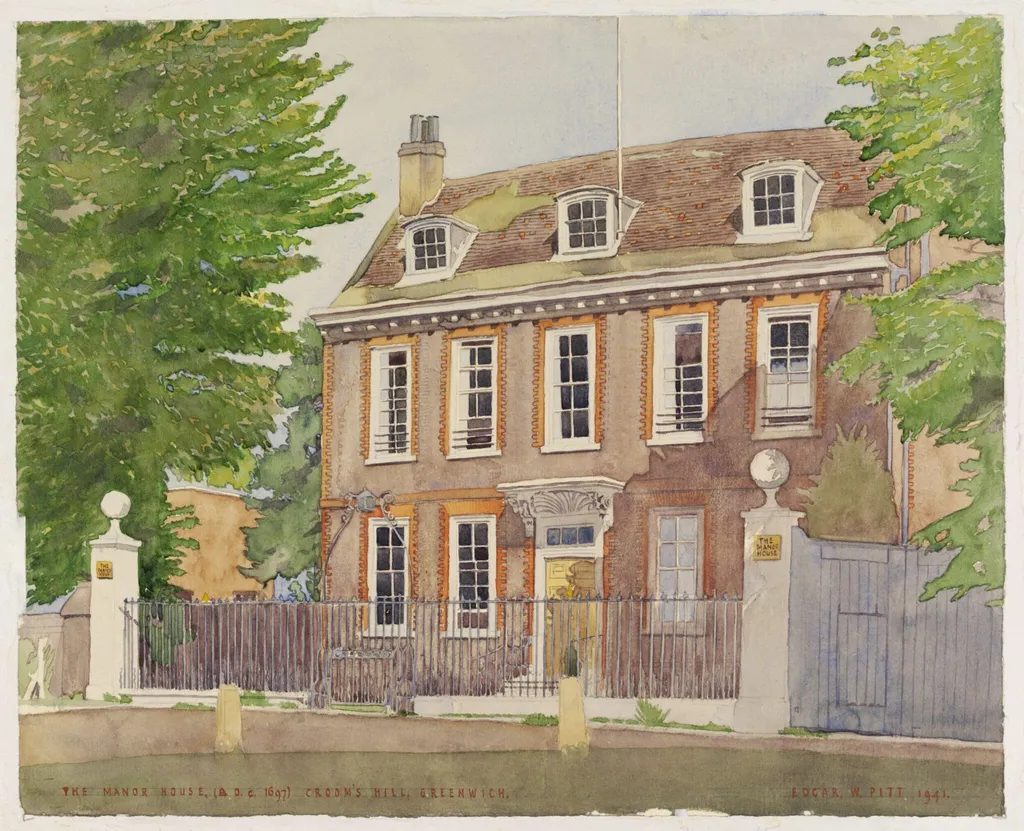
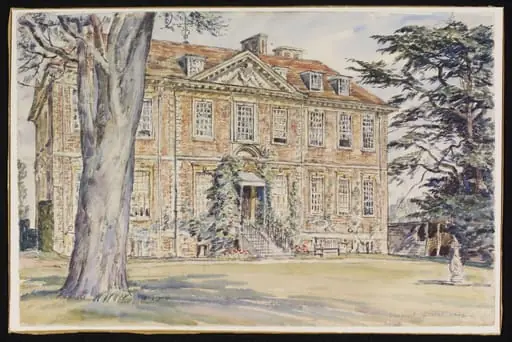
The Manor House, Croom's Hill, Greenwich is a watercolor work on paper by the Social Realist artist Pitt. It dates from 1941 and is held in the collection of the Victoria and Albert Museum.
About this work
" The artist painted it in 1941, focusing on the building’s details like the shutters and chimneys.
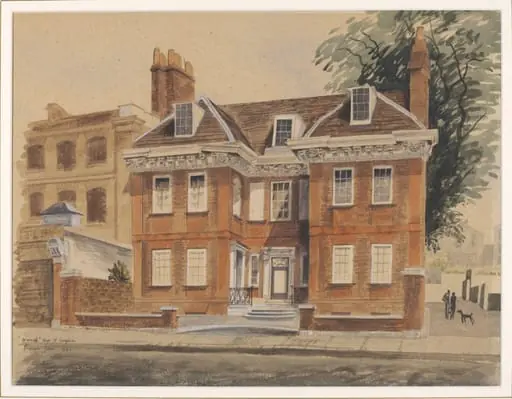
This watercolor shows a two-story brick house with white-trimmed windows and a steep, tiled roof. A black iron fence runs along the front, and a tall tree leans over the left side. The house has a small porch with columns, and a sign on the gate reads "The Manor House."
The artist painted it in 1941, focusing on the building’s details like the shutters and chimneys. The colors are soft, with greens and browns blending together.
Next, check out the Victoria and Albert Museum to see more of this painting.
Overview
Created in 1941, this watercolour by the artist Pitt records the appearance of The Manor House on Croom’s Hill in Greenwich. Executed for the Recording Britain initiative, the work presents a detailed view of the two‑storey brick residence, its tiled roof, white‑trimmed windows and surrounding foliage, offering a snapshot of the locale during the early years of the Second World War.
Subject & Meaning
The painting focuses on a domestic architectural subject, emphasizing the manor’s structural elements such as the iron fence, columned porch and the leaning tree that frames the left side. By documenting a specific building, the image contributes to a broader visual archive intended to safeguard the memory of England’s historic environments amid wartime threats.
Technique & Style
Pitt employs a restrained palette of muted greens, browns and whites, rendering the scene with soft washes that convey atmospheric light. Fine brushwork captures the texture of brickwork, shutters and chimney details, while the delicate handling of foliage and sky creates a balanced composition that blends topographical accuracy with a modest lyrical tone.
History & Provenance
The work was commissioned as part of the Recording Britain project, a wartime effort launched by Sir Kenneth Clark and financed by the Pilgrim Trust to record sites considered vulnerable to bomb damage or post‑war development. After its completion, the watercolour entered the collection of the Victoria and Albert Museum, where it remains accessible to researchers and the public.
Context
During the early 1940s, Britain faced extensive aerial bombardment and rapid urban change, prompting cultural institutions to preserve visual records of the nation’s built heritage. This painting exemplifies the project’s aim to capture ordinary yet historically significant locales, reflecting contemporary concerns about loss and the desire to maintain a visual continuity of the English landscape.
Artist & collection
Artist
Watercolour painter Pitt captured quiet corners of mid-century Britain, especially in Greenwich.

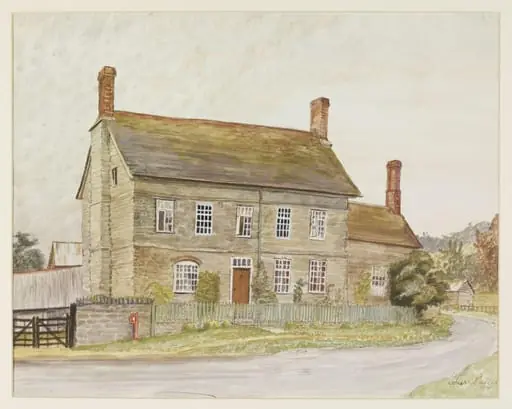 Hall Farm, Leinthall Earls
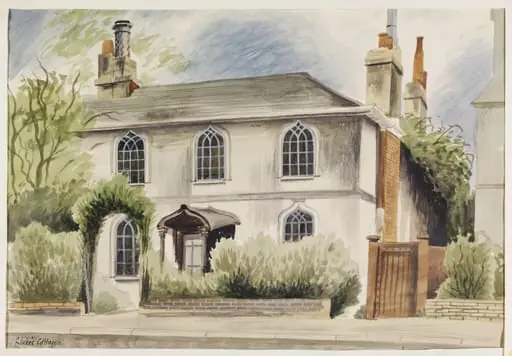 Blake's Cottages, Park Lane, Croydon
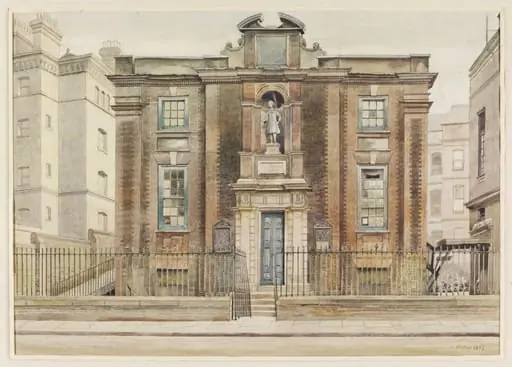 Bluecoat School, Caxton Street, Westminster
 "Wrencote," High Street, Croydon
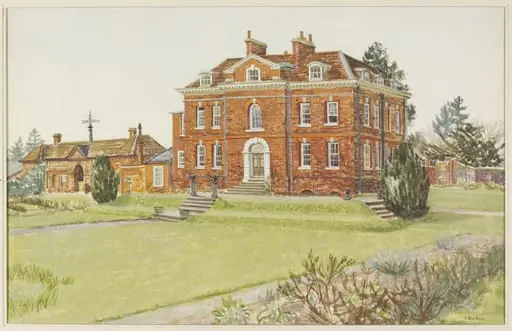 Much Hadham Hall
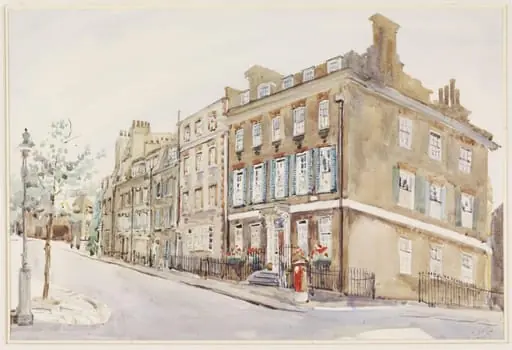 Buckingham Place, Westminster
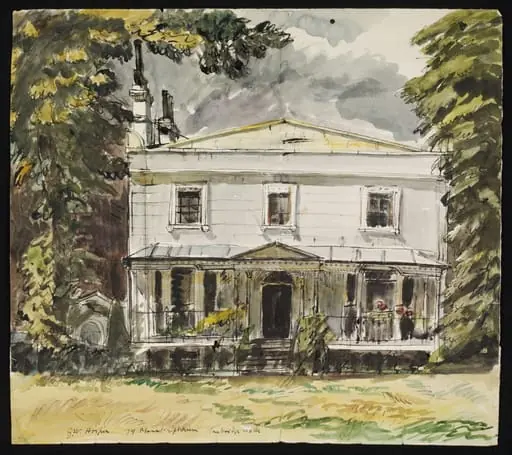 79, Mount Epraim, Tunbridge Wells
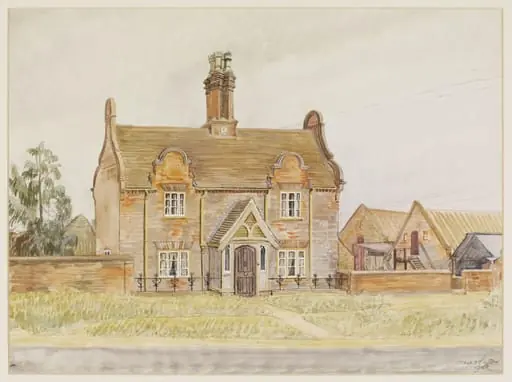 Chantry Farm in Orford
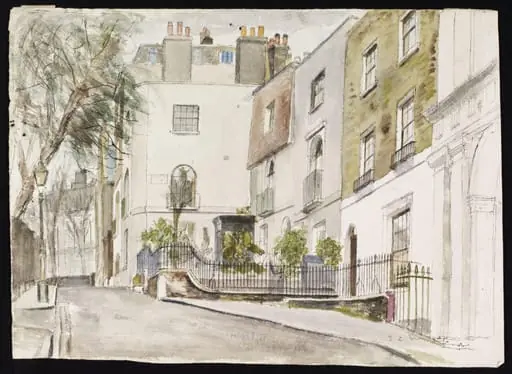 Hollyberry Walk, N.W.3.
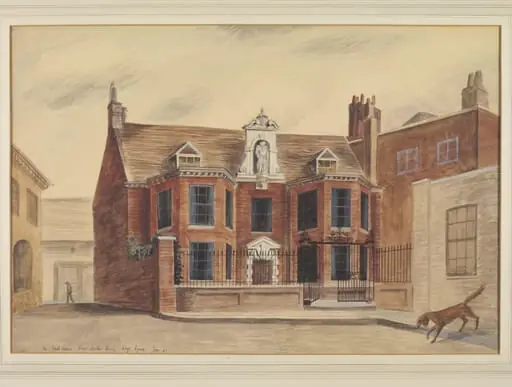 The Bank House, Kings Staithes Quay, Kings Lynn
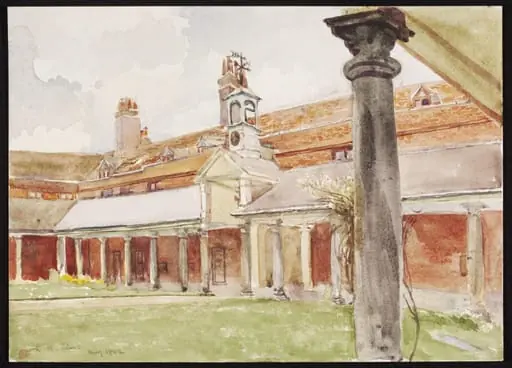 Quadrangle, Bromley College
 Ramsbury Manor