Artwork
Bird Dropping Blinding Tobit
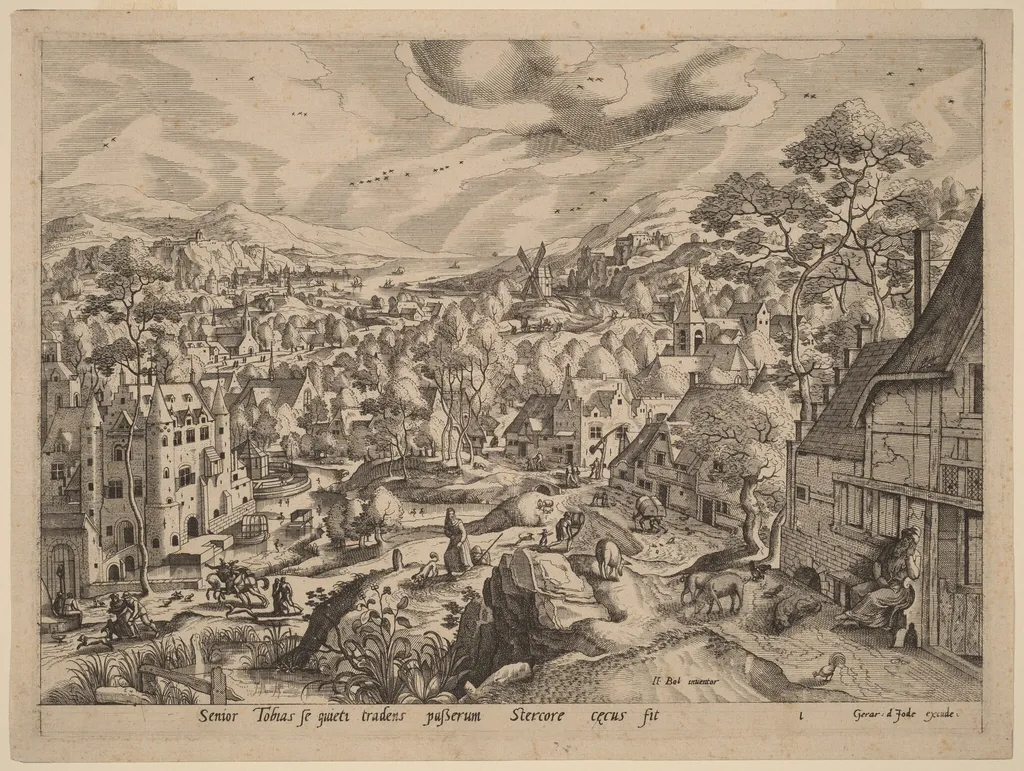
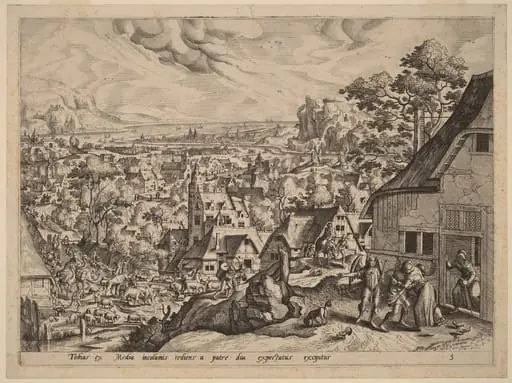
Bird Dropping Blinding Tobit is an ink print by the Renaissance artist Johannes van Doetechum the Elder. It dates from 1565 and is held in the collection of the National Gallery of Art.
About this work
Overview
His practice centered on Haarlem, where he refined techniques learned in Deventer and collaborated with family members in his workshop.
Created around 1565 by Johannes van Doetecum the Elder, this print combines etching and engraving on laid paper to depict a moment from the biblical Book of Tobit. Van Doetecum, a Dutch printmaker active in the mid-to-late 16th century, specialized in reproductive works that translated popular compositions into detailed graphic form. His practice centered on Haarlem, where he refined techniques learned in Deventer and collaborated with family members in his workshop.
Subject & Meaning
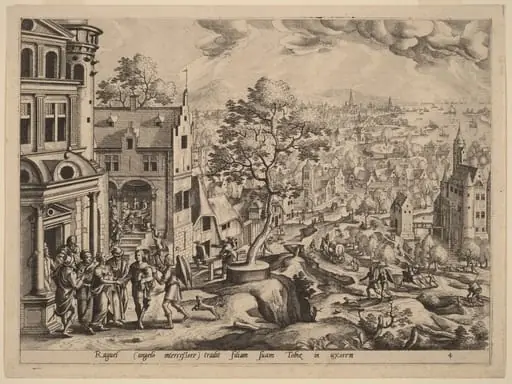
The scene illustrates Tobit’s sudden blindness, caused by bird droppings falling into his eyes—a lesser-known episode from the Apocrypha. Rather than emphasizing divine intervention, the image renders the event within a vivid rural setting, grounding the sacred narrative in everyday life. Figures go about their routines around a modest dwelling, suggesting the unpredictability of misfortune amid ordinary routines.
Technique & Style
Van Doetecum employed fine, controlled lines typical of Renaissance reproductive engraving, layering etched contours with precise engraving to define textures in clothing, architecture, and landscape. Shading is achieved through cross-hatching and varied line density, creating spatial depth without heavy tonal contrasts. The composition reflects a documentary impulse, prioritizing clarity and narrative legibility over dramatic intensity.
History & Provenance
The print emerged during Van Doetecum’s early career, before his 1578 move to Haarlem. It belongs to a series of biblical and genre scenes he produced in collaboration with his brother Lucas and later his sons. These works circulated widely across Northern Europe, serving as accessible visual narratives for a growing literate public. No definitive early ownership records survive, but the print’s survival in multiple institutional collections indicates its enduring circulation.
Context
In the mid-16th century, Dutch printmakers increasingly turned to biblical and moralizing subjects for commercial appeal, often adapting compositions by artists like Pieter Bruegel. Van Doetecum’s approach aligned with this trend, translating complex scenes into reproducible formats. His work reflects the era’s shift toward secularized religious storytelling, where sacred events were framed within recognizable domestic and rural environments.
Legacy
Van Doetecum’s prints, including this one, contributed to the standardization of biblical imagery in Northern European households. Though not original compositions, his technical precision and attention to detail influenced later generations of engravers. His family workshop became a model for multi-generational printmaking, sustaining a tradition of reproductive art that bridged fine art and popular visual culture.
Artist & collection

Artist
Johannes van Doetechum the Elder
Joannes van Doetecum the Elder (1530 – 1605) was a Dutch engraver-cartographer known for his etched works after genre scenes by Pieter Bruegel the Elder and maps of various cities in the Netherlands.

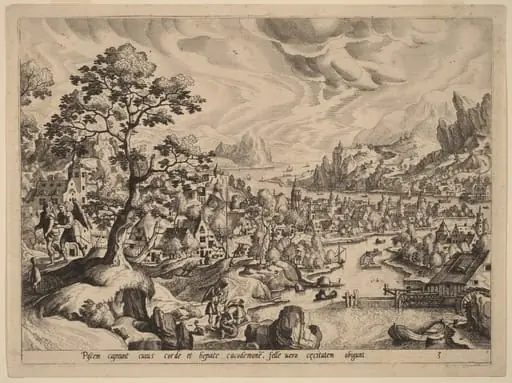 Tobias Catching the Fish in the River Tigris
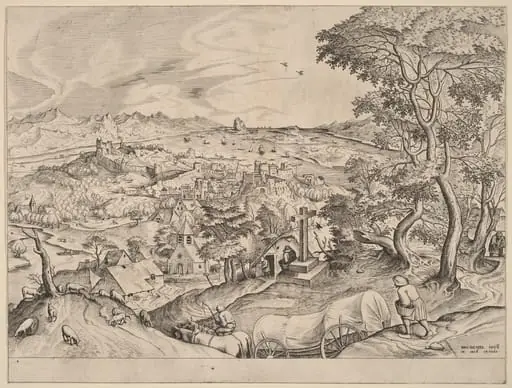 Plaustrum Belgicum (The Belgian Wagon)
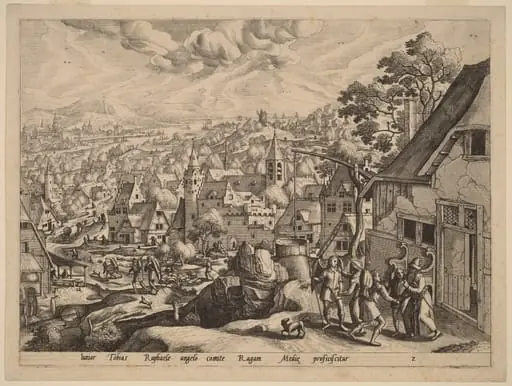 Tobias Taking Leave of his Parents
 The Homecoming of Tobias
 Solicitudo Rustica (Rustic Concerns)
 The Rabbit Hunters
 View of Steyr on Enns
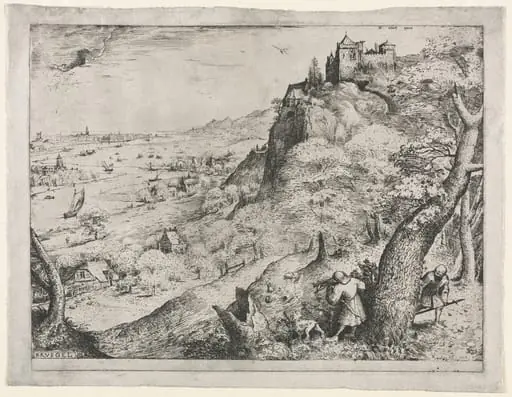 The Rabbit Hunt
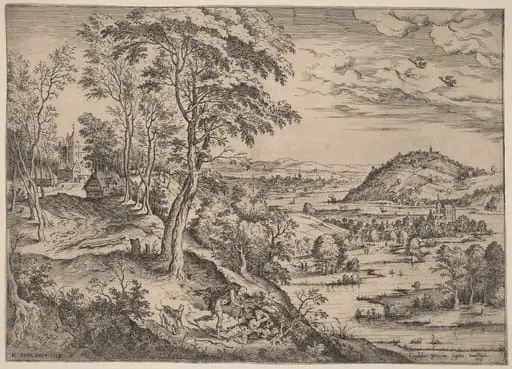 Cephalus and Procris
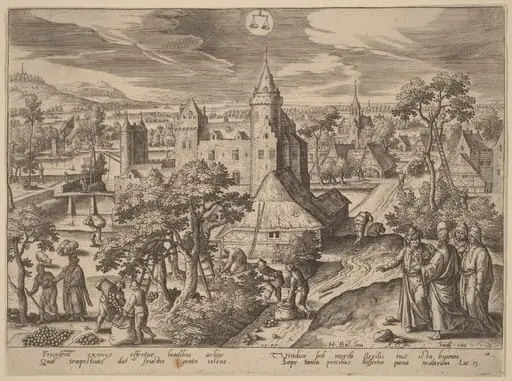 The Parable of the Barren Fig Tree
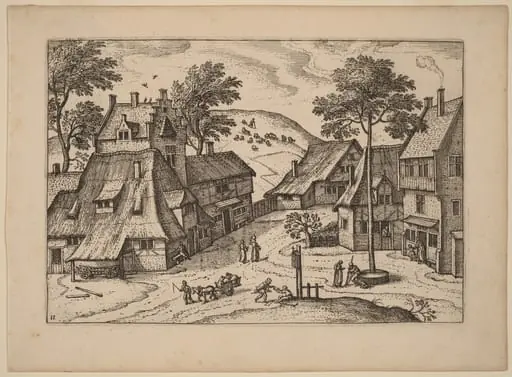 Village Square with Shrine