Artwork
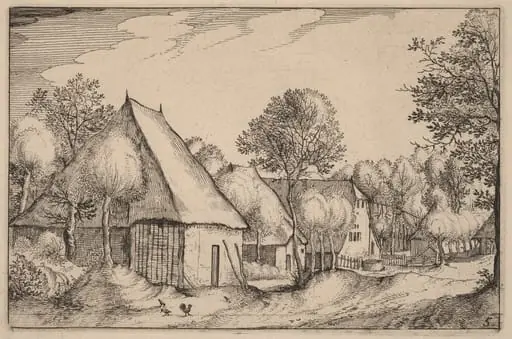
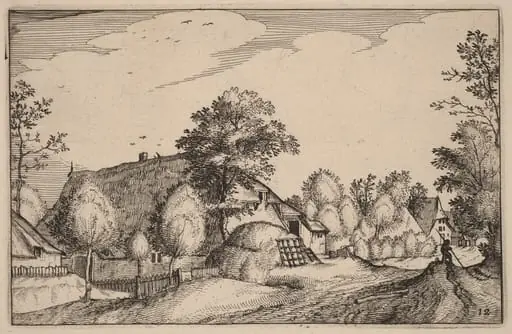
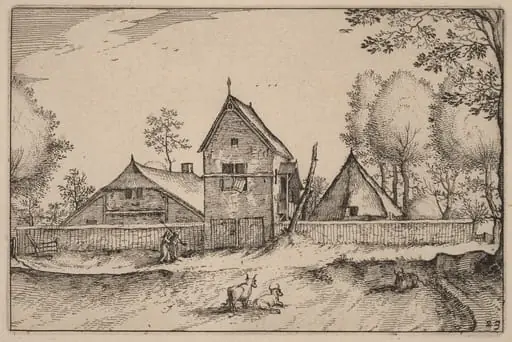
Large Farm
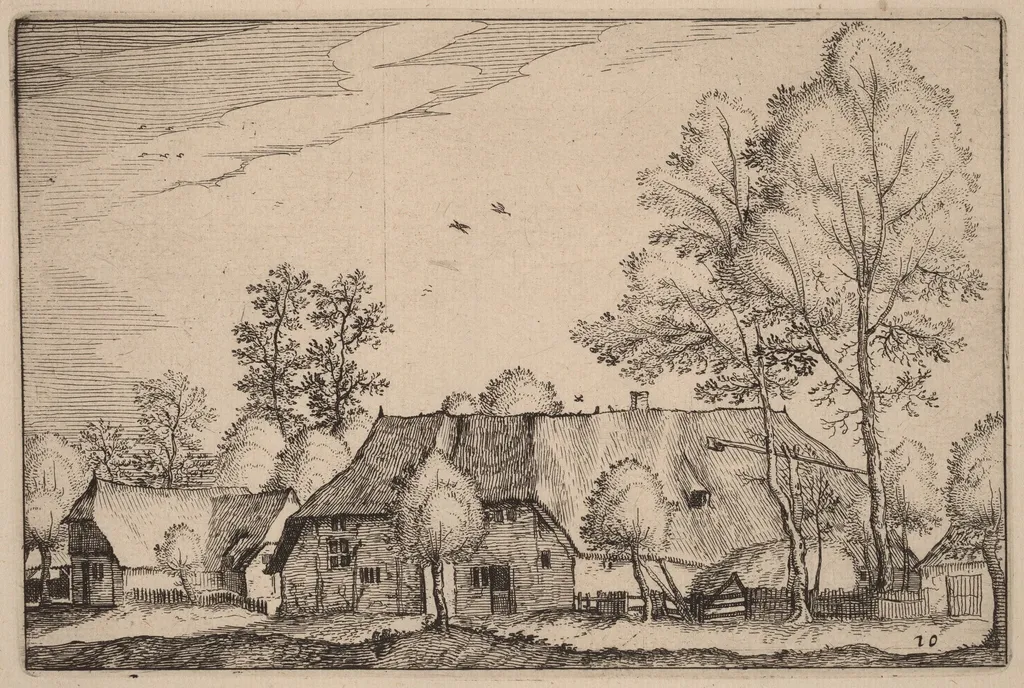
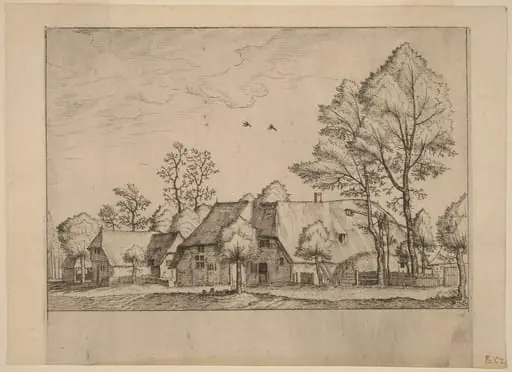
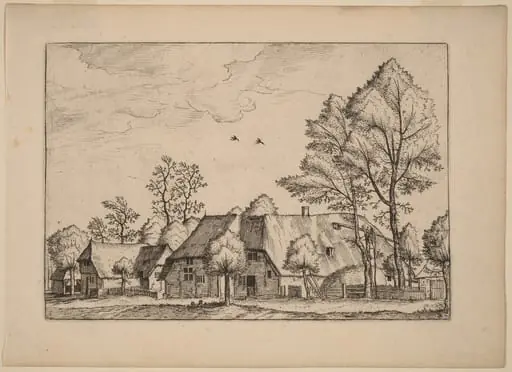
Large Farm is an ink print by the Baroque artist Claes Jansz Visscher. It dates from 1612 and is held in the collection of the National Gallery of Art.
About this work
Overview
This work belongs to a broader tradition of landscape-focused printmaking, where the natural and built environment was rendered with precision and care.
Created in 1612 by Claes Janszoon Visscher, *Large Farm* is an etching that exemplifies the Dutch Golden Age’s interest in everyday rural life. As a skilled engraver and publisher based in Amsterdam, Visscher produced detailed prints that served both artistic and documentary purposes. This work belongs to a broader tradition of landscape-focused printmaking, where the natural and built environment was rendered with precision and care.
Subject & Meaning
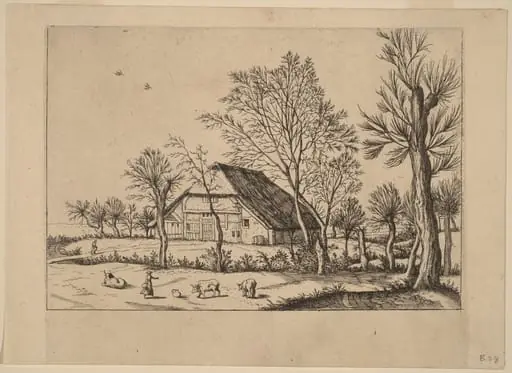
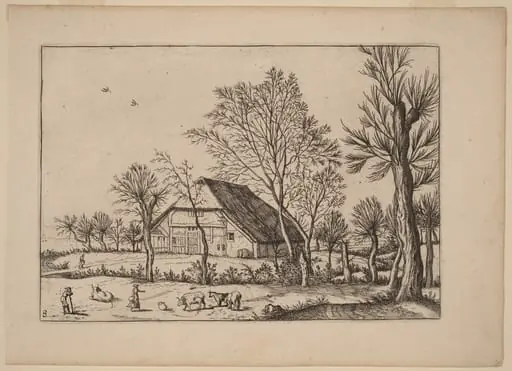
The scene depicts a working farmstead with quiet activity: chickens forage near a thatched barn, a horse drinks from a trough, and two women carry baskets of harvested grain. There is no overt narrative or symbolism—instead, the image conveys the rhythm of agricultural labor. The composition emphasizes order and routine, reflecting the value placed on self-sufficiency and diligence in early 17th-century Dutch society.
Technique & Style
Visscher used the etching process, incising fine lines into a copper plate with a sharp needle before applying acid to bite the design. The plate was then inked and pressed onto paper, producing a detailed monochrome image. His lines are controlled and deliberate, capturing textures like thatch, furrows, and fabric with clarity. The technique aligns with contemporary printmakers, including Rembrandt, who also exploited etching’s capacity for fine detail and tonal variation.
History & Provenance
Visscher established a successful family publishing house in Amsterdam, known for maps and topographical prints that circulated widely across Europe. *Large Farm* was likely produced as part of a series documenting rural life, intended for collectors and merchants interested in Dutch scenery. Though specific early ownership records are scarce, the print’s survival in multiple institutional collections suggests its steady circulation during the 17th century.
Context
In early 1600s Holland, economic prosperity and urban growth heightened interest in the countryside as both a source of sustenance and a symbol of national identity. Printmaking flourished as a medium for disseminating images of daily life, from cityscapes to farms. Visscher’s work fits within this trend, offering accessible, detailed views that appealed to a growing literate public seeking representations of their world.
Legacy
Visscher’s prints, including *Large Farm*, contributed to the standardization of landscape imagery in Dutch print culture. His family’s publishing enterprise ensured the longevity of his designs, influencing later generations of engravers. While not as widely studied as painterly equivalents, his etchings remain important records of rural economy and visual culture, preserving the textures of everyday life in a period of rapid change.
Artist & collection

Artist
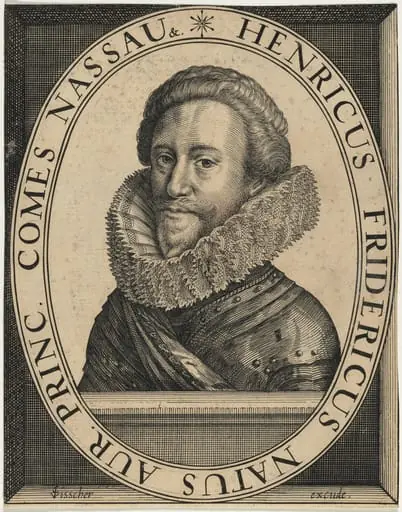
Claes Janszoon Visscher (1587 – 19 June 1652) was a Dutch Golden Age draughtsman, engraver, mapmaker, and publisher.