Artwork
Farms
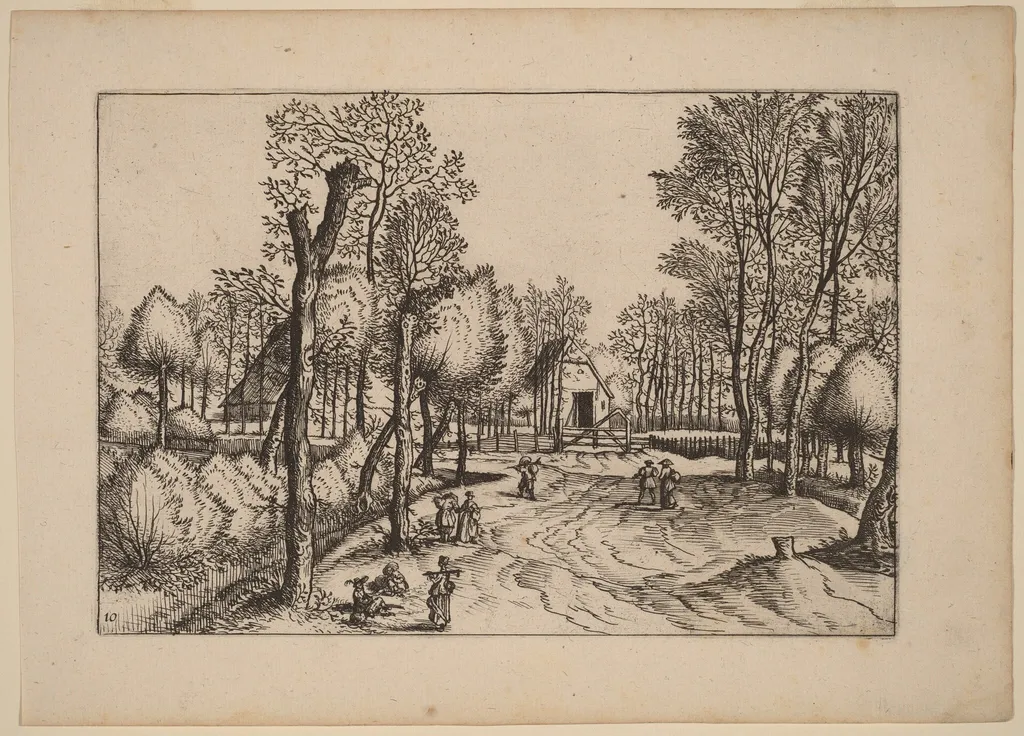
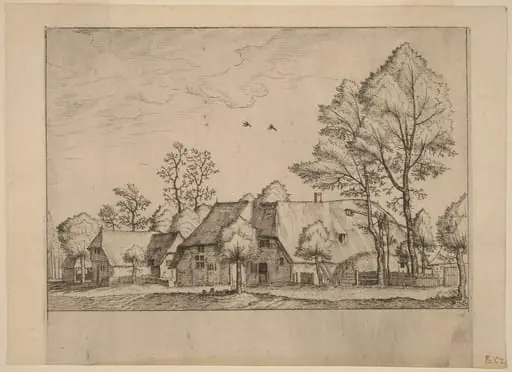
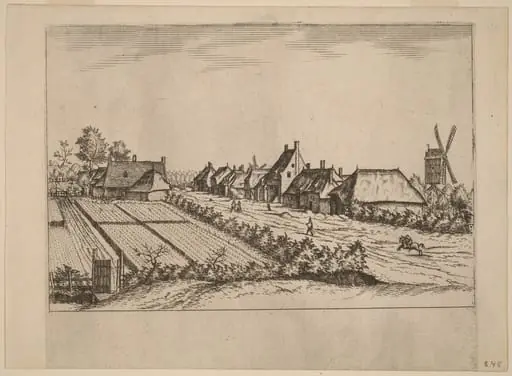
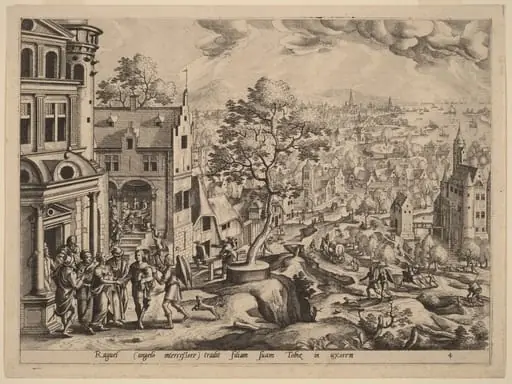
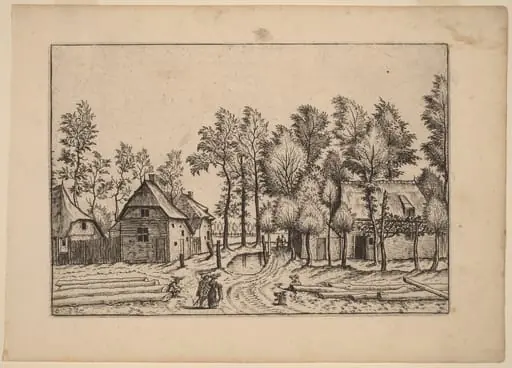
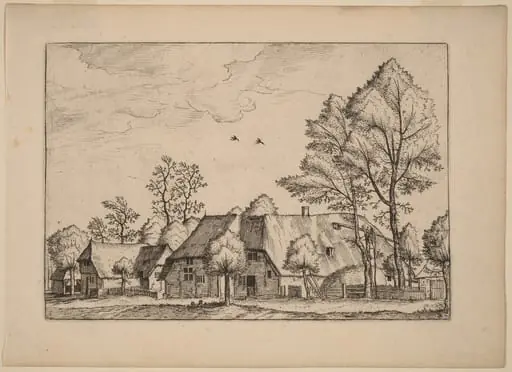
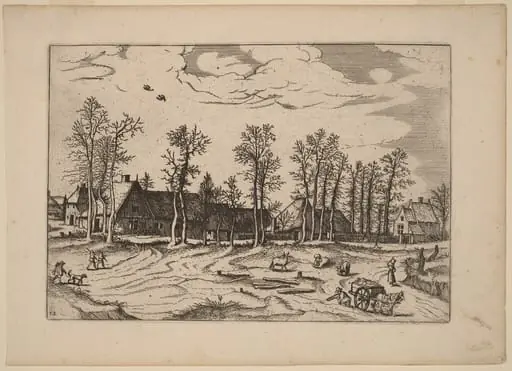
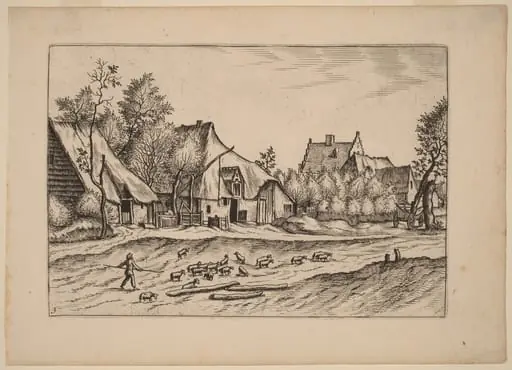
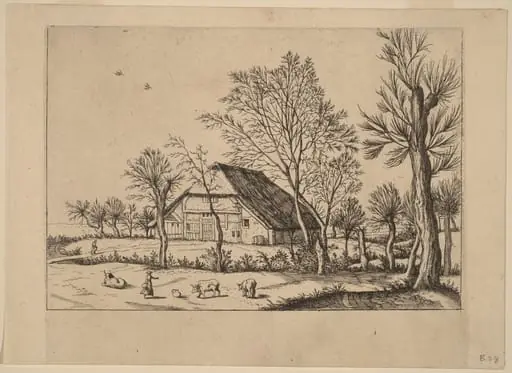
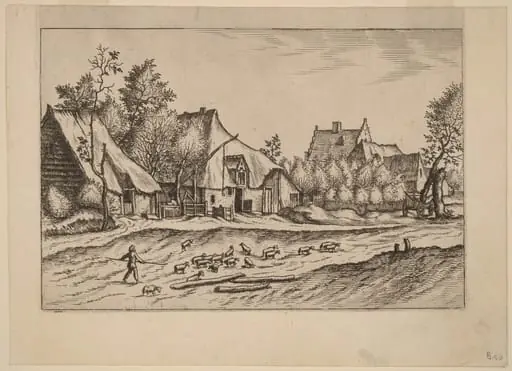
Farms is an ink print by the Baroque artist Johannes van Doetechum the Elder. It is held in the collection of the National Gallery of Art.
About this work
Overview
Created in 1676 by Johannes van Doetecum the Elder, this black-and-white print combines etching with selective engraving to depict a tranquil rural landscape.
Created in 1676 by Johannes van Doetecum the Elder, this black-and-white print combines etching with selective engraving to depict a tranquil rural landscape. Van Doetecum, active in Haarlem after moving from Deventer in 1578, specialized in reproductive prints and cartography. This work belongs to a broader Dutch tradition of documenting everyday countryside life through detailed graphic media, reflecting both technical precision and observational clarity.
Subject & Meaning
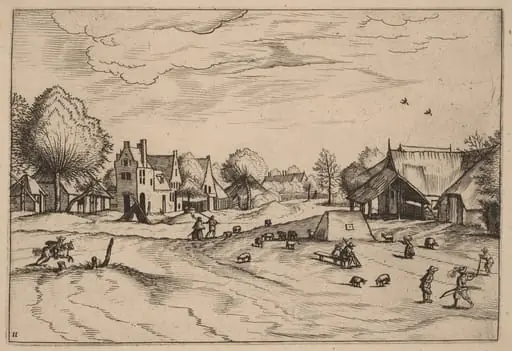
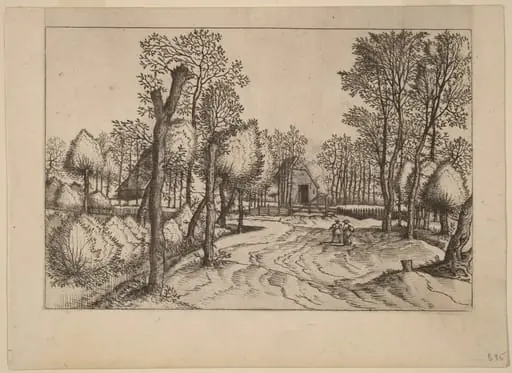
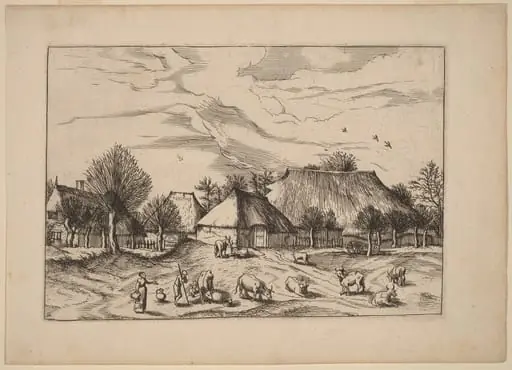
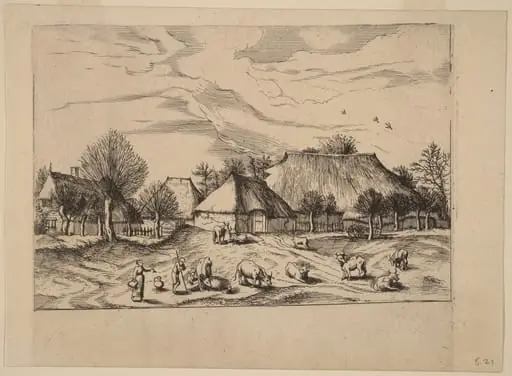
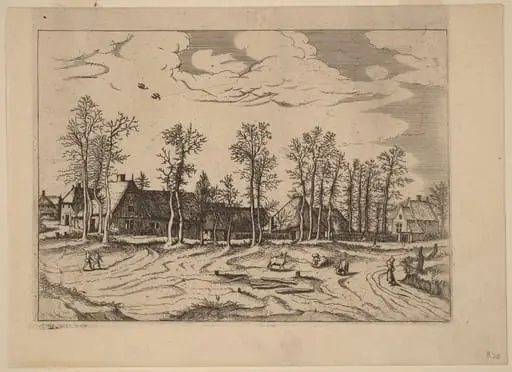
The scene portrays a quiet rural path lined with bare or sparsely leaved trees, a narrow stream, and a modest farmhouse behind a low fence. Figures move subtly along the road, their presence unobtrusive, suggesting daily routines rather than narrative drama. The composition emphasizes stillness and order, evoking the rhythm of agricultural life without idealization or sentimentality, consistent with the restrained realism of late 16th-century Dutch print culture.
Technique & Style
Van Doetecum employed etching to lay down the foundational lines, then enhanced key areas with engraving for sharper detail and tonal contrast. Fine, controlled strokes render the texture of tree bark, fabric folds, and water ripples. The absence of tone or wash preserves the clarity of line, characteristic of Northern European printmaking of the period. The method allowed for reproducibility while maintaining the delicacy of hand-drawn observation.
History & Provenance
The print emerged from a collaborative printmaking environment in Haarlem, where van Doetecum worked alongside his brother Lucas and other artisans. Though no specific early ownership records are documented, its style aligns with prints distributed through regional networks that circulated Bruegel-inspired scenes and topographical views. Its survival reflects the demand for affordable, detailed landscape imagery among educated urban audiences.
Context
In the late 16th and early 17th centuries, Dutch printmakers increasingly turned to rural subjects as civic pride and economic stability fostered interest in local landscapes. Van Doetecum’s work, though not original in composition, contributed to a visual archive of the Dutch countryside, reinforcing regional identity through accessible imagery. His role as a reproductive artist placed him within a system that valued accuracy over invention.
Legacy
Van Doetecum’s prints, including this one, helped standardize the visual language of Dutch rural scenes for later generations of artists and collectors. While not widely celebrated in his lifetime, his technical discipline and fidelity to source material influenced the development of landscape printmaking. His work remains a reference point for understanding the intersection of cartography, reproduction, and everyday observation in early modern Northern Europe.
Artist & collection

Artist
Johannes van Doetechum the Elder
Joannes van Doetecum the Elder (1530 – 1605) was a Dutch engraver-cartographer known for his etched works after genre scenes by Pieter Bruegel the Elder and maps of various cities in the Netherlands.