Artwork
Fields and a Village Road with Post Mill
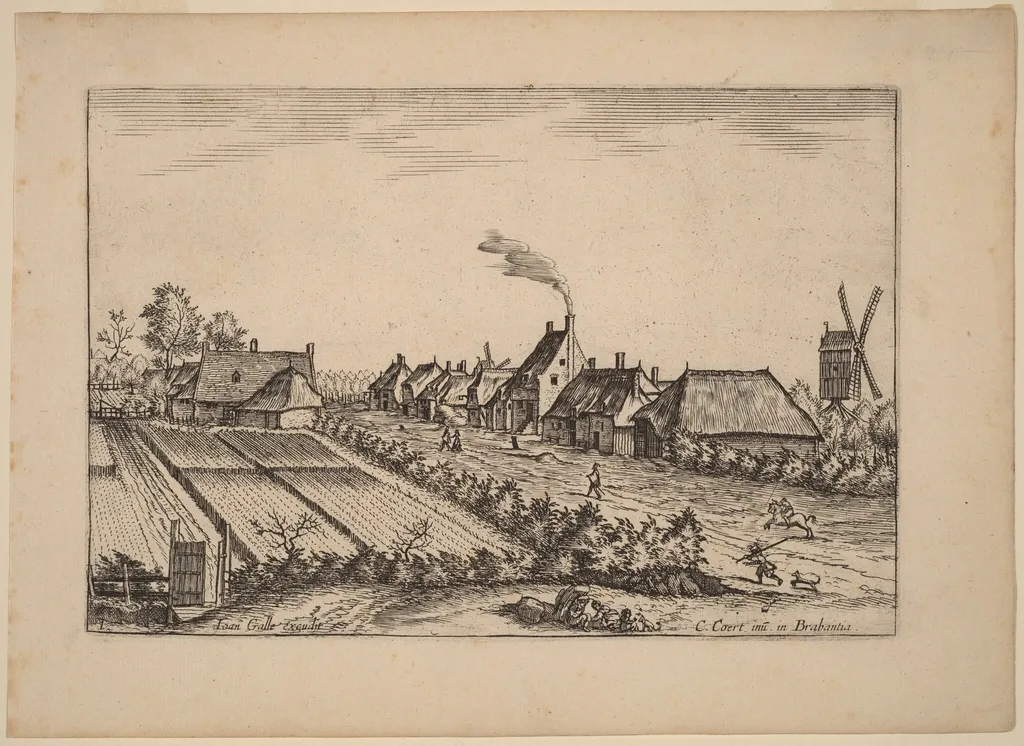
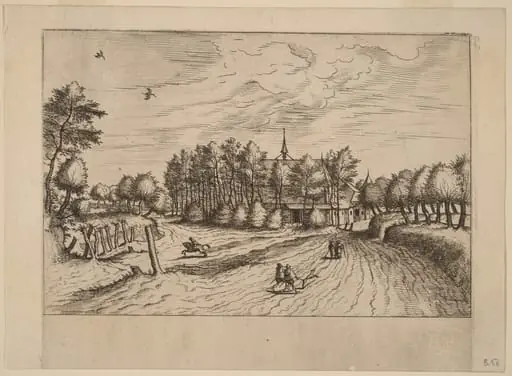
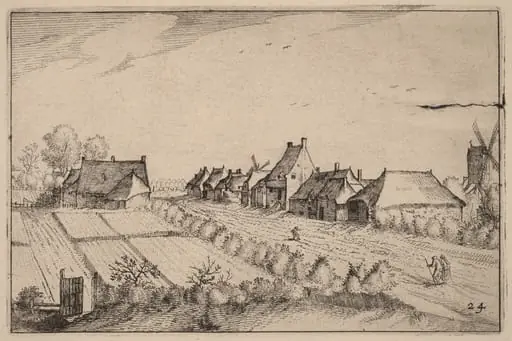
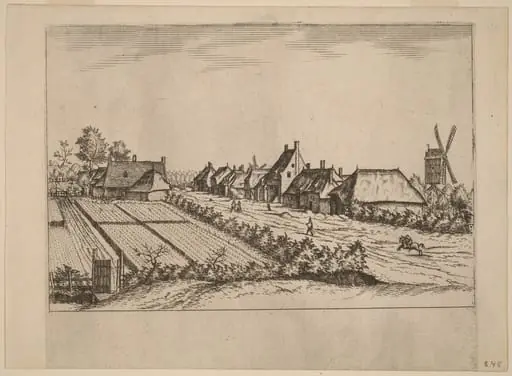
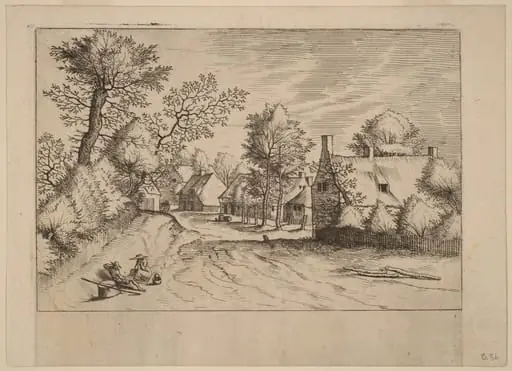
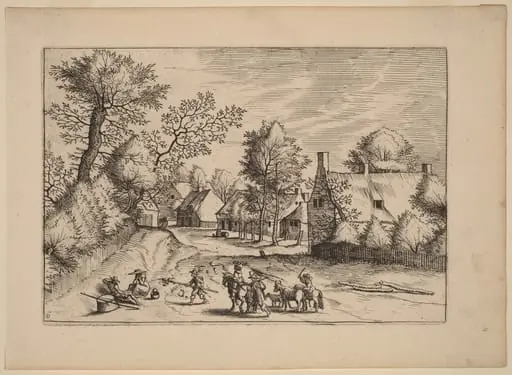
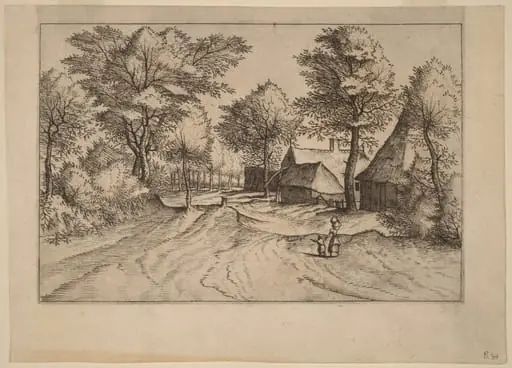
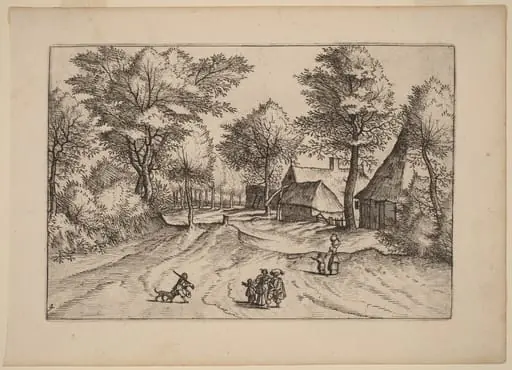
Fields and a Village Road with Post Mill is an ink print by the Baroque artist Lucas van Doetechum. It is held in the collection of the National Gallery of Art.
About this work
Overview
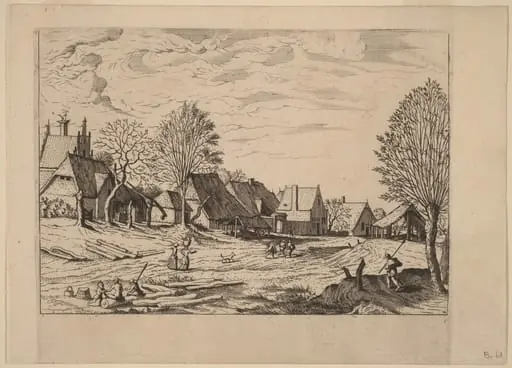
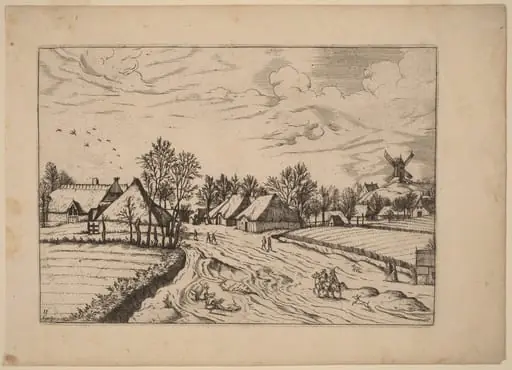
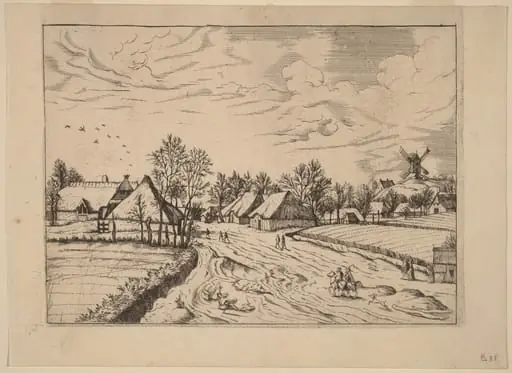
Lucas van Doetechum’s 1676 print, titled *Fields and a Village Road with Post Mill*, presents a quiet rural scene. A winding road leads the eye from the foreground’s cultivated fields and laboring figures toward a distant village, punctuated by a traditional post mill. Trees and modest dwellings line the way, while a softly clouded sky crowns the composition.
Subject & Meaning
The image captures everyday agrarian life, emphasizing the relationship between people, their work, and the landscape that sustains them. The presence of the post mill, a common feature of Dutch countryside, underscores the integration of technology and nature, while the calm atmosphere suggests a harmonious, stable community.
Technique & Style
Executed as an etching later enhanced with engraving, the work relies on fine, intersecting lines to render texture and form. Careful modulation of light and shadow creates a convincing sense of depth, and the meticulous detailing of foliage, architecture, and figures reflects the Baroque interest in realism and visual richness.
History & Provenance
Created in 1676, the print is attributed to Lucas van Doetechum, a Dutch artist active in the late 17th century. It survives in several museum collections, having been circulated through the print market of the period, which facilitated the spread of Dutch landscape imagery across Europe.
Context
The composition aligns with the Dutch Golden Age’s fascination with countryside vistas, a genre that celebrated national identity through depictions of fertile land and industrious inhabitants. Its Baroque sensibility—marked by dramatic chiaroscuro and intricate detail—places the work within broader European trends that favored naturalism and narrative depth.
Artist & collection