Artwork
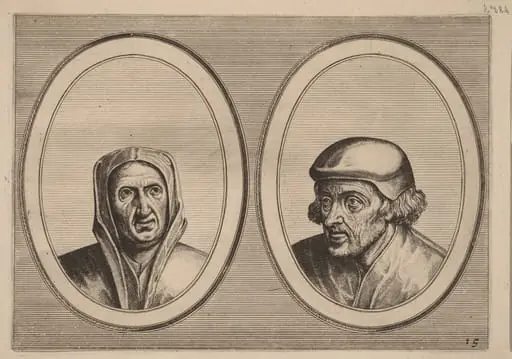
"Kees Geldt-sack" and "Kaarighe Truy"
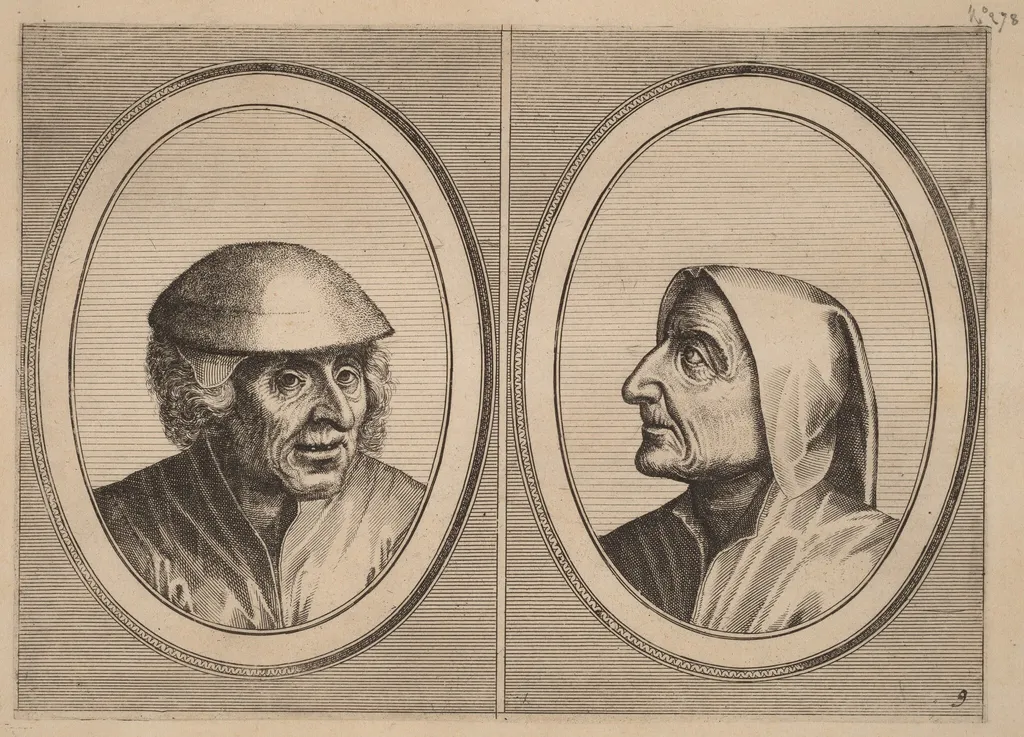
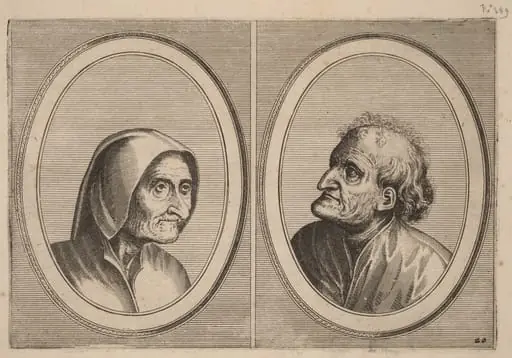
"Kees Geldt-sack" and "Kaarighe Truy" is an ink print by the Renaissance artist Lucas van Doetechum. It dates from 1564 and is held in the collection of the National Gallery of Art.
About this work
Overview
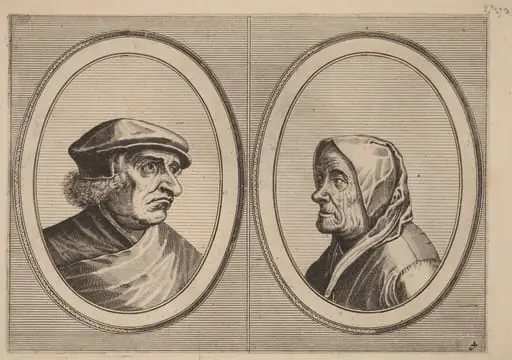
Lucas van Doetechum’s early‑mid‑16th‑century etching presents a pair of contemporaneous portrait heads. Executed around 1564, the work consists of two side‑by‑side images, each enclosed in an oval frame with a subtly textured border, rendered entirely in black and white.
Subject & Meaning
The left figure is depicted wearing a soft cap and a loose, turned‑down collar, while the right figure dons a high, stiff collar and a solemn expression. Both faces are marked by pronounced wrinkles, suggesting age and experience, and the intimate scale invites a direct, personal encounter with the sitters.
Technique & Style
Van Doetechum employed the etching process, incising fine lines into a metal plate to achieve delicate tonal variation. The precision of the line work captures minute facial details and the texture of the surrounding frames, creating a sense of immediacy akin to a drawn sketch rather than a formal painted likeness.
History & Provenance
The print originates from the mid‑16th century, a period when etching was gaining popularity among Northern European artists for its capacity to reproduce detailed portraiture. No specific patron or collection history is recorded, and the work remains attributed solely to van Doetechum based on stylistic analysis.
Context
Created during the Renaissance’s northern diffusion, the piece reflects the era’s growing interest in individual identity and realistic representation. Portraits such as these were often used to document notable figures or members of a guild, aligning with contemporary practices of personal commemoration.
Artist & collection


 "Joris Ysegrim" and "Quastighe Jopje"
 "Goelijeke Floor" and "Kinne Snavels"
 "Keesje Licht-hart" and "Verblinde Swaen"
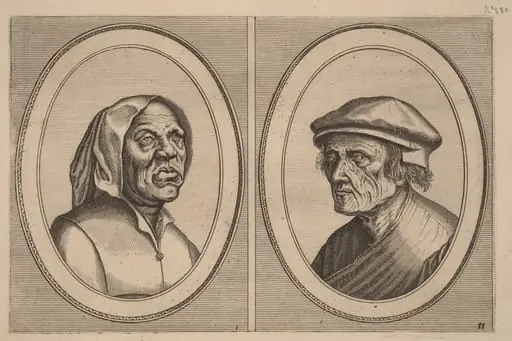 "Baef Schol-becx" and "Spruyt Vroegh-bedorven"
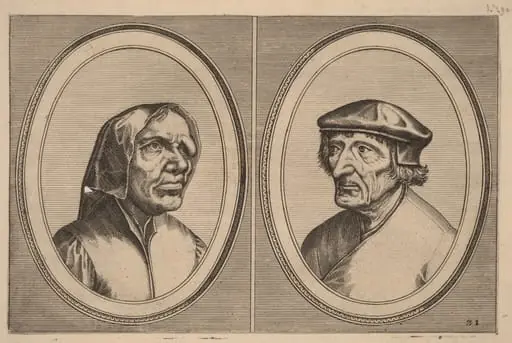 "Trijn Bulle-bacx" and "Voorsichtighe Oenne"
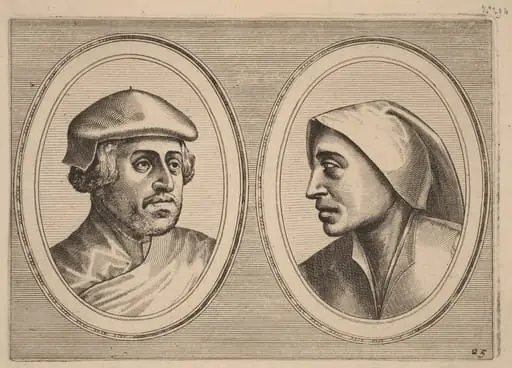 "Oprechte Lammert" and "Deughdighe Geertruyd"
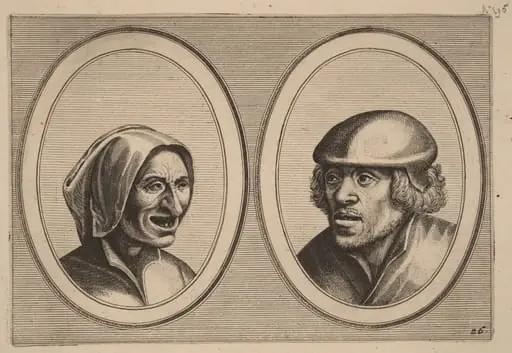 "Vrouw Verneem-al" and "Hans de Pluym-strijcker"
 "Ritze Stijn" and "Schurckje Sonder-Baerdt"