Artwork
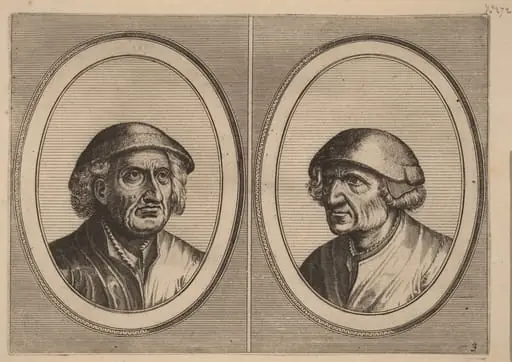
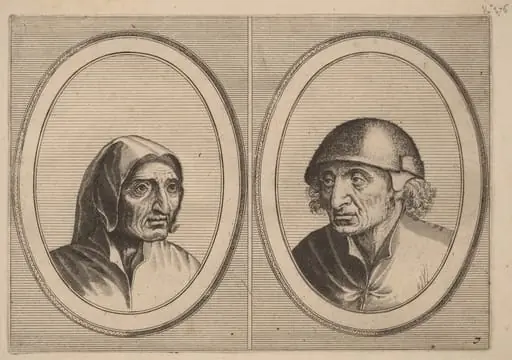
"Baef Schol-becx" and "Spruyt Vroegh-bedorven"
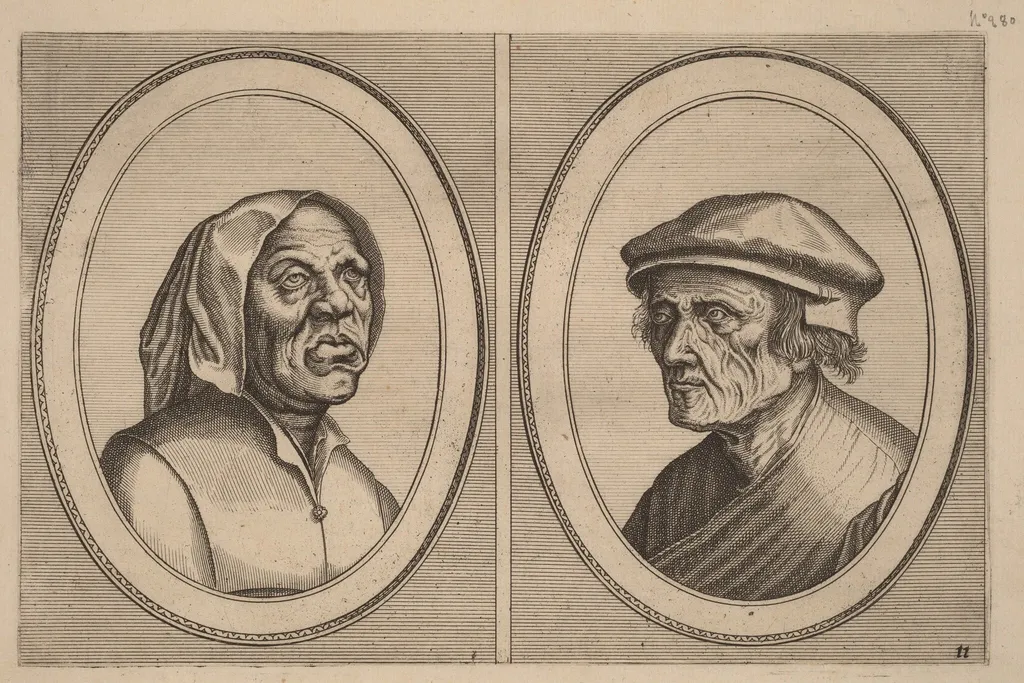
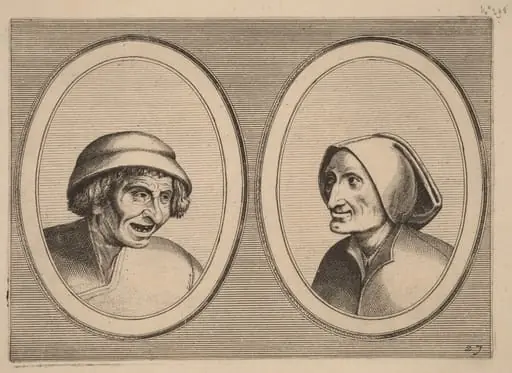
"Baef Schol-becx" and "Spruyt Vroegh-bedorven" is an ink print by the Renaissance artist Johannes van Doetechum the Elder. It dates from 1564 and is held in the collection of the National Gallery of Art.
About this work
Overview
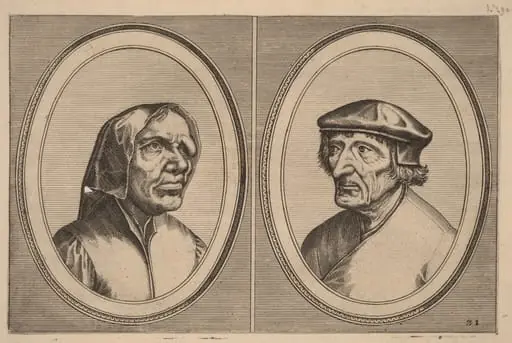
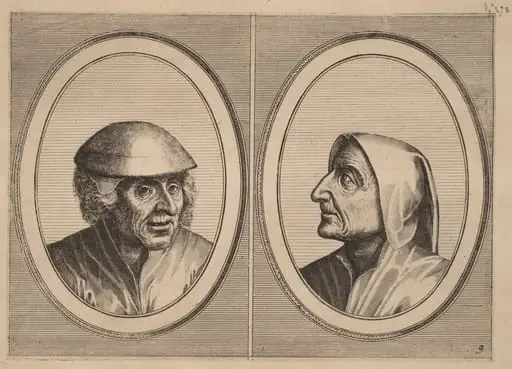
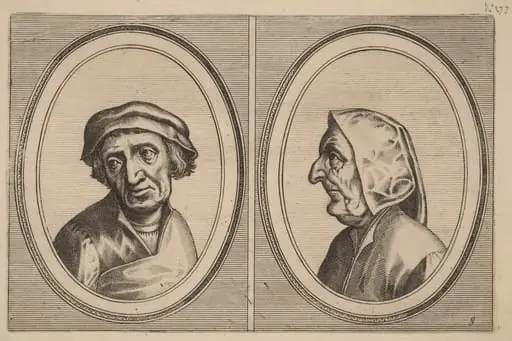
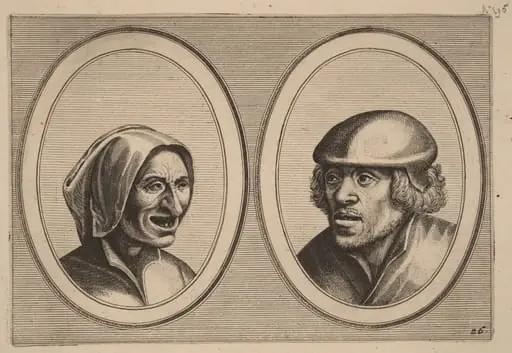
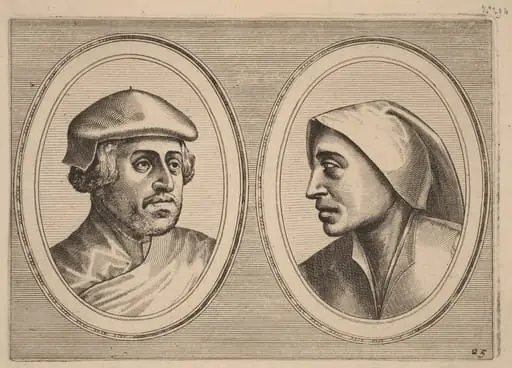
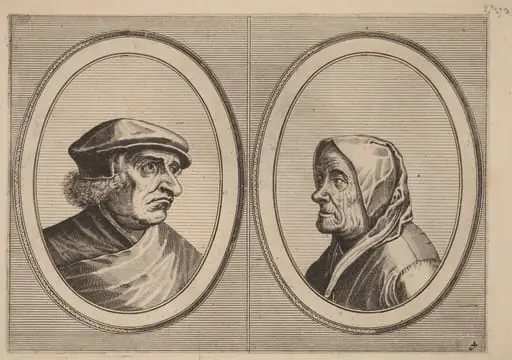
Around 1564, Dutch engraver and cartographer Johannes van Doetecum the Elder created a paired etching known as *Baef Schol-becx* and *Spruyt Vroegh-bedorven*. The work consists of two oval, black‑and‑white portrait prints placed side by side, each set within an ornate decorative frame.
Subject & Meaning
The left image portrays a woman dressed in a modest headscarf and a collared jacket, while the right image shows a man wearing a cap and a dark shirt. The intimate, genre‑type presentation reflects a 16th‑century interest in everyday rural figures and domestic life.
Technique & Style
Executed in fine etching, the prints display delicate line work, cross‑hatching and shading that convey depth and texture. The ornamental frames are rendered with intricate linear patterns, demonstrating the artist’s meticulous hand and the period’s taste for decorative borders.
History & Provenance
Johannes van Doetecum the Elder, born in Deventer and later active in Haarlem, was known for collaborating with his brother Lucas on series of prints and for interpreting designs by Pieter Bruegel the Elder. These two portraits belong to his broader output of cartographic and genre prints produced in the mid‑to‑late 16th century.
Context
The etchings emerge from a Dutch artistic climate that combined mapmaking with genre scenes, catering to a market interested in both geographic knowledge and depictions of rural life. Such works often served as decorative objects for private collections.
Artist & collection

Artist
Johannes van Doetechum the Elder
Joannes van Doetecum the Elder (1530 – 1605) was a Dutch engraver-cartographer known for his etched works after genre scenes by Pieter Bruegel the Elder and maps of various cities in the Netherlands.