Artwork
Village Street
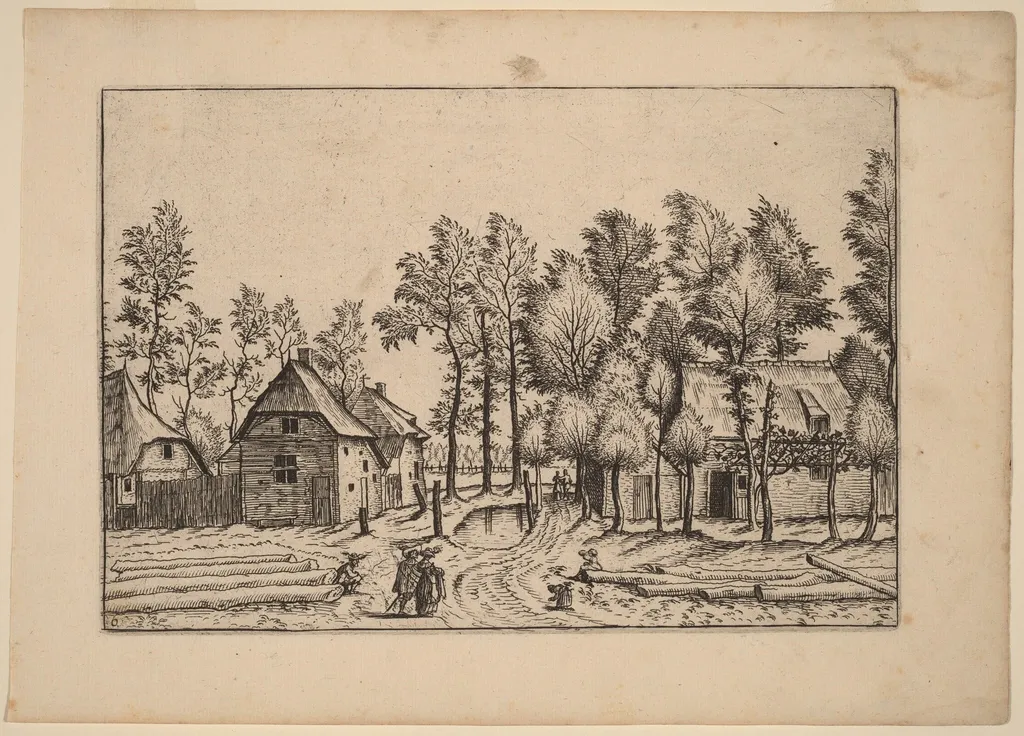
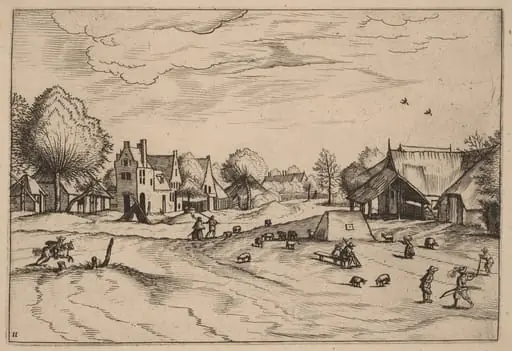
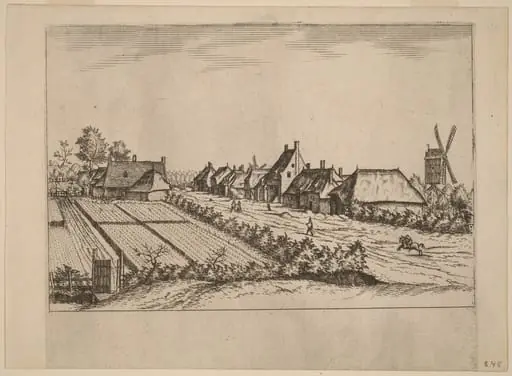
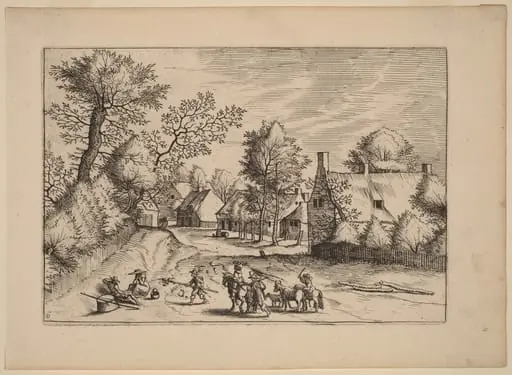
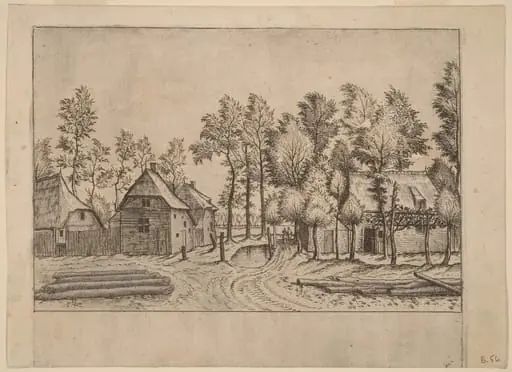
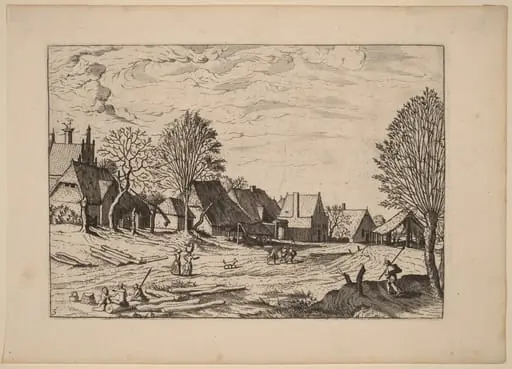
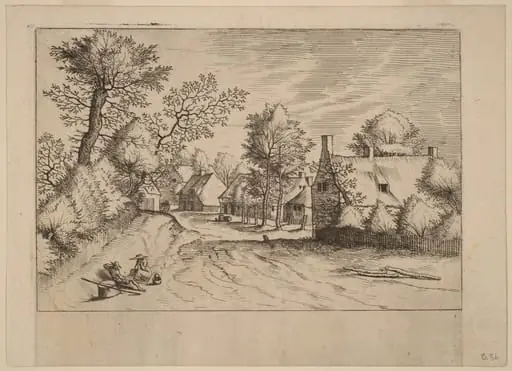
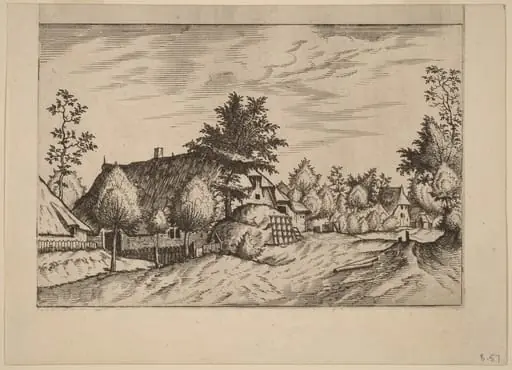
Village Street is an ink print by the Baroque artist Johannes van Doetechum the Elder. It is held in the collection of the National Gallery of Art.
About this work
Overview
His technique emphasized precision, using fine lines to render texture and atmosphere, characteristic of Dutch printmaking in the late 17th century.
Created in 1676 by Johannes van Doetecum the Elder, this print combines etching with selective engraving to depict a quiet rural thoroughfare. Van Doetecum, active in Haarlem after relocating from Deventer, specialized in reproductive prints and cartographic works. His technique emphasized precision, using fine lines to render texture and atmosphere, characteristic of Dutch printmaking in the late 17th century.
Subject & Meaning
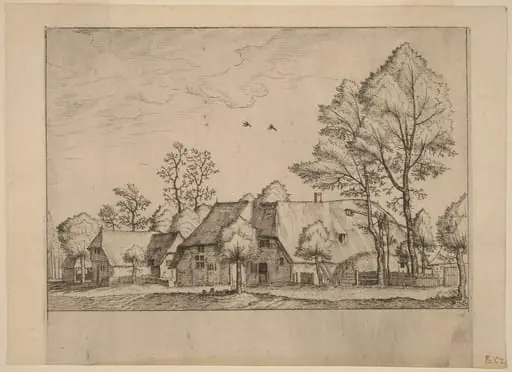
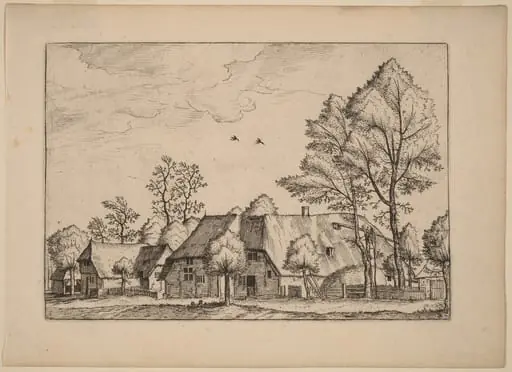
The scene portrays an uneventful village lane, with modest wooden dwellings, thatched roofs, and sparse vegetation. Figures move slowly along the path, engaged in ordinary tasks, suggesting a rhythm of daily life rather than narrative drama. The absence of grandeur or symbolism points to an interest in quiet observation, reflecting a broader Dutch cultural preference for intimate, unidealized rural settings.
Technique & Style
Van Doetecum employed etching to lay down the initial composition, then refined details with engraving for sharper definition. Fine, controlled lines capture the texture of bark, fabric, and thatch, while subtle variations in line weight suggest light and depth. The method allowed for both broad tonal areas and intricate detail, typical of printmakers who valued craftsmanship over expressive brushwork.
History & Provenance
Johannes van Doetecum the Elder moved to Haarlem in 1578, where he worked alongside his brother Lucas on series of prints after Bruegel and Dutch landscapes. While *Village Street* is not part of a known series, its style aligns with their collaborative output. The print likely circulated among collectors interested in topographical and genre imagery, though its early ownership remains undocumented.
Context
In late 17th-century Holland, prints of rural life were widely produced for domestic markets, catering to a growing middle class with interest in local scenes. Unlike grand historical or religious subjects, these images celebrated the ordinary. Van Doetecum’s work fits within this trend, drawing from earlier Netherlandish traditions while adapting to contemporary tastes for detailed, tranquil imagery.
Legacy
Van Doetecum’s prints, including *Village Street*, contributed to the dissemination of Dutch visual culture through reproductive techniques. Though less celebrated than his contemporaries, his meticulous approach influenced later printmakers focused on topographical accuracy and quiet realism. His work remains a reference for understanding the technical and aesthetic priorities of Dutch printmaking in the post-Bruegel era.
Artist & collection

Artist
Johannes van Doetechum the Elder
Joannes van Doetecum the Elder (1530 – 1605) was a Dutch engraver-cartographer known for his etched works after genre scenes by Pieter Bruegel the Elder and maps of various cities in the Netherlands.