Artwork
View in the West Nave
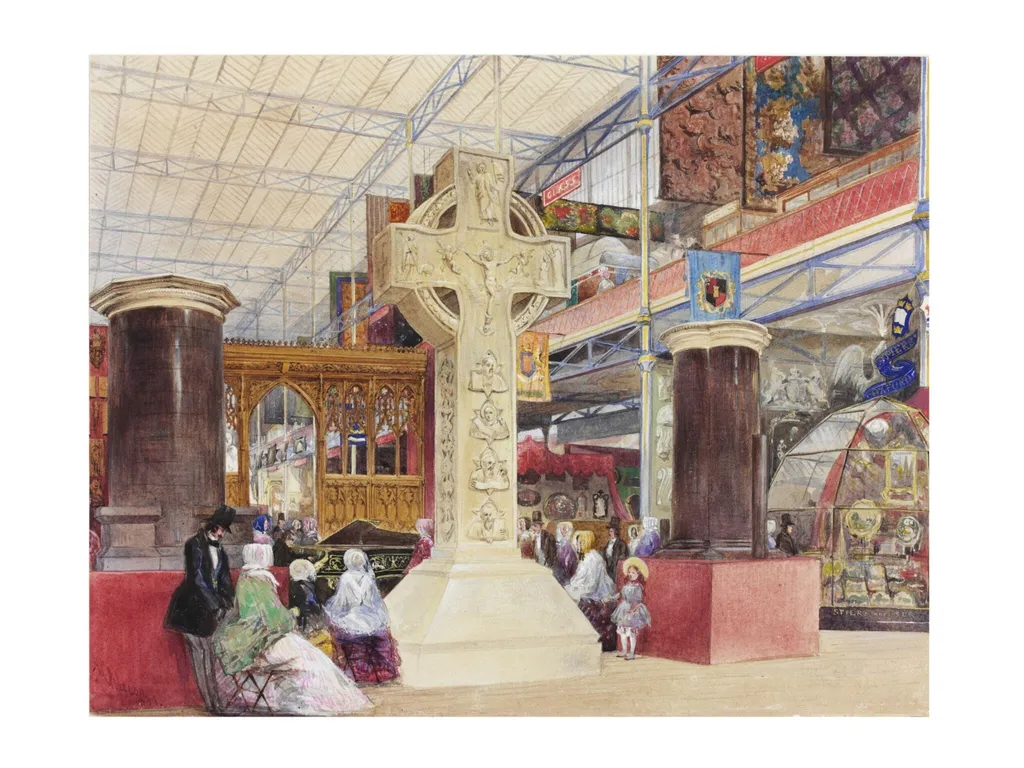
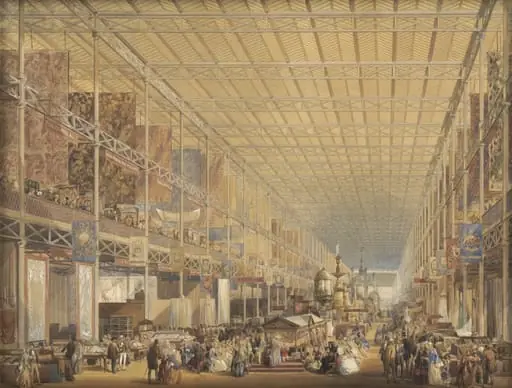
View in the West Nave is a watercolor work on paper by the Impressionist artist Henry Clarke Pidgeon. It dates from 1851 and is held in the collection of the Victoria and Albert Museum.
About this work
You see a long, bright hallway made of glass and iron, filled with people and displays from the 1851 Great Exhibition.
You see a long, bright hallway made of glass and iron, filled with people and displays from the 1851 Great Exhibition.
This painting shows the Crystal Palace before it burned down. The building was a marvel—like a giant greenhouse for art and machines. Pidgeon painted it as a souvenir for visitors who wanted to remember the event.
If you like this, look up the Victoria and Albert Museum to see more watercolors from the same exhibition.
Overview
This watercolour depicts a scene from the 1851 Great Exhibition, held in the innovative Crystal Palace at Hyde Park, London. The work is part of a series reproduced as colour lithographs in a contemporary souvenir guide, Recollections of the Great Exhibition.
Subject & Meaning
The painting focuses on the West Nave, showcasing a cross by Harriet M. Ross, featuring New Testament scenes, and a polygonal glazed display case by Spiers & Son of Oxford, containing papier mâché items. The scene captures the exhibition's blend of art, religion, and industrial innovation.
Technique & Style
Executed in watercolour, the piece reflects the medium's transparency and lightness, suited to capturing the airy, glass-and-iron interior of the Crystal Palace. The style is representative of mid-19th-century souvenir art, prioritizing detail and documentary value.
History & Provenance
Originally part of a souvenir publication, the watercolour's provenance links to the broader legacy of the Great Exhibition, whose profits funded institutions like the Victoria and Albert Museum, established in the late 1850s.
Context
The Great Exhibition of 1851 was a landmark event in London, attracting over six million visitors and showcasing international manufactured goods. The Crystal Palace, though later destroyed by fire, symbolized Victorian engineering and cultural ambition.
Artist & collection

Artist
Henry Clark Pidgeon (1807–1880) was an English painter in water-colours and antiquary.

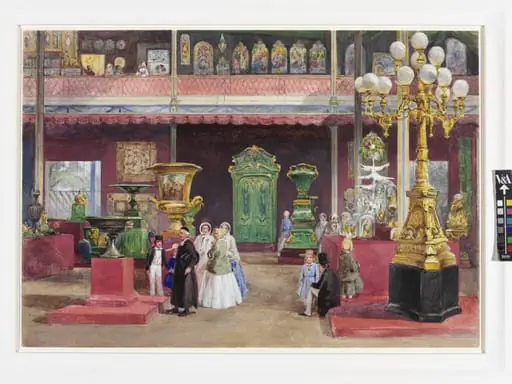
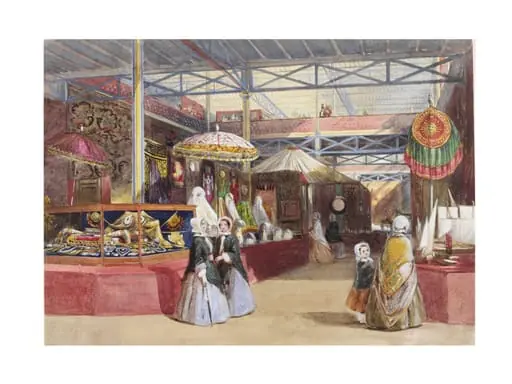
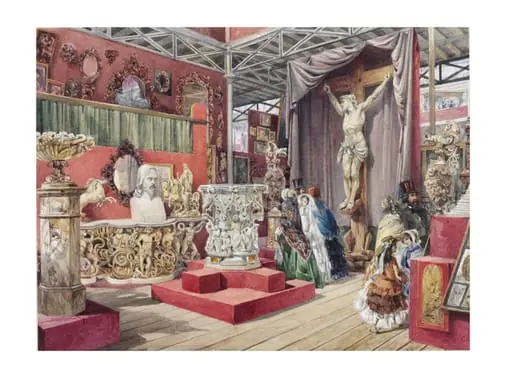 Part of the Fine Arts Court
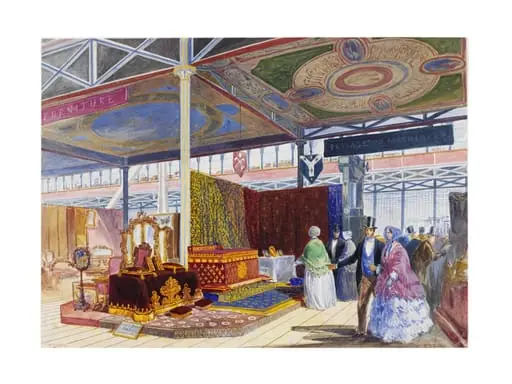 Church Furniture
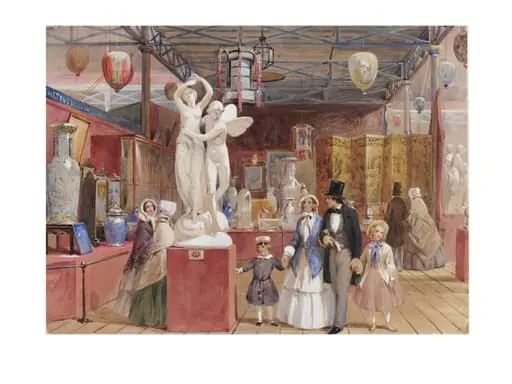 Part of the Chine Court
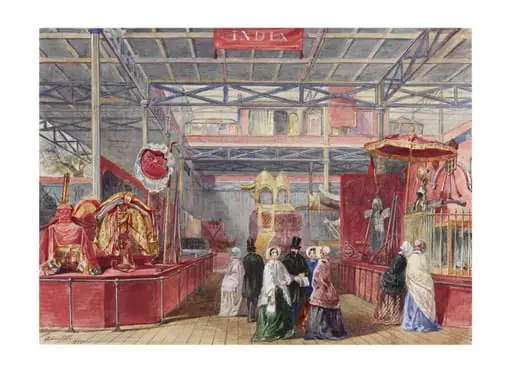 The Indian Court and Elephant Trappings
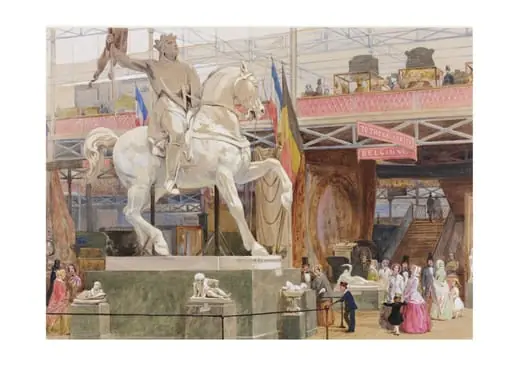 View in the East Nave (Godfrey of Bouillon, by Simonis)
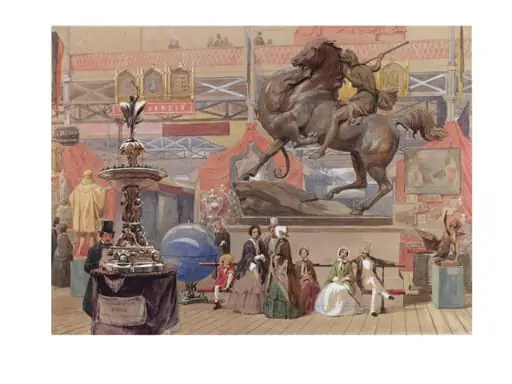 View in the East Nave (The Amazon, by Kiss)
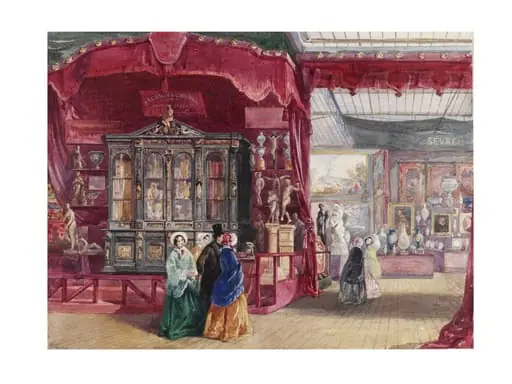 Part of the French Court, no. 1 (Sevres)
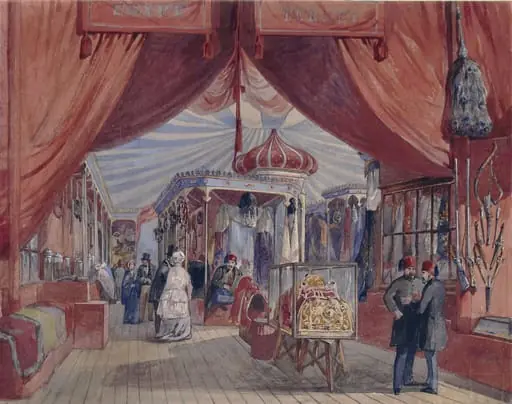 The Turkish Court
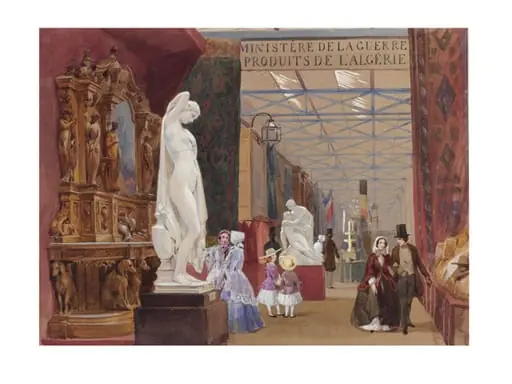 Part of the French Court, No. 2
 Interior of the Great Exhibition