Artwork
Part of the Chine Court
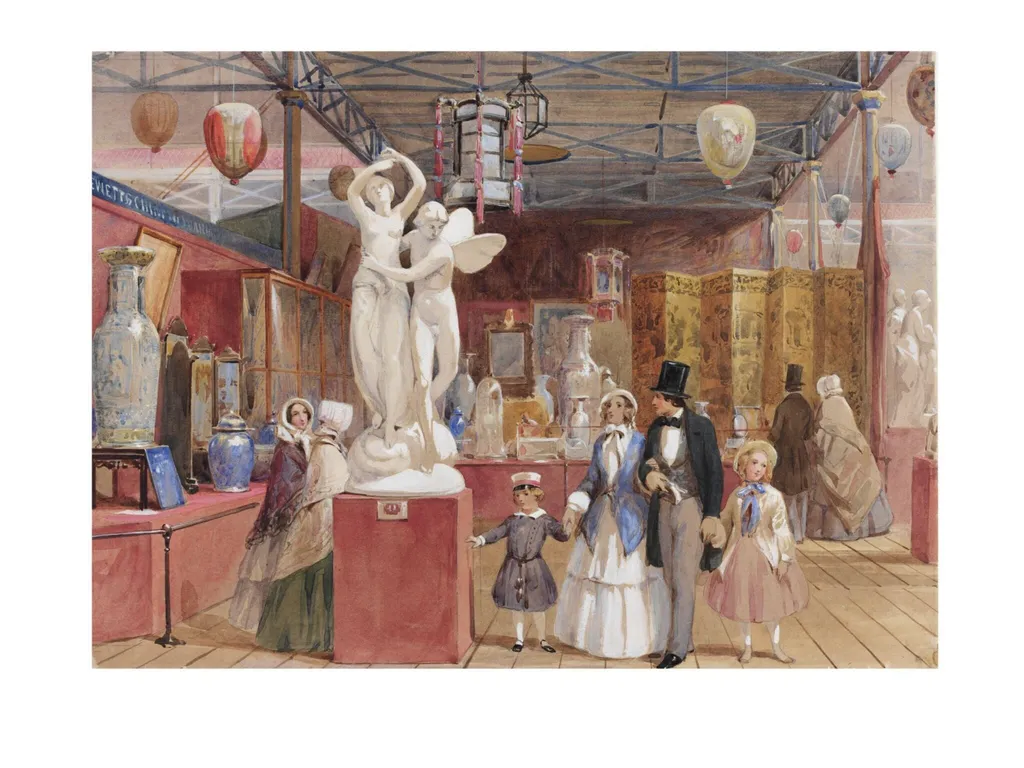
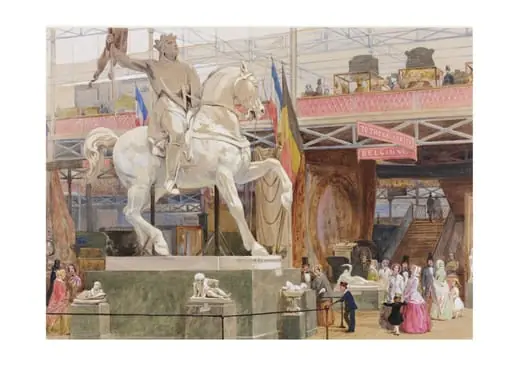
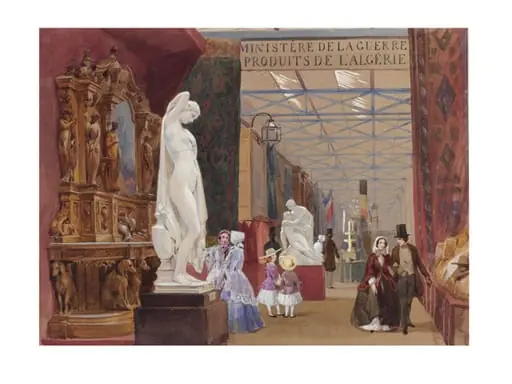
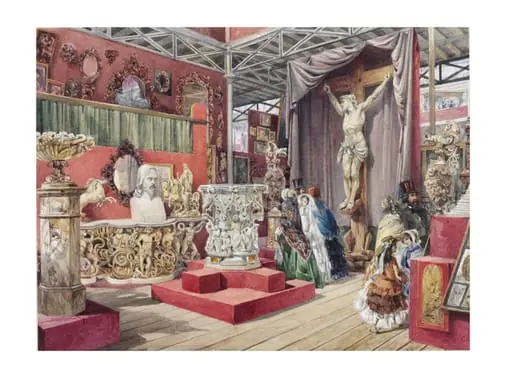
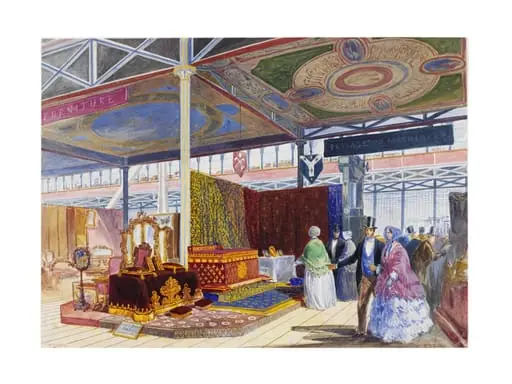
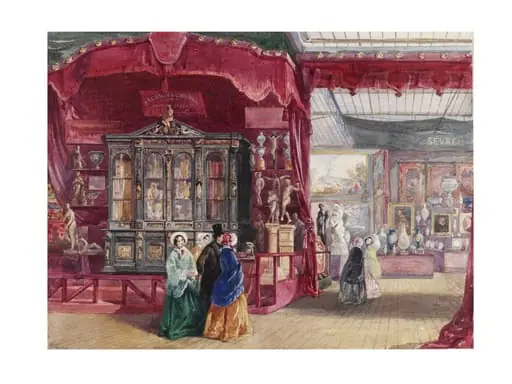
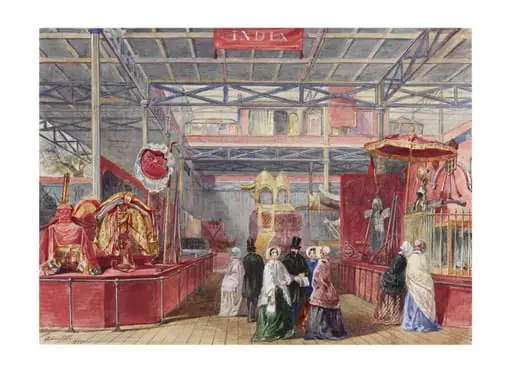
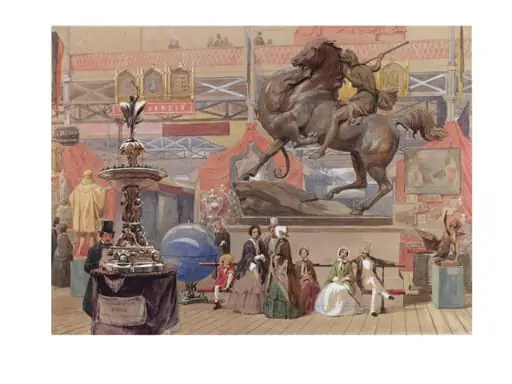
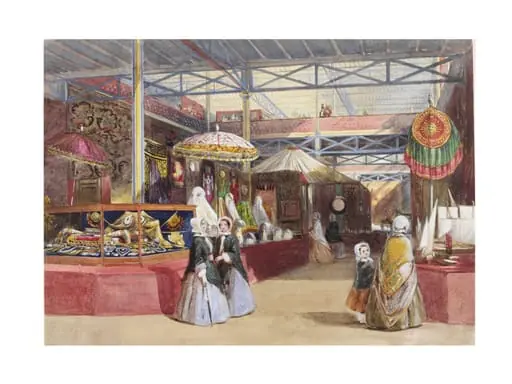
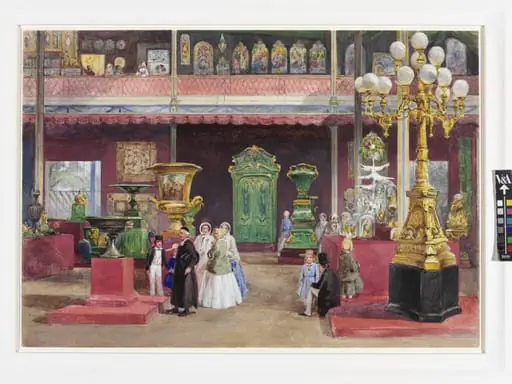
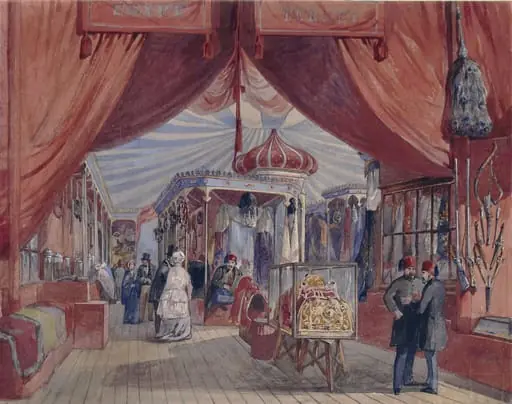
Part of the Chine Court is a watercolor work on paper by the British Romanticist artist John Absolon. It dates from 1851 and is held in the collection of the Victoria and Albert Museum. This watercolour captures a section of the China Court within the Crystal Palace during the Great Exhibition of 1851.
About this work
This watercolor shows part of the China Court from the Great Exhibition of 1851. It’s a view inside the famous Crystal Palace, that huge glass-and-iron building in Hyde Park.
The show drew millions of visitors—about a third of Britain’s whole population. This painting was later turned into a colored print for a fancy souvenir book.
See more of Absolon’s work at the Victoria and Albert Museum.
Overview
Created as part of a series later reproduced as colour lithographs, it served as a visual record for a commercial souvenir publication.
This watercolour captures a section of the China Court within the Crystal Palace during the Great Exhibition of 1851. Created as part of a series later reproduced as colour lithographs, it served as a visual record for a commercial souvenir publication. The work reflects the exhibition’s role in showcasing global industry and culture, even when participation was indirect or curated by commercial interests rather than national representation.
Subject & Meaning
The China Court displayed ceramics and decorative objects imported by British traders, as China did not formally contribute exhibits. The arrangement, dominated by goods from Hewett & Co., presented a curated vision of Chinese material culture filtered through commercial channels. The scene thus reveals more about Victorian consumer tastes and colonial trade networks than about China’s own cultural representation at the event.
Technique & Style
Executed in watercolour, the work employs delicate washes and precise linear detail to render the architectural grandeur of the Crystal Palace and the arranged porcelain displays. The transparency of the medium complements the glass structure’s luminosity, while the composition guides the viewer’s eye through rows of objects under natural light, emphasizing order and abundance rather than artistic innovation.
History & Provenance
The watercolour was produced for inclusion in Recollections of the Great Exhibition, a lavishly illustrated guide published shortly after the event. Its reproduction as a colour lithograph ensured wide circulation among the exhibition’s six million visitors. The piece later entered the collection of the Victoria and Albert Museum, which was founded using profits from the exhibition and holds the earliest surviving building erected from those funds in 1857.
Context
The Great Exhibition was a landmark event in global commerce and imperial display, held in a revolutionary iron-and-glass structure designed to symbolize progress. While nations were invited to exhibit, China’s absence highlighted the asymmetry of international participation. The China Court, assembled from imported stock, became a proxy for national representation, reflecting Britain’s role as both collector and interpreter of global goods.
Legacy
The exhibition’s financial surplus directly supported the establishment of cultural institutions in South Kensington, including the Victoria and Albert Museum. This watercolour, once a commercial souvenir, now functions as a historical document, illustrating how public exhibitions shaped Victorian perceptions of global culture and how commercial interests filled gaps left by absent nations.
Artist & collection
Artist
John Absolon was a British watercolourist, specialising in figure painting. He studied in London and then Paris.