Artwork
Man of Sorrows with the Virgin Mary, Saint John and a Donor
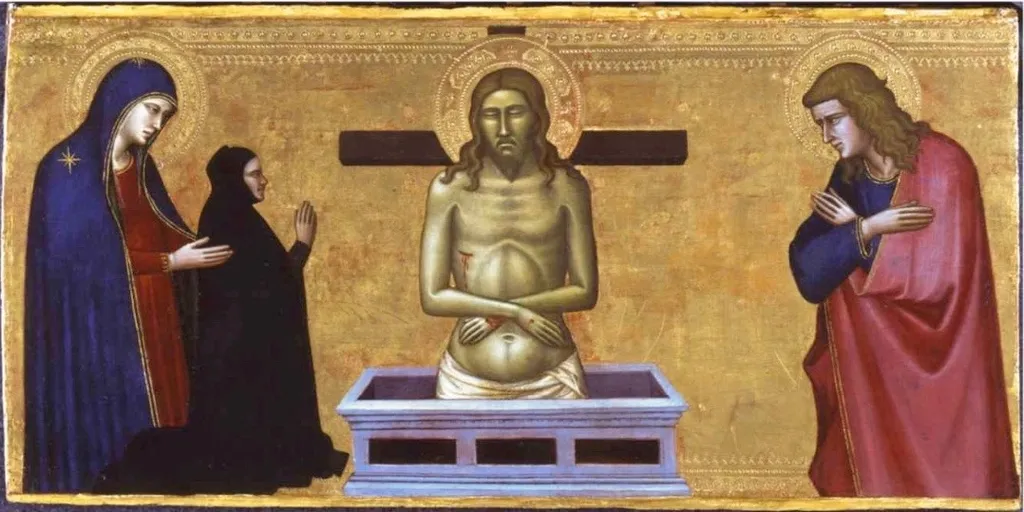
Man of Sorrows with the Virgin Mary, Saint John and a Donor is a tempera painting by the Byzantine icon painting artist Don Silvestro dei Gherarducci. It dates from 1365 and is held in the collection of the Denver Art Museum.
About this work
Overview
As both a painter and a prior of Santa Maria degli Angeli, Silvestro blended devotional intensity with the formal traditions of late medieval Italian art.
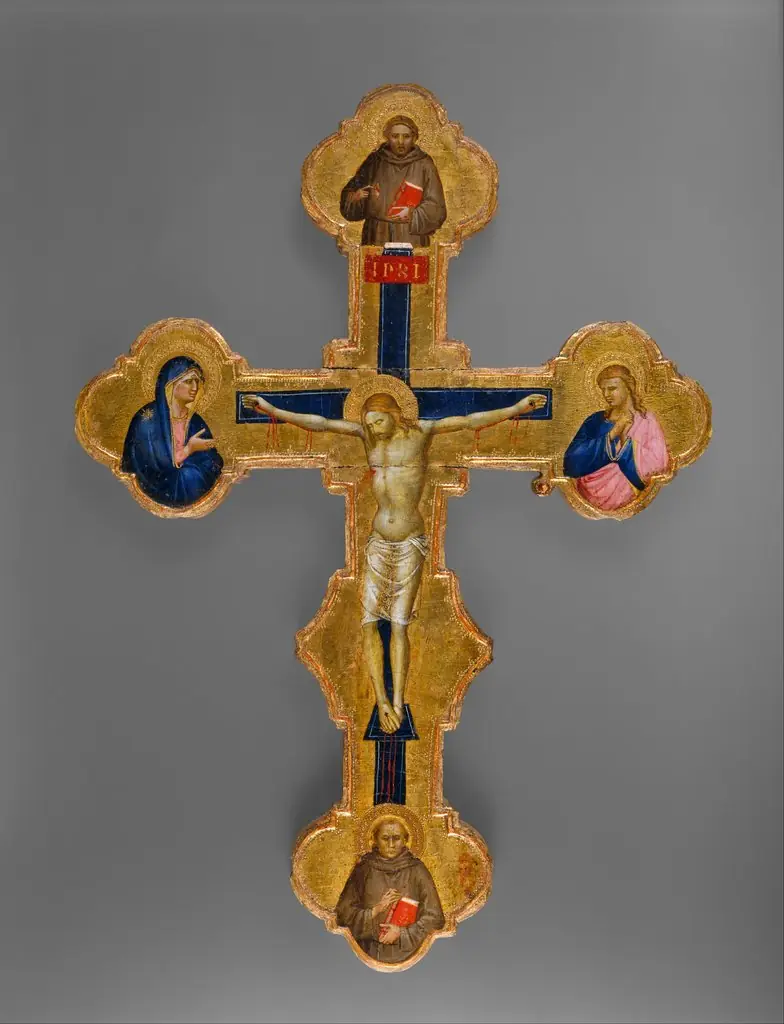
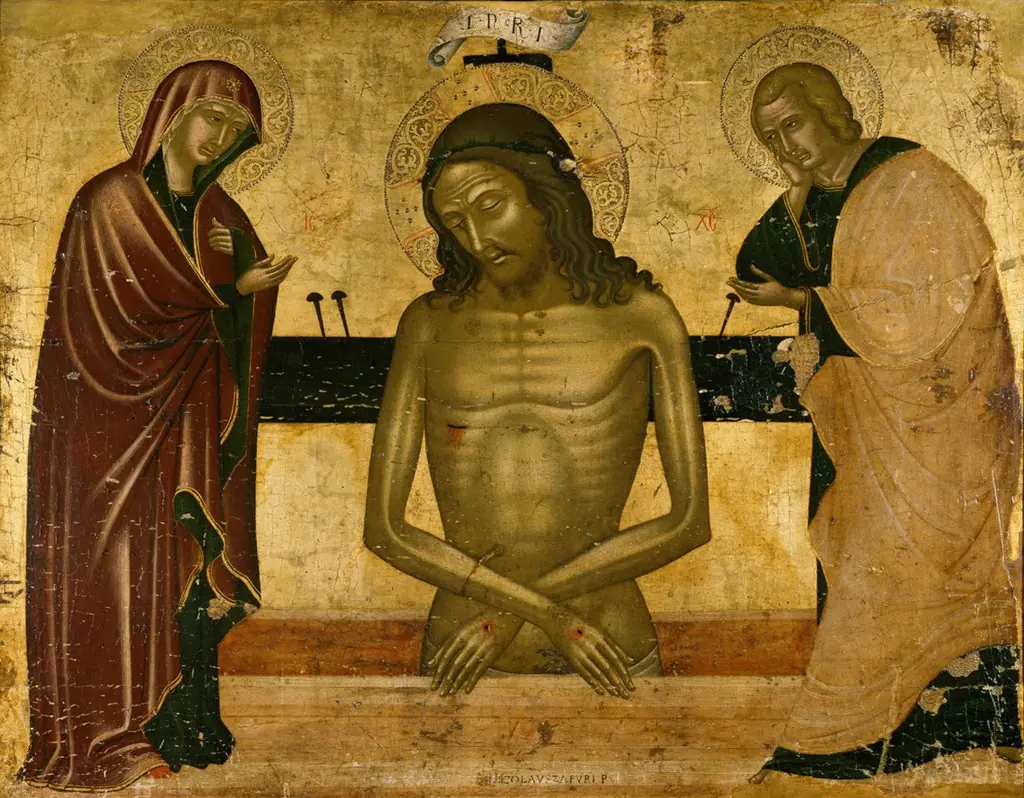
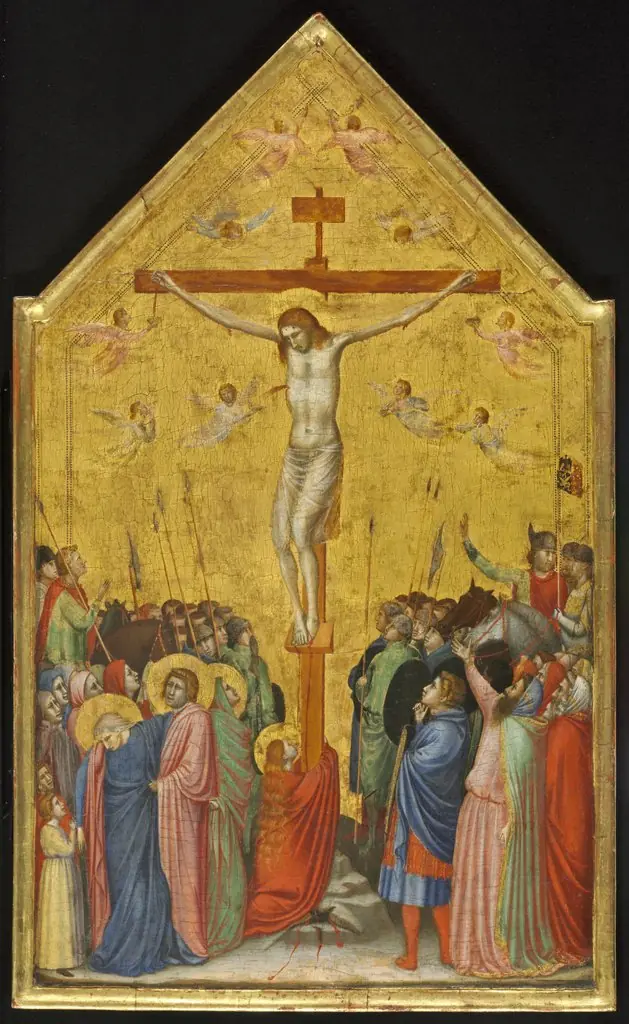
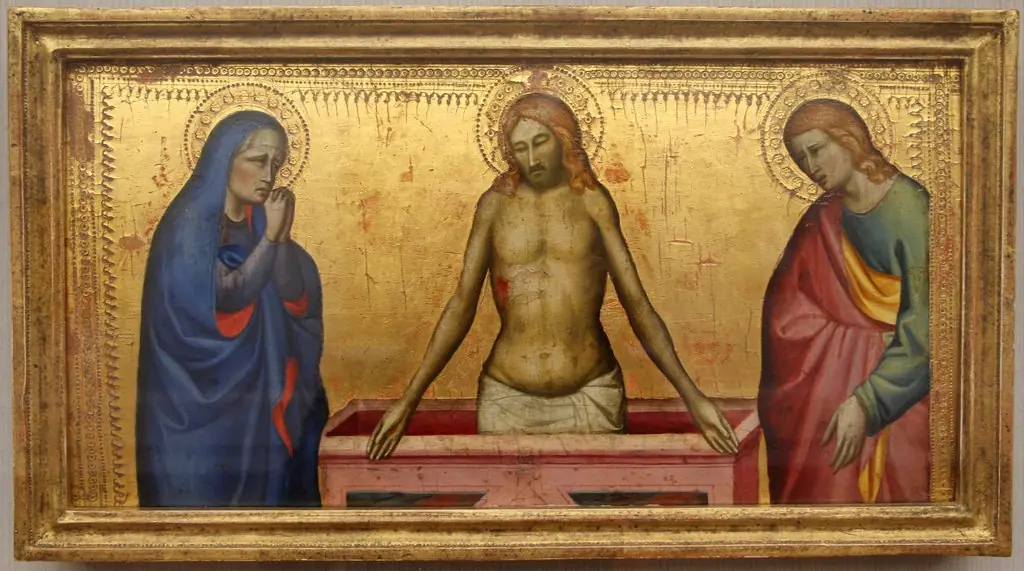
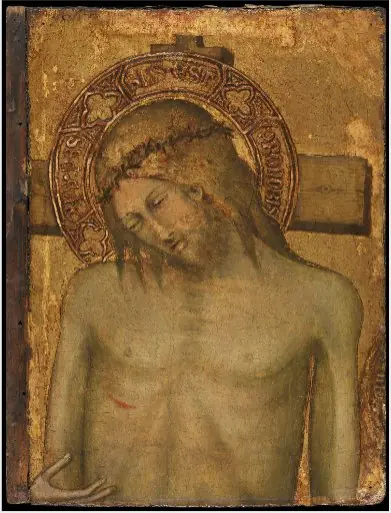
Painted in 1365 by Don Silvestro dei Gherarducci, this tempera work originates from a Florentine monastic context. As both a painter and a prior of Santa Maria degli Angeli, Silvestro blended devotional intensity with the formal traditions of late medieval Italian art. The composition centers on a crucified Christ, surrounded by the Virgin Mary, Saint John, and a kneeling donor, reflecting a common devotional format of the period.
Subject & Meaning
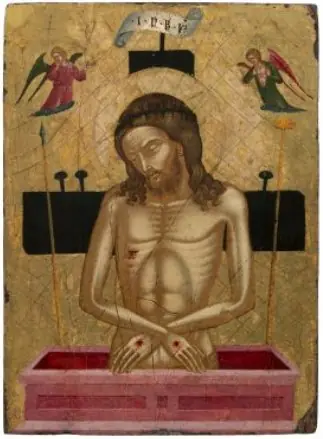
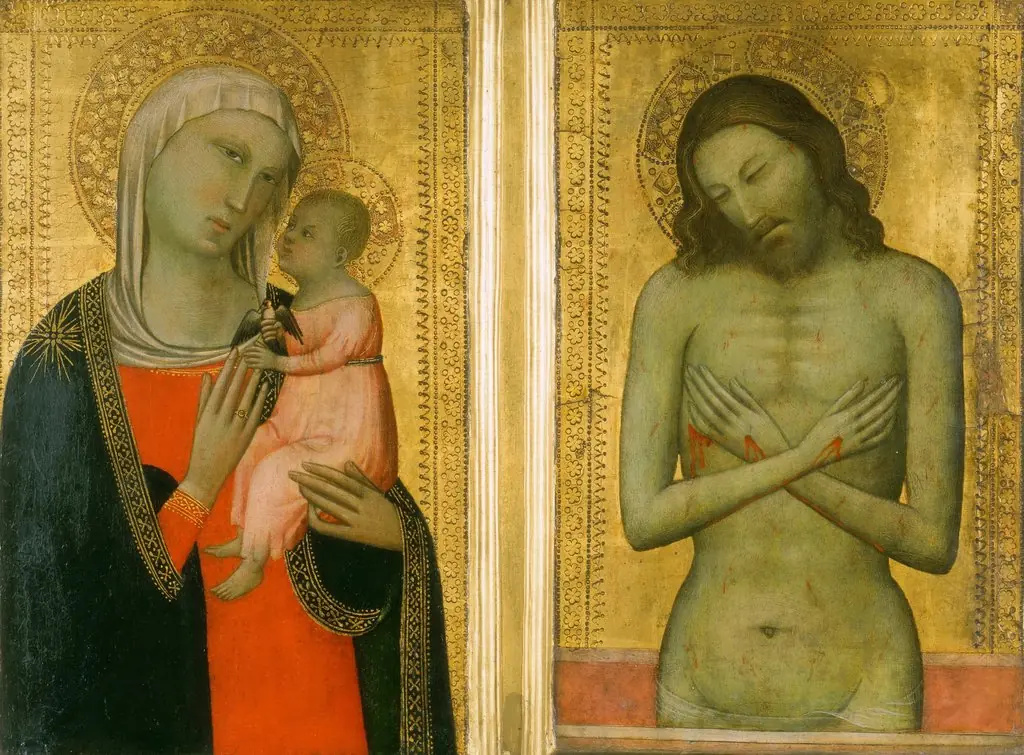
The central figure, Christ as the Man of Sorrows, is depicted post-crucifixion, nude except for a loincloth, his hands crossed over his chest in a gesture of suffering and resignation. The Virgin and Saint John, both haloed, stand in silent mourning, embodying grief and witness. The donor, shown in prayer behind the Virgin, seeks spiritual intercession, reinforcing the painting’s function as a personal devotional object meant to inspire contemplation and penitence.
Technique & Style
Executed in tempera on panel, the painting employs the refined, linear precision typical of 14th-century Italian illumination. Gold leaf outlines and a luminous golden background elevate the sacred figures, while the flat, hierarchical space follows Byzantine conventions. Figures are rendered with elongated proportions and restrained gestures, emphasizing spiritual presence over naturalism. The intricate decorative border along the top suggests manuscript illumination influences.
History & Provenance
Created for private devotion within the Augustinian community of Santa Maria degli Angeli in Florence, the painting likely served as a focus for monastic prayer. It remained in religious hands until entering the Denver Art Museum’s collection, where it is now preserved as an example of Tuscan devotional art from the mid-14th century. Its survival reflects its enduring spiritual and artistic significance.
Context
In mid-14th-century Tuscany, images of the Man of Sorrows gained popularity amid widespread plague and religious introspection. Such works emphasized Christ’s humanity and suffering, inviting viewers to empathize and seek redemption. Silvestro’s training as an illuminator informed his attention to detail and symbolic clarity, bridging the traditions of manuscript art and panel painting in a time of evolving devotional practices.
Legacy
Though not widely known outside scholarly circles, the painting exemplifies the quiet intensity of Florentine monastic art before the full emergence of the Renaissance. Its preservation offers insight into how religious communities used visual imagery to sustain faith during periods of crisis. Silvestro’s synthesis of Byzantine form and Italian devotional sensitivity remains a subtle but important thread in the history of medieval sacred art.
Artist & collection
Artist
Silvestro dei Gherarducci (c. 1339 – c. 1399) was an Italian painter and illuminator in Florence. He became a monk and later a prior of the monastery of Santa Maria degli Angeli where he first started work on illustrations for manuscripts.