Artwork
H Beard Print Collection
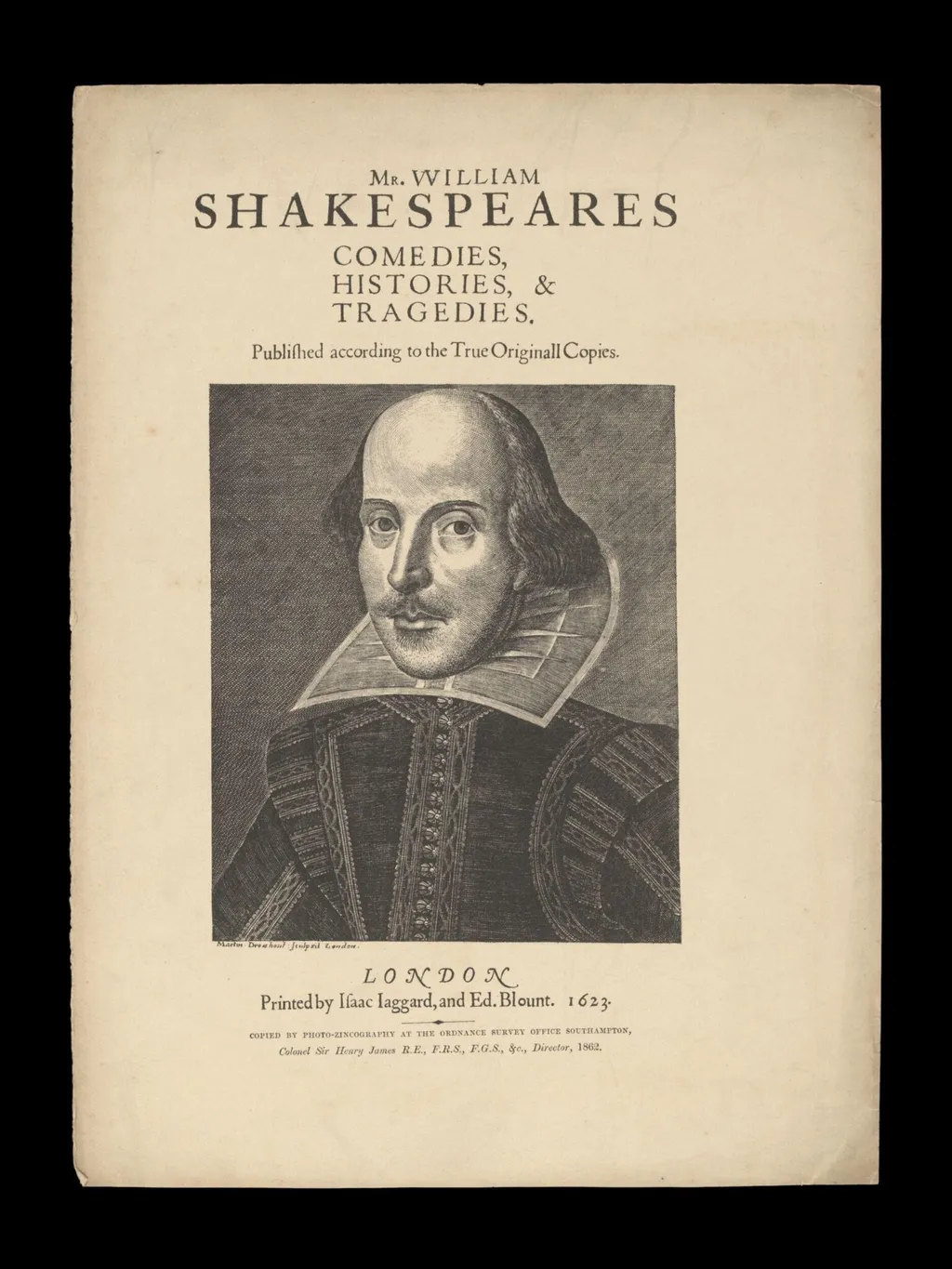
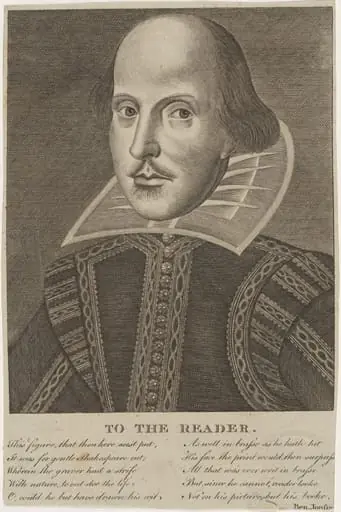
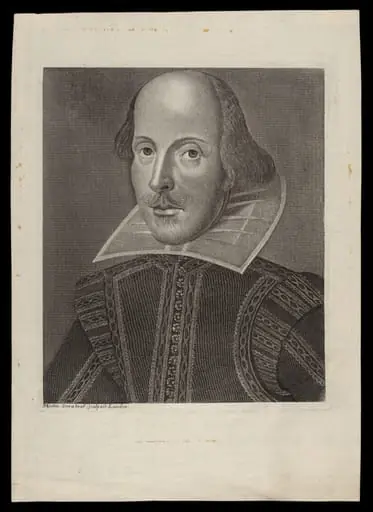
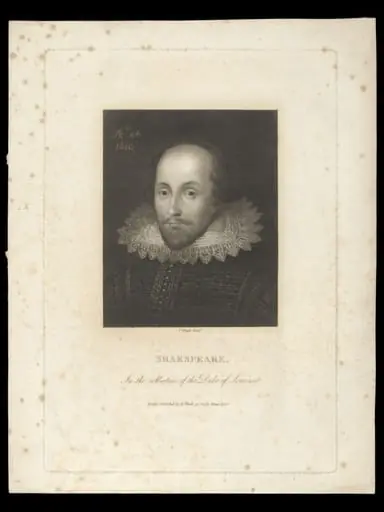
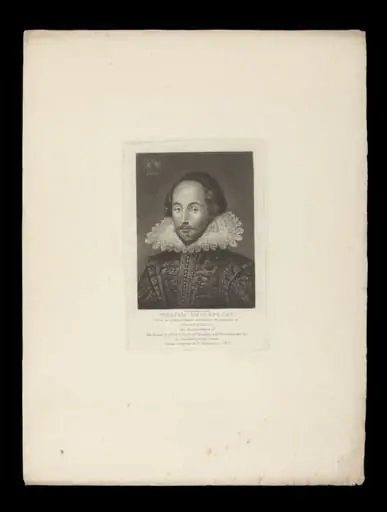
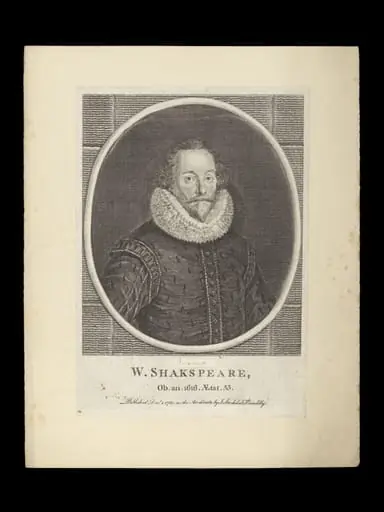
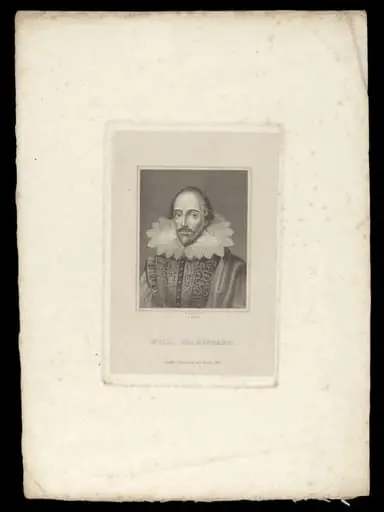
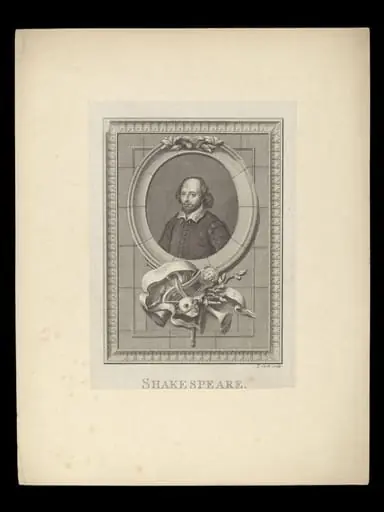
H Beard Print Collection is a print by the Impressionist artist Martin Droeshout. It dates from 1862 and is held in the collection of the Victoria and Albert Museum. This print reproduces a 1623 portrait of William Shakespeare that originally appeared in the First Folio.
About this work
This print shows Shakespeare’s face in half-tone, like a grainy old photo. His ruffled collar is clear but the rest is soft. The artist copied a 1623 engraving exactly.
Shakespeare looks tired but proud. The copy was made in 1862 using a new photo-zinc process. It turned the fine lines of the original into dots.
See the original at the Victoria and Albert Museum.
Overview
This print reproduces a 1623 portrait of William Shakespeare that originally appeared in the First Folio. The image presents the playwright’s face in a grainy half‑tone, with a sharply rendered ruffled collar and softer surrounding features, conveying a weary yet dignified expression.
Subject & Meaning
The portrait depicts Shakespeare, the eminent English dramatist, as a figure of literary authority. By presenting him in a solemn, slightly aged manner, the image reinforces his enduring cultural stature and the gravitas of his comedies, histories, and tragedies.
Technique & Style
The original engraving, executed by Isaac Iaggard and Edward Blount, employed fine line work typical of early‑17th‑century printmaking. In 1862 the image was re‑created using photo‑zincography at the Ordnance Survey Office in Southampton, a process that translated the engraved lines into a pattern of dots, yielding a halftone effect reminiscent of early photography.
History & Provenance
First issued in London in 1623 as part of the First Folio, the portrait was later copied in 1862 using the then‑novel photo‑zincographic technique. The reproduction was produced by the Ordnance Survey Office, reflecting mid‑19th‑century interest in preserving historical prints through emerging photographic methods.
Context
The 1623 engraving served as one of the few contemporary visual references to Shakespeare’s appearance. Its 1862 reproduction illustrates Victorian efforts to document and disseminate cultural heritage, employing scientific advances to make historic images more widely accessible.
Legacy
The print remains part of the Victoria and Albert Museum’s collection, where it continues to inform scholars and the public about early modern portraiture and the evolution of print reproduction technologies.
Artist & collection