Artwork
Dr. John Donne, Dean of Saint Paul's, Poet
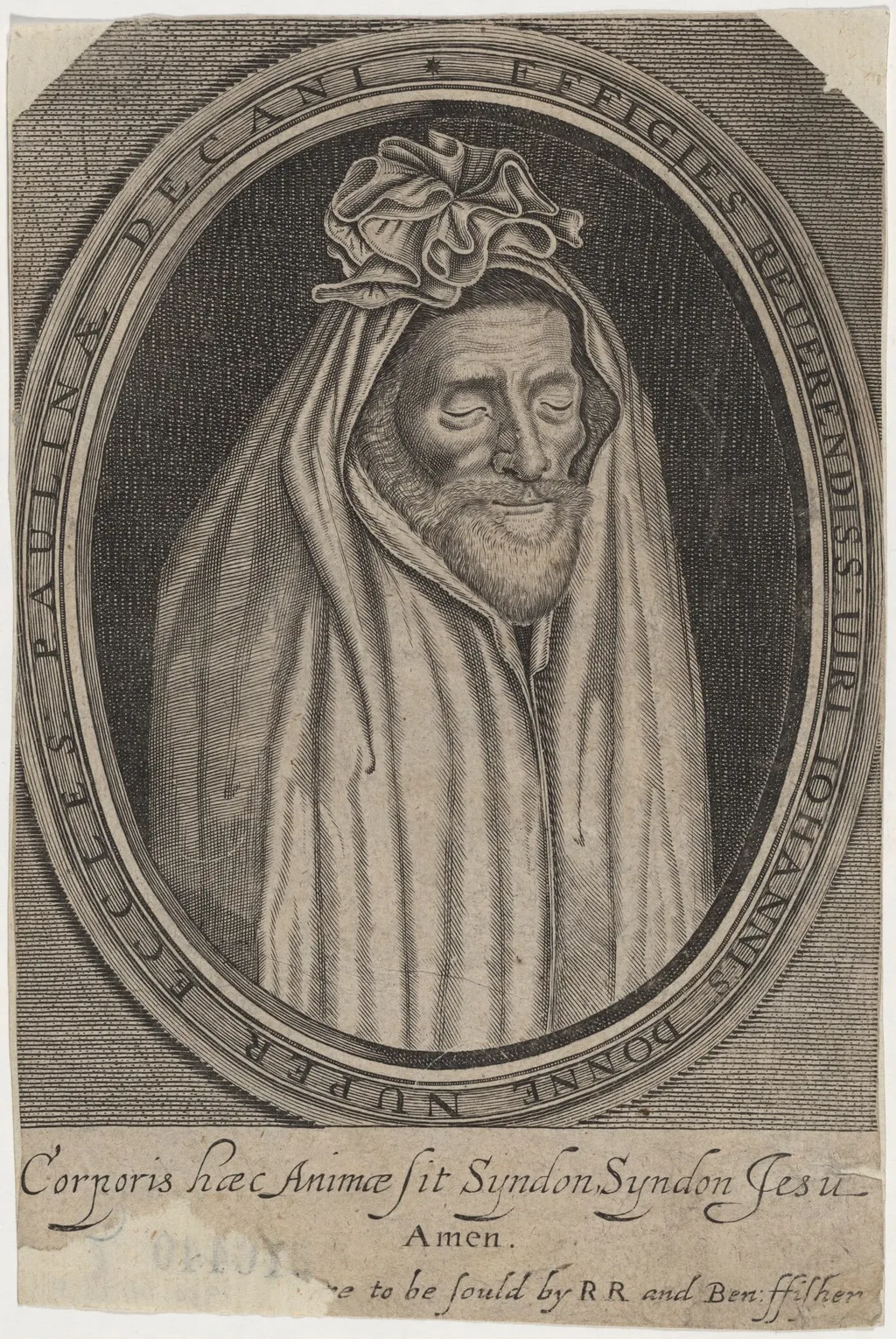
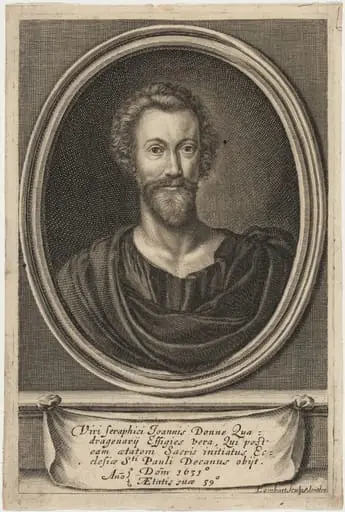
Dr. John Donne, Dean of Saint Paul's, Poet is an ink print by the Baroque artist Martin Droeshout. It dates from 1633 and is held in the collection of the National Gallery of Art.
About this work
Overview
The work was produced as a printed image, likely for distribution among Donne’s contemporaries or as a posthumous tribute.
This 1633 engraving by Martin Droeshout depicts John Donne, then Dean of St. Paul’s Cathedral, as a contemplative religious figure. Rendered in monochrome, the portrait emphasizes stillness and introspection. The composition is tightly framed, focusing on the subject’s face and upper torso, with minimal background detail. The work was produced as a printed image, likely for distribution among Donne’s contemporaries or as a posthumous tribute.
Subject & Meaning
John Donne is portrayed with closed eyes and hands folded over his chest, suggesting a moment of prayer or transition between life and death. The hooded robe and solemn expression align him with spiritual devotion. The Latin inscription invokes rest for his soul in Christ, reinforcing the theme of mortality and faith. The circular motif behind him, inscribed with musical notation, may allude to divine harmony or the eternal song of the soul.
Technique & Style
Droeshout employed fine, precise lines typical of early 17th-century engraving to model form and texture. Subtle cross-hatching creates gradations of light and shadow, particularly around the face and beard, lending a sculptural quality to the features. The background remains sparse, directing attention to the figure. The musical symbols are rendered with delicate precision, contrasting with the heavier lines of the robe and facial contours.
History & Provenance
Created shortly after Donne’s death in 1631, the engraving was likely commissioned to accompany the posthumous publication of his works. It served as a frontispiece in early editions of his poetry, establishing a visual identity for the poet-theologian. The image was reproduced in multiple printings, becoming one of the most enduring portraits of Donne, though its exact original context remains tied to literary rather than ecclesiastical display.
Context
In early 17th-century England, engraved portraits of clergy and scholars were common in printed books, serving both commemorative and authoritative functions. Donne’s dual role as poet and church leader made him a fitting subject for such imagery. The inclusion of Latin text and symbolic elements reflects the humanist tradition, where visual and textual elements worked together to convey moral and theological ideas to a literate audience.
Legacy
Droeshout’s engraving became the definitive visual representation of John Donne, widely reproduced in anthologies and scholarly editions for centuries. Its restrained aesthetic influenced later depictions of religious intellectuals, emphasizing inner life over external grandeur. Though not the only portrait of Donne, it remains the most reproduced, anchoring his public image in the collective memory of English literary history.
Artist & collection