Artwork
John Foxe, Author of Book of Martyrs
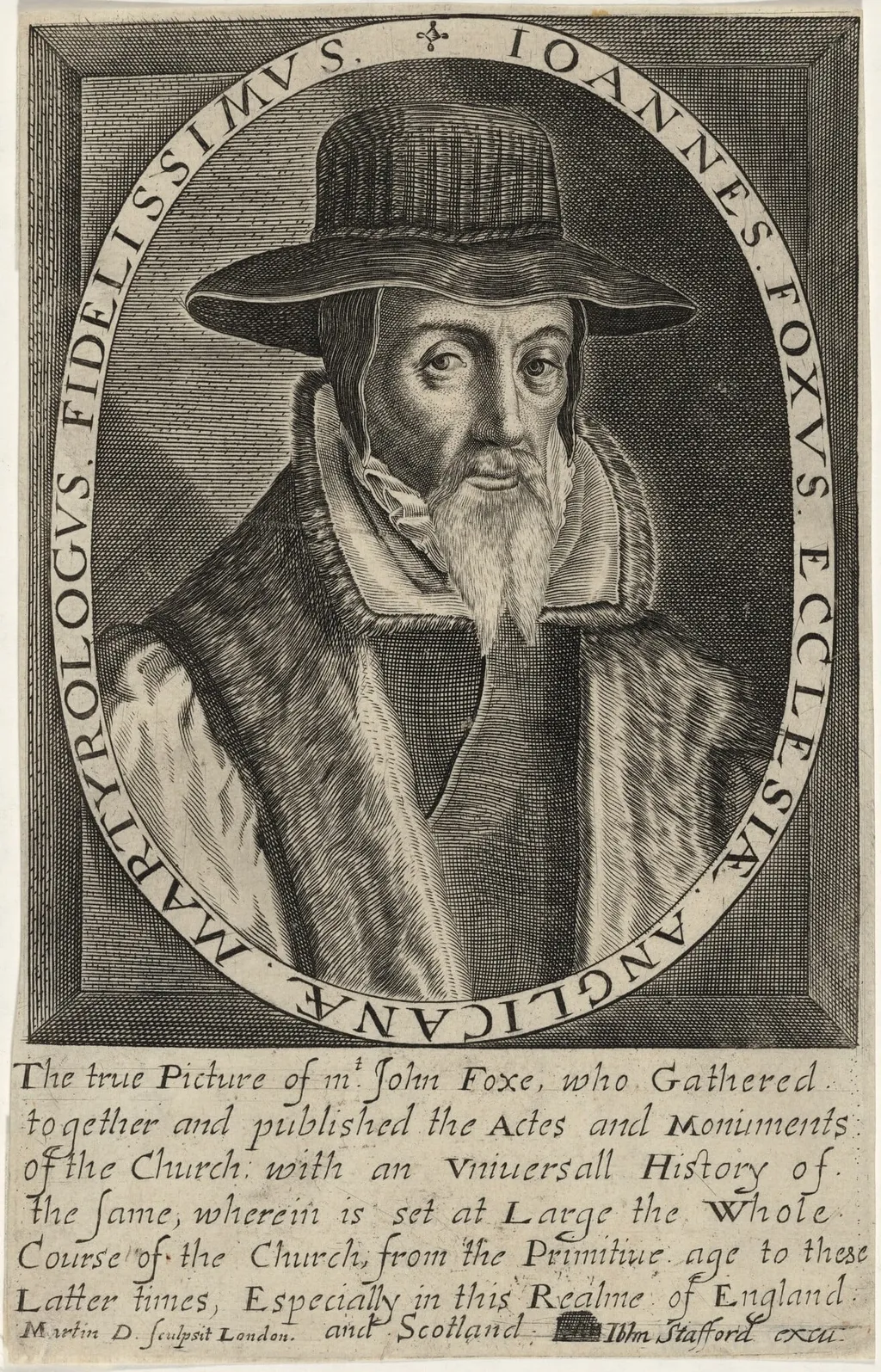
John Foxe, Author of Book of Martyrs is an ink print by the Renaissance artist Martin Droeshout. It dates from 1610 and is held in the collection of the National Gallery of Art.
About this work
Overview
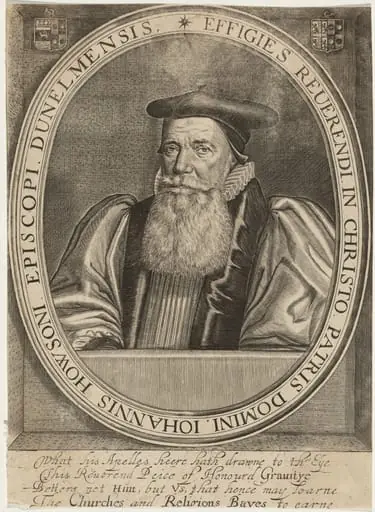
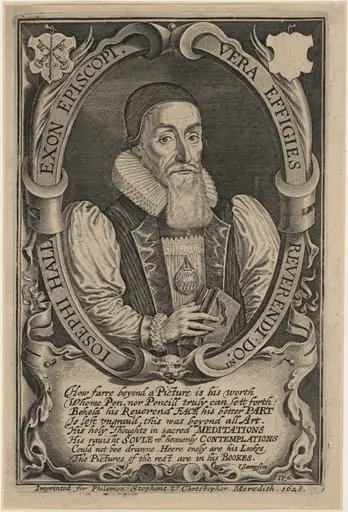
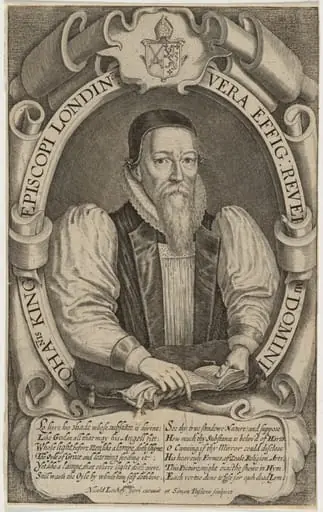
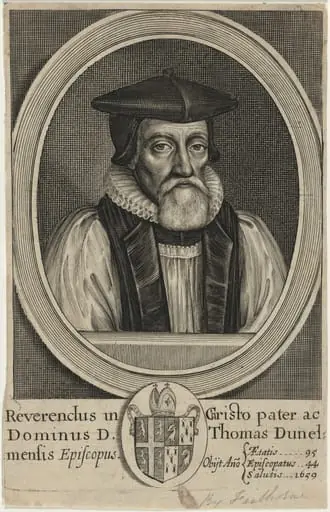
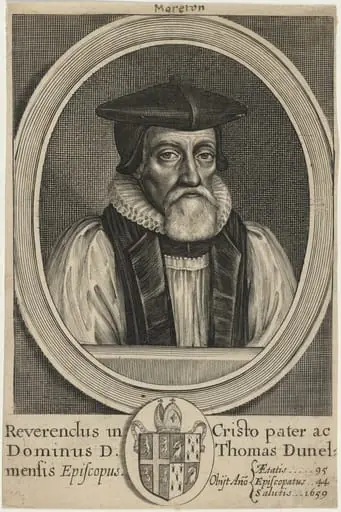
This 1610 engraving by Martin Droeshout depicts John Foxe, the author of Actes and Monuments, commonly known as the Book of Martyrs.
This 1610 engraving by Martin Droeshout depicts John Foxe, the author of Actes and Monuments, commonly known as the Book of Martyrs. Rendered in fine linear detail, the portrait presents Foxe in a circular format, framed by inscribed text. His upper torso and face are the sole focus, rendered with precision typical of early 17th-century printmaking. The composition emphasizes solemnity and intellectual authority, aligning with Foxe’s role as a Protestant historian.
Subject & Meaning
John Foxe is portrayed not as a clergyman or noble, but as a scholar and chronicler. His serious expression and formal attire—wide-brimmed hat, high collar, and layered coat—signal his status as a writer of religious history. The surrounding text likely contains his name and title, reinforcing his identity as the compiler of a seminal Protestant narrative. The image functions as a visual credential, anchoring his authority in the public imagination.
Technique & Style
Droeshout employed fine, controlled engraving lines to model Foxe’s features and fabric textures. The fur collar, hat brim, and facial contours are rendered with subtle gradations of tone, achieved through cross-hatching and stippling. The circular format and border inscription reflect conventions of commemorative portraiture in printed media. The style is restrained, avoiding ornamentation in favor of clarity and dignified realism.
History & Provenance
Created in 1610, the engraving likely accompanied early editions of Foxe’s Book of Martyrs, serving as a frontispiece or title-page illustration. It was produced during a period when printed images were increasingly used to legitimize religious and political narratives. The work’s survival in multiple copies suggests its use in both private and institutional collections, particularly among Protestant households and libraries.
Context
In early Jacobean England, printed portraits of religious figures were tools of ideological reinforcement. Foxe’s work had become a cornerstone of Protestant identity following the Reformation. Droeshout’s image, though modest in scale, contributed to the visual canon of reformers, aligning Foxe with other reformers whose likenesses were circulated to sustain religious memory and moral instruction.
Legacy
The engraving remains one of the few surviving contemporary portraits of John Foxe. Its enduring presence in historical archives and reprints of the Book of Martyrs underscores its role in shaping Foxe’s public image. Though not artistically flamboyant, its clarity and purpose ensured its longevity as a reference point for later biographers and historians.
Artist & collection