Artwork
Le mari confesseur
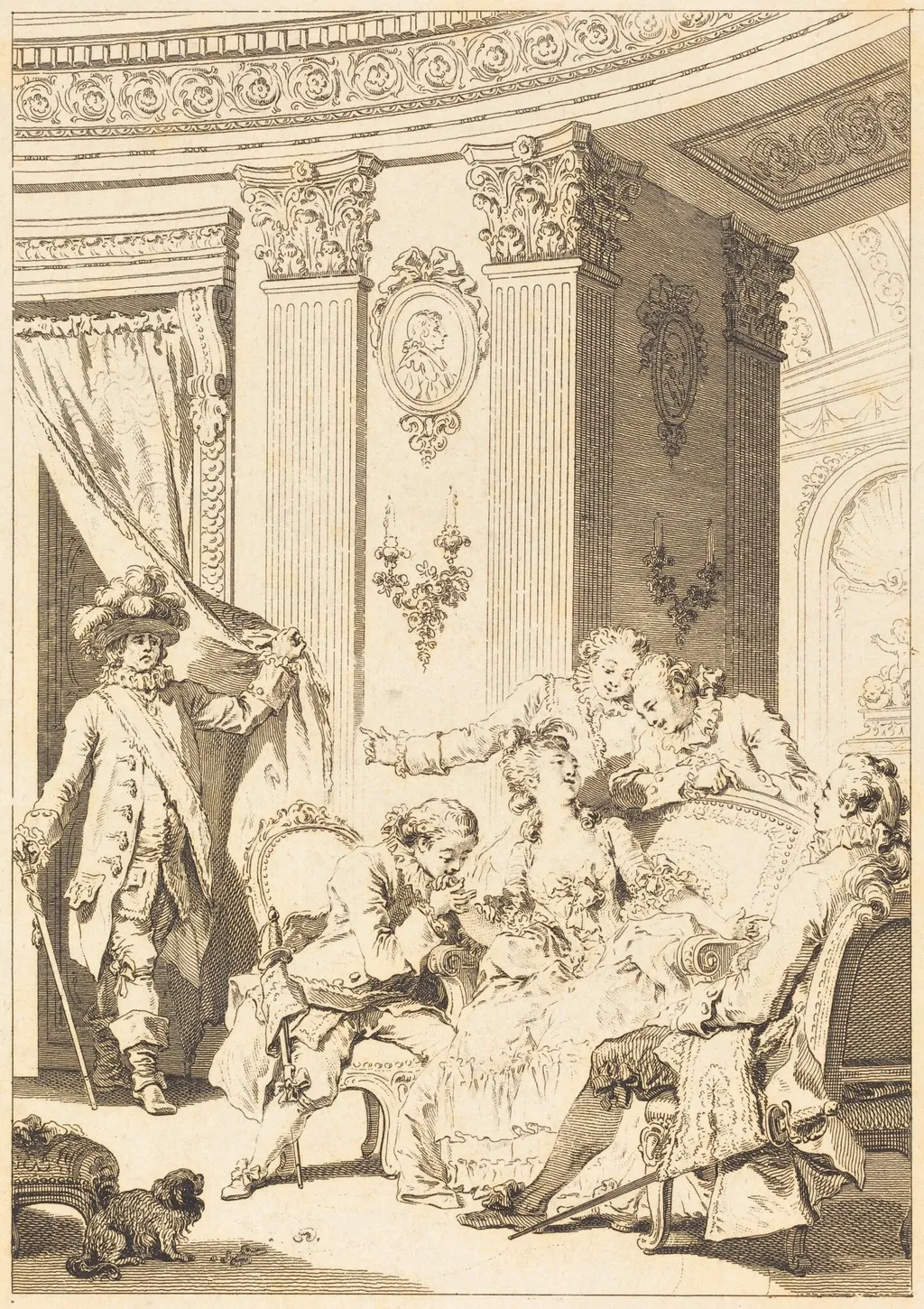
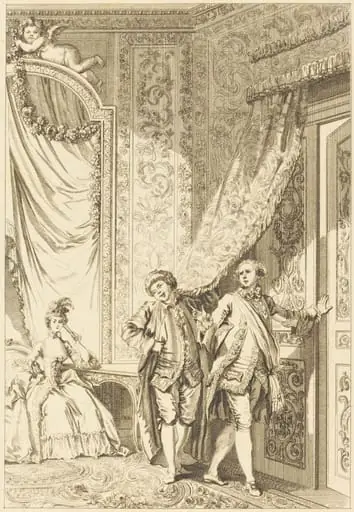
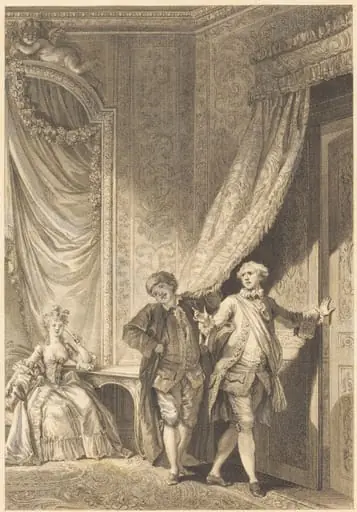
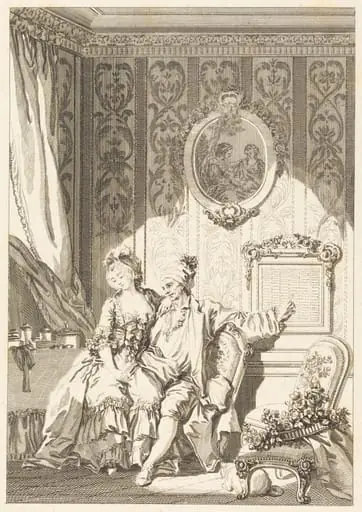
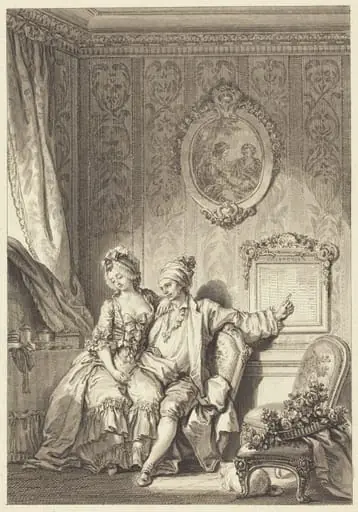
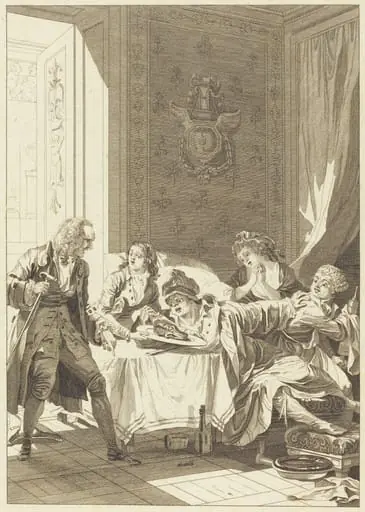
Le mari confesseur is an ink print by the Baroque artist Antoine-Jean Duclos. It dates from 1776 and is held in the collection of the National Gallery of Art.
About this work
Overview
Le mari confesseur is an etching produced in 1776 by French artist Antoine-Jean Duclos. The work belongs to a tradition of 18th-century printmaking that captured domestic scenes with subtle social commentary. Its fine lines and tonal contrasts reflect the technical precision typical of the medium at the time, offering a glimpse into private life through a carefully composed interior setting.
Subject & Meaning
The scene centers on a man in formal attire, rigidly holding a scroll, suggesting a role of authority or moral instruction. Around him, children engage playfully with pets, and a woman in an elaborate gown observes passively. The disconnect between the man’s solemn posture and the children’s disregard implies a critique of performative piety or the futility of enforced decorum in domestic spaces.
Technique & Style
The contrast between the man’s stillness and the animated figures around him is achieved through selective line weight and spatial arrangement.
Duclos employed fine-line etching to render intricate details: the texture of fabrics, the grain of woodwork, and the delicate contours of architectural elements. The composition is tightly framed, with layered backgrounds of carved panels and balustrades adding depth. The contrast between the man’s stillness and the animated figures around him is achieved through selective line weight and spatial arrangement.
History & Provenance
Created in 1776, the print likely circulated among French collectors interested in genre scenes and satirical imagery. While specific early ownership records are sparse, its survival in institutional collections suggests it was valued for its technical execution and social observation. Duclos, though less known than contemporaries, contributed to a broader movement of printmakers documenting everyday life.
Context
In late 18th-century France, etchings like this one responded to growing public interest in domestic morality and class behavior. The scene echoes themes found in the works of Hogarth and Greuze, blending humor with quiet critique. The setting—richly furnished yet confined—reflects urban middle-class aspirations, while the children’s autonomy hints at shifting attitudes toward childhood and discipline.
Legacy
Le mari confesseur remains a modest but telling example of pre-Revolutionary French print culture. It does not stand as a landmark work, but its nuanced portrayal of familial dynamics contributes to the understanding of how artists used print media to observe, rather than idealize, private life. Its preservation allows continued study of social norms encoded in everyday imagery.
Artist & collection


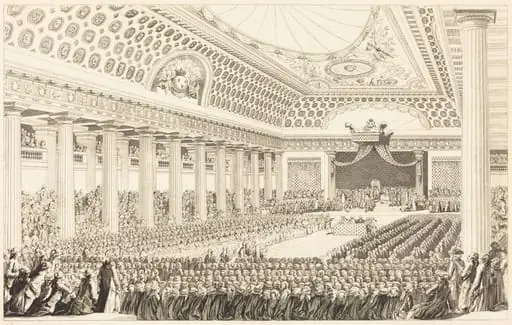 Ouverture des Etats-Généraux à Versailles, le 5 mars 1789
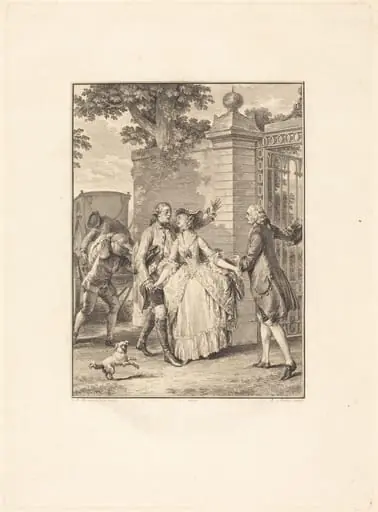 La confiance des belles âmes
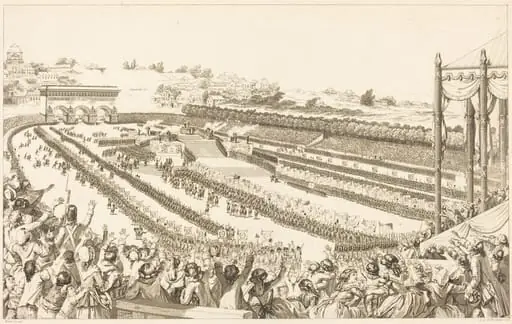 Fédération Générale de Français, au Champ de Mars, le 14 Juillet 1790
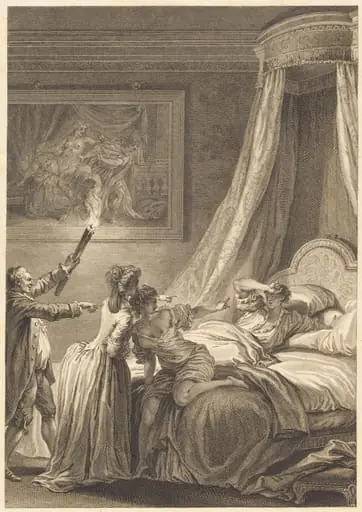 Le gascon puni
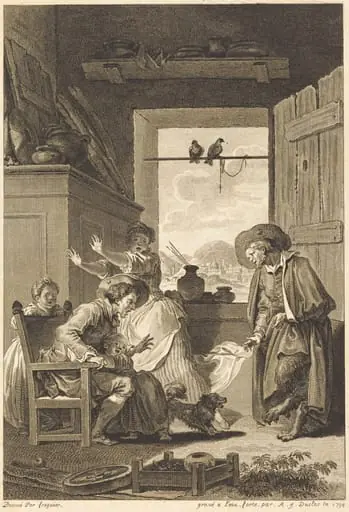 Belphegor
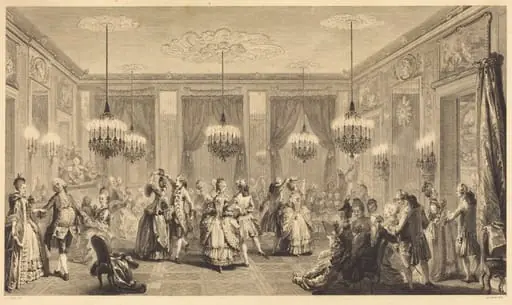 Le bal paré
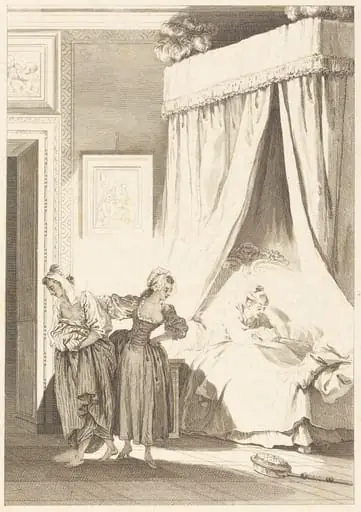 La gageure des trois commeres: La servante
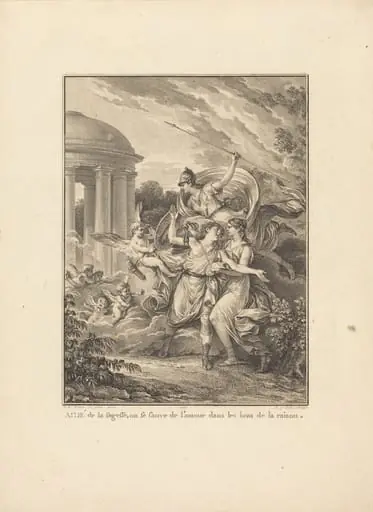 Frontispiece: Aidé de la sagesse, on se sauve de l'amour dans les bras de la raison