Artwork
Flowers (Fleurs)
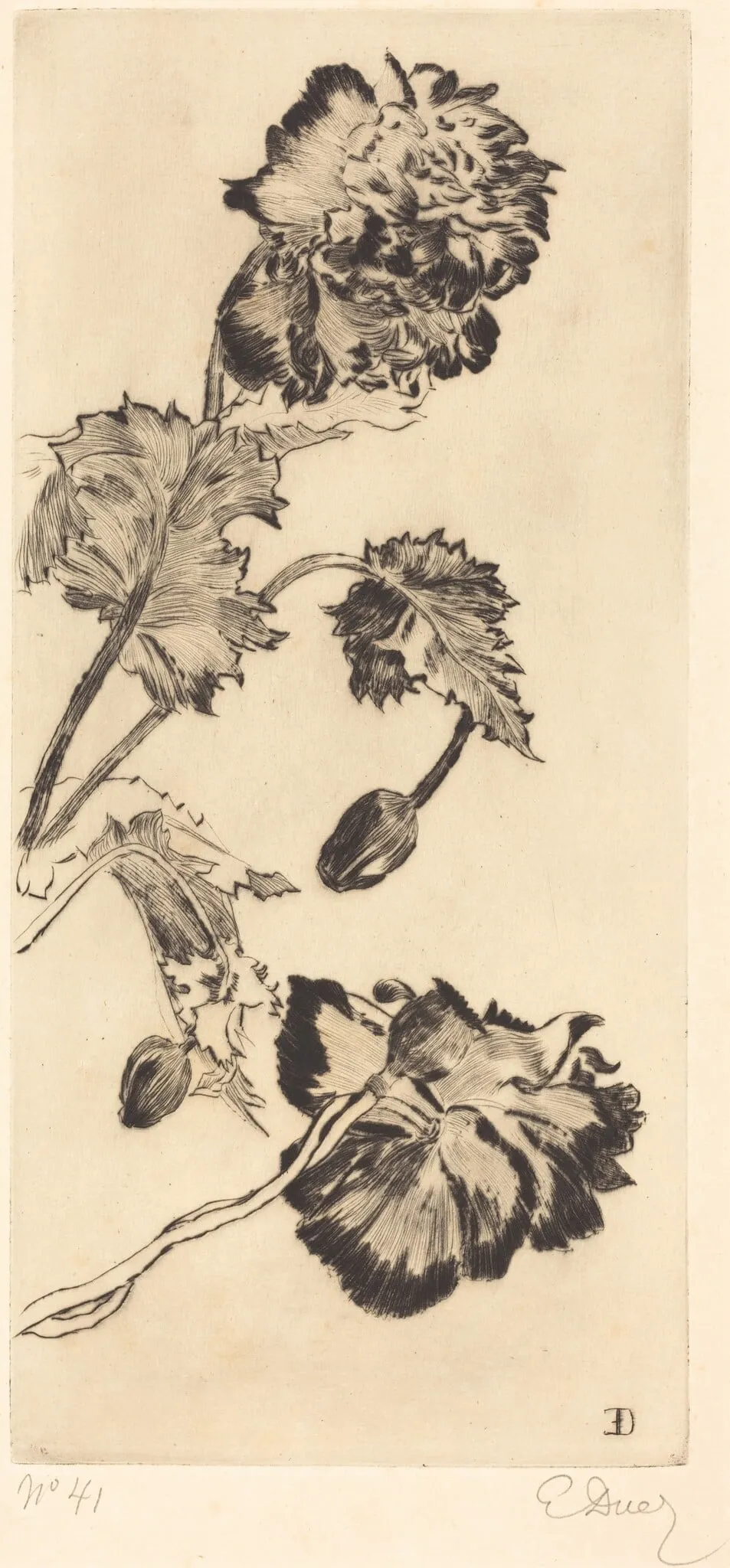
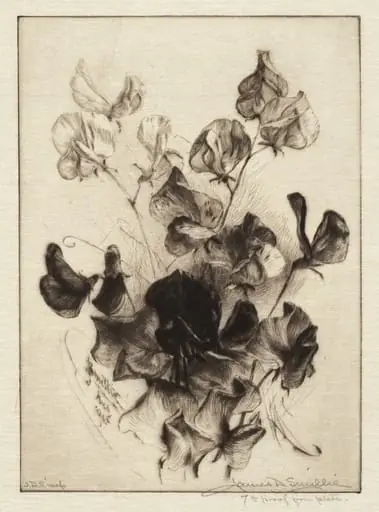
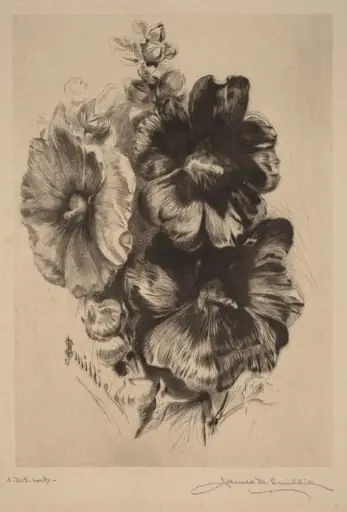
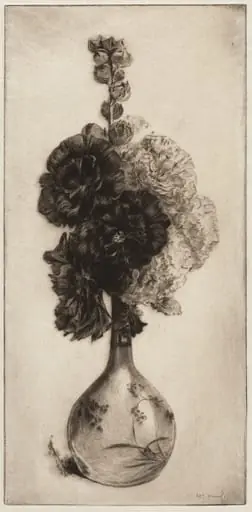
Flowers (Fleurs) is an ink print by the Impressionist artist Ernest-Ange Duez. It dates from 1894 and is held in the collection of the National Gallery of Art.
About this work
Overview
The medium—drypoint—allowed for fine, tactile lines that echo the delicacy of the subject, distinguishing it from the bolder experiments of his contemporaries.
Ernest-Ange Duez created *Flowers* in 1894 as a drypoint print on laid paper, part of his broader engagement with still-life subjects. Though primarily known for figurative and religious paintings, this work reveals his interest in quiet, intimate natural forms. The medium—drypoint—allowed for fine, tactile lines that echo the delicacy of the subject, distinguishing it from the bolder experiments of his contemporaries.
Subject & Meaning
The print depicts a single stem bearing three blossoms at varying stages: fully open, half-unfurled, and tightly budded. Each stage suggests the passage of time, evoking themes of growth and transience without overt symbolism. The absence of context—no vase, table, or background—focuses attention on the plant’s quiet life cycle, aligning with Duez’s preference for restrained, contemplative imagery.
Technique & Style
Drypoint was employed to scratch lines directly into a metal plate, creating a soft, velvety edge that retains ink well. Duez used this to render petals and leaves with subtle gradations of tone, where fine, dark strokes define form without heavy contrast. The light paper enhances the delicacy of the lines, producing a sense of fragility. His approach avoids the spontaneity of Impressionist brushwork, favoring precision and quiet control.
History & Provenance
Created in 1894, *Flowers* emerged during a period when Duez maintained ties to the Paris Salon while privately collecting works by Monet, Degas, and Morisot. Though influenced by their subject matter, he did not adopt their radical techniques. This print reflects his position within the *juste milieu*—a middle ground between academic tradition and avant-garde innovation—making it a quiet testament to his artistic independence.
Context
In late 19th-century France, still-life prints were less common than paintings, especially among artists associated with the Salon. Duez’s choice to render flowers in drypoint placed him alongside a small group of printmakers exploring natural forms with technical restraint. His work contrasts with the expressive lithographs of contemporaries, offering instead a meditative, linear interpretation of botanical life.
Legacy
While Duez is not widely remembered today, *Flowers* stands as a refined example of how academic-trained artists engaged with emerging print techniques without abandoning their compositional discipline. The work illustrates a quieter, overlooked strand of late 19th-century French art—one that valued subtlety over spectacle, and observation over innovation.
Artist & collection
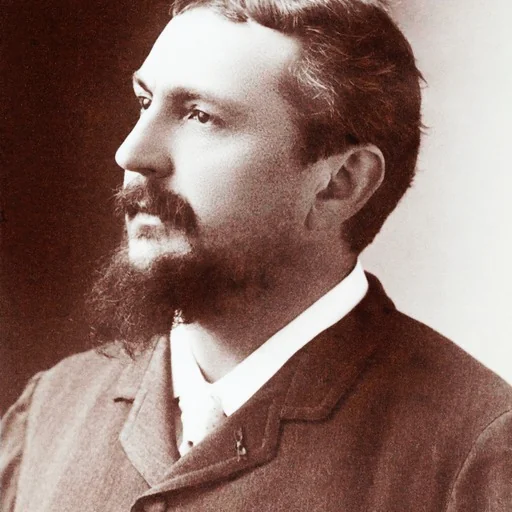
Artist
Ernest Ange Duez (also known as Ernest-Ange Duez and Ernest Duez, 7 March 1843 – 4 April 1896) was a French painter of genre scenes, portraits, landscapes and religious subjects.