Artwork
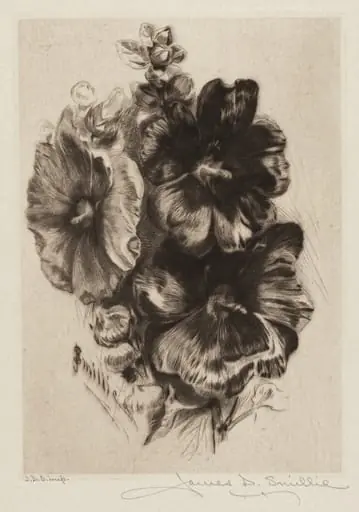
Hollyhocks in a Long-necked Vase
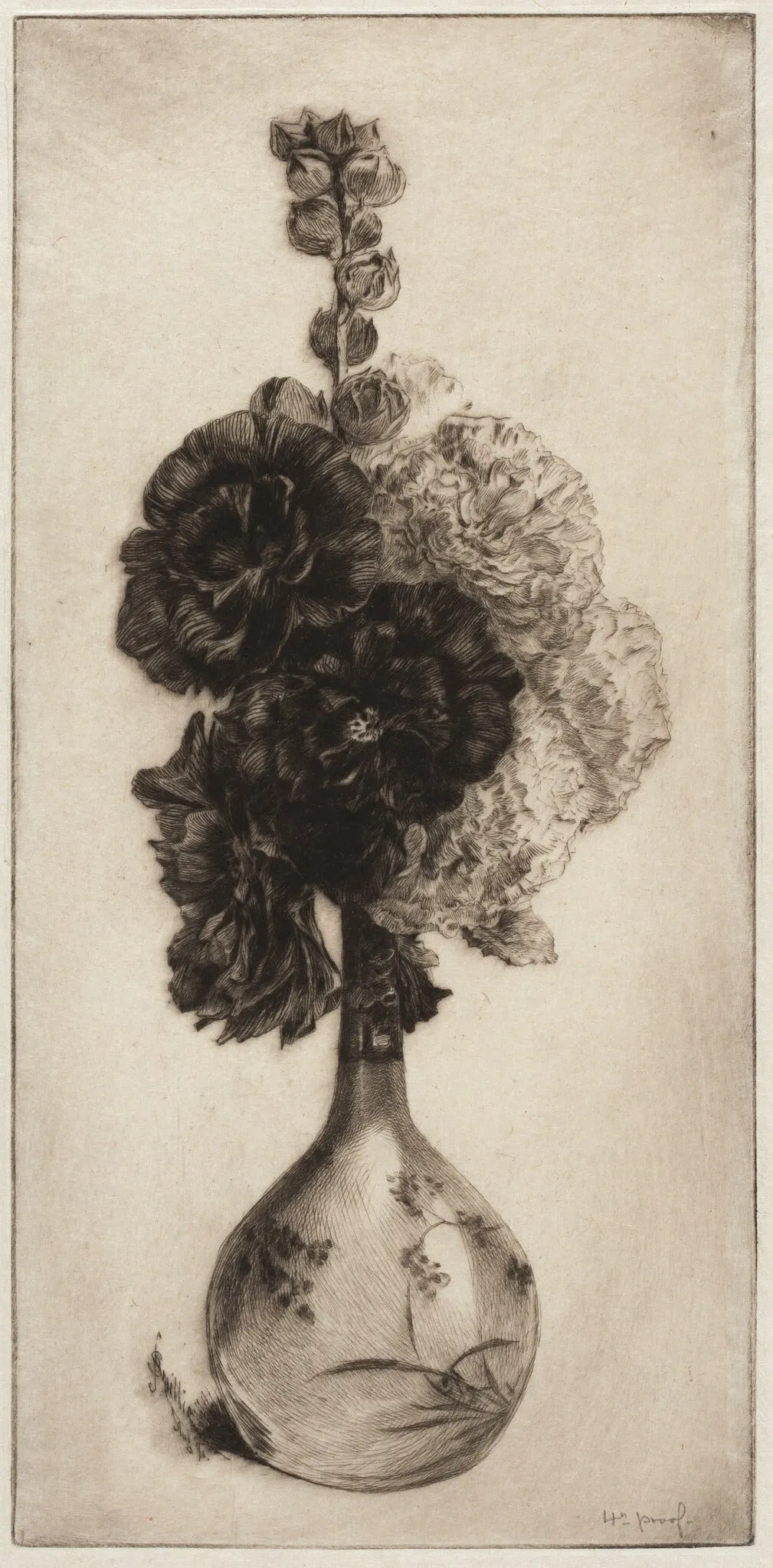
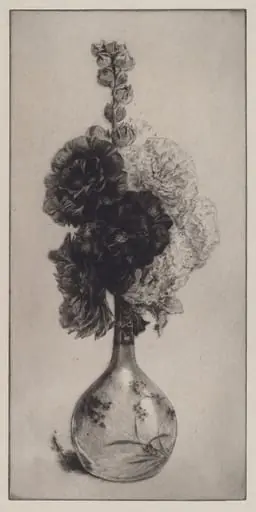
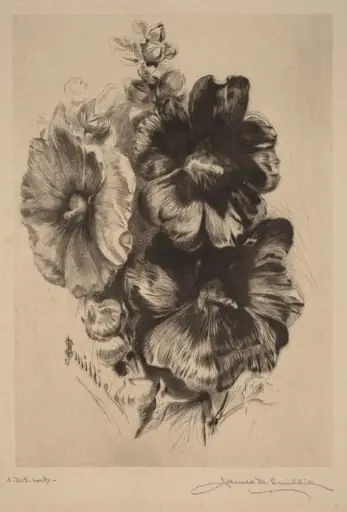
Hollyhocks in a Long-necked Vase is an ink print by the Impressionist artist James David Smillie. It dates from 1891 and is held in the collection of the National Gallery of Art.
About this work
Overview
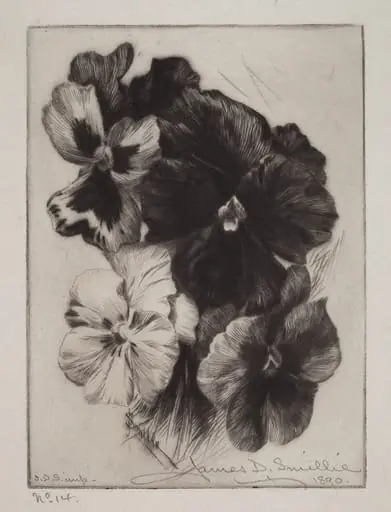
Created in 1891, this drypoint print by James David Smillie depicts a slender vase holding three hollyhock blooms. Rendered in black ink on light wove paper, the composition emphasizes verticality and delicate detail. The artist used no color or wash, relying solely on the texture and depth of etched lines to define form and volume, capturing the quiet stillness of the arrangement.
Subject & Meaning
The hollyhocks, with their broad, slightly drooping petals and frayed edges, suggest a moment just after peak bloom. The tall, narrow vase anchors the composition, drawing the eye upward. There is no overt symbolism; the focus is on the quiet dignity of the flowers in transition, observed with close attention to natural decay and structural grace.
Technique & Style
The thick, irregular lines convey texture and weight, while the paper’s white space defines highlights, giving the forms a sculptural presence without color.
Drypoint technique involves scratching lines directly into a metal plate with a hardened needle, creating a burr that holds ink and yields soft, velvety strokes. Smillie exploited this to model the petals and vase with subtle gradations of tone. The thick, irregular lines convey texture and weight, while the paper’s white space defines highlights, giving the forms a sculptural presence without color.
History & Provenance
The print was made during Smillie’s later career, when he increasingly turned to intimate botanical subjects. It was likely produced for private circulation rather than mass publication. No documented exhibition history or early ownership records are widely known, but it remains part of institutional collections focused on American printmaking of the Gilded Age.
Context
In the 1890s, American artists were turning toward quiet, observational subjects as a counterpoint to grand historical narratives. Smillie’s focus on a single vase of flowers aligns with broader trends in printmaking that valued craftsmanship and intimate detail. Drypoint, though labor-intensive, was favored by artists seeking expressive line work over the precision of engraving.
Legacy
This work exemplifies Smillie’s skill in translating natural forms into the tactile language of drypoint. While not widely reproduced, it is cited in studies of American printmaking for its restrained elegance and technical refinement. It remains a quiet testament to the artist’s interest in the transient beauty of everyday botanical subjects.
Artist & collection

Artist
James David Smillie was an American artist, cofounder of the American Watercolor Society and New York Etching Club. His brother was painter George Henry Smillie.