Artwork
The Bagpipe Player
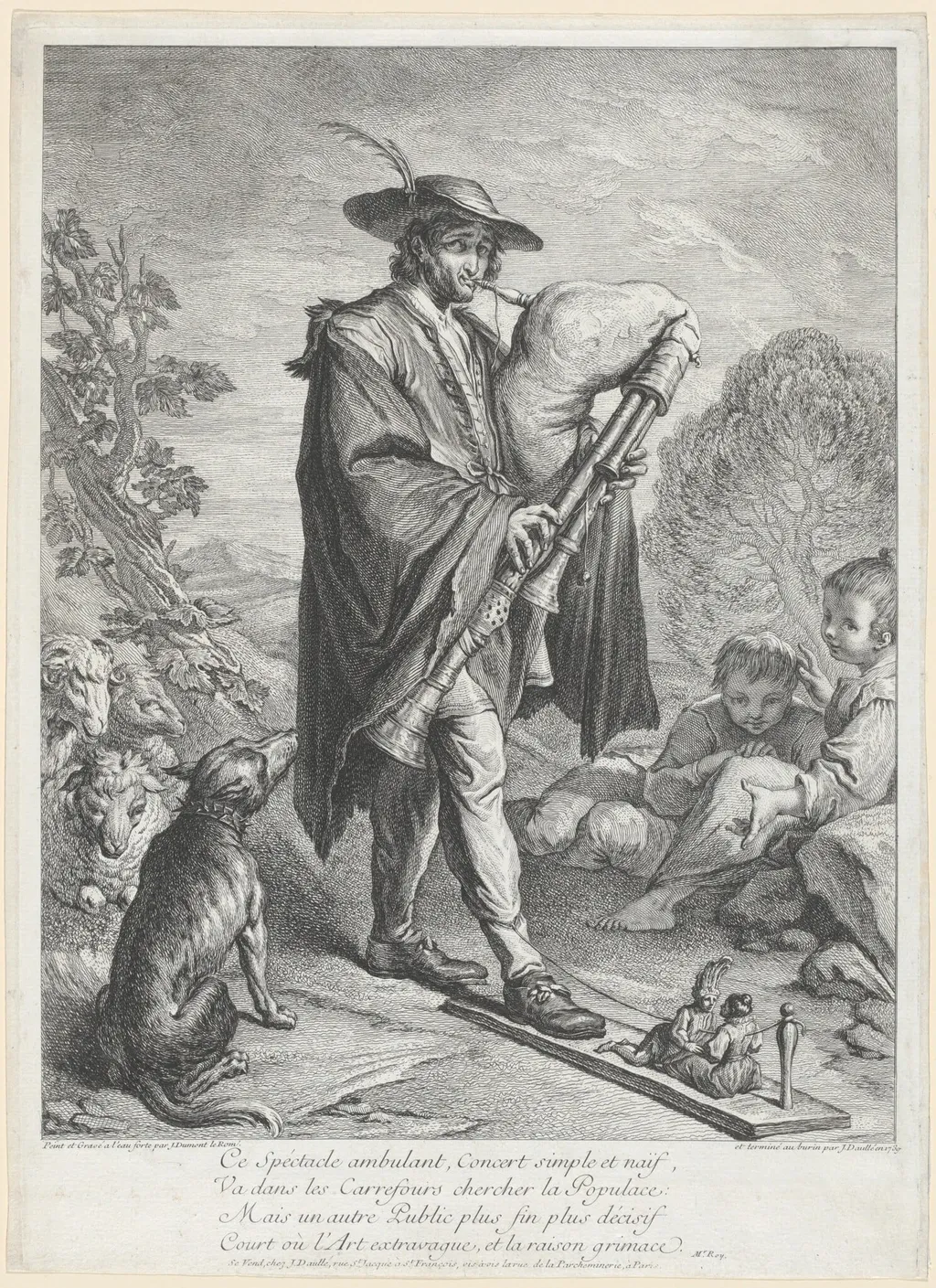
The Bagpipe Player is an ink print by the Baroque artist Jacques Dumont. It dates from 1739 and is held in the collection of the National Gallery of Art.
About this work
Overview
Jacques Dumont’s print, titled The Bagpipe Player, was produced in 1739 using an etching that was later finished with engraving on laid paper. The work depicts a solitary figure in a wide-brimmed hat, playing a bagpipe while surrounded by children and a dog in a modest outdoor setting.
Subject & Meaning
The central figure holds the instrument with one hand and a small dog on his shoulder with the other, suggesting a casual, domestic scene. Nearby, three children—one seated, one kneeling, one crawling—observe the performance, while a larger dog watches attentively. The composition evokes a light‑hearted, everyday concert that hints at communal enjoyment.
Technique & Style
Dumont combined etching’s fluid lines with the precise incising of engraving to achieve fine detail on the laid‑paper surface. This hybrid method allows for delicate rendering of textures such as the hat’s brim, the foliage, and the animals’ fur, while maintaining the tonal depth characteristic of 18th‑century printmaking.
Context
The print reflects the 18th‑century French interest in genre scenes that celebrate rural life and popular entertainment. By portraying a bagpipe player—a common folk musician—alongside children and animals, Dumont aligns with contemporary tastes for depictions of everyday leisure.
Artist & collection


 The Seller of Rat Poison
 The Beggars: Blind Man with His Dog
 Les chasses ... ne se ressemblent pas
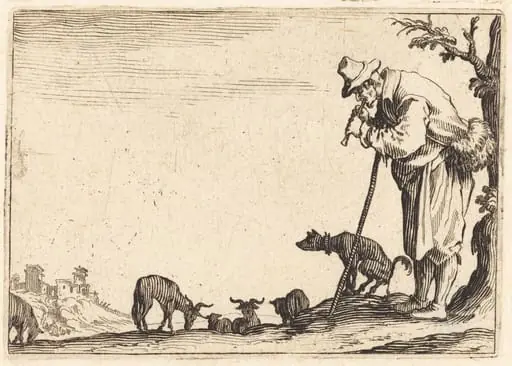 Shepherd Playing Flute
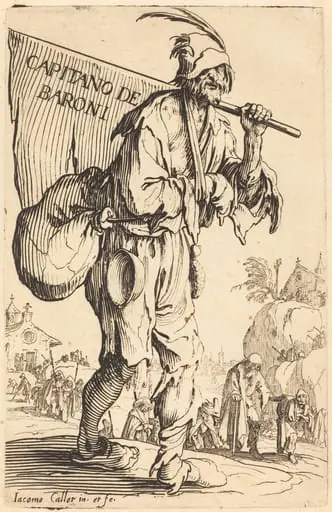 Captain of the Barons
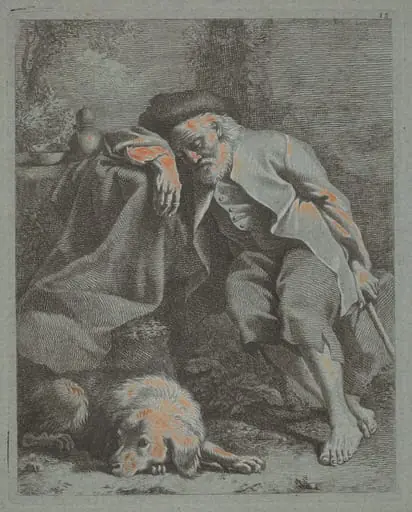 Sleeping Old Man with Dog
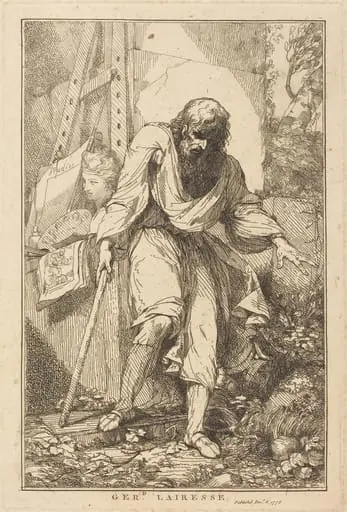 Gerard Lairesse
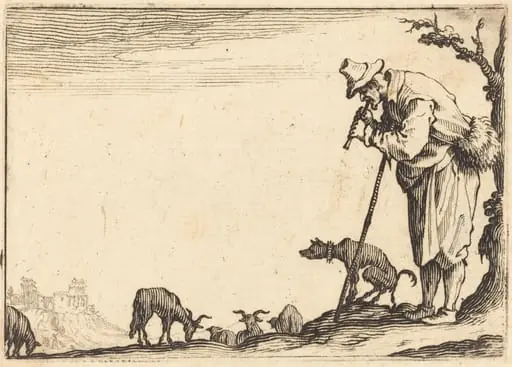 Shepherd Playing Flute
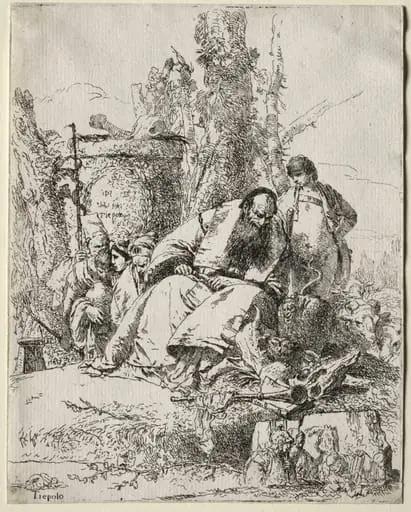 Scherzi di Fantasia: seated Magician, boy and four figures
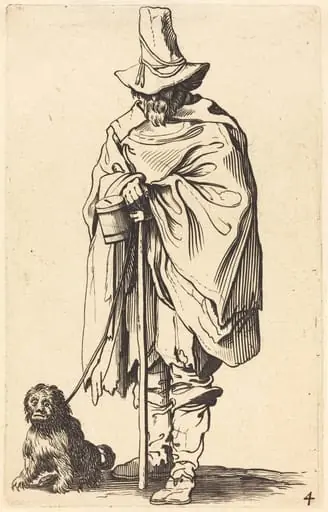 Beggar with Dog
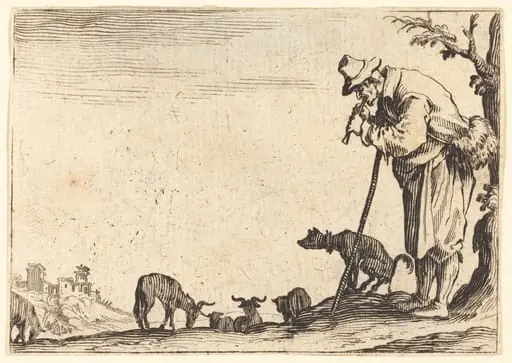 Shepherd Playing Flute
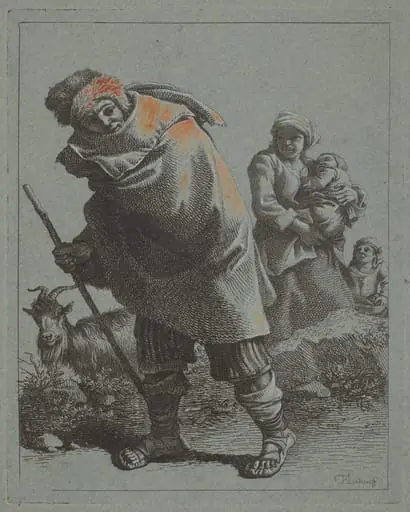 Shepherd with Walking Stick and a Peasant Woman with Child