Artwork
Shepherd with Walking Stick and a Peasant Woman with Child
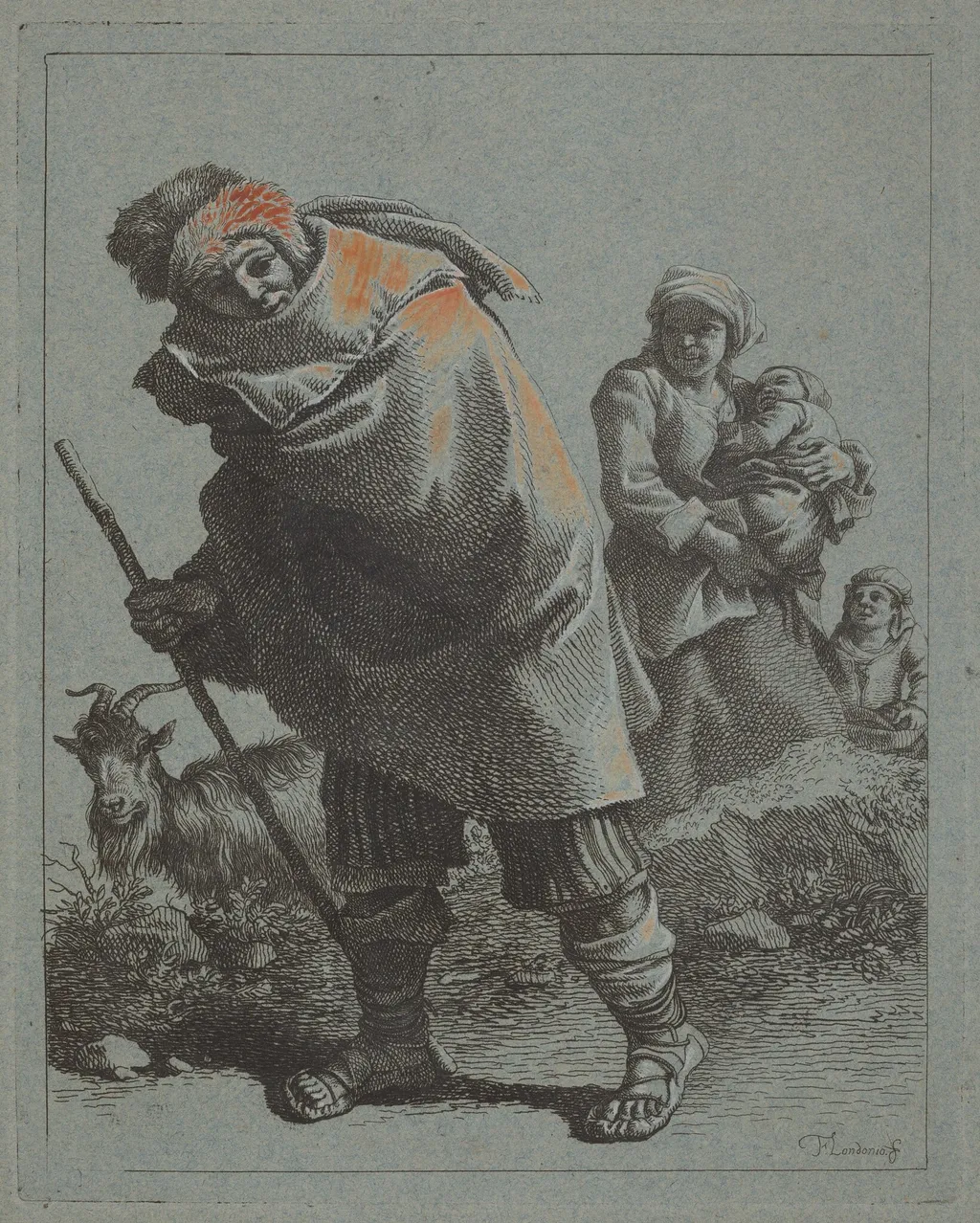
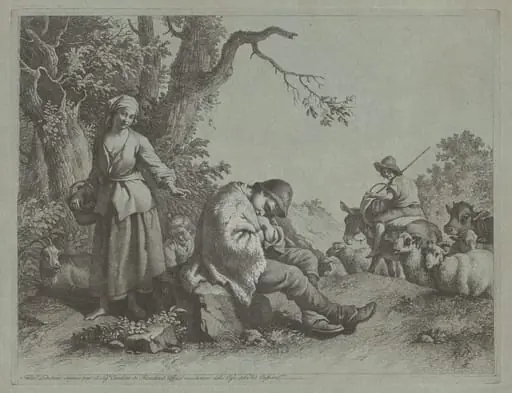
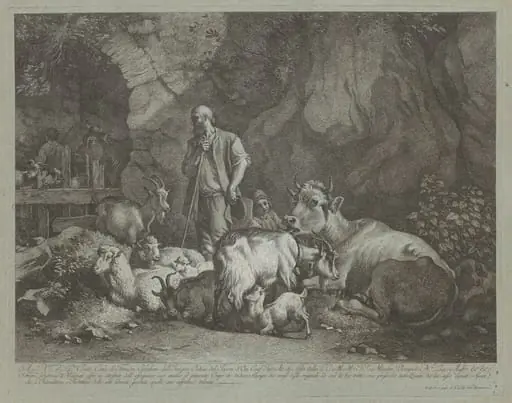
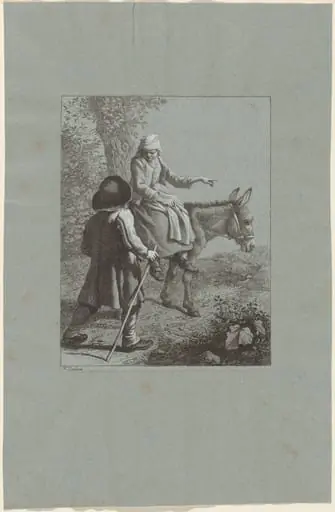
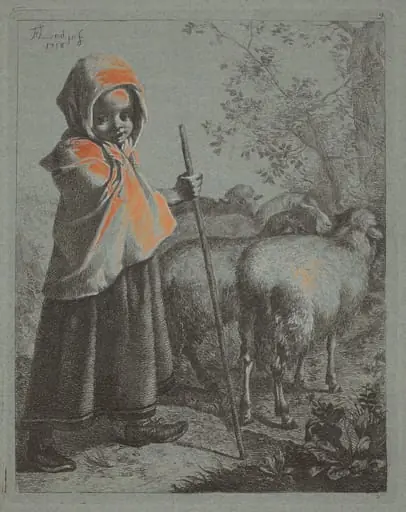
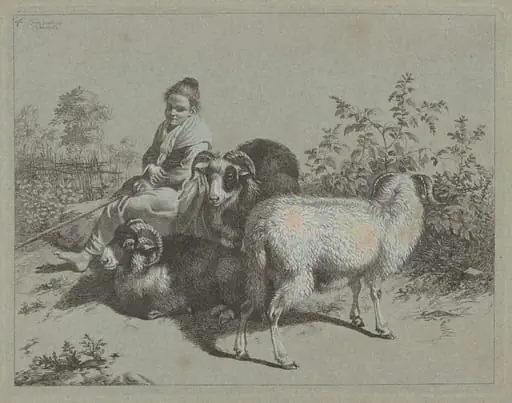
Shepherd with Walking Stick and a Peasant Woman with Child is a gouache print by the Baroque artist Francesco Londonio. It dates from 1758 and is held in the collection of the National Gallery of Art.
About this work
Overview
The work exemplifies his skill in translating everyday observations into refined graphic form, blending technical precision with gentle narrative.
Created in 1758, this etching by Francesco Londonio captures a quiet rural moment on blue paper, enhanced with white gouache for contrast. As a Milan-based artist trained in both painting and engraving, Londonio specialized in scenes of peasant life, often commissioned by Northern Italian collectors. The work exemplifies his skill in translating everyday observations into refined graphic form, blending technical precision with gentle narrative.
Subject & Meaning
The scene portrays a shepherd, staff in hand, beside a woman holding an infant, with a second child peeking from behind. A goat rests at their feet, grounding the composition in pastoral realism. No grand symbolism is present—instead, the focus lies in the quiet dignity of labor and familial bonds. The figures’ postures and proximity suggest mutual reliance, reflecting a worldview that valued rural stability over theatrical drama.
Technique & Style
Londonio employed etching to render fine, controlled lines across the surface, then added opaque white gouache to heighten highlights on clothing and skin. The blue paper provided a cool tonal base, enhancing the warmth of the added pigments. Textured brushwork in the background suggests uneven terrain, while the figures remain sharply defined. The result is a delicate balance between spontaneity and precision, typical of Rococo-era graphic art.
History & Provenance
Londonio trained under Ferdinando Porta and Giovanni Battista Sassi in Milan, later studying engraving with Benigno Bossi. His travels to Rome and Naples exposed him to broader Italian artistic currents, though he remained rooted in Lombard traditions. This print likely circulated among local collectors who favored genre scenes as decorative, morally neutral reflections of rural life, distinct from religious or mythological subjects.
Context
In mid-18th century Northern Italy, there was growing interest in depictions of peasant life, not as idealized pastoral fantasy but as observed reality. Wealthy patrons collected such works as tokens of enlightened taste, valuing their authenticity and craftsmanship. Londonio’s prints responded to this demand, offering intimate, unembellished glimpses of the countryside that contrasted with the grandeur of courtly art.
Legacy
Londonio’s etchings contributed to a regional tradition of genre printmaking that emphasized observation over allegory. Though less widely known than his contemporaries in Rome or Venice, his works remain significant for their quiet realism and technical finesse. His use of colored paper and gouache highlights influenced later printmakers seeking to elevate graphic art beyond mere reproduction.
Artist & collection

Artist
Francesco Londonio (1723–1783) was an Italian painter, engraver, and scenographer, active mainly in his native Milan in a late-Baroque or Rococo style.

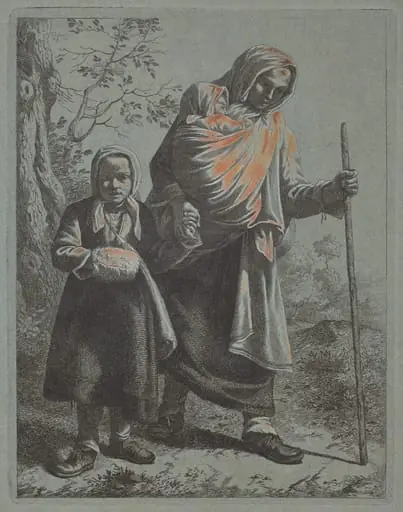 Peasant Woman with Baby and Little Girl
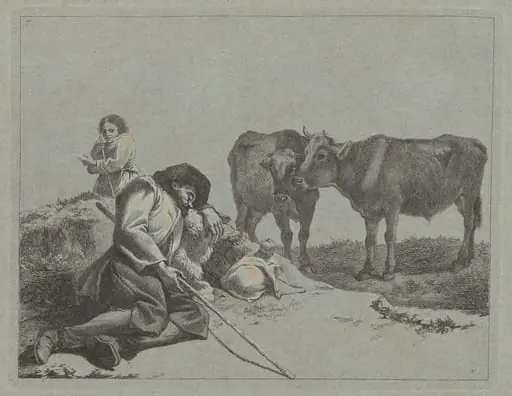 Sleeping Shepherd, Two Calves, and a Peasant Woman
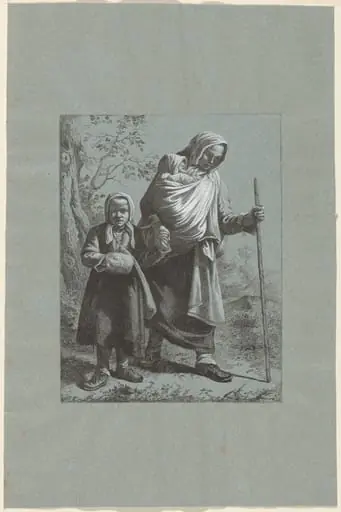 Peasant Woman with Two Children
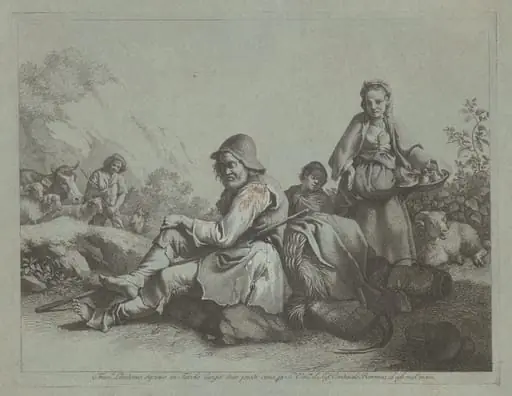 Seated Shepherd and a Peasant Woman with a Basket
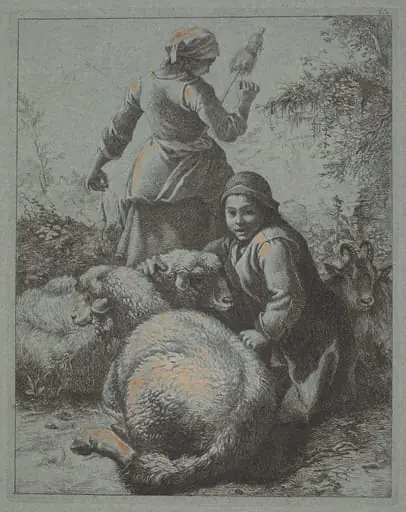 Woman Spinner and a Shepherd with Flock
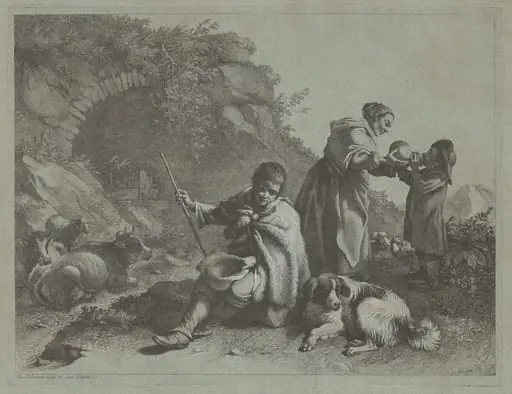 Seated Shepherd Boy and Woman Giving a Drink to a Child
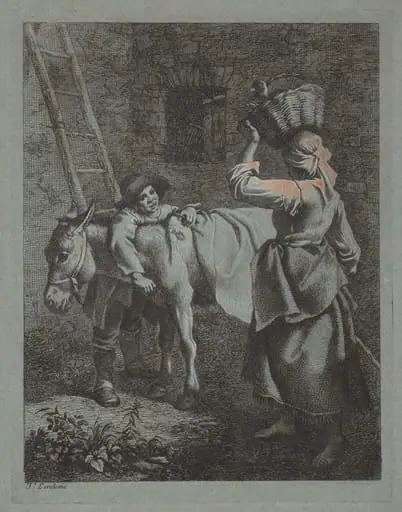 Shepherd Speaking to a Peasant Woman
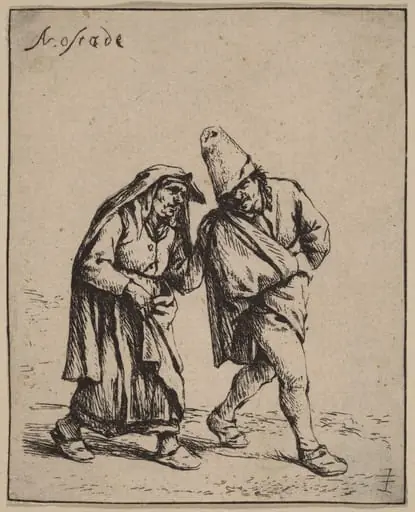 Peasant Couple Walking