Artwork
The Seller of Rat Poison
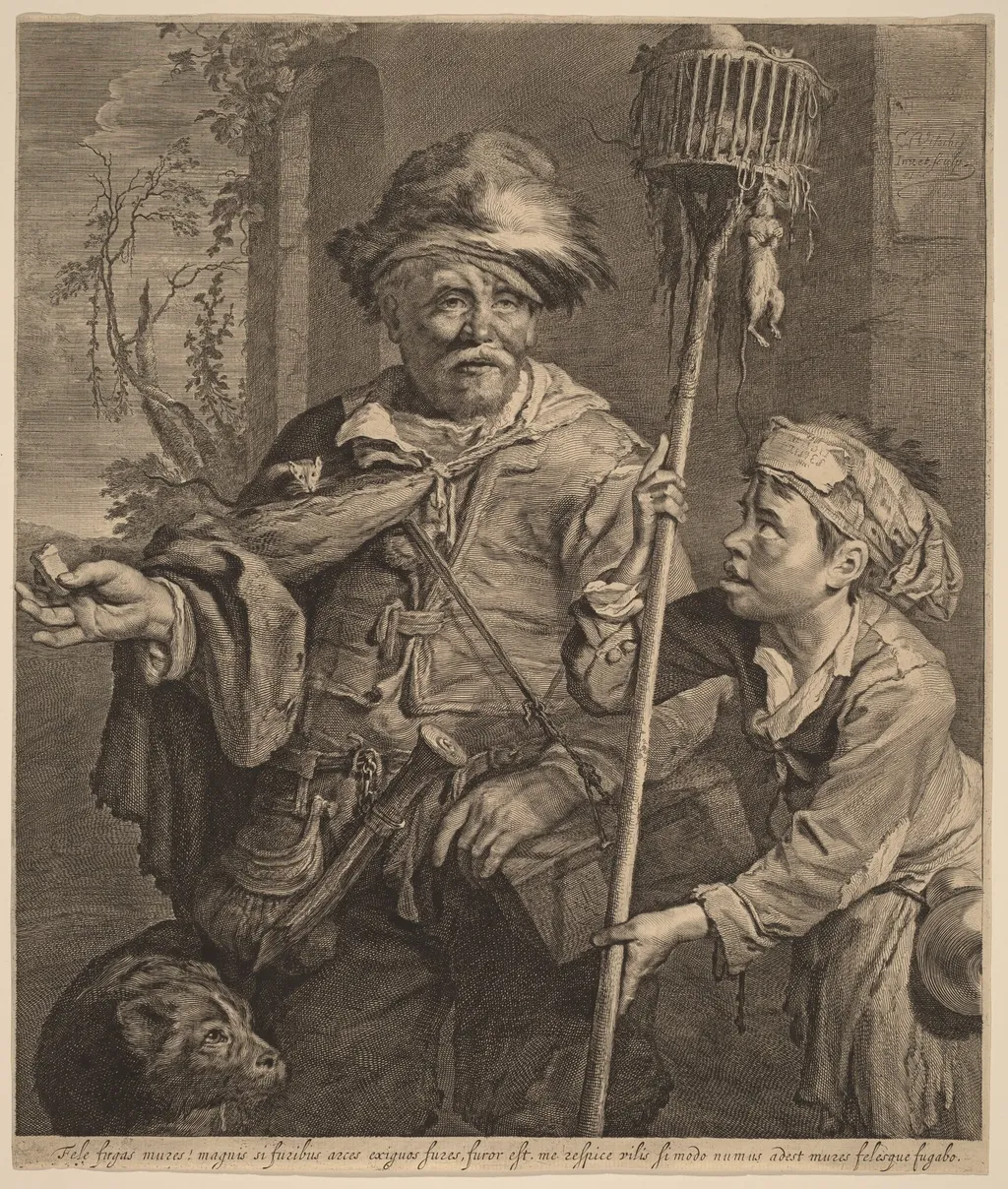
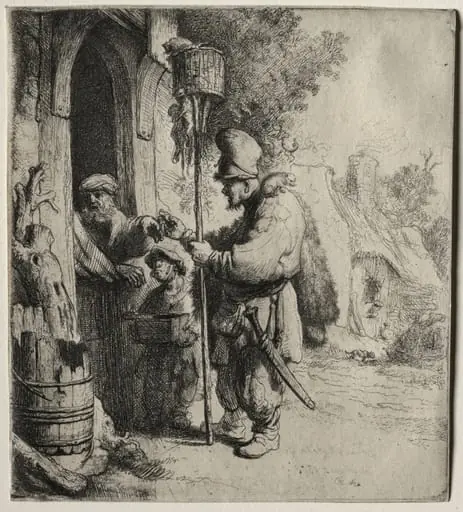
The Seller of Rat Poison is an ink print by the Baroque artist Cornelis Visscher. It dates from 1655 and is held in the collection of the National Gallery of Art.
About this work
Overview
Cornelis Visscher’s 1655 print, titled *The Seller of Rat Poison*, combines engraving and etching techniques to produce a finely detailed scene of everyday life in the Dutch Golden Age. The work presents a solitary vendor, a young boy, and a dog within a modest, open landscape, rendered with the precise line work characteristic of mid‑seventeenth‑century printmaking.
Subject & Meaning
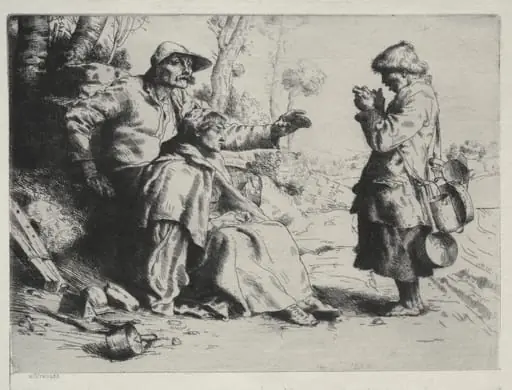
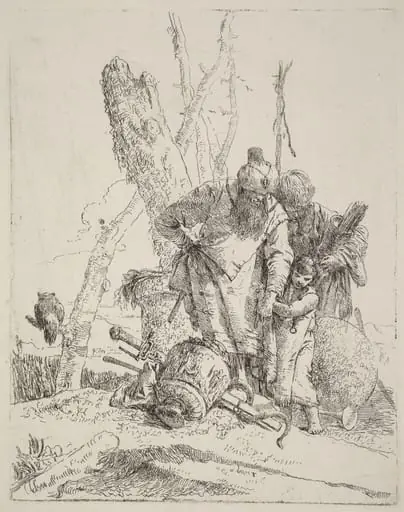
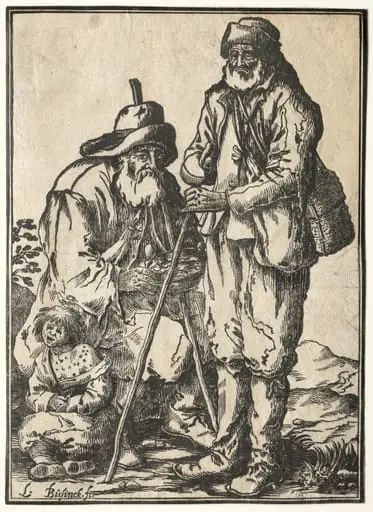
The central figure is a man in a broad hat and long coat, carrying a staff topped by a cage that likely contains the poison he sells. A small boy, head wrapped in a scarf, reaches toward the vendor, while a dog rests nearby. The composition suggests a moment of quiet commerce, highlighting the ordinary interactions that sustained urban and rural communities.
Technique & Style
Visscher employs a combination of engraving’s crisp lines and etching’s softer tonal washes, achieving a nuanced texture in the fabric, fur, and foliage. The shading creates a subtle play of light and shadow, aligning the work with Baroque sensibilities without overt theatricality, and emphasizing realistic observation over dramatic effect.
History & Provenance
Created in 1655, the print reflects Visscher’s mature period, during which he produced numerous genre scenes for the Dutch market. Original impressions circulated among collectors of the time, and the image has since been documented in several print collections, confirming its attribution to Visscher’s workshop.
Context
The scene belongs to a broader Dutch tradition of genre prints that depict daily labor and market activities. Such works offered viewers a glimpse into the lives of ordinary citizens, reinforcing contemporary values of industriousness and modesty within a rapidly commercializing society.
Artist & collection