Artwork
Ilda (Hilda)
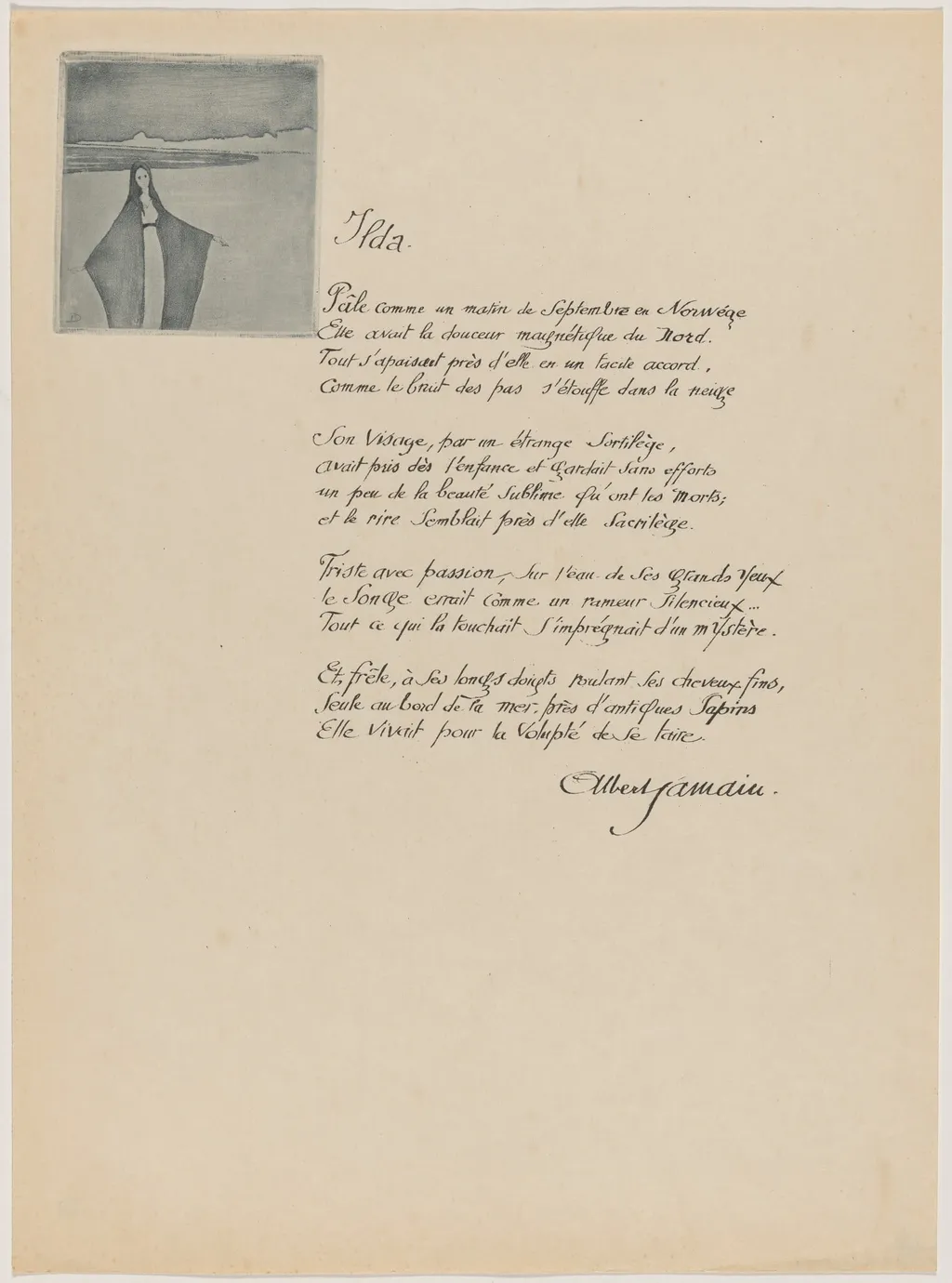
Ilda (Hilda) is an ink print by the Impressionist artist Maurice Dumont. It dates from 1894 and is held in the collection of the National Gallery of Art.
About this work
Overview
Ilda (Hilda) is a small print executed in 1894 by French artist Maurice Dumont. Rendered in a delicate blue tone on heavy Japan paper, the work measures only a few inches and presents a solitary figure on a shoreline at twilight. The composition is restrained, emphasizing atmosphere over narrative detail.
Subject & Meaning
The image depicts a woman standing alone on a beach, her back turned toward the viewer. She is cloaked in a long coat and gazes out over calm, muted waves beneath a soft gray sky. The figure’s isolation and the subdued setting suggest contemplation or melancholy, inviting the viewer to consider themes of solitude and the passage of time.
Technique & Style
Dumont employed a sugar‑lift aquatint, a process in which a sugary solution is painted onto the plate, then developed with acid to create tonal washes. This method yields soft, diffused edges, evident in the way the woman's coat seems to dissolve into the surrounding air. The limited palette of blue on yellowish paper enhances the ethereal quality of the scene.
History & Provenance
Created toward the end of the 19th century, the print reflects Dumont’s interest in experimental printmaking techniques. It remains part of a private collection, having been documented in early catalogues of the artist’s work. Its provenance traces back to the artist’s own studio, where the sugar‑lift method was explored alongside more conventional etching practices.
Artist & collection

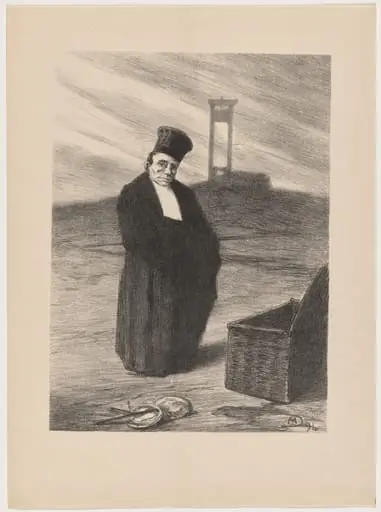

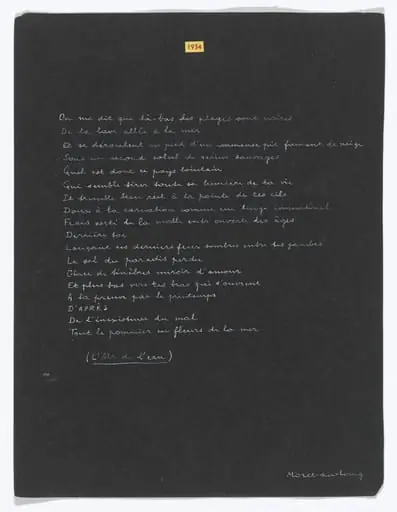 Untitled
 Luceafărul
 Dintre sute de catarge
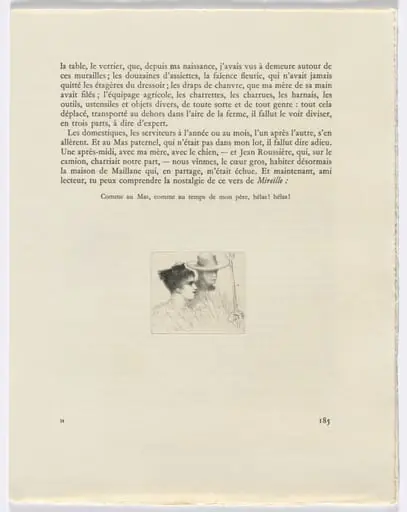 Frédéric Mistral: Mémoires et Recits by Frédéric Mistral: bust of a man and a woman (page 185)
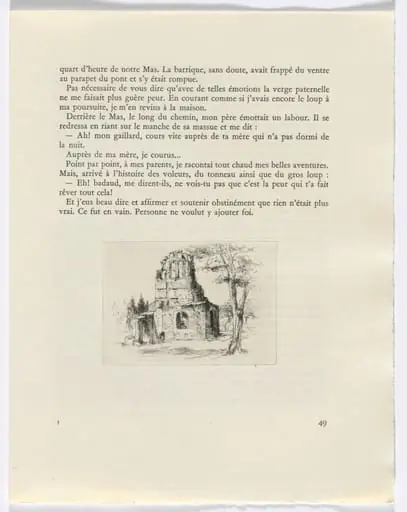 Frédéric Mistral: Mémoires et Recits by Frédéric Mistral: ruin (page 49)
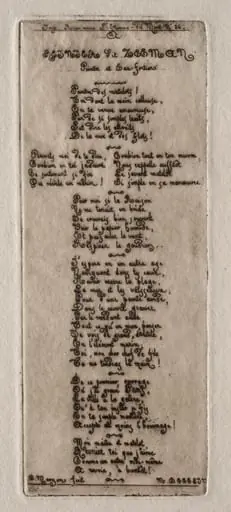 Etchings of Paris: Dedication to Reynier Nooms, called Zeeman
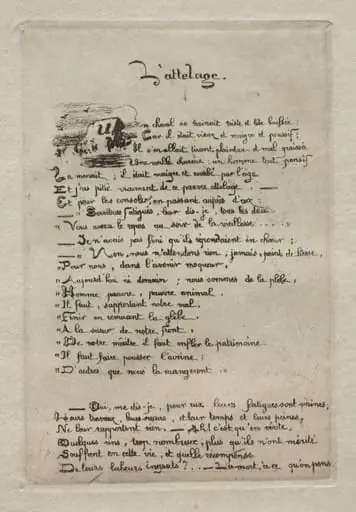 The Ploughman and his Horse
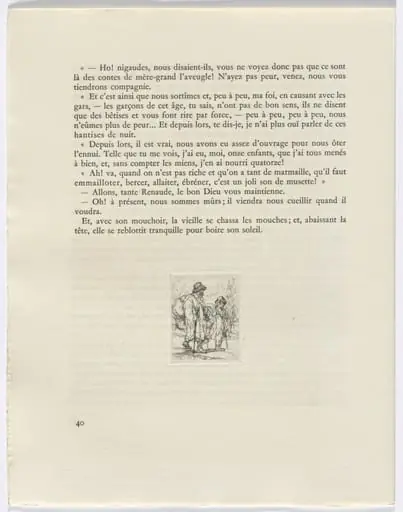 Frédéric Mistral: Mémoires et Recits by Frédéric Mistral: two figures walking (page 40)
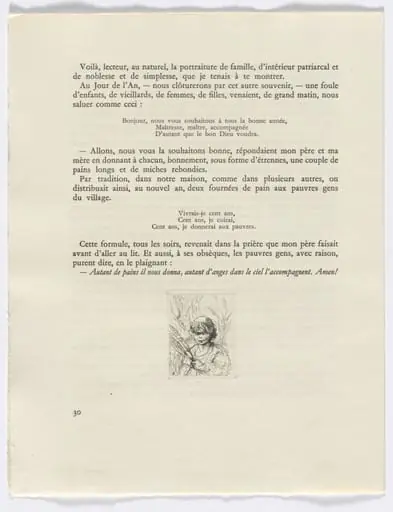 Frédéric Mistral: Mémoires et Recits by Frédéric Mistral: bust of a child (page 30)
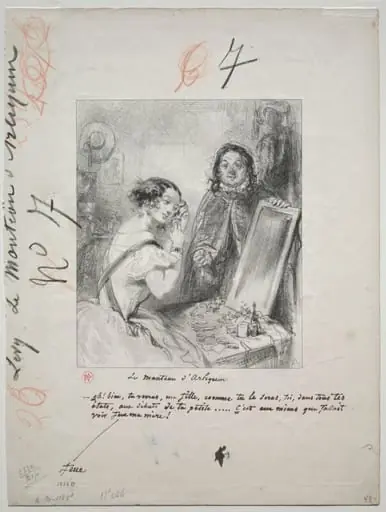 Le Manteau d'Arlequin: Eh bien ! Tu verra, ma fille...
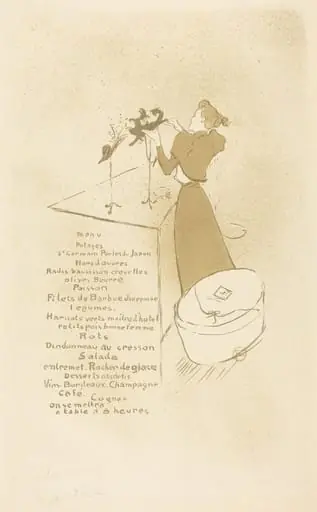 The Milliner (La Modiste - Renée Vert)
 Untitled