Artwork
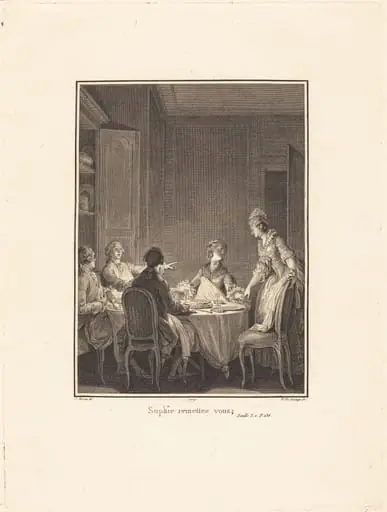
Sophie remettez-vous
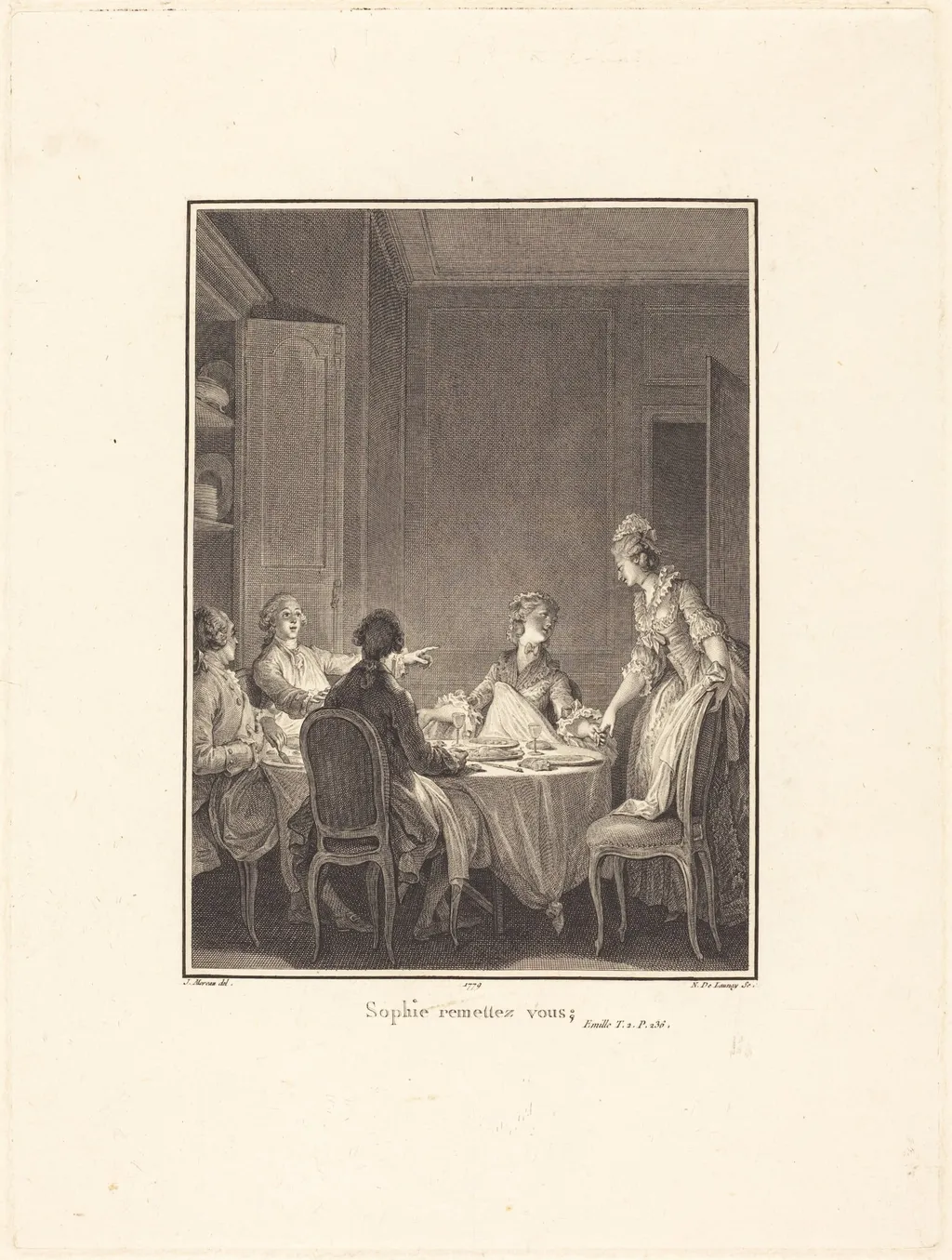
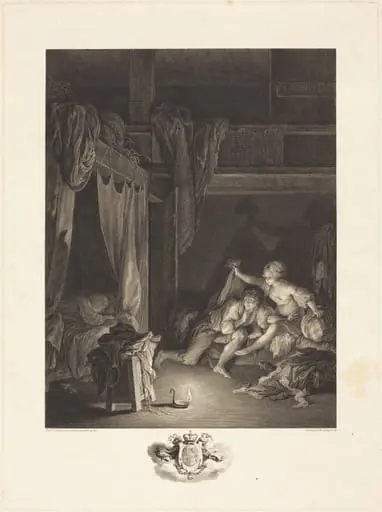
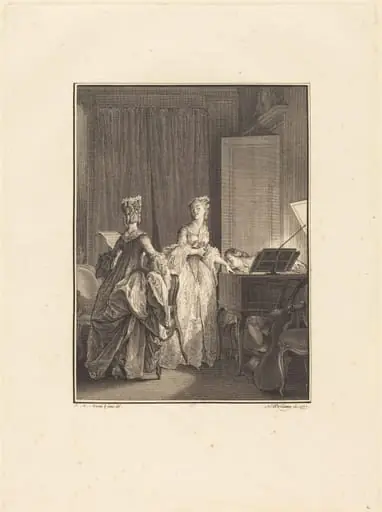
Sophie remettez-vous is an ink print by the Romanticist artist Nicolas Delaunay. It dates from 1779 and is held in the collection of the National Gallery of Art.
About this work
Overview
Created in 1779 by Nicolas Delaunay, this black-and-white print combines etching and engraving techniques to depict an intimate domestic scene.
Created in 1779 by Nicolas Delaunay, this black-and-white print combines etching and engraving techniques to depict an intimate domestic scene. The composition centers on five figures in a modest interior, rendered with precise linear detail. The work belongs to the tradition of 18th-century French printmaking, where everyday moments were captured with observational clarity rather than grand narrative.
Subject & Meaning
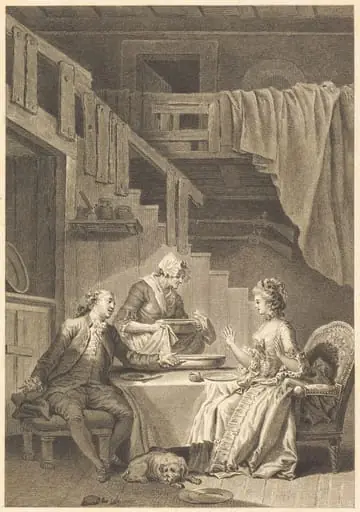
The scene portrays a quiet moment of domestic interaction: two women seated at a table with tea service, a man gesturing toward an unseen object, another listening intently, and a woman in ornate attire standing apart. The absence of overt drama suggests a private, unscripted exchange. The title, 'Sophie, remettez-vous,' implies a moment of calm or reassurance, hinting at emotional nuance beneath the surface of routine.
Technique & Style
Delaunay employed fine, controlled lines typical of engraving to render fabric folds, metallic surfaces, and textured wood. Etching allowed for softer tonal gradations, particularly in the shadowed corners and the heavy curtains. Light is subtly modeled on the teapot’s rim and jewelry, enhancing realism without theatricality. The composition’s tight framing and muted palette reinforce the intimacy of the moment.
History & Provenance
The print was produced during the late Ancien Régime, a period when domestic scenes gained popularity in print form among the middle class. Though specific early ownership records are scarce, similar works by Delaunay circulated in Parisian art markets. It likely served as a decorative item or a study in human behavior, reflecting the era’s interest in private life over public spectacle.
Context
In late 18th-century France, printmaking offered an accessible medium for depicting contemporary life. Artists like Delaunay responded to rising demand for images of domesticity, often influenced by genre painting traditions. This work aligns with a broader cultural shift toward valuing quiet, personal moments—distinct from the mythological or aristocratic themes dominant in academic art.
Legacy
Though not widely exhibited today, the print remains a representative example of French graphic art from the pre-Revolutionary period. It contributes to the understanding of how everyday scenes were visually documented before photography. Delaunay’s attention to subtle gestures and interior detail influenced later generations of printmakers focused on realism and psychological nuance.
Artist & collection

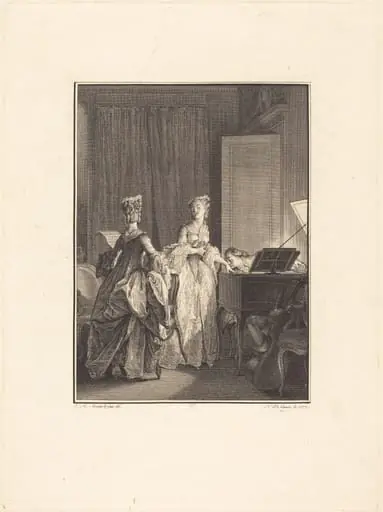
 Julie s'évanouit dans un fauteuil
 Julie s'évanouit dans un fauteuil
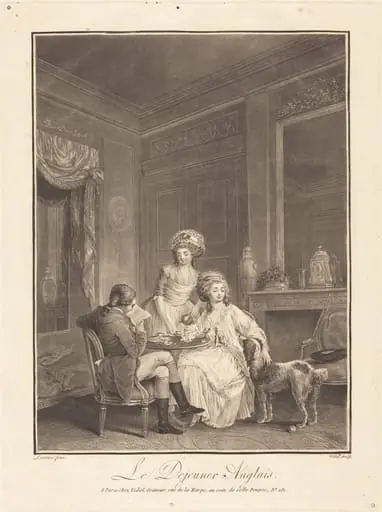 Le dejeuner anglais
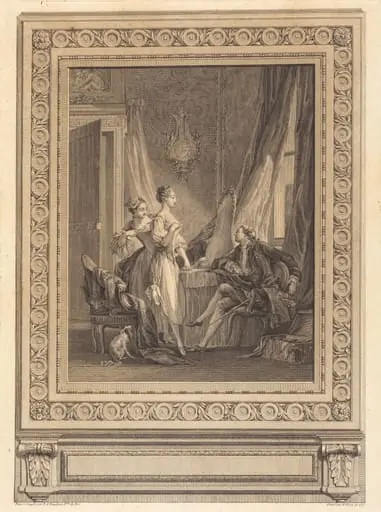 La toilette
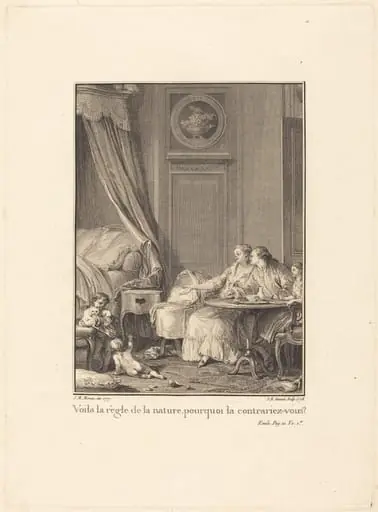 Voilà la règle de la nature, pourquoi la contrariez-vous?
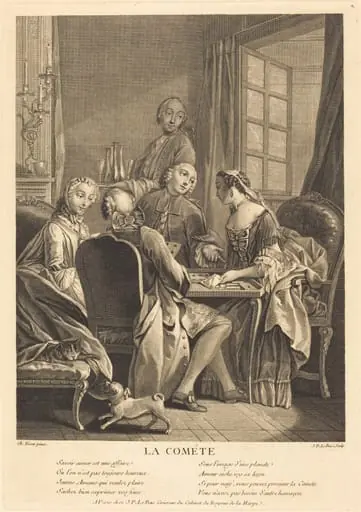 La comete
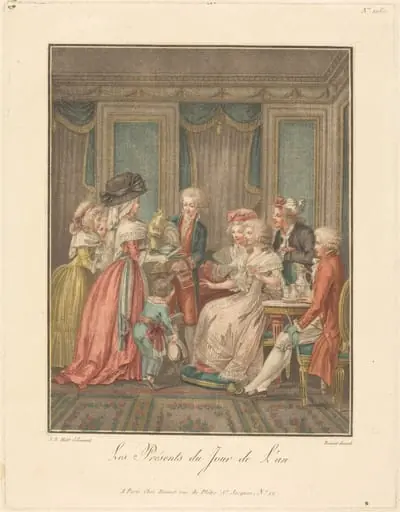 Les Présents du jour de l'an
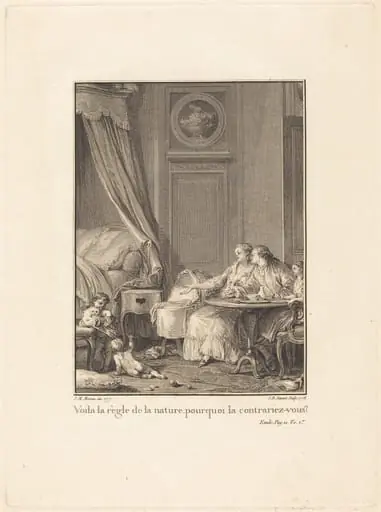 Voilà la règle de la nature, pourquoi la contrariez-vous?
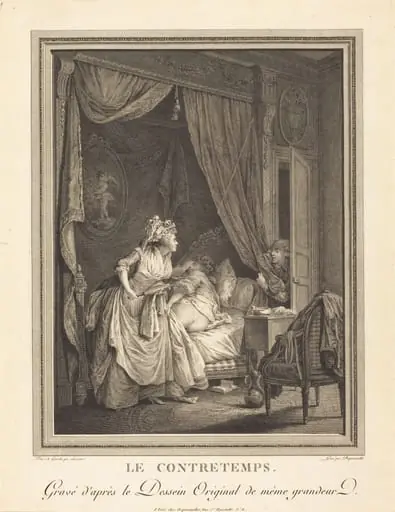 Le contretemps
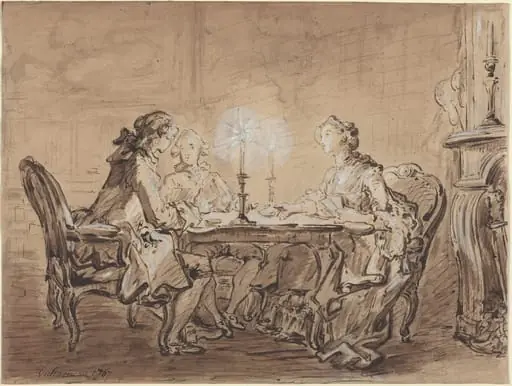 A Game of Cards
 Le faucon
 Sophie remettez-vous