Artwork
David Meeting Goliath
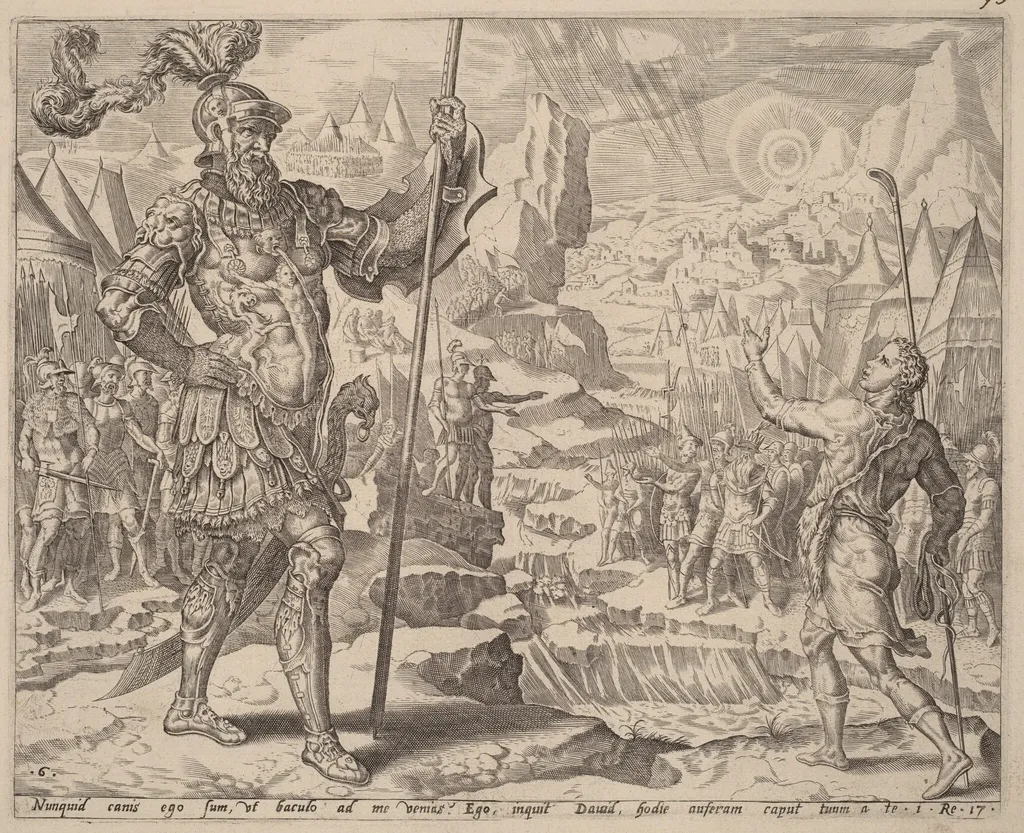
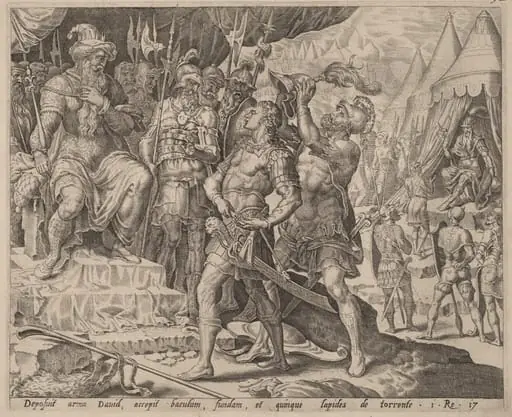
David Meeting Goliath is an ink print by the Renaissance artist Dutch 16th Century. It dates from 1556 and is held in the collection of the National Gallery of Art.
About this work
Overview
The composition centers on the physical and symbolic contrast between the two figures, set against a sparse landscape of rolling hills and distant encampments.
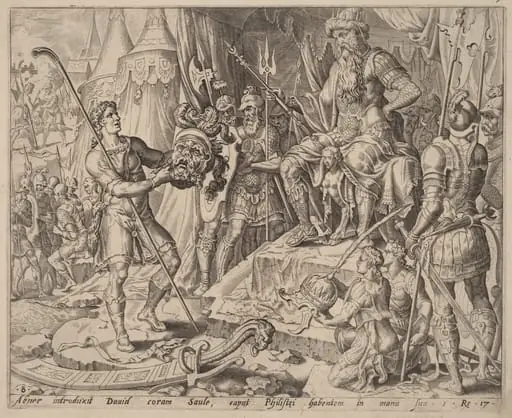
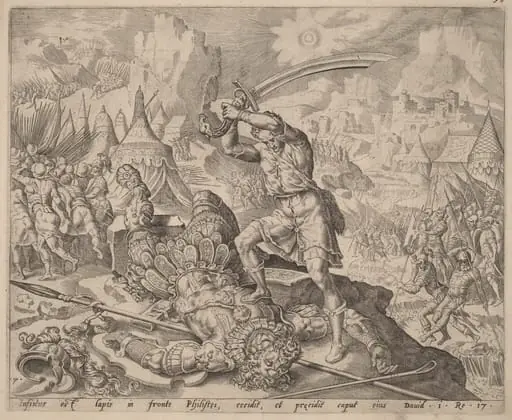
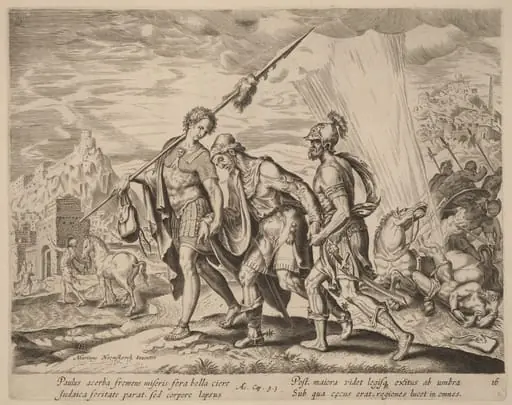
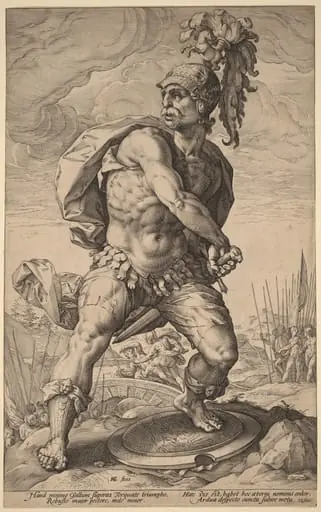
This engraving depicts the biblical encounter between David and Goliath, rendered in fine linear detail characteristic of the printmaking technique. The composition centers on the physical and symbolic contrast between the two figures, set against a sparse landscape of rolling hills and distant encampments. The medium emphasizes texture through incised lines, enhancing the tactile quality of fabric, metal, and terrain.
Subject & Meaning
The scene illustrates the moment before battle, when the young shepherd David faces the towering Philistine warrior Goliath. David’s unarmored form and simple sling suggest reliance on agility and faith, while Goliath’s heavy armor and spear convey brute strength and conventional power. The visual disparity underscores a narrative of humility triumphing over might, rooted in biblical tradition.
Technique & Style
The image is executed in engraving, a method involving incised lines cut into a metal plate to hold ink. Fine, controlled strokes define the textures of armor, clothing, and landscape, creating depth through variation in line weight and density. The absence of tone or shading relies entirely on linear precision to model form and suggest spatial recession.
History & Provenance
The engraving’s origin is not documented here, but its subject and technique align with early modern European print traditions, particularly those produced for religious instruction or popular devotion. Such prints were widely circulated in the 16th and 17th centuries, often reproduced from designs by established artists or biblical illustrators.
Context
During the Reformation and Counter-Reformation, biblical scenes like David and Goliath were frequently reproduced in prints to convey moral and theological messages to a literate and semi-literate public. The contrast between the underdog and the oppressor resonated with communities navigating political and religious upheaval.
Legacy
This engraving reflects a broader trend in early modern visual culture where biblical narratives were adapted for mass dissemination through print. Its reliance on linear clarity and symbolic contrast influenced later illustrative traditions, embedding the story of David and Goliath into the visual vocabulary of Western art.
Artist & collection

Artist
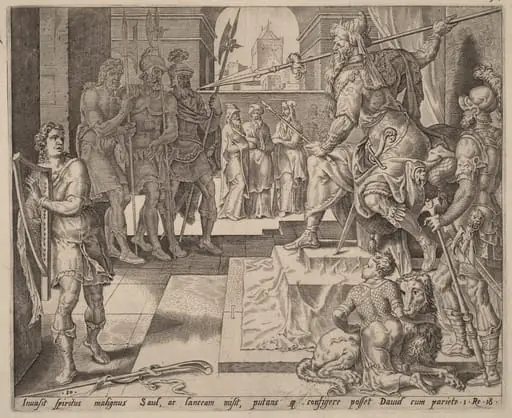
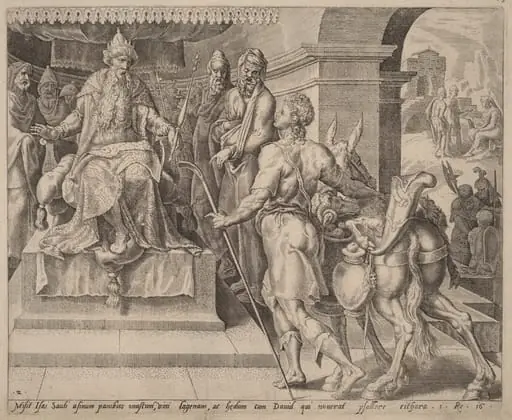
This Dutch artist made engravings in the 1550s that retell the biblical story of David and Saul.