Artwork
Arcadian Landscape
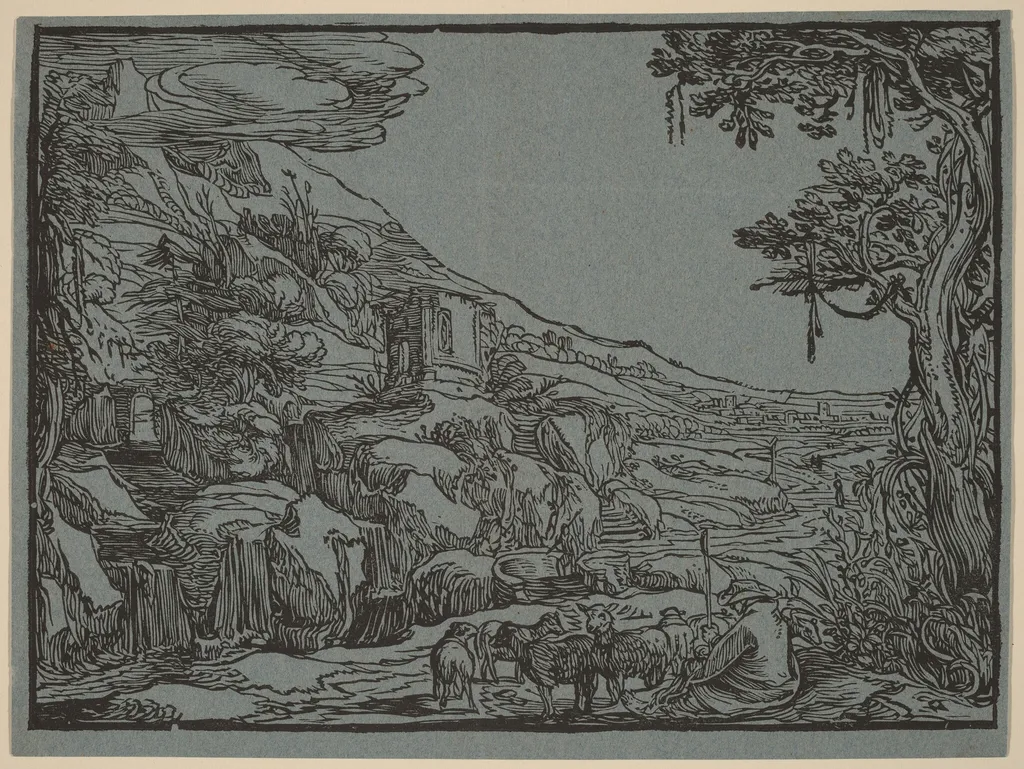
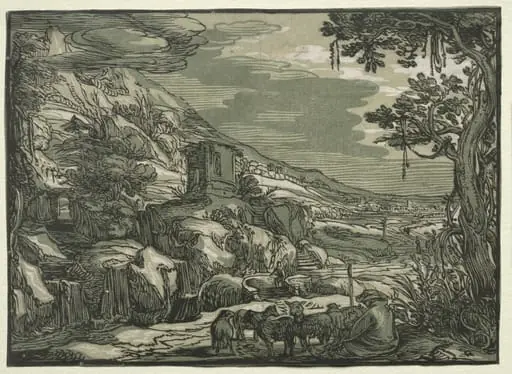
Arcadian Landscape is an ink print by the Baroque artist Dutch 17th Century. It dates from 1614 and is held in the collection of the National Gallery of Art. This woodcut on blue laid paper depicts a tranquil rural scene, rendered in the traditional relief printing method.
About this work
Overview
The choice of blue paper adds a quiet tonal contrast to the inked lines, enhancing the calm atmosphere of the composition.
This woodcut on blue laid paper depicts a tranquil rural scene, rendered in the traditional relief printing method. The image features gentle hills, a meandering path, and scattered trees, with sheep and a shepherd near a stream. Distant buildings emerge subtly from the foliage, and the sky is softly clouded. The choice of blue paper adds a quiet tonal contrast to the inked lines, enhancing the calm atmosphere of the composition.
Subject & Meaning
The scene presents an idealized vision of pastoral life, emphasizing harmony between humans and nature. The lone shepherd tending sheep suggests quiet labor and stewardship, while the undisturbed landscape evokes a sense of timeless serenity. There is no narrative drama—only stillness and routine, inviting contemplation rather than action.
Technique & Style
The image was produced using a woodcut technique, in which the artist carved lines into a wooden block, leaving raised surfaces to receive ink. The resulting print shows crisp, linear forms with a tactile texture, characteristic of relief printing. The use of blue paper as a ground subtly modifies the contrast, softening the black ink and lending the scene a muted, atmospheric quality.
History & Provenance
The work is an example of early modern printmaking, likely produced in the 16th or 17th century, when woodcuts were commonly used for both artistic and reproductive purposes. The blue paper suggests a deliberate aesthetic choice, possibly influenced by regional printing practices or the availability of dyed stock. Its survival indicates it was valued enough to be preserved, though its specific origin remains undocumented.
Context
During the period of its creation, woodcuts were widely accessible and often used to depict landscapes as symbols of order and peace. Rural scenes like this one reflected contemporary ideals of simplicity and moral virtue tied to the land. While not tied to a specific event, the image aligns with broader European traditions of pastoral imagery in print and painting.
Legacy
This print exemplifies how woodcut technology enabled the dissemination of quiet, contemplative imagery beyond elite audiences. Its use of colored paper and restrained composition influenced later printmakers seeking emotional resonance through minimal means. Though not widely known today, it represents a quiet thread in the evolution of landscape printmaking.
Artist & collection

Artist
This Dutch artist made small, sharp engravings and etchings—mostly portraits and sea battles—printed from metal plates.

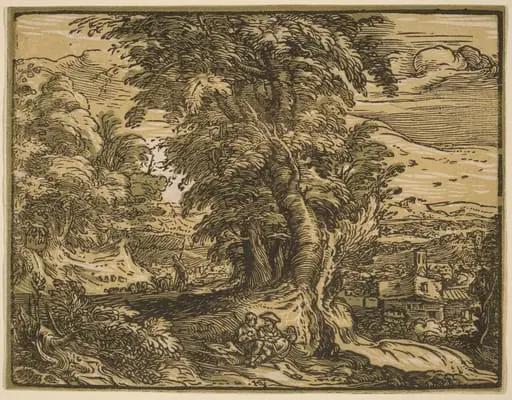 Landscape with a Shepherd Couple
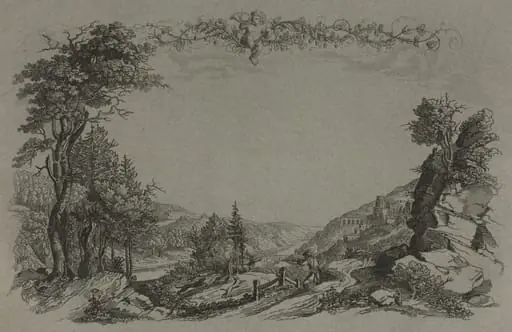 Six Views of Heidelberg Castle: Cover, Hunting Scene
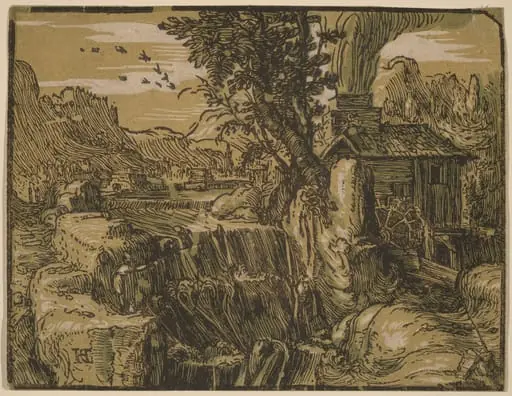 Landscape with a Waterfall
 Sheep Calling Lamb
 The Stream
 Six Views of Heidelberg Castle
 View Near Rome
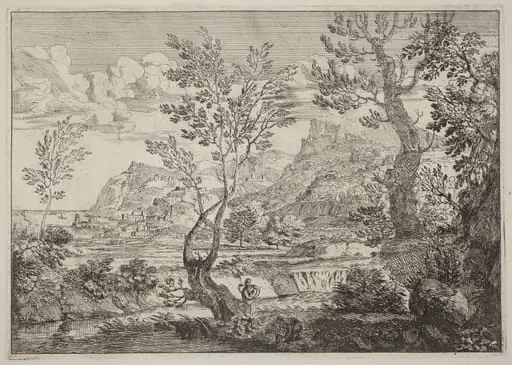 A Waterfall
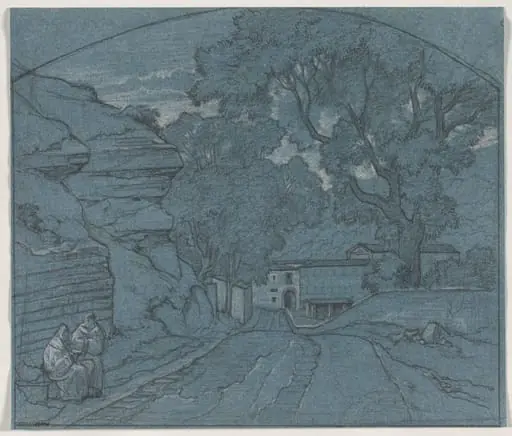 Landscape with Two Monks
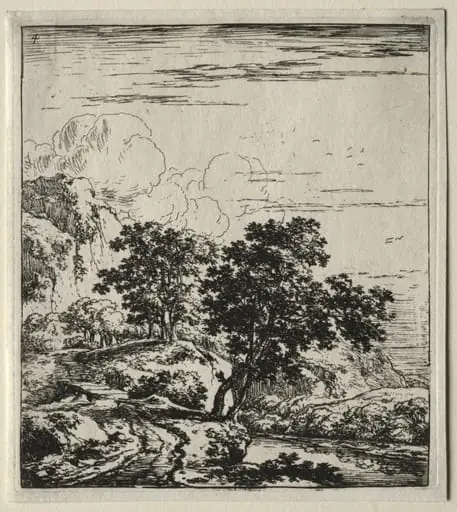 Le sentier au bord de la rivière et le petit pont du bois
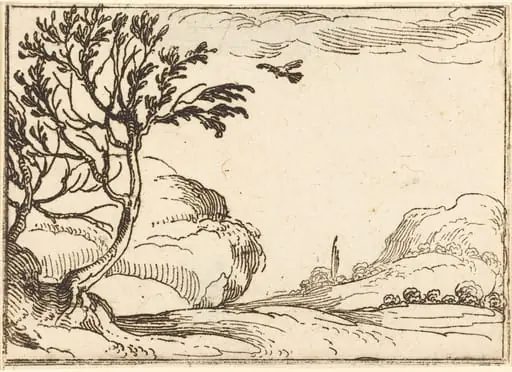 Turtle Dove Flying in the Desert
 Arcadian Landscape