Artwork
Arcadian Landscape
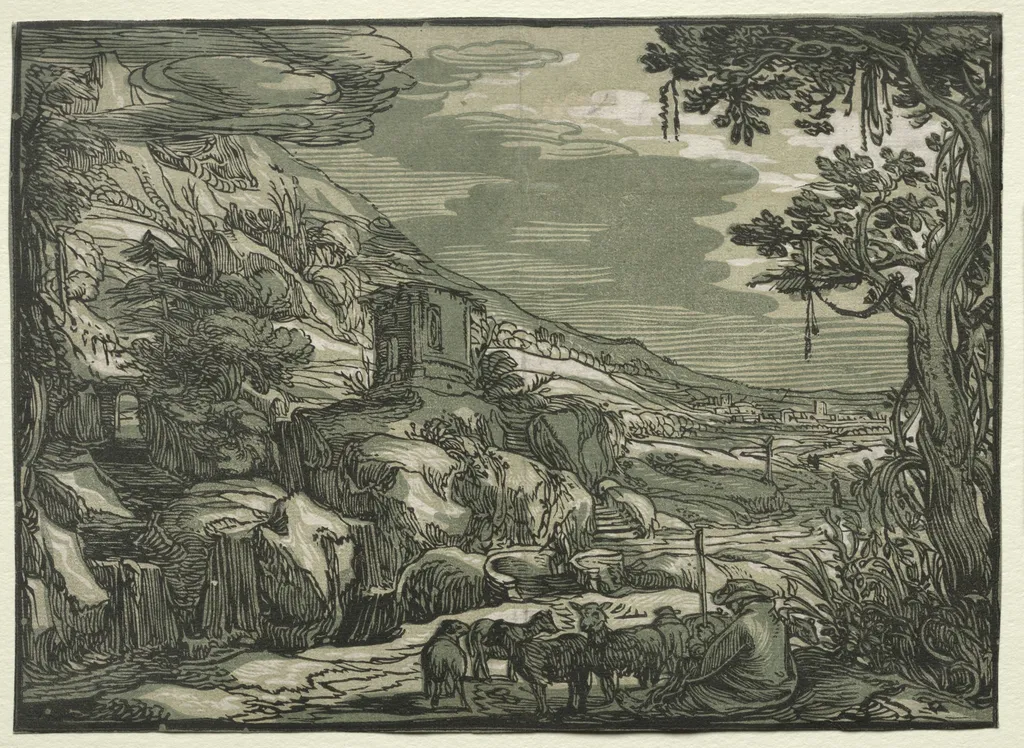
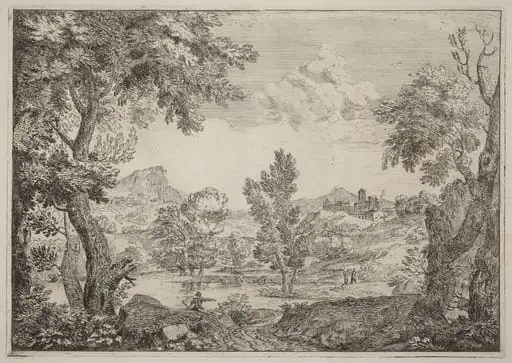
Arcadian Landscape is a print by the Baroque artist Esaias van de Velde. It dates from 1615 and is held in the collection of the Cleveland Museum of Art.
About this work
Overview
Created circa 1615 by Dutch artist Esaias van de Velde, *Arcadian Landscape* is an early‑17th‑century print that exemplifies the period’s emerging interest in natural scenery. The composition depicts a calm lake foreground, a forested middle ground, and rolling hills that recede toward a distant village, offering a layered sense of space.
Subject & Meaning
The work presents an idealized pastoral setting, inviting contemplation of a harmonious relationship between water, woodland, and human habitation. By placing a modest settlement within a broader, untouched landscape, van de Velde suggests a tranquil coexistence of rural life and nature, a theme common in early Dutch depictions of Arcadia.
Technique & Style
Van de Velde employs a restrained palette of warm earth tones, using light to illuminate the lake surface and foliage while casting gentle shadows on the hills. The print’s line work is confident, with expressive strokes that convey texture in trees and water, reflecting the nascent Baroque sensibility toward chiaroscuro without overt drama.
History & Provenance
The print entered the collection of the Cleveland Museum of Art, where it remains on view. Its acquisition reflects the museum’s broader effort to represent the development of Dutch landscape art, situating van de Velde alongside his contemporaries who helped define the genre.
Artist & collection
Artist
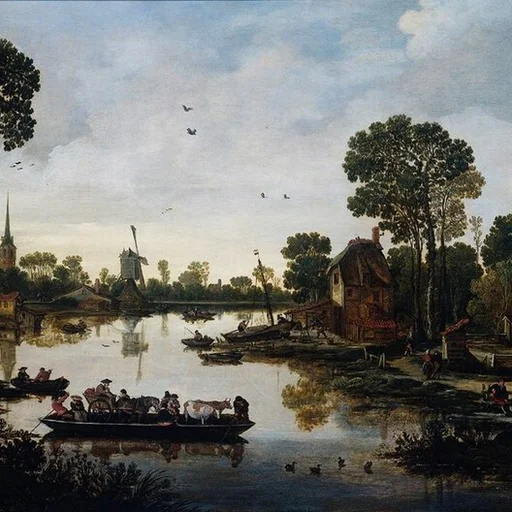
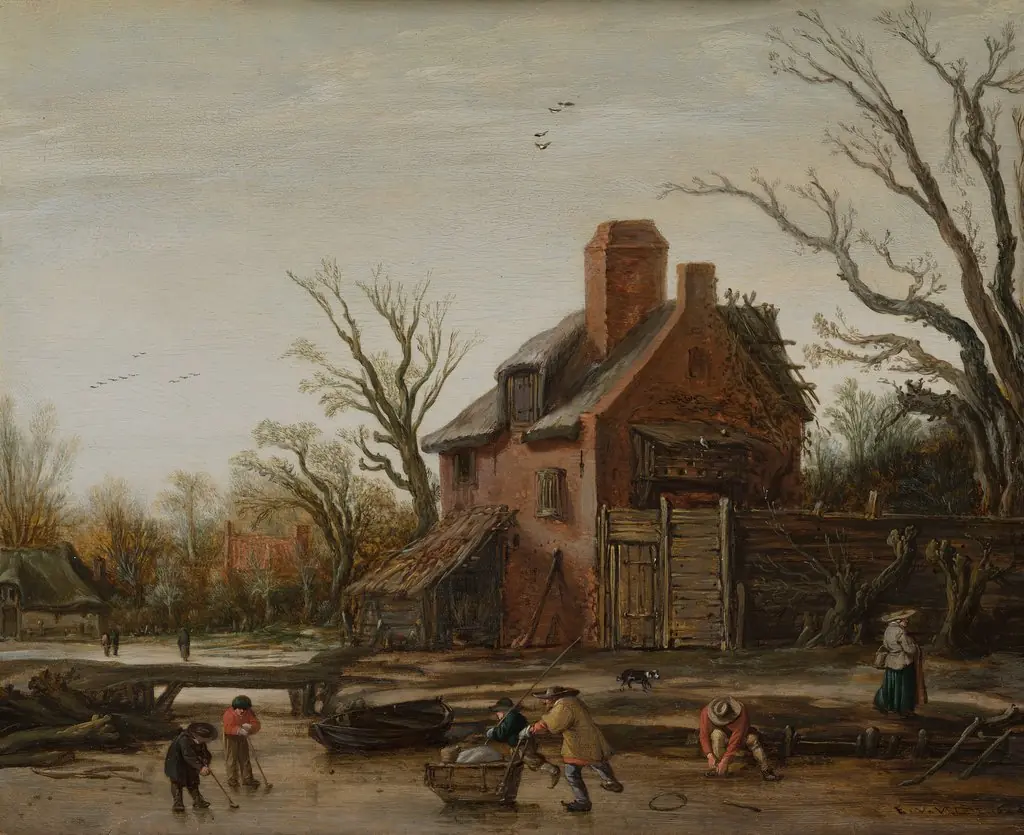
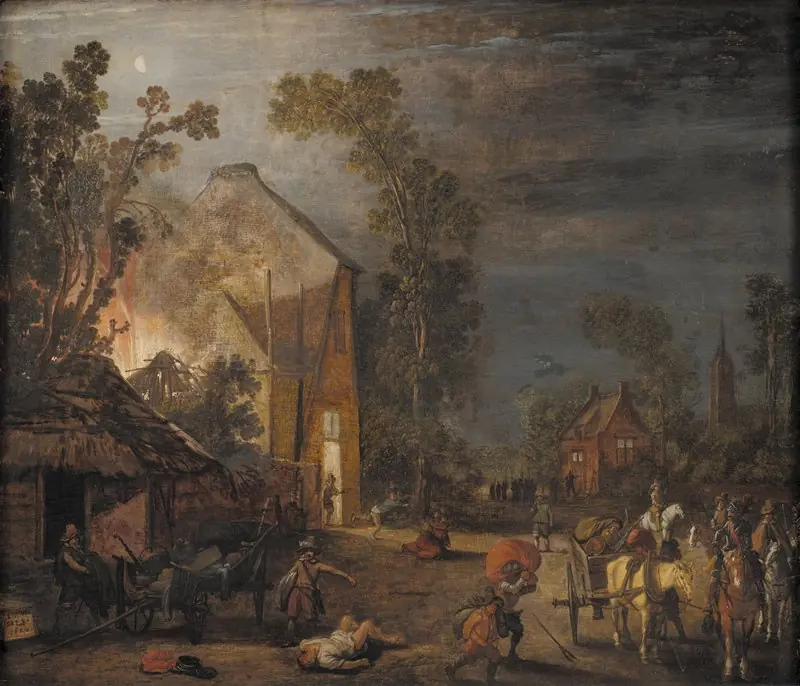
Esaias van de Velde (17 May 1587 (baptized) – 18 November 1630 (buried)) was a Dutch Golden Age painter, mainly of landscapes and a printmaker who experimented with etching.

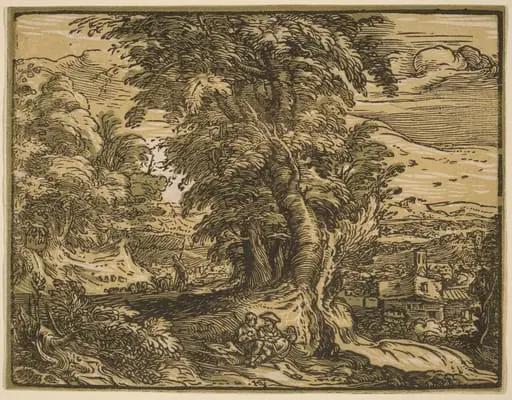 Landscape with a Shepherd Couple
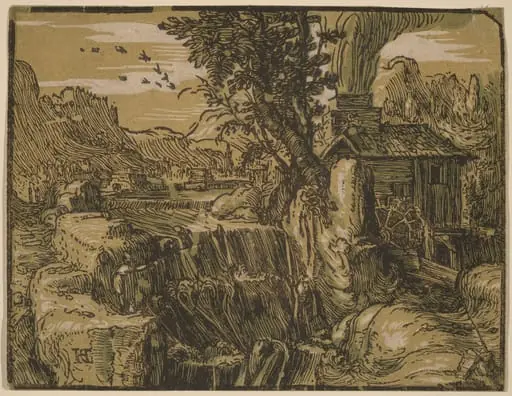 Landscape with a Waterfall
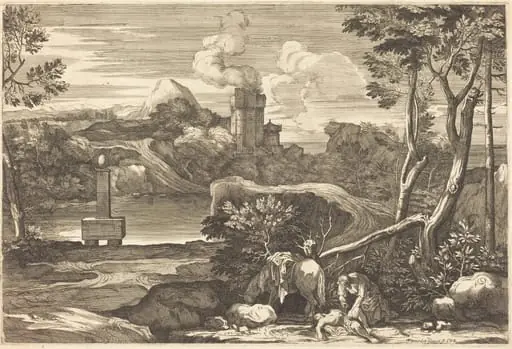 The Samaritan Pours Oil and Wine in the Wounds of a Man Left for Dead
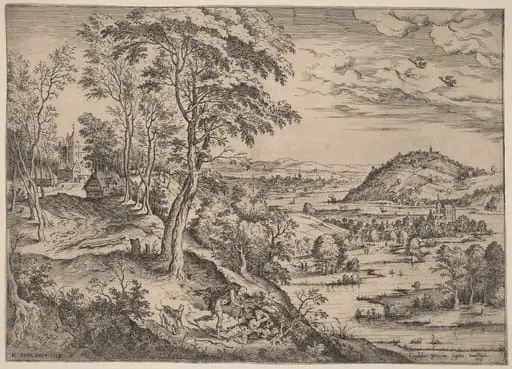 Cephalus and Procris
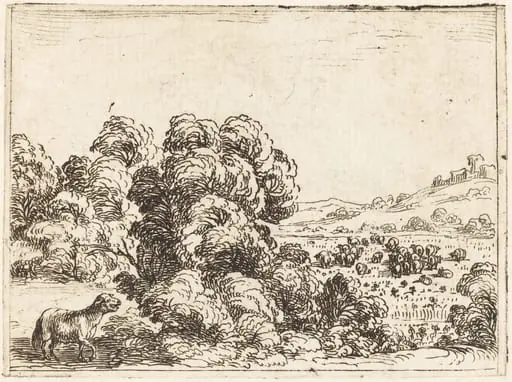 Sheep Calling Lamb
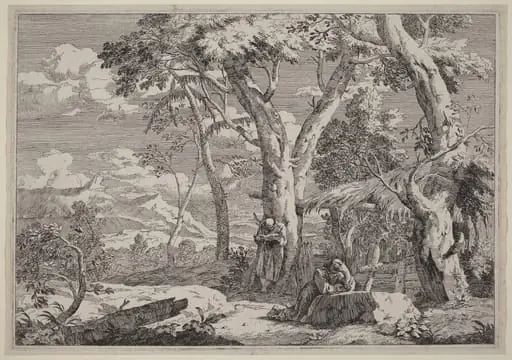 Wilderness Landscape with Two Monks
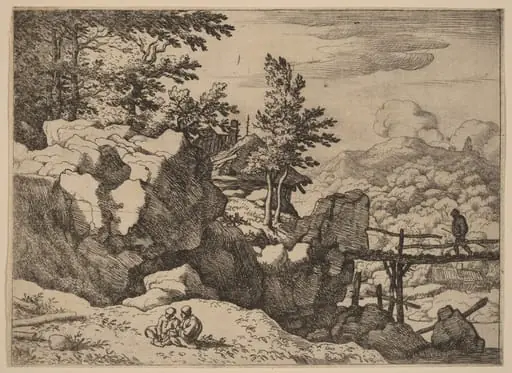 Man on a Small Wooden Bridge
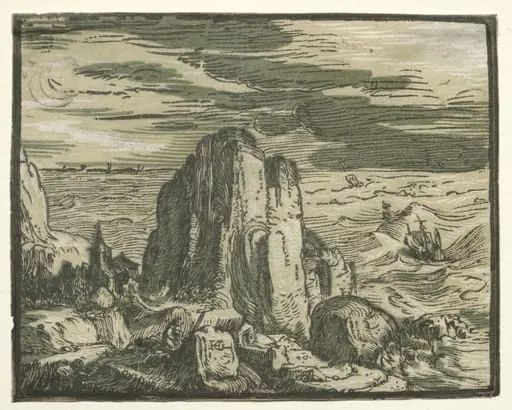 Four Small Landscapes: No. 4, Cliff on the Seashore
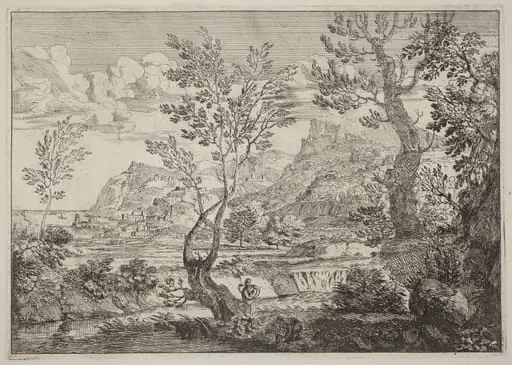 A Waterfall
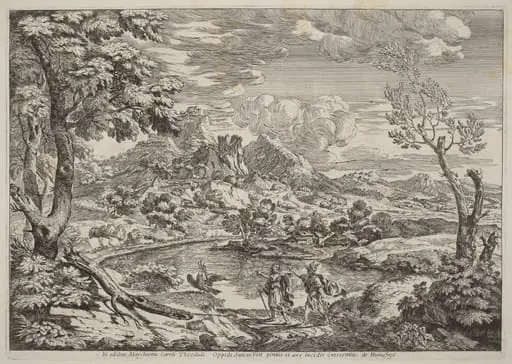 A Man Showing Mercury the Eagle of Jupiter
 The Stream
 Arcadian Landscape