Artwork
Six Views of Heidelberg Castle
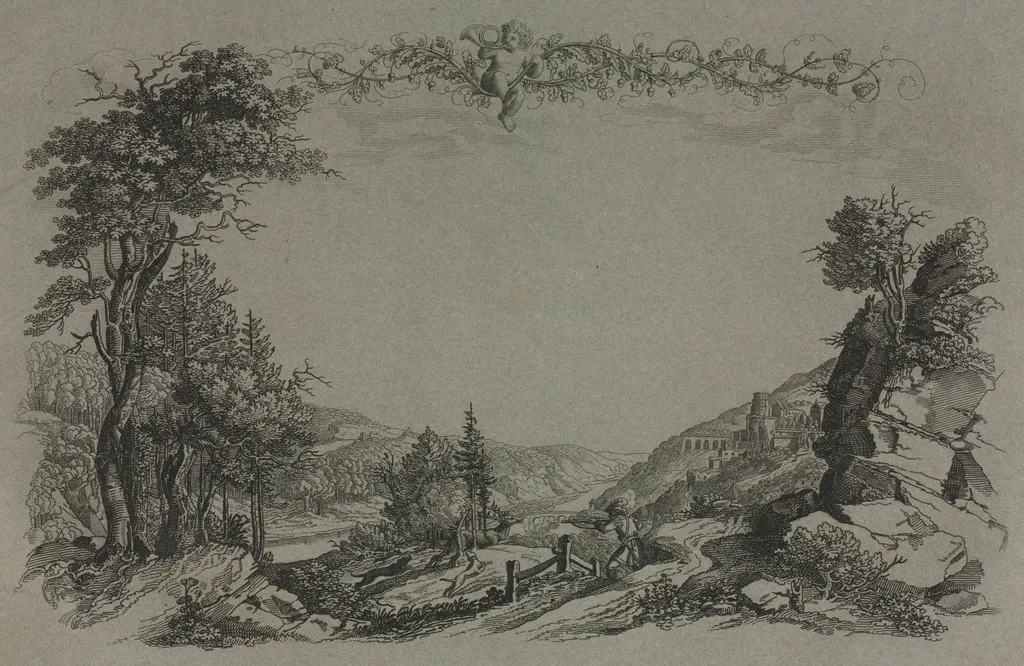
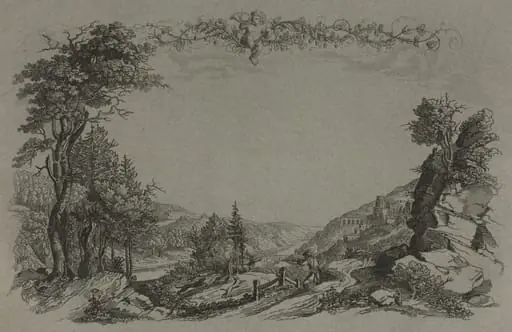
Six Views of Heidelberg Castle is a print by the Romanticist artist Ernst Fries. It dates from 1820 and is held in the collection of the Cleveland Museum of Art.
About this work
Overview
Ernst Fries produced *Six Views of Heidelberg Castle* in 1820 as a series of prints capturing the ruin from multiple angles.
Ernst Fries produced *Six Views of Heidelberg Castle* in 1820 as a series of prints capturing the ruin from multiple angles. A German artist active in the early 19th century, Fries was associated with the Heidelberg circle of Romantic painters. His work combined precise observation with emotional resonance, reflecting a broader cultural interest in medieval ruins as symbols of historical memory and national identity.
Subject & Meaning
The series presents the fragmented remains of Heidelberg Castle perched above the Neckar River, framed by dense woodland and distant hills. Each view emphasizes decay and grandeur in equal measure, inviting contemplation of time’s passage. Human figures in the foreground, small and contemplative, underscore the scale of nature and history against human transience, a common Romantic theme.
Technique & Style
Fries employed detailed line work and subtle tonal gradations typical of etching and aquatint, techniques well-suited to rendering texture and atmosphere. Light is used to model architectural forms and cast long shadows, enhancing the sense of depth. The compositions avoid idealization, instead grounding dramatic effects in observed reality, a bridge between Romantic sentiment and emerging Realist precision.
History & Provenance
Created during a period of renewed interest in Germany’s medieval heritage, the prints were likely produced for local collectors and travelers drawn to Heidelberg’s picturesque ruins. Fries’s association with fellow artists like Karl Philipp Fohr suggests the series was part of a regional artistic dialogue. The prints circulated in academic and bourgeois circles, contributing to the castle’s status as a cultural landmark.
Context
In the early 1820s, Heidelberg became a focal point for German Romanticism, where ruins were seen as vessels of national spirit. Fries’s work emerged alongside literary and philosophical movements that valued emotion, nature, and historical continuity. His prints responded to a growing public appetite for images that connected landscape with collective memory, particularly after the Napoleonic Wars disrupted traditional identities.
Legacy
Fries’s *Six Views* contributed to the visual documentation of Heidelberg Castle at a critical moment in its preservation history. While not widely known beyond regional art circles, the series influenced later topographical artists and helped shape the aesthetic treatment of ruins in 19th-century German art. The prints remain valuable records of the castle’s condition before extensive 19th-century restoration efforts.
Artist & collection
Artist
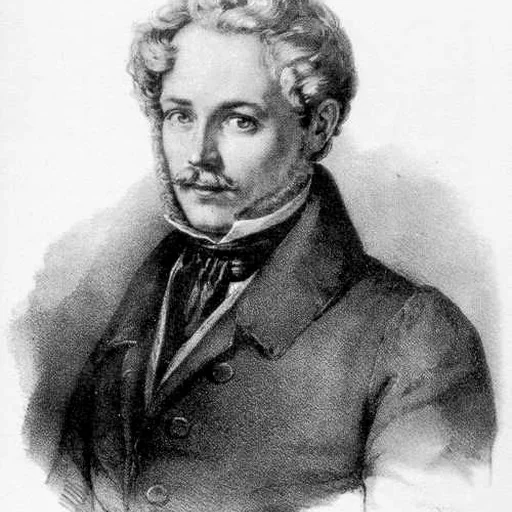
Ernst Fries (22 June 1801, Heidelberg – 11 October 1833, Karlsruhe) was a German painter, draftsman, watercolourist, etcher, printmaker, and lithograph.

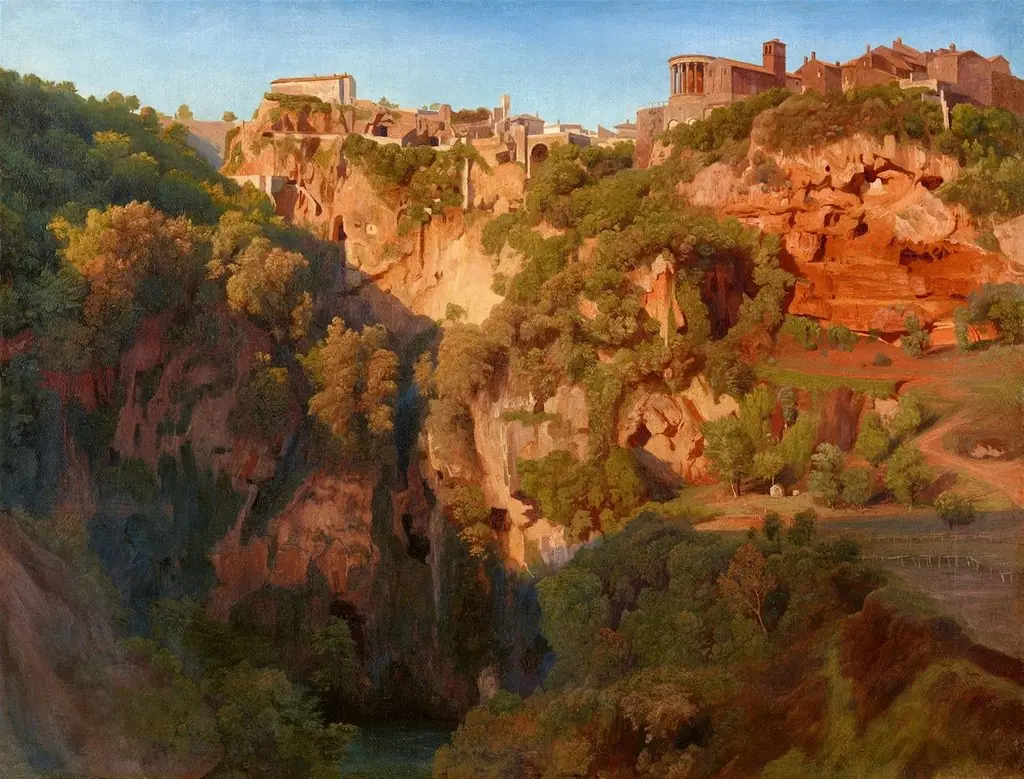 The Waterfalls at Tivoli with the Ponte Lupo, Temple of Vesta, and Temple of Sibyl The Waterfalls at Tivoli with the Ponte Lupo, Temple of Vesta, and Temple of Sibyl
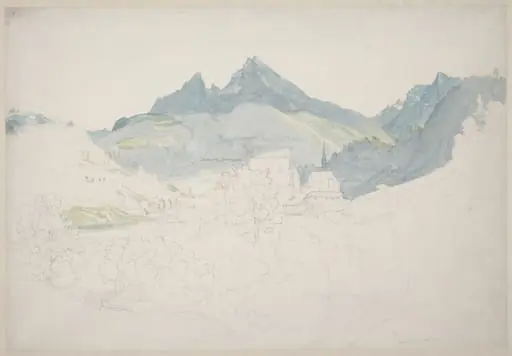 Berchtesgaden with the Watzmann Peak in the Distance
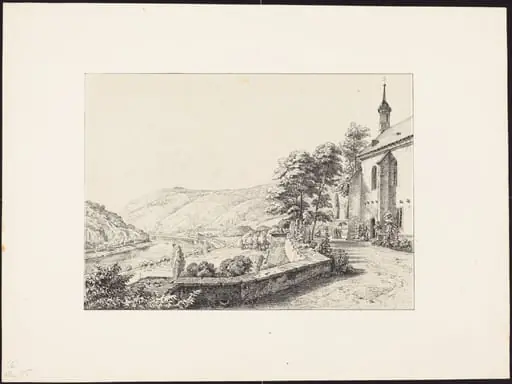 The Convent Terrace
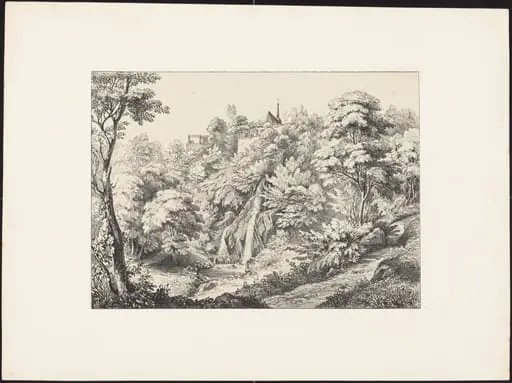 Rear View of the Convent with Waterfall
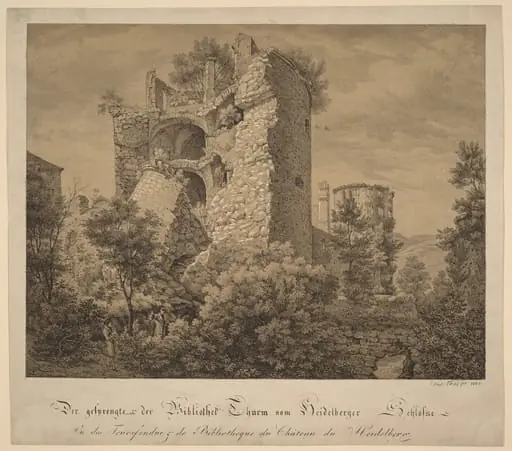 Der Gesprengte und der Bibliotheke Thurm von Heidelberger Schloß (The Exploded Tower and the Library of Heidelberg Castle)
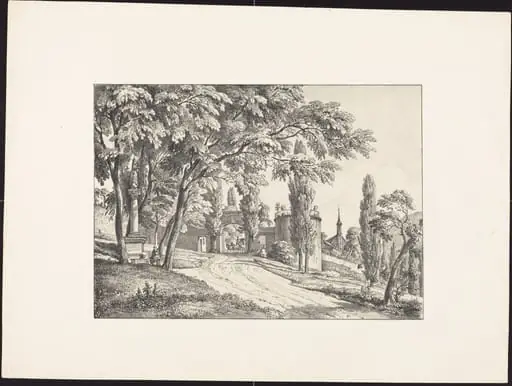 Entrance to the Convent Courtyard
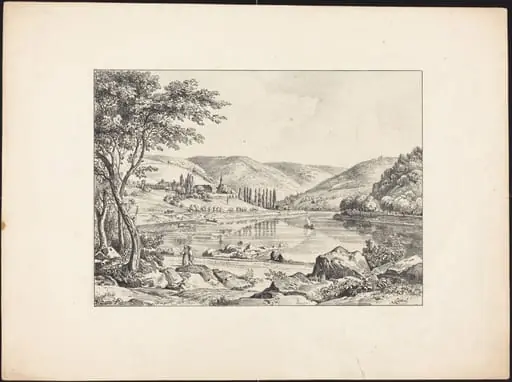 The Convent of Neuburg from Haarlass
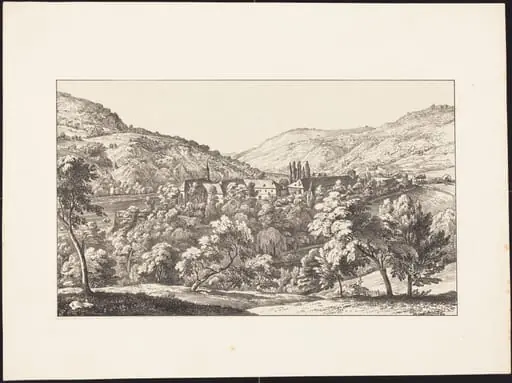 View of the Convent of Neuberg from the Summit
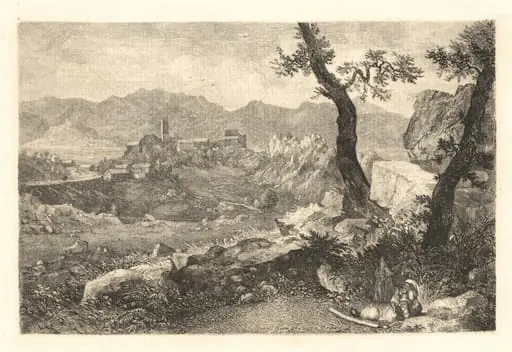 A View near Rome
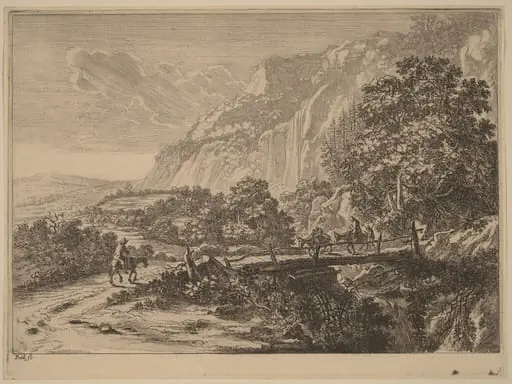 The Wooden Bridge at Sulmona near Tivoli
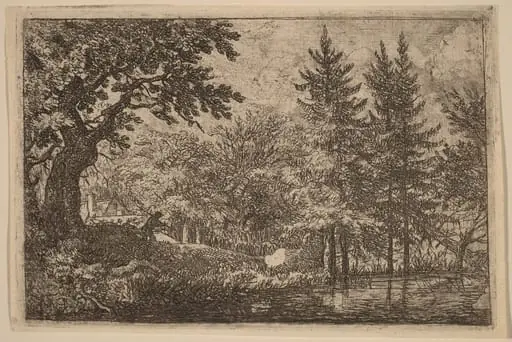 Fir Trees at the Water
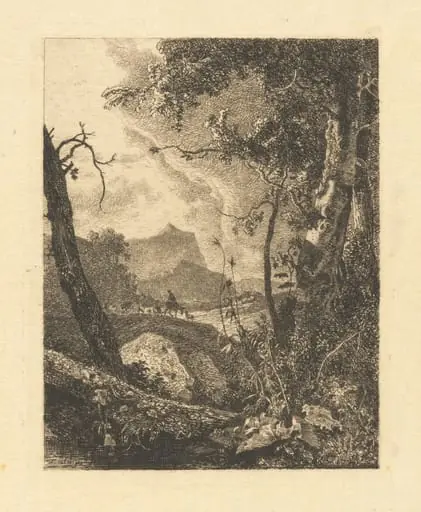 Italian Landscape
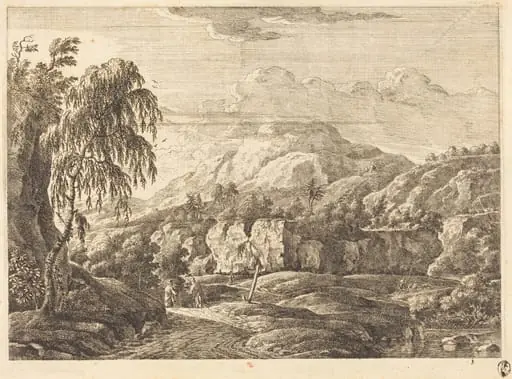 Landscape with Cross and Figures
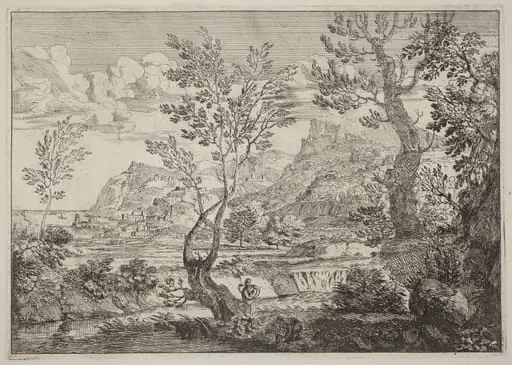 A Waterfall
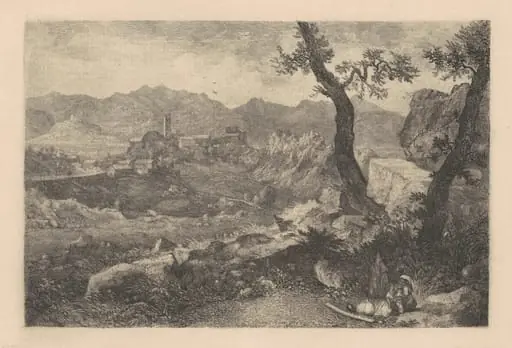 View Near Rome
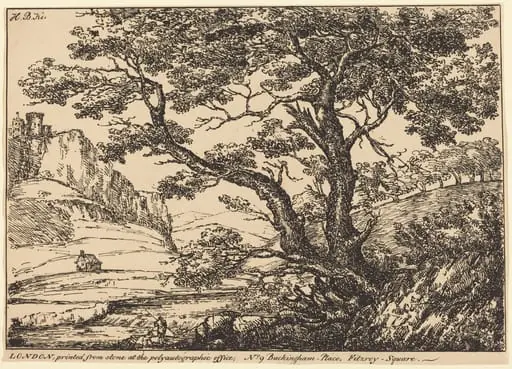 Landscape with Large Tree, Castle on Left
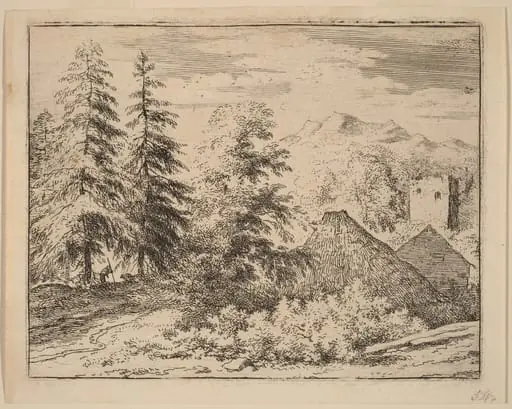 Man between Two Fir Trees
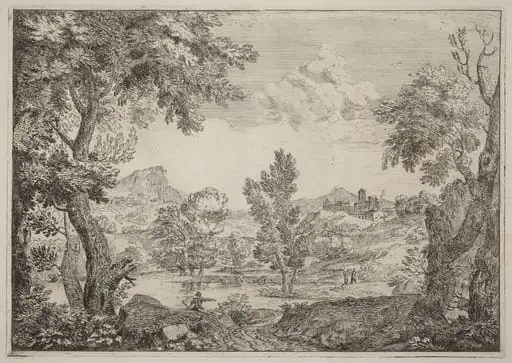 The Stream
 Specimens of Polyautography: Man Seated under an Oak
 Six Views of Heidelberg Castle: Cover, Hunting Scene