Artwork
Old Woman Sleeping
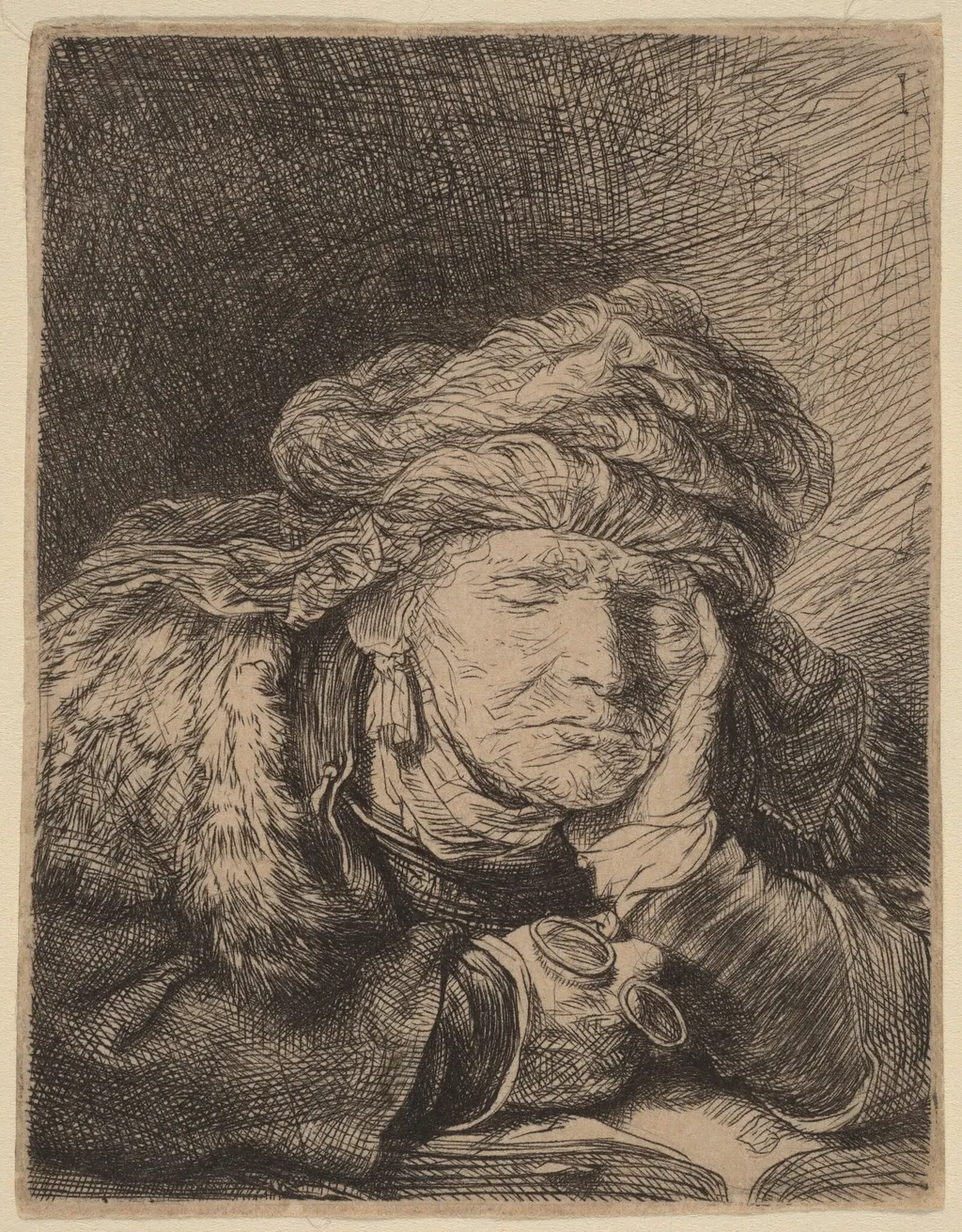
Old Woman Sleeping is an ink print by the Baroque artist Rembrandt. It dates from 1636 and is held in the collection of the National Gallery of Art.
About this work
Overview
Created around 1636, this etching by Rembrandt van Rijn depicts an elderly woman in repose. Rendered in monochrome, the work captures a quiet, intimate moment with minimal detail. The composition focuses on the figure’s stillness, emphasizing texture and shadow over narrative. The medium’s inherent graininess enhances the sense of solitude and physical weight.
Subject & Meaning
The subject is an aging woman, her head wrapped in a simple cloth, hands folded gently over her chest. There is no indication of identity or context, suggesting a meditation on vulnerability and rest rather than a portrait. The absence of expression or environment invites contemplation of mortality and the dignity of ordinary life in its most unguarded form.
Technique & Style
Rembrandt employed drypoint and etching to create deep, irregular lines that hold ink unevenly, producing a richly textured surface. The scratchy, uneven strokes mimic the roughness of aged skin and tangled hair, while the contrast between dense shadows and sparse highlights gives the face a sculptural, almost carved quality. The technique prioritizes tactile presence over precision.
History & Provenance
The print emerged during Rembrandt’s early Amsterdam period, when he was refining his printmaking skills. It was likely made for private circulation among collectors rather than public sale. No definitive record of its early ownership exists, but it appears in several 18th-century catalogues of Rembrandt’s prints, indicating its recognition among connoisseurs.
Context
In the 1630s, Rembrandt increasingly turned to intimate, everyday subjects in his prints, moving away from grand historical scenes. This work aligns with a broader interest in human stillness and inner life, influenced by Dutch realism and Protestant values that valued quiet dignity. Similar figures appear in his drawings and paintings of the same era.
Legacy
The etching became a reference for later artists exploring the expressive potential of line and tone in printmaking. Its unidealized portrayal of aging contributed to a shift in how elderly subjects were represented in art, emphasizing authenticity over idealization. It remains a key example of Rembrandt’s ability to convey depth with minimal means.
Artist & collection
Artist
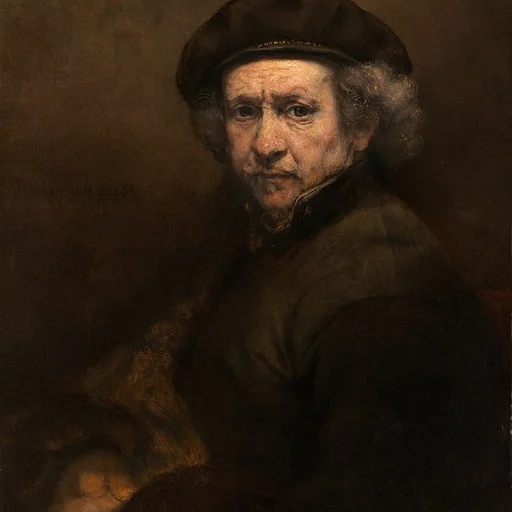
Rembrandt Harmenszoon van Rijn (15 July 1606 – 4 October 1669), known mononymously as Rembrandt, was a Dutch Golden Age painter, printmaker, and draughtsman.

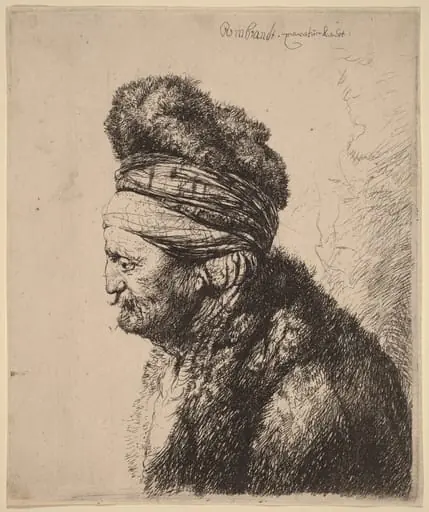 The Second Oriental Head
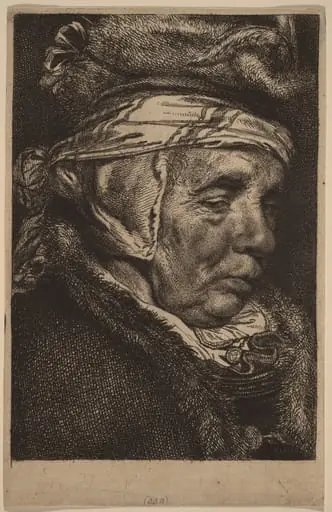 Head of an Old Woman (Visscher's Mother)
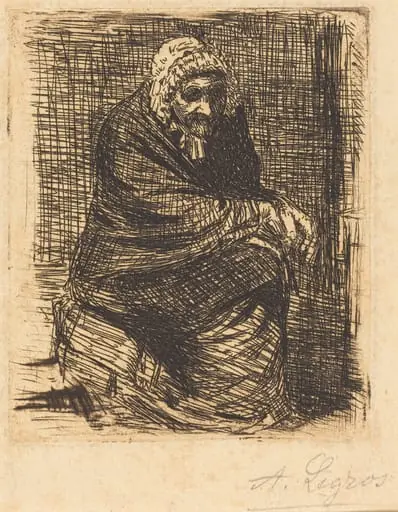 Old Woman Seated (La vieille femme assise)
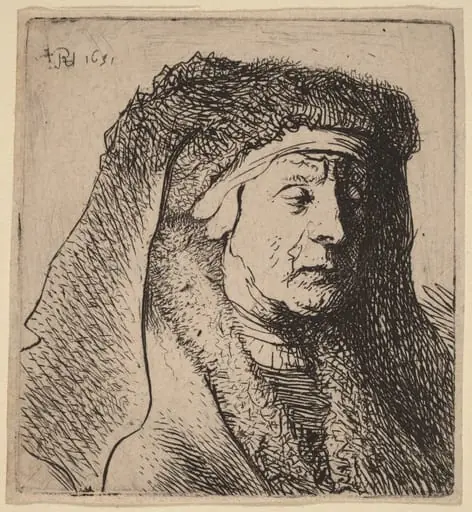 Bust of an Old Woman in a Furred Cloak and Heavy Headdress
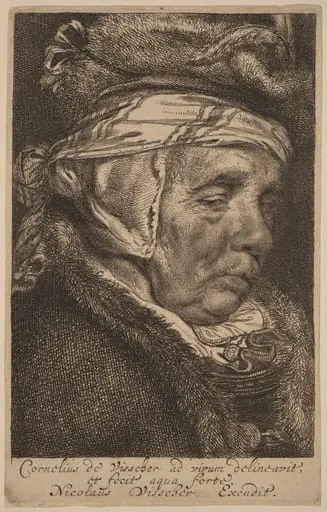 Head of an Old Woman (Visscher's Mother)
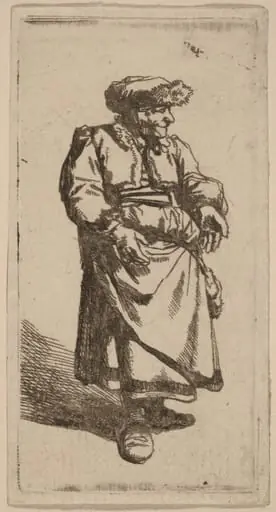 Old Woman Standing
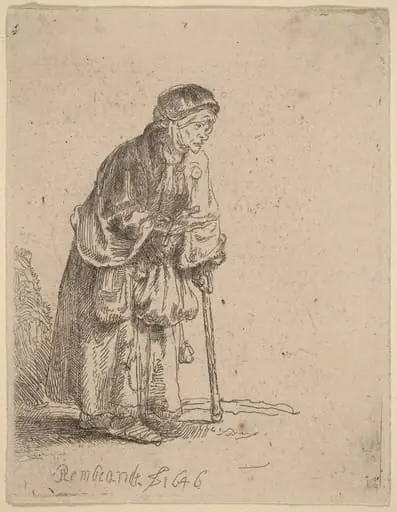 Beggar Woman Leaning on a Stick
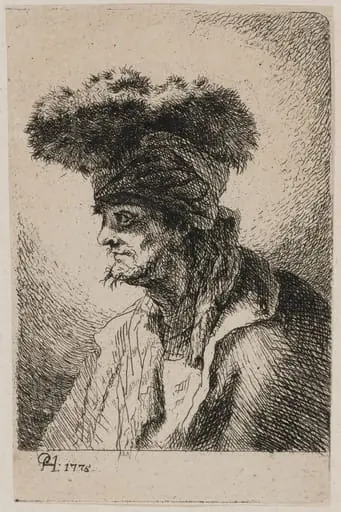 Oriental with a Fur Hat, Looking Left
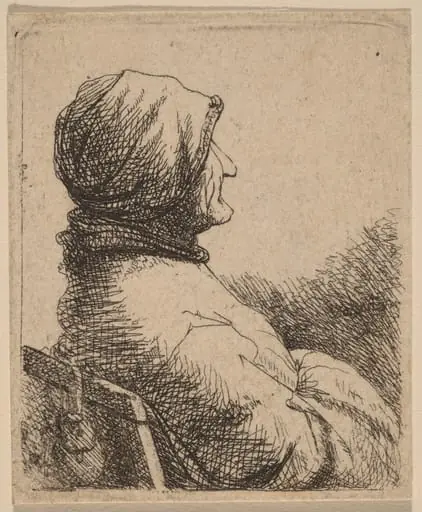 Bust of an Old Woman Turned in Profile to the Right
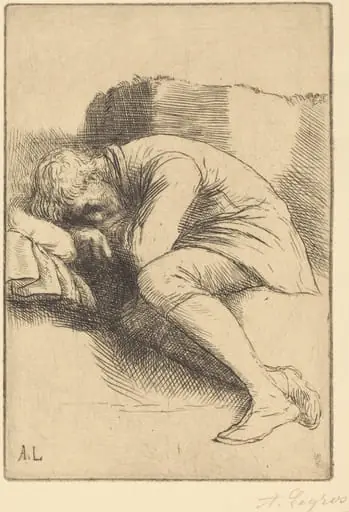 Sleeper (Un dormeur)
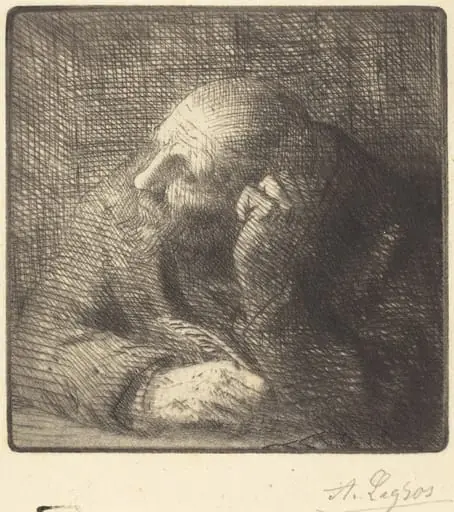 Meditation (La meditation)
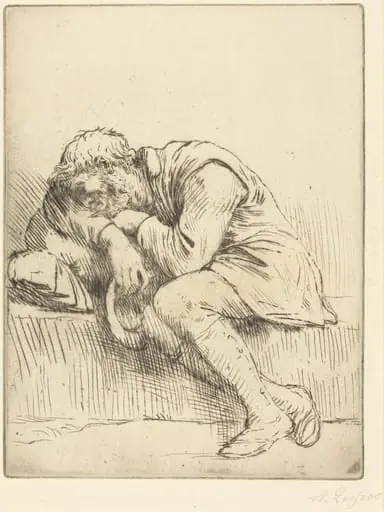 Sleeping Beggar (Mendiant endormi)