Artwork
Descent from the Cross
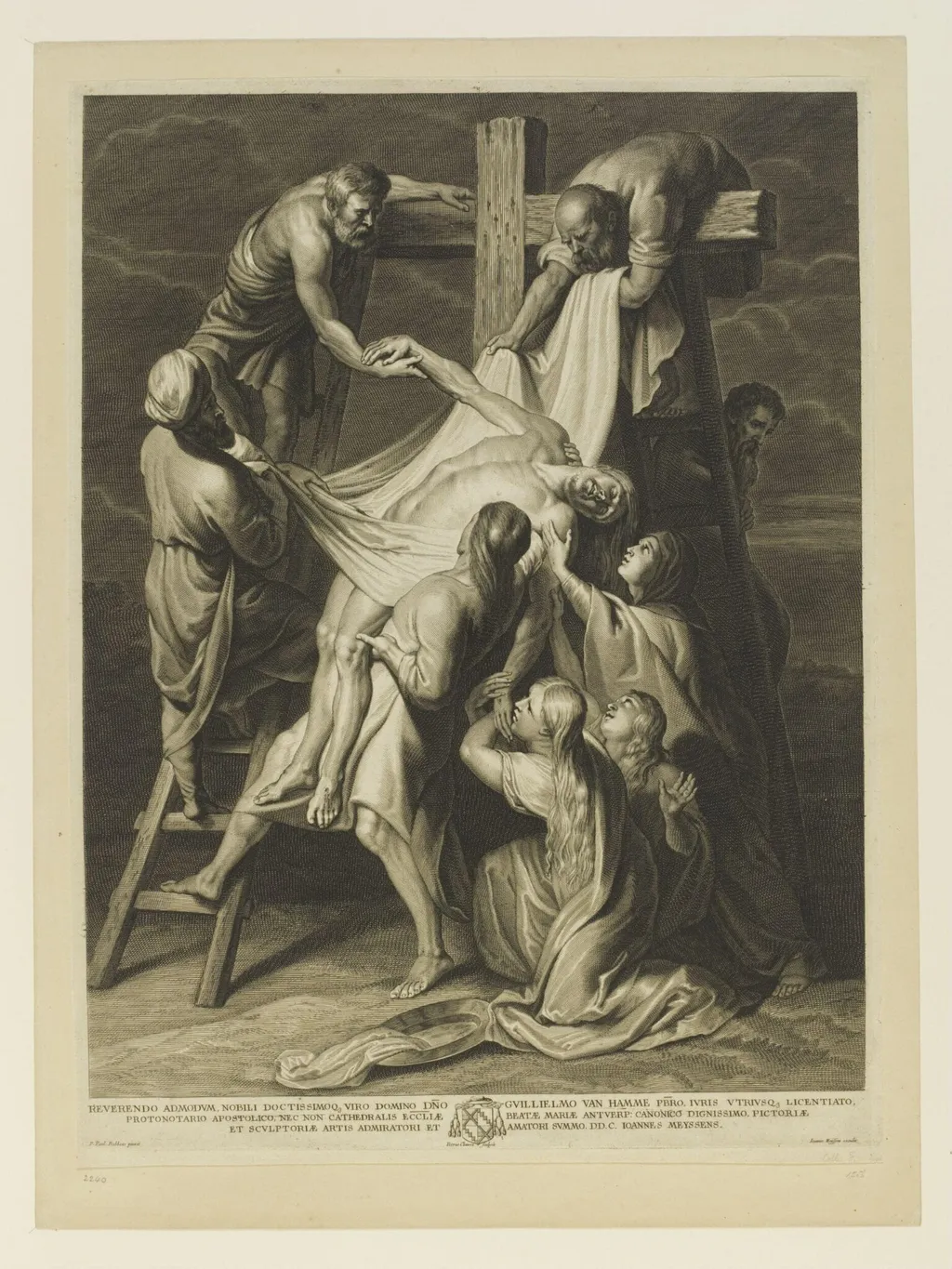
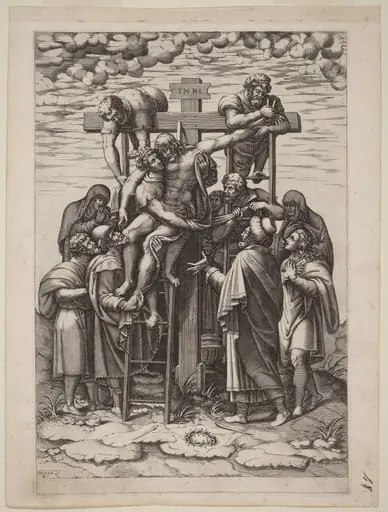
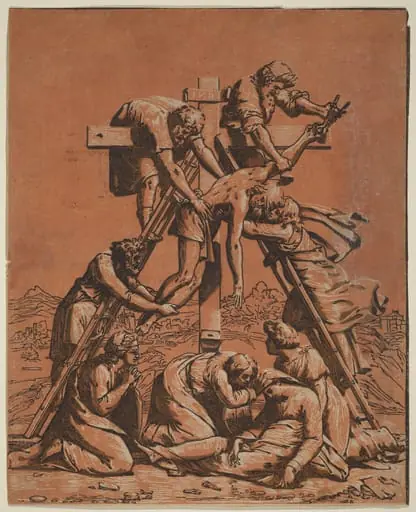
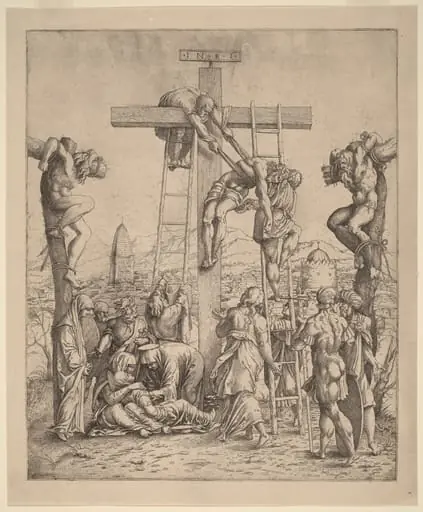
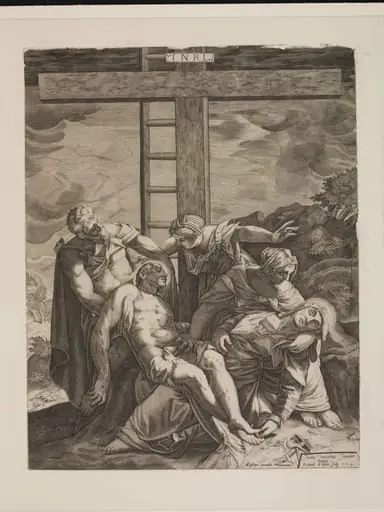
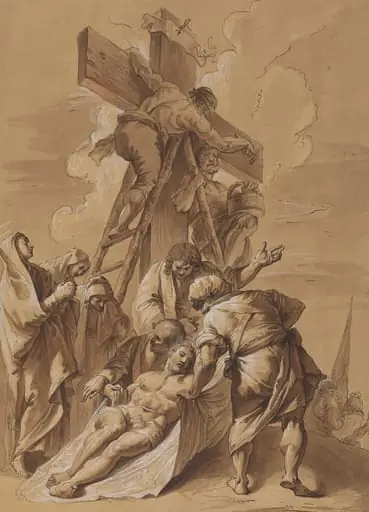
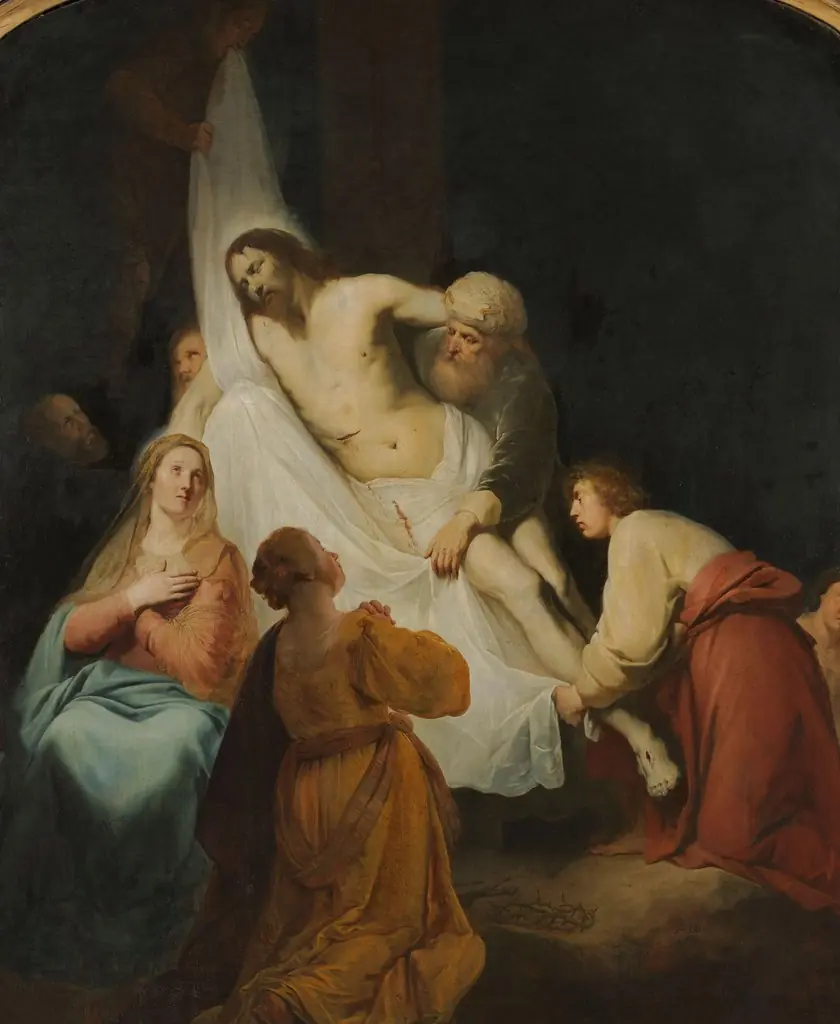
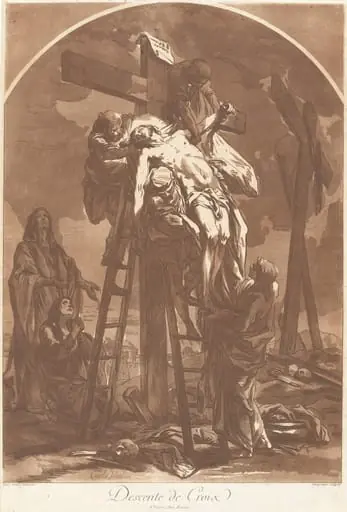
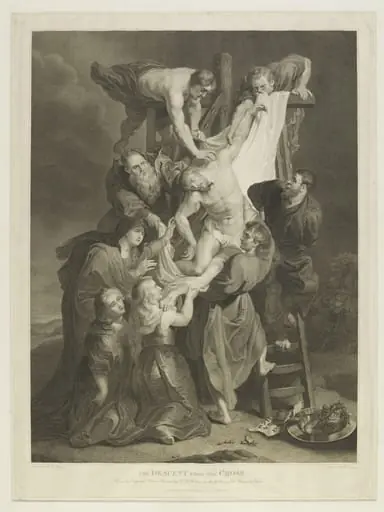
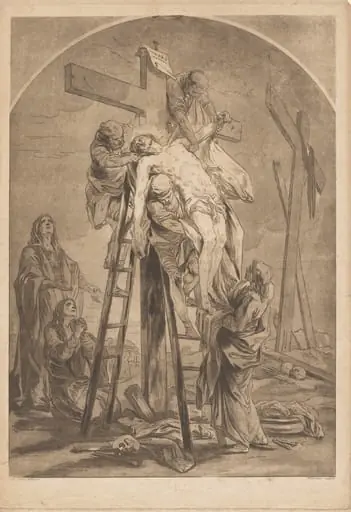
Descent from the Cross is a print by Peeter Clouwet. It dates from 1650 and is held in the collection of the Victoria and Albert Museum.
About this work
Overview
Executed as an engraving on paper, it translates Rubens’s dramatic religious scene into the medium of printmaking.
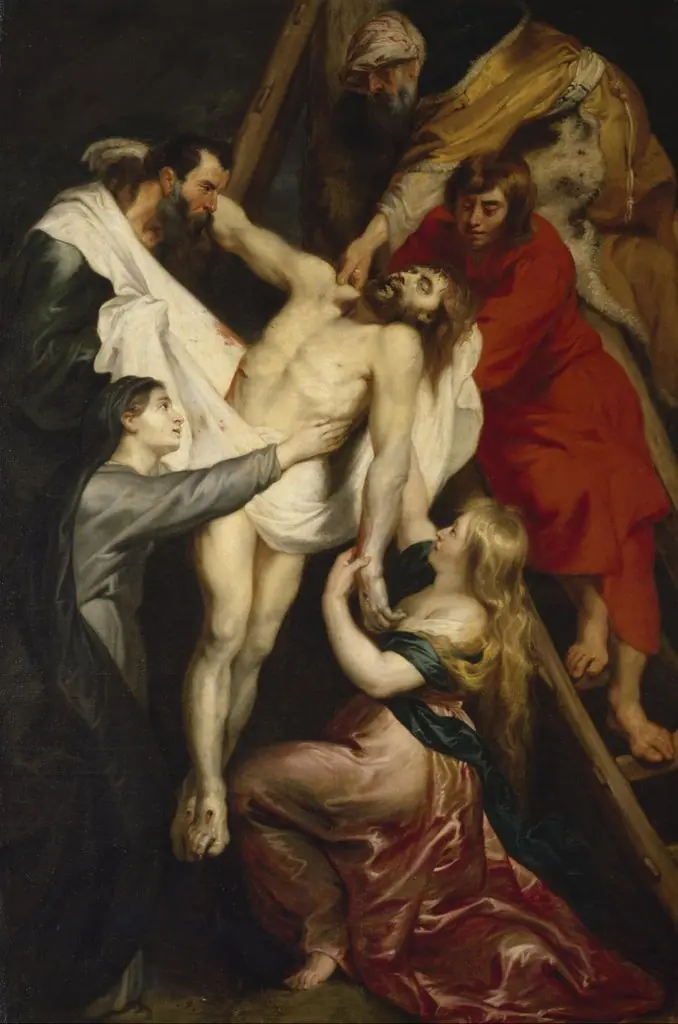
Created in 1650, this print by Peeter Clouwet reproduces a composition originally devised by Peter Paul Rubens. Executed as an engraving on paper, it translates Rubens’s dramatic religious scene into the medium of printmaking. The work carries inscriptions identifying the patron and the engraver, reflecting the collaborative nature of 17th-century artistic production and the role of prints in disseminating major compositions beyond original paintings.
Subject & Meaning
The scene depicts the removal of Christ’s body from the cross, a moment of profound sorrow in Christian tradition. Figures surround the lifeless form, their gestures conveying anguish and reverence. The physical weight of the body, the strained postures of those supporting it, and the emotional intensity of the onlookers emphasize human grief and sacred sacrifice, grounding the divine narrative in palpable, shared emotion.
Technique & Style
Clouwet employed fine, controlled lines to render the figures with clarity and emotional force. Strong contrasts between light and shadow—chiaroscuro—accentuate the musculature of the arms, the folds of the shroud, and the expressions of grief. The dark, indistinct background isolates the group, heightening the drama. The precision of the engraving allows for nuanced rendering of texture and movement despite the medium’s limitations.
History & Provenance
The print was made during a period when Rubens’s compositions were widely reproduced by engravers across Europe. Clouwet, active in Antwerp, was known for translating major paintings into prints for collectors and clergy. The inclusion of formal inscriptions suggests the work may have been commissioned or dedicated to a high-ranking ecclesiastical figure, aligning it with devotional and elite circulation networks of the time.
Context
In mid-17th-century Flanders, religious imagery remained central to artistic production despite growing secular trends. Prints like this served both devotional and educational purposes, allowing those without access to large-scale paintings to engage with key biblical narratives. Clouwet’s adaptation of Rubens’s style reflects the enduring influence of the Antwerp master and the role of print in shaping religious visual culture.
Legacy
Though Clouwet’s name is less known today, his engraving preserved and transmitted Rubens’s composition to broader audiences. Copies of this print survive in institutional collections, offering insight into how Baroque religious imagery was reproduced and consumed. It stands as an example of the printmaker’s role in sustaining the visual language of the Counter-Reformation across Europe.
Artist & collection
Artist
Peeter Clouwet made small, detailed prints in the middle of the 1600s. His 1650 engraving *Descent from the Cross* shows the same arched doorway that appears in his *The Cow-House*, a view of a low brick shed where cows…