Artwork
The Small Crucifixion
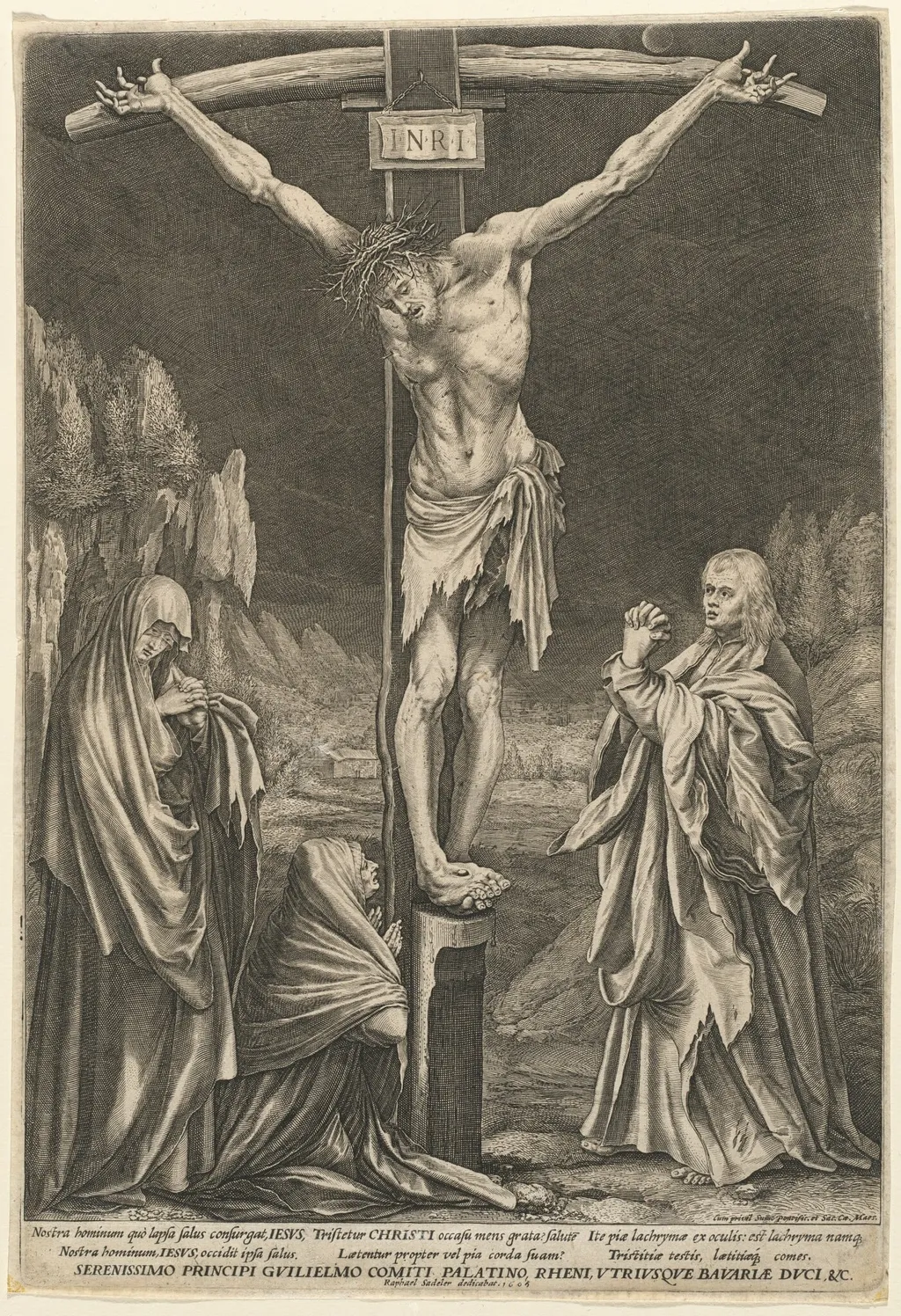
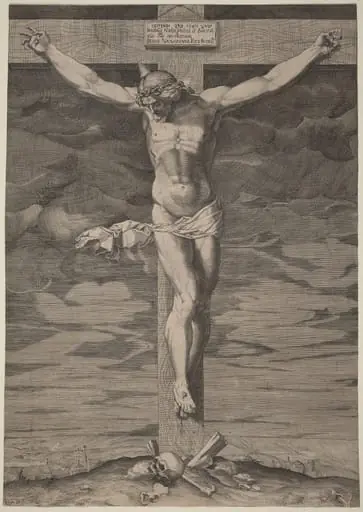
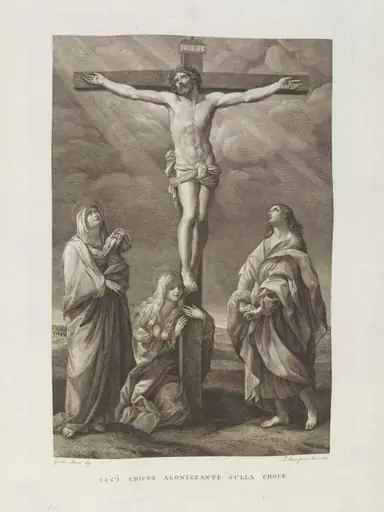
The Small Crucifixion is an ink print by the Baroque artist Raphael Sadeler I. It dates from 1605 and is held in the collection of the National Gallery of Art.
About this work
Overview
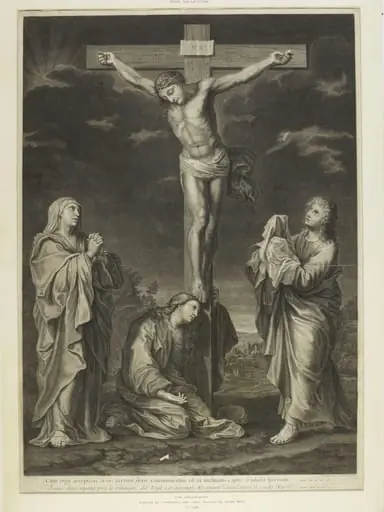
The Small Crucifixion is an early‑17th‑century engraving executed on laid paper. Produced in 1605 by the Flemish printmaker Raphael Sadeler I, the work presents a compact, black‑and‑white depiction of the crucifixion narrative, typical of devotional prints circulated for private contemplation.
Subject & Meaning
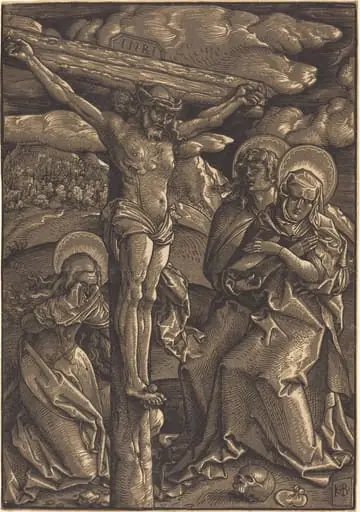
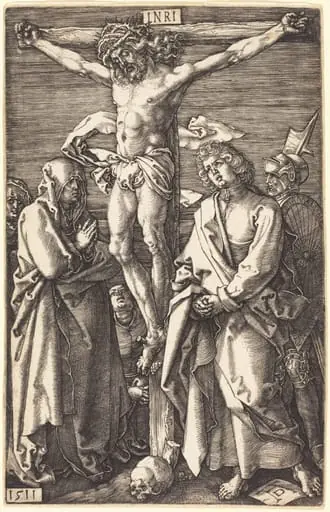
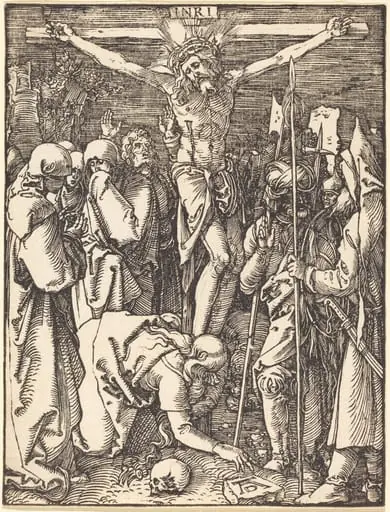
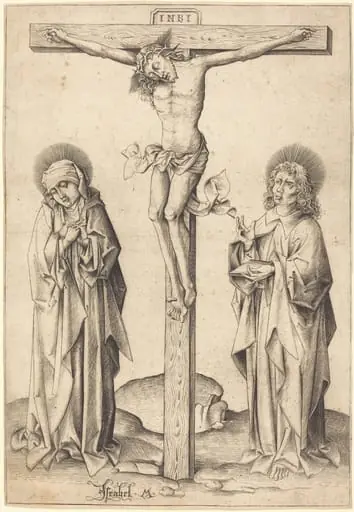
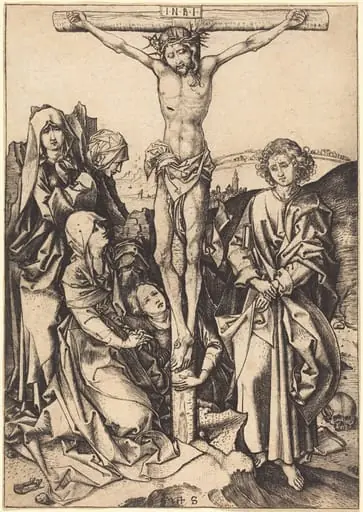
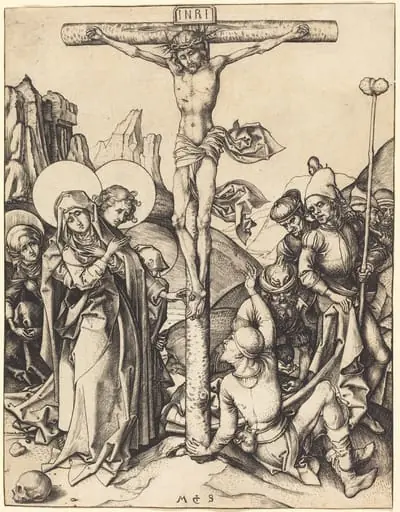
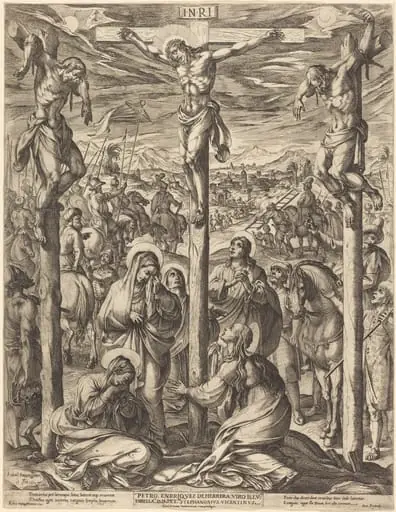
At the centre of the image stands Christ on the cross, his arms outstretched and nailed to a wooden beam. In the foreground three robed figures kneel in prayer, their gestures emphasizing piety and mourning. A dim, indistinct landscape recedes behind the scene, reinforcing the spiritual focus on the sacrificial act.
Technique & Style
Sadeler employs fine, closely spaced lines to model flesh, drapery and the wooden cross, while cross‑hatching creates subtle gradations of tone. The engraving’s chiaroscuro effect, with deep shadows against illuminated forms, reflects Baroque sensibilities that aim to heighten emotional intensity within a limited monochrome medium.
History & Provenance
The print originates from the Sadeler family workshop, a prolific dynasty of engravers active in Antwerp and Rome. Though specific ownership records are scarce, the work was likely distributed among collectors of religious imagery in the early modern period, and it now appears in several museum collections specializing in print media.
Context
Created during the Counter‑Reformation, the engraving aligns with Catholic efforts to reinforce devotion through vivid visual narratives. Its compact size made it suitable for personal use, while its dramatic composition mirrors contemporary Baroque art that sought to engage viewers emotionally with sacred subjects.
Artist & collection