Artwork
Paulus Pontius
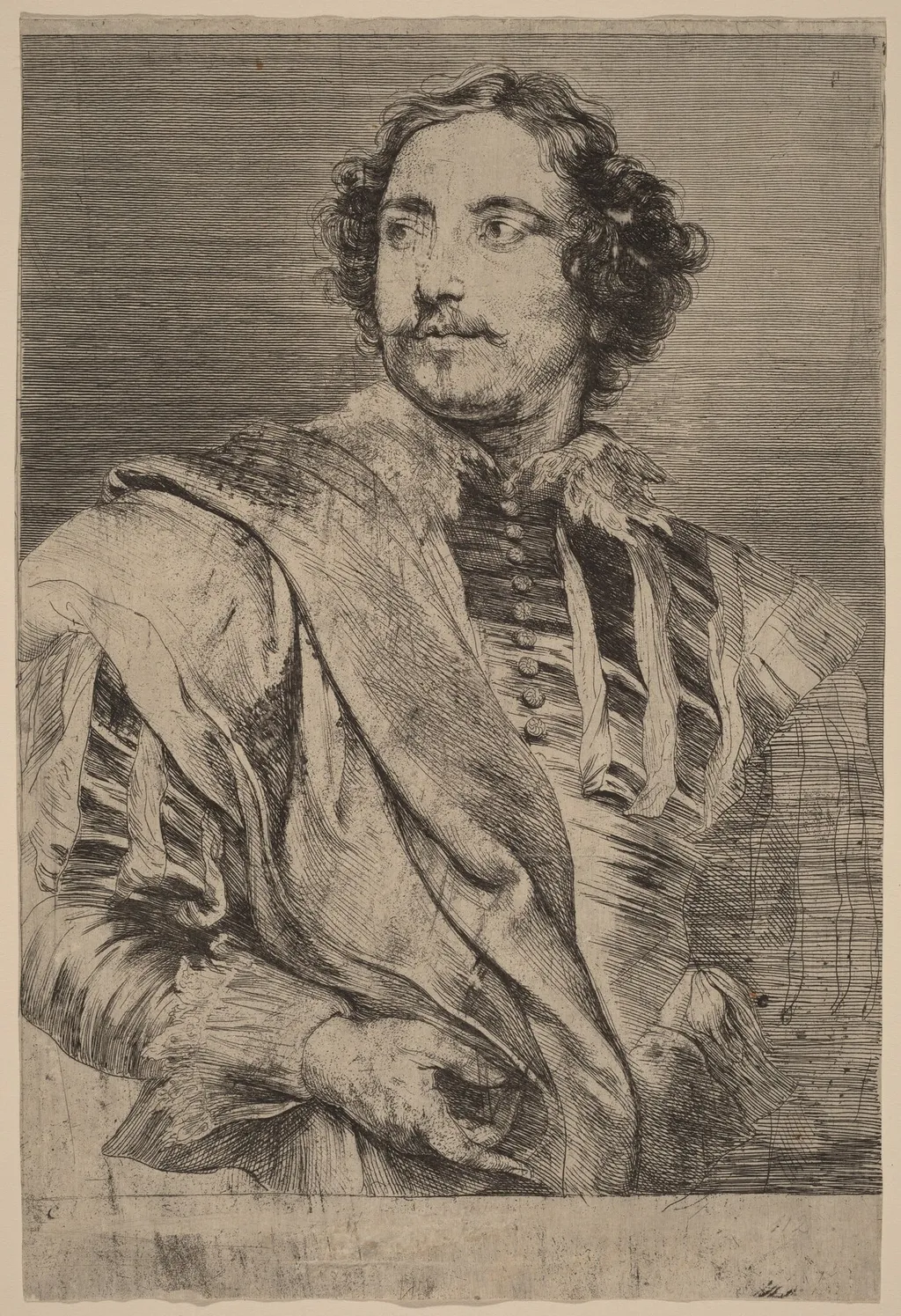
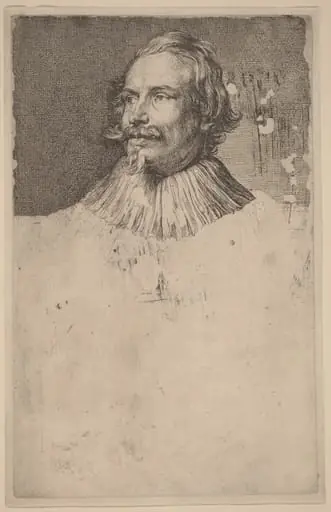
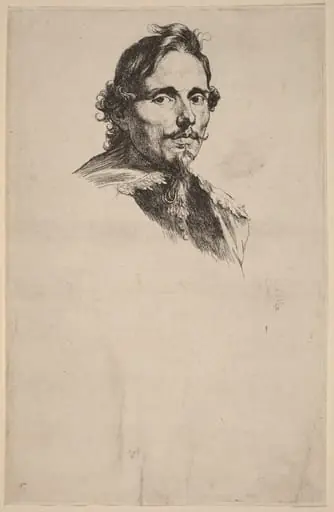
Paulus Pontius is an ink print by the Baroque artist Anthony van Dyck. It dates from 1634 and is held in the collection of the National Gallery of Art.
About this work
Overview
Anthony van Dyck created the etching 'Paulus Pontius' around 1634, a black-and-white portrait characterized by meticulous line work.
Subject & Meaning
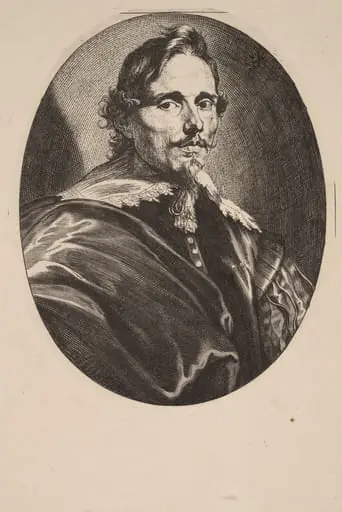
The subject, Paulus Pontius, is depicted with curly hair, a mustache, and a serious expression, attired in a high-necked, button-front coat and ruffled collar, conveying a sense of solemnity and formality.
Technique & Style
Van Dyck employed etching techniques, scratching lines into a metal plate to achieve detailed textures, evident in the rendering of Pontius's hair and fabric.
History & Provenance
Created circa 1634, specific provenance details are not provided, highlighting the work's existence as a product of Van Dyck's etching practice during this period.
Context
This etching reflects Van Dyck's broader practice of capturing contemporary figures with precision and depth, situating 'Paulus Pontius' within his portfolio of portraitures.
Legacy
As an example of Van Dyck's etching work, 'Paulus Pontius' contributes to the artist's legacy in portrait art, though its individual impact is not distinctly outlined in available information.
Artist & collection
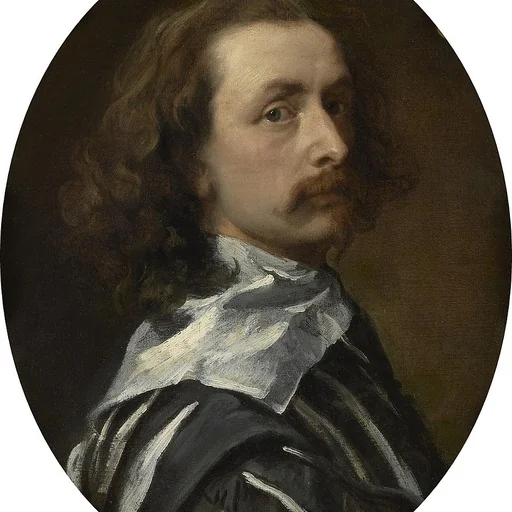
Artist
Sir Anthony van Dyck (; Dutch: Antoon van Dijck ; 22 March 1599 – 9 December 1641) was a Flemish Baroque artist, who became the leading court painter in England after success in the Spanish Netherlands and Italy.