Artwork
Untitled
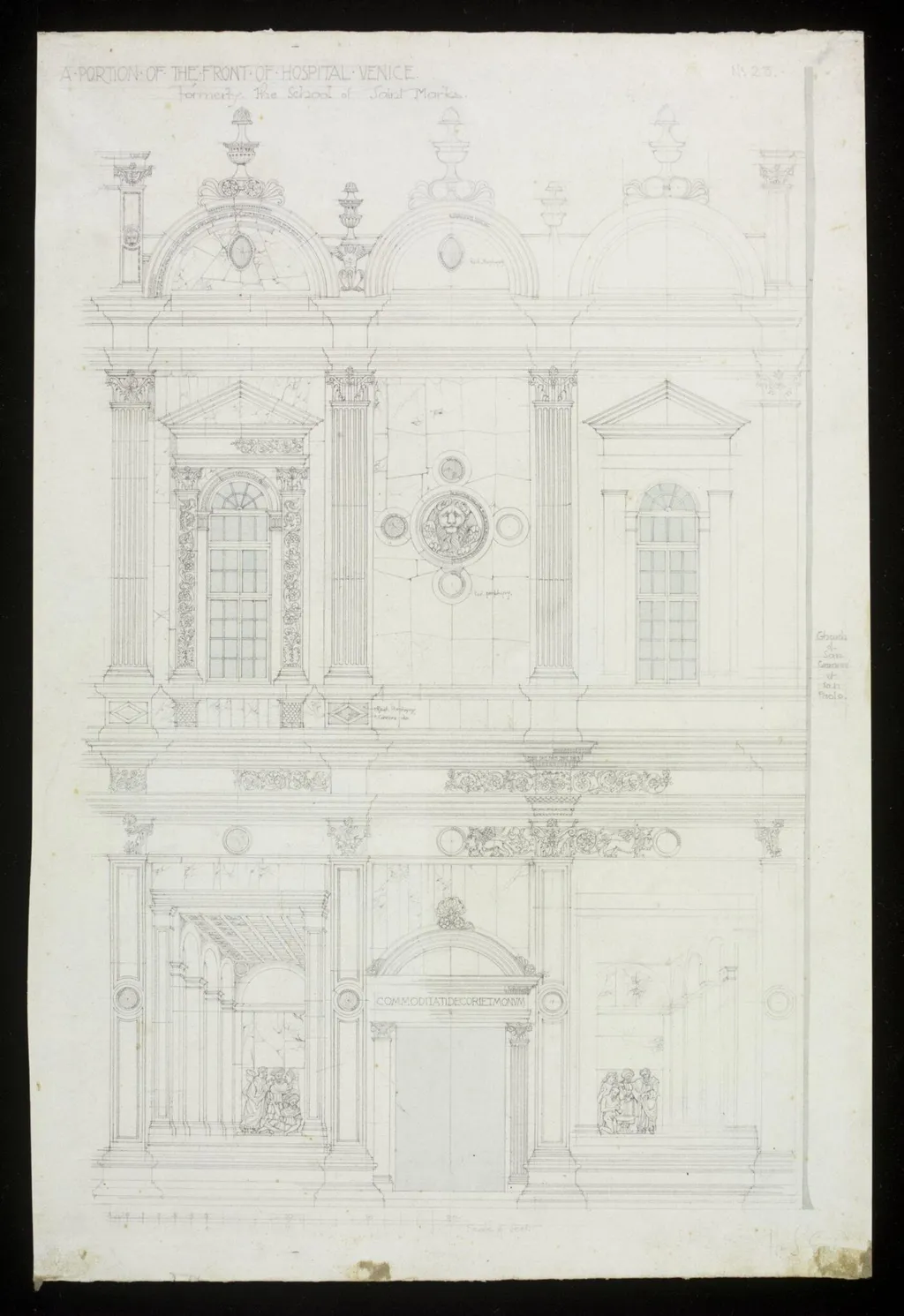
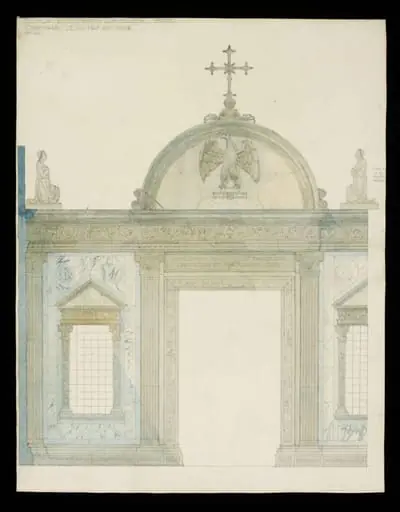
Untitled is a drawing by the Impressionist artist Hubert Springford A.R.I.B.A. East. It dates from 1895 and is held in the collection of the Victoria and Albert Museum. A precise pencil drawing captures the front facade of a hospital in Venice, rendered with meticulous attention to architectural detail.
About this work
Overview
The work reflects a technical approach to architectural representation, likely intended for documentation or study rather than artistic expression.
A precise pencil drawing captures the front facade of a hospital in Venice, rendered with meticulous attention to architectural detail. The composition emphasizes symmetry and structural clarity, focusing on the central arched entrance flanked by columns and upper windows adorned with carved ornamentation. The work reflects a technical approach to architectural representation, likely intended for documentation or study rather than artistic expression.
Subject & Meaning
The subject is a Venetian hospital facade, not a church as sometimes misidentified. Its design reflects Renaissance civic architecture, where functionality and dignity were balanced through proportion and ornament. The decorative carvings above the windows suggest institutional prestige, while the grand archway implies access and hospitality—values central to the building’s purpose as a place of care.
Technique & Style
Executed in fine pencil lines, the drawing demonstrates a disciplined, measured hand. Details such as column fluting, window tracery, and stone textures are rendered with consistent precision. The absence of shading or tone emphasizes line and form, aligning with architectural drafting conventions of the period, prioritizing accuracy over atmospheric effect.
History & Provenance
The drawing is attributed to Hubert Springford East, a British architect and member of the Royal Institute of British Architects. His work in Venice likely stemmed from professional interest in Italian civic structures during the late 19th or early 20th century. The piece may have served as a study for academic or restoration purposes, though its exact provenance remains undocumented beyond the artist’s known practice.
Context
During the late 1800s, British architects frequently traveled to Italy to document historic buildings, often as part of broader efforts to understand classical and Renaissance design. This drawing fits within that tradition, reflecting a scholarly engagement with Venetian architecture beyond its religious monuments, extending to institutions that served public welfare.
Legacy
The drawing contributes to a body of work by East that records lesser-known Venetian structures, preserving visual records of buildings that may have since changed or been lost. Its value lies in its fidelity as a technical record, offering insight into how foreign architects interpreted and recorded Italian civic architecture during a period of renewed interest in historical preservation.
Artist & collection
Artist
Hubert Springford A.R.I.B.A. East
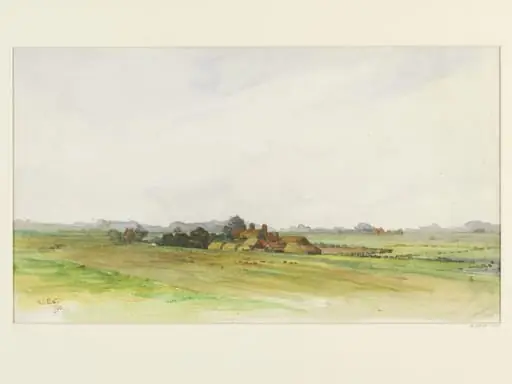
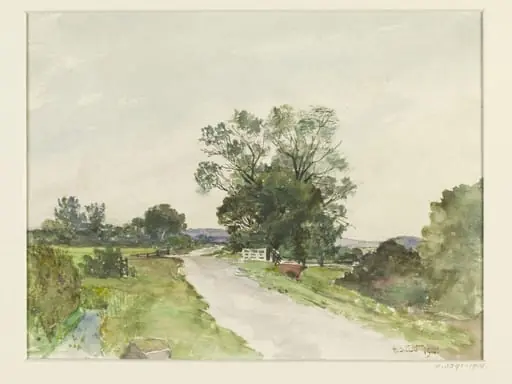
Hubert Springford drew quiet, flat landscapes in ink and pencil around 1895–1910, favoring wide skies above plowed fields and empty roads that stretch to the edge of the paper.

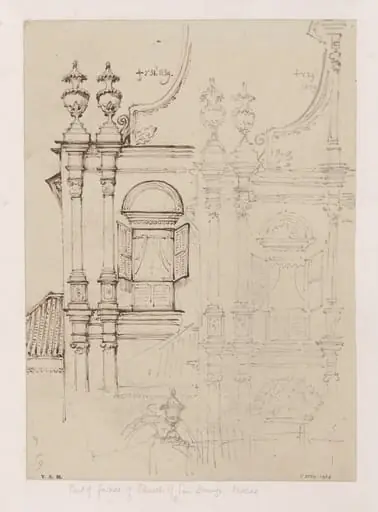 The church of S. Domingos, Macau
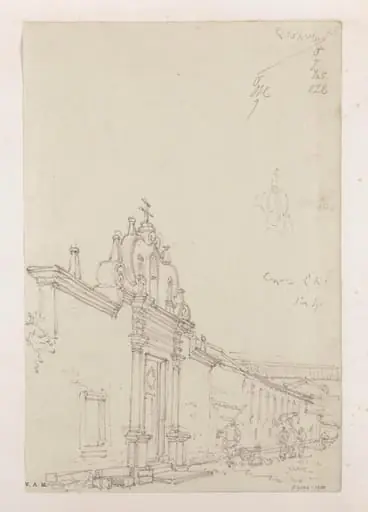 The gateway to the convent of Santa Clara, Macau
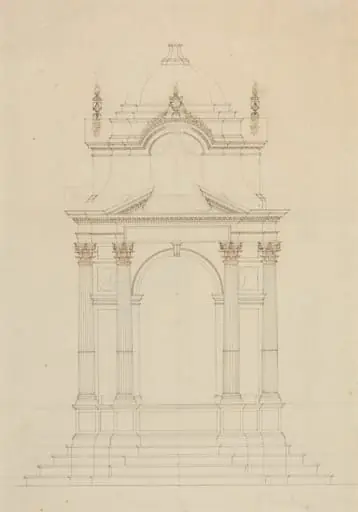 Design for a Baldaquin
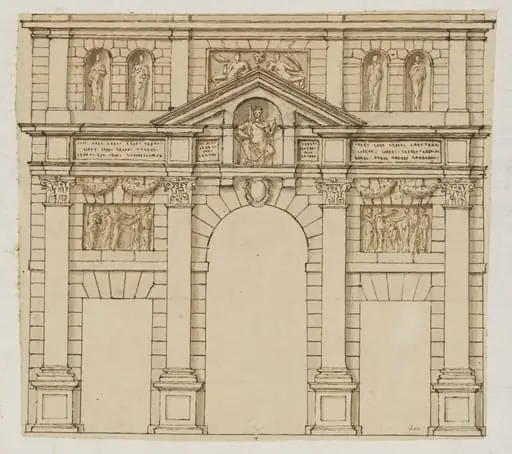 Study for a gateway
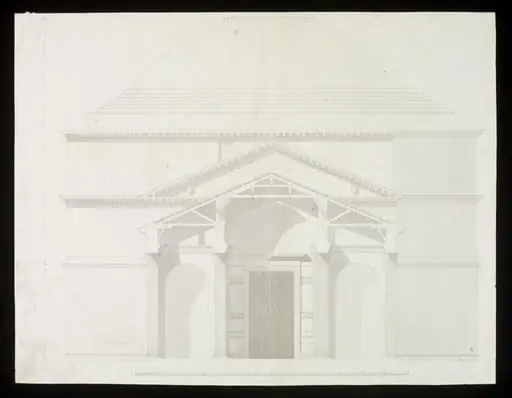 Longitudinal section through Pantheon portico
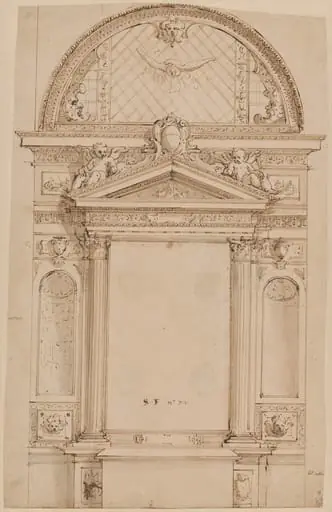 Design for an Altar
 Untitled
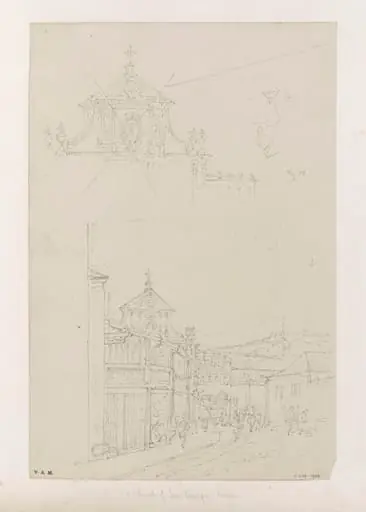 The church of San Domingos, Macau
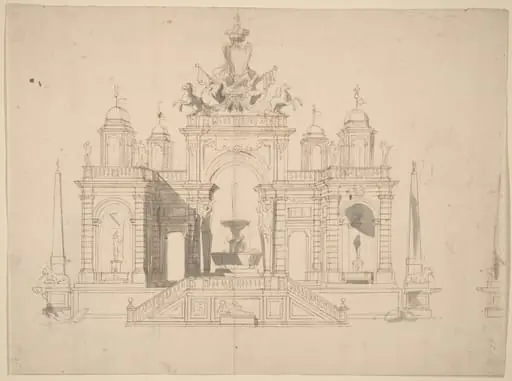 Study for "The Seconda Macchina for the Chinea of 1754: An Allegory of Waterworks"
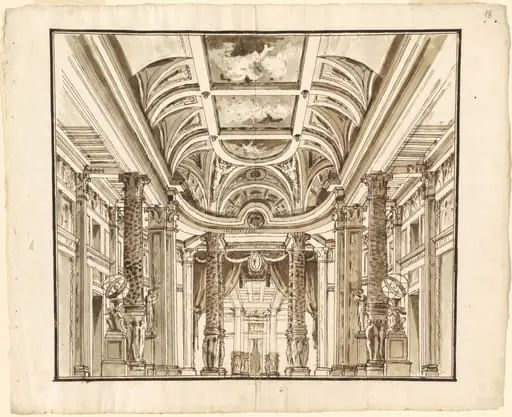 Fantasy of a Great Hall with Basketweave Columns
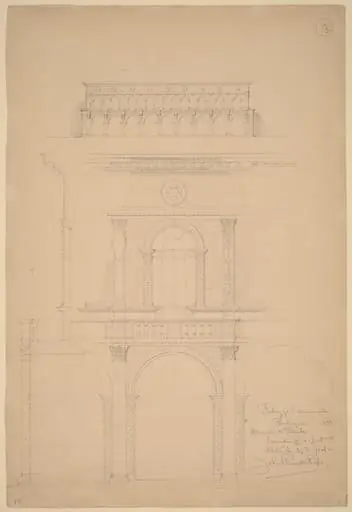 Palazzo Communale, Bologna
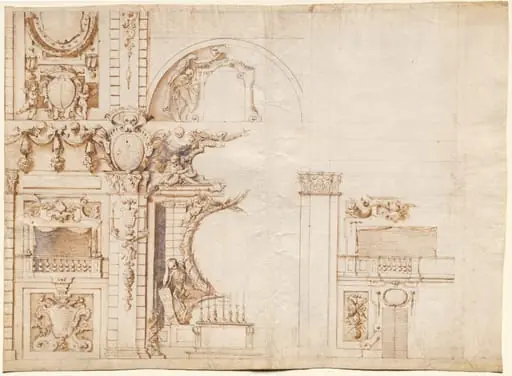 Study for the 'Essequie' Conducted in San Lorenzo, Florence, in 1637 in Honour of Holy Roman Emperor Ferdinand II