Artwork
Gentleman with Cane
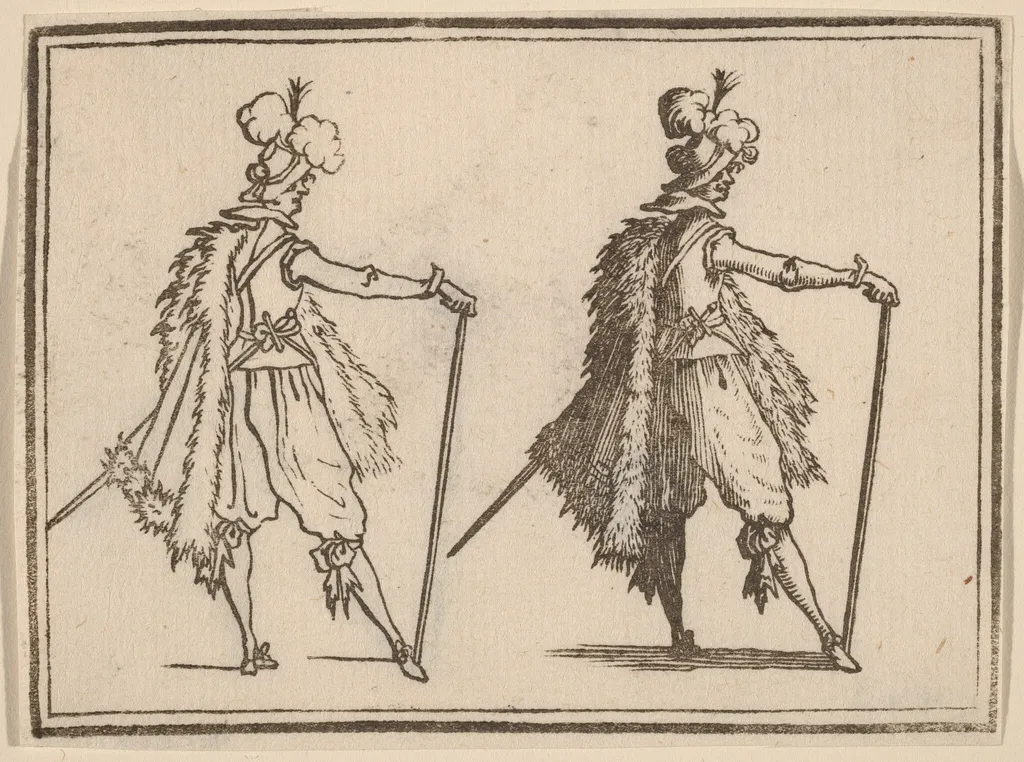
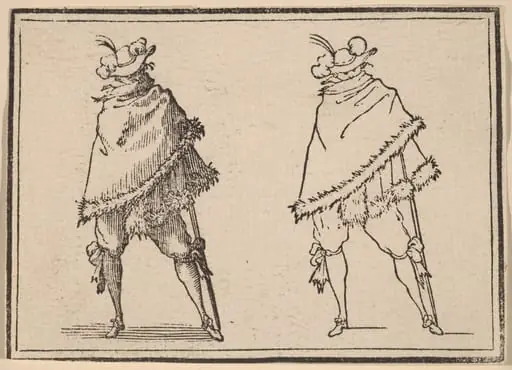
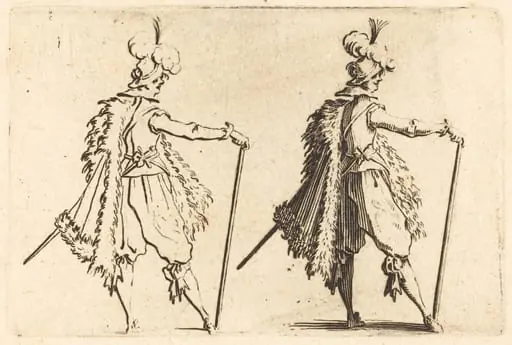
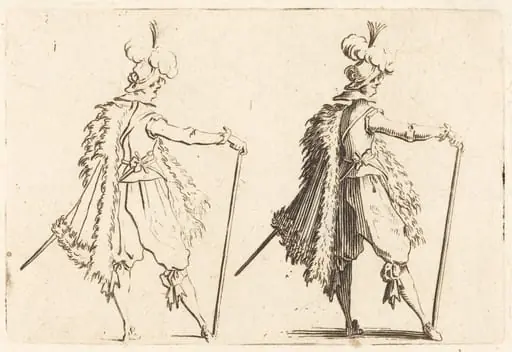
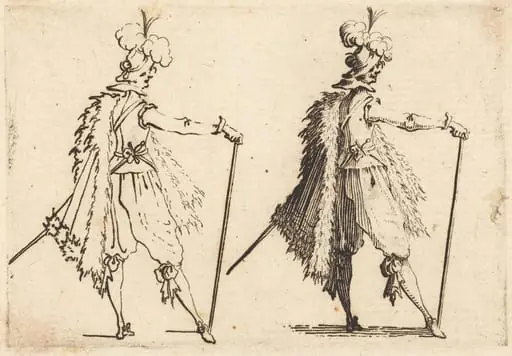
Gentleman with Cane is an ink print by the Baroque artist Edouard Eckman. It dates from 1621 and is held in the collection of the National Gallery of Art.
About this work
Overview
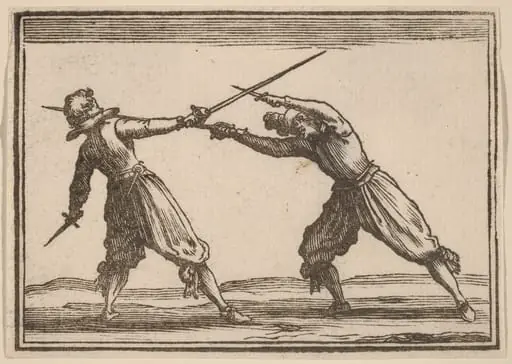
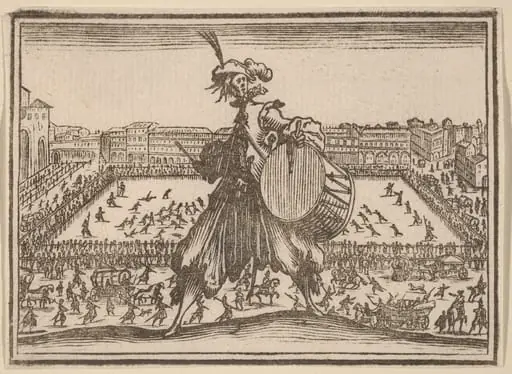
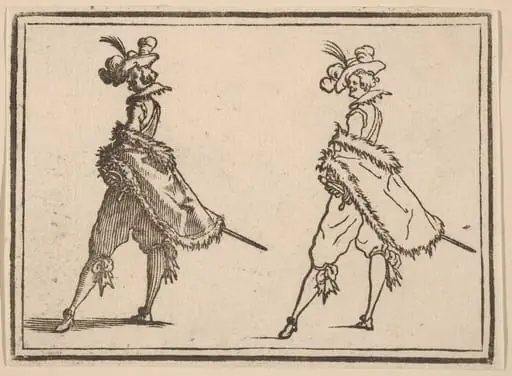
Gentleman with Cane is a 1621 woodcut by Edouard Eckman, printed on laid paper. It depicts two men in profile, turned away from each other, each holding a slender cane. Their attire—feathered hats, fur-lined coats, and flowing cloaks—suggests aristocratic status. The composition is symmetrical yet dynamic, with careful attention to the interplay of light and texture across fabric and accessories.
Subject & Meaning
The two figures represent male nobility of the early 17th century, their postures and accessories signaling social standing and personal refinement.
The two figures represent male nobility of the early 17th century, their postures and accessories signaling social standing and personal refinement. The canes, held with deliberate poise, function as both practical tools and symbols of authority. Their mirrored profiles, facing opposite directions, may imply duality—perhaps introspection and outward presentation—or simply a formal arrangement suited to the medium’s constraints.
Technique & Style
Executed as a woodcut, the image relies on incised lines to define form and texture. Eckman’s carving captures the crisp folds of fur, the sheen of silk, and the grain of wood in the canes with remarkable precision. The high contrast between inked areas and the paper’s white ground enhances the graphic clarity typical of Northern European printmaking of the period, aligning with Baroque sensibilities of detail and drama.
History & Provenance
Created in 1621, the print likely served as a standalone image or part of a series illustrating contemporary fashion or social types. Its survival in original condition suggests it was preserved by collectors or institutions interested in portraiture or graphic arts. No definitive record of its early ownership exists, but its technical quality indicates it was produced for a discerning audience.
Context
In early 17th-century Europe, woodcuts remained a vital medium for disseminating images beyond painting. Eckman’s work reflects the era’s fascination with costume and identity, particularly among the urban elite. Similar prints circulated in the Netherlands and Germany, where printmakers documented social types and manners, often blending observation with idealized representation.
Legacy
Gentleman with Cane stands as an example of how printmaking preserved the visual language of aristocratic life before the dominance of oil painting in portraiture. While Eckman is not widely known today, this work contributes to the broader understanding of how everyday status symbols were rendered in print, influencing later generations of graphic artists and social historians.
Artist & collection