Artwork
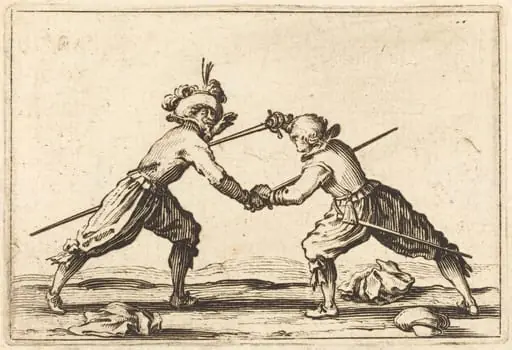
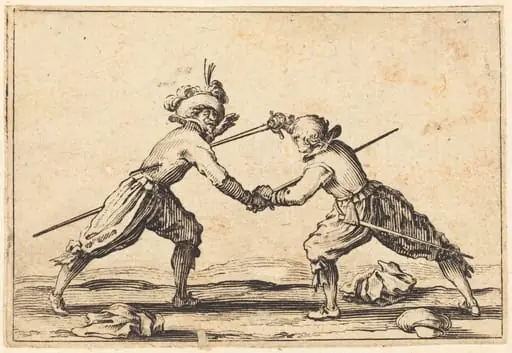
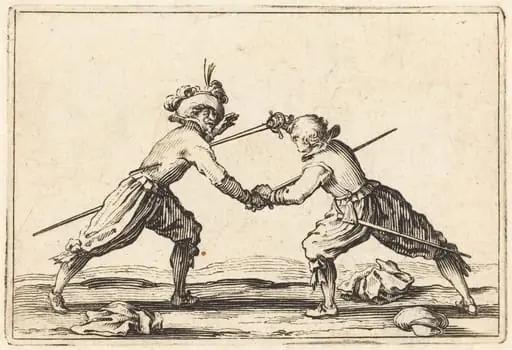
Duel with Swords and Daggers
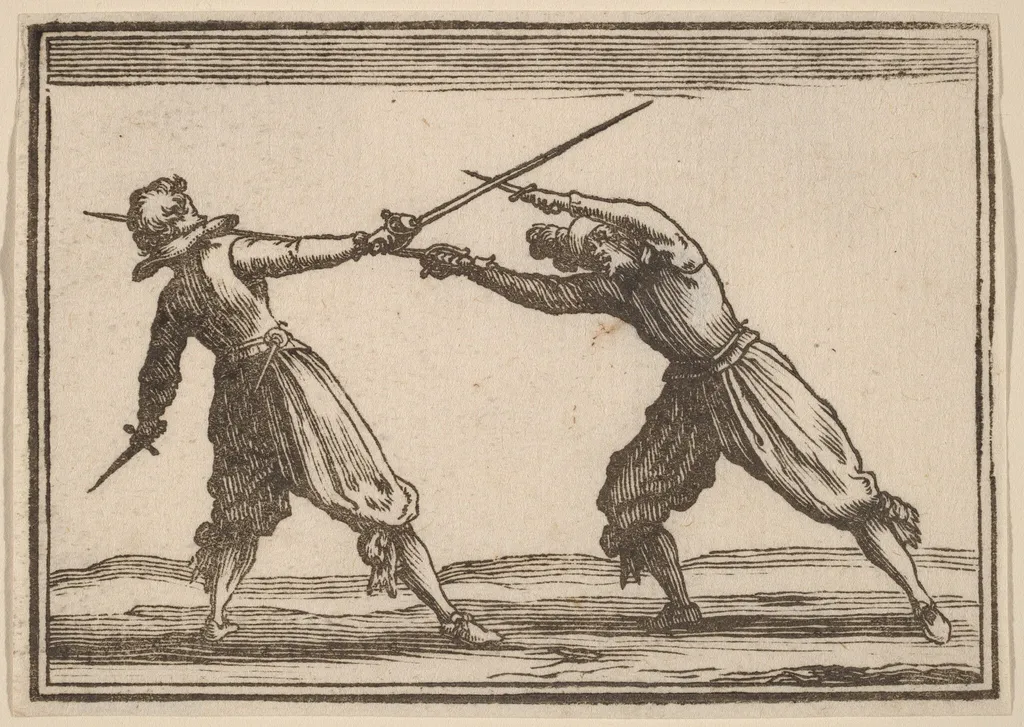
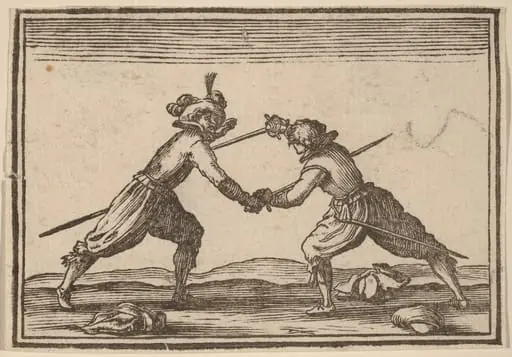
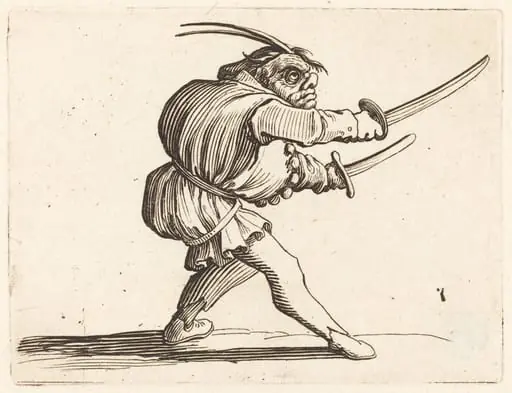
Duel with Swords and Daggers is an ink print by the Baroque artist Edouard Eckman. It dates from 1621 and is held in the collection of the National Gallery of Art.
About this work
Overview
The medium’s reliance on carved lines lends the scene a stark, dynamic energy characteristic of early 17th-century printmaking.
Created in 1621 by Edouard Eckman, this woodcut depicts a violent encounter between two armed figures. Rendered in black ink on laid paper, the print captures a moment of intense physical conflict. The composition is tightly framed, focusing entirely on the duelists without background detail. The medium’s reliance on carved lines lends the scene a stark, dynamic energy characteristic of early 17th-century printmaking.
Subject & Meaning
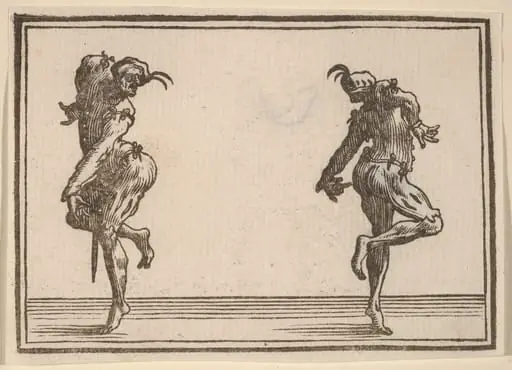
The scene portrays two men locked in combat—one kneeling and lunging with a sword, the other standing in defense, wielding both sword and dagger. Their clothing suggests historical or theatrical attire rather than contemporary dress, hinting at a stylized or symbolic confrontation. The tension in their postures and the imbalance of their stances imply a moment of decisive action, possibly representing honor, fate, or personal conflict.
Technique & Style
Eckman employed sharp, incised lines typical of woodcut printing, where the image was carved into a wooden block and inked for impression. The rough, undulating ground beneath the figures is rendered with angular strokes, enhancing the sense of instability. Contrast between dense black areas and open spaces heightens the drama. The technique demands precision; each line had to be planned and carved, limiting revisions and emphasizing bold, decisive forms.
History & Provenance
The print dates to 1621, placing it within a period when woodcuts were widely used for illustrations in books and broadsheets. While Eckman’s broader oeuvre is not extensively documented, this work reflects the continued use of the medium for narrative and martial imagery in Northern Europe. Its survival suggests it was circulated, possibly as a standalone image or part of a larger collection of combat scenes.
Context
In early 17th-century Europe, depictions of armed duels appeared frequently in printed media, often tied to codes of honor, legal disputes, or theatrical traditions. Woodcuts like this one served both documentary and entertainment purposes, reaching audiences beyond the elite. The stylized clothing and exaggerated motion align with conventions of the time, prioritizing clarity and emotional impact over anatomical realism.
Legacy
This woodcut exemplifies the enduring utility of the medium for capturing motion and conflict before the rise of more detailed engraving techniques. Though Eckman is not a major figure in art history, works such as this contribute to understanding how visual narratives of violence were produced and consumed in the early modern period. Its preservation offers insight into the aesthetics of popular print culture.
Artist & collection