Artwork
Asetelma
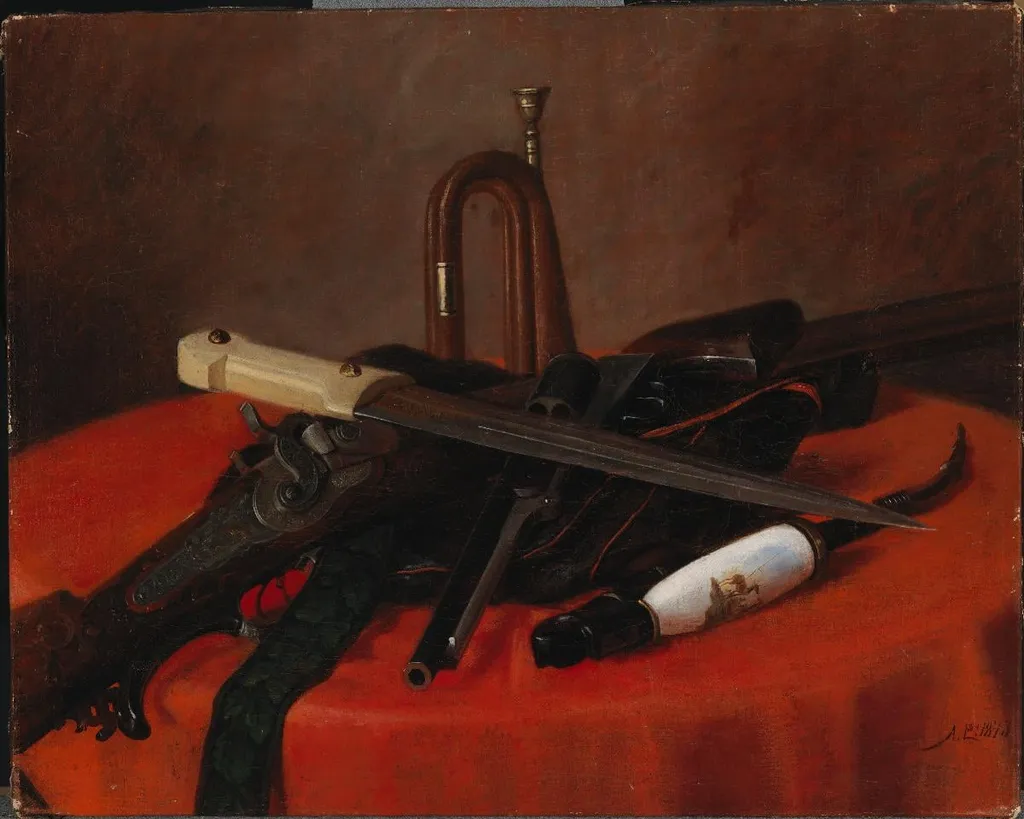
Asetelma is an unspecified painting by Albert Edelfelt. It dates from 1889 and is held in the collection of the Finnish National Gallery.
About this work
Overview
Asetelma, painted around 1889 by Albert Edelfelt, is a still life composed of two antique firearms and a wooden saddle arranged on a red cushion. The composition is deliberately sparse, focusing attention on the textures and wear of everyday objects. The dark background enhances the contrast of the crimson fabric and the metallic surfaces, creating a quiet, contemplative atmosphere.
Subject & Meaning
The objects depicted—worn guns and a weathered saddle—suggest a past tied to hunting, travel, or military use. The white cloth wrapped around one barrel hints at care or preservation, while the faded leather of the saddle speaks to prolonged use. Together, they evoke a sense of memory and quiet dignity, implying the lives once connected to these tools without overt narrative.
Technique & Style
Edelfelt employs precise observation and subtle chiaroscuro to render the surfaces with tangible realism. Light catches the brass horn and gun metal, while deep shadows define the contours of the saddle and fabric. The brushwork is controlled yet sensitive, capturing the roughness of aged wood, the sheen of metal, and the soft fold of cloth without embellishment.
History & Provenance
Created during Edelfelt’s mature period, Asetelma reflects his interest in domestic and regional Finnish subjects. Though not widely exhibited at the time, the painting remained within private collections in Finland. Its survival and continued study attest to its quiet significance in the artist’s oeuvre, separate from his more famous portraits.
Context
In late 19th-century Finland, artists like Edelfelt increasingly turned to intimate, non-heroic subjects as national identity formed. Still lifes of utilitarian objects resonated with a cultural shift toward valuing everyday heritage. Asetelma aligns with this trend, offering a restrained meditation on material memory amid broader artistic movements toward realism.
Legacy
Asetelma endures as an example of Nordic realism’s quiet power. It influenced later Finnish painters who sought to elevate ordinary objects through careful observation. Though not widely reproduced, its emphasis on texture, light, and historical resonance continues to inform interpretations of Finnish visual culture in the modern era.
Artist & collection
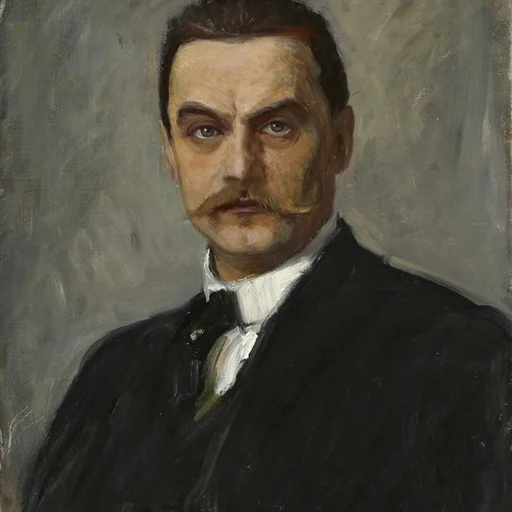
Artist
Albert Gustaf Aristides Edelfelt (21 July 1854 – 18 August 1905) was a Finnish painter noted for his naturalistic style and Realist approach to art.

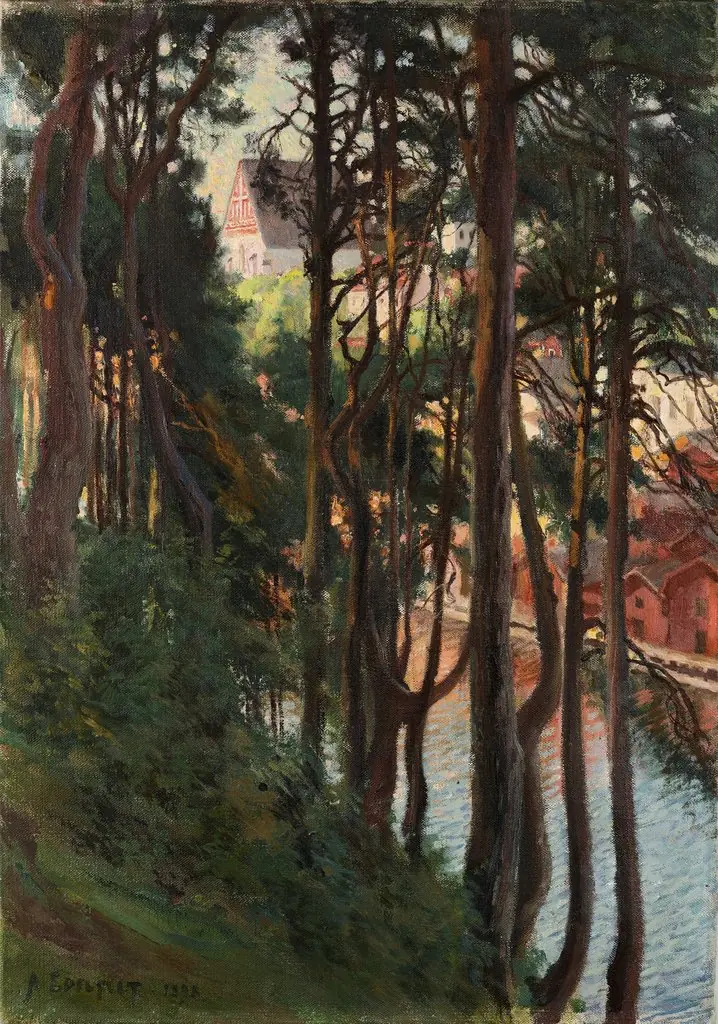
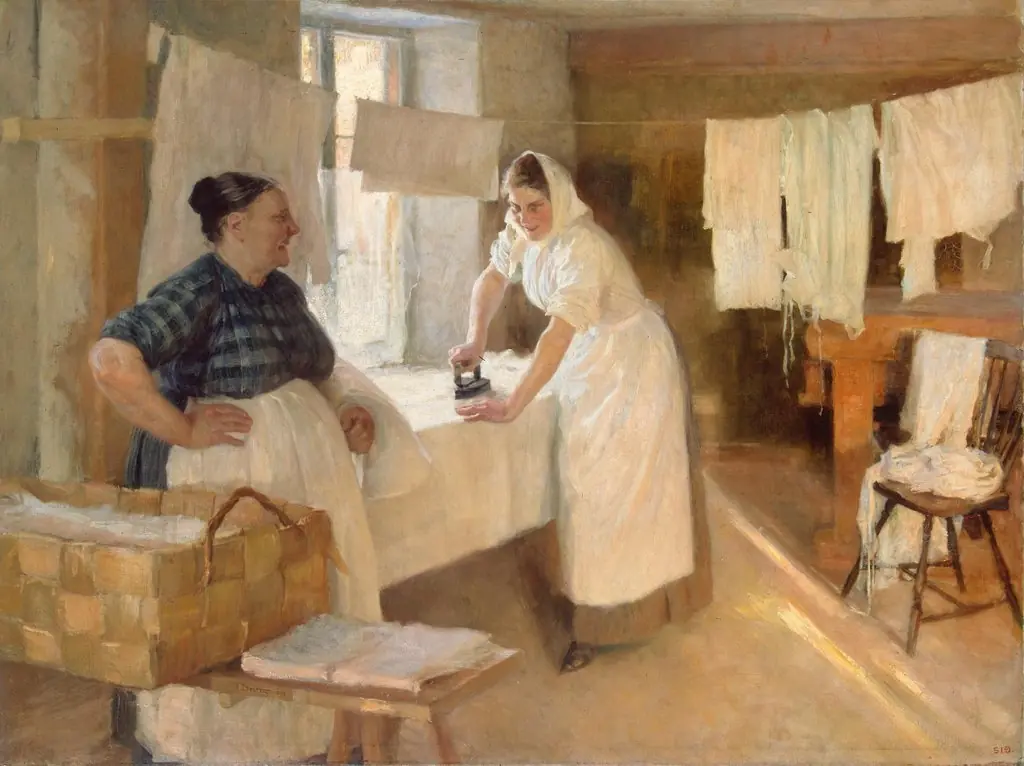
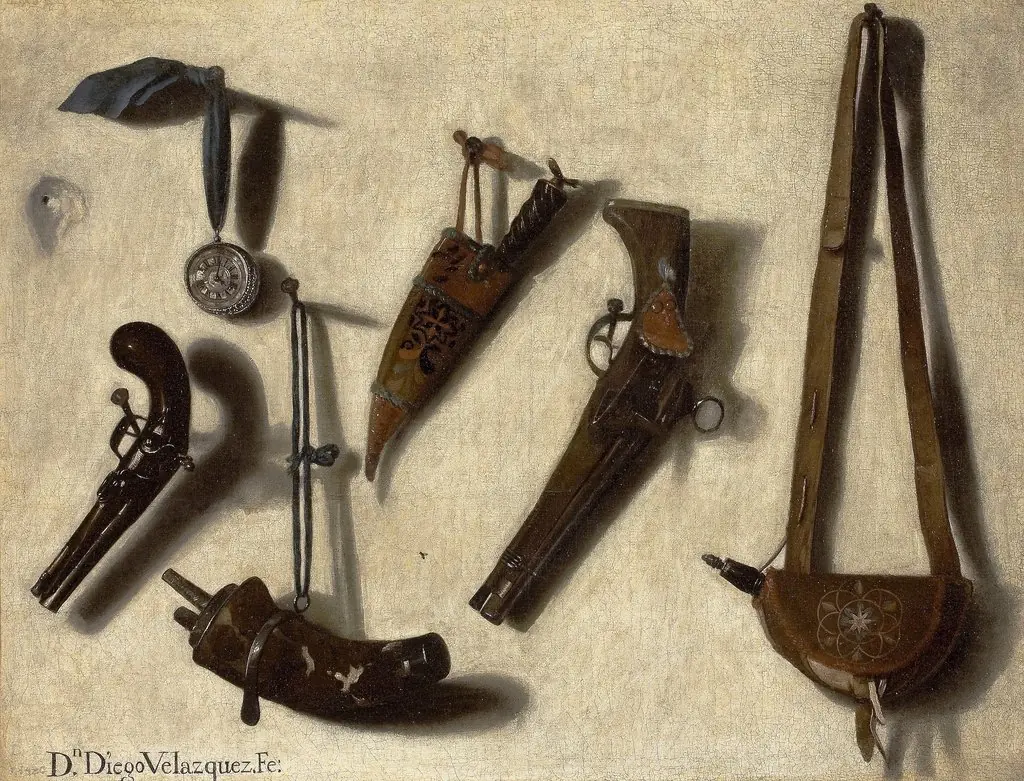 Weapons and Hunting Equipment
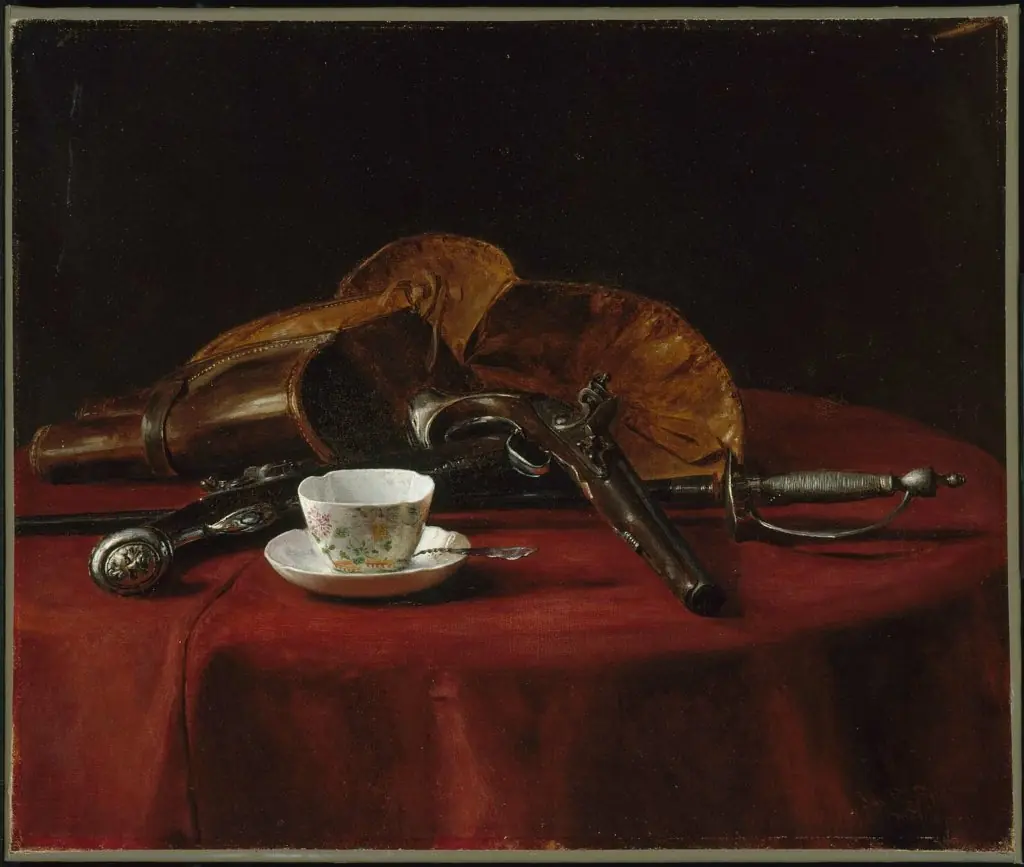 Sword, Pistols, and Teacup
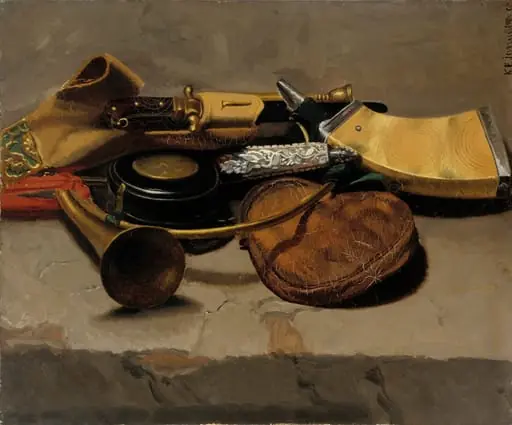 Aseasetelma
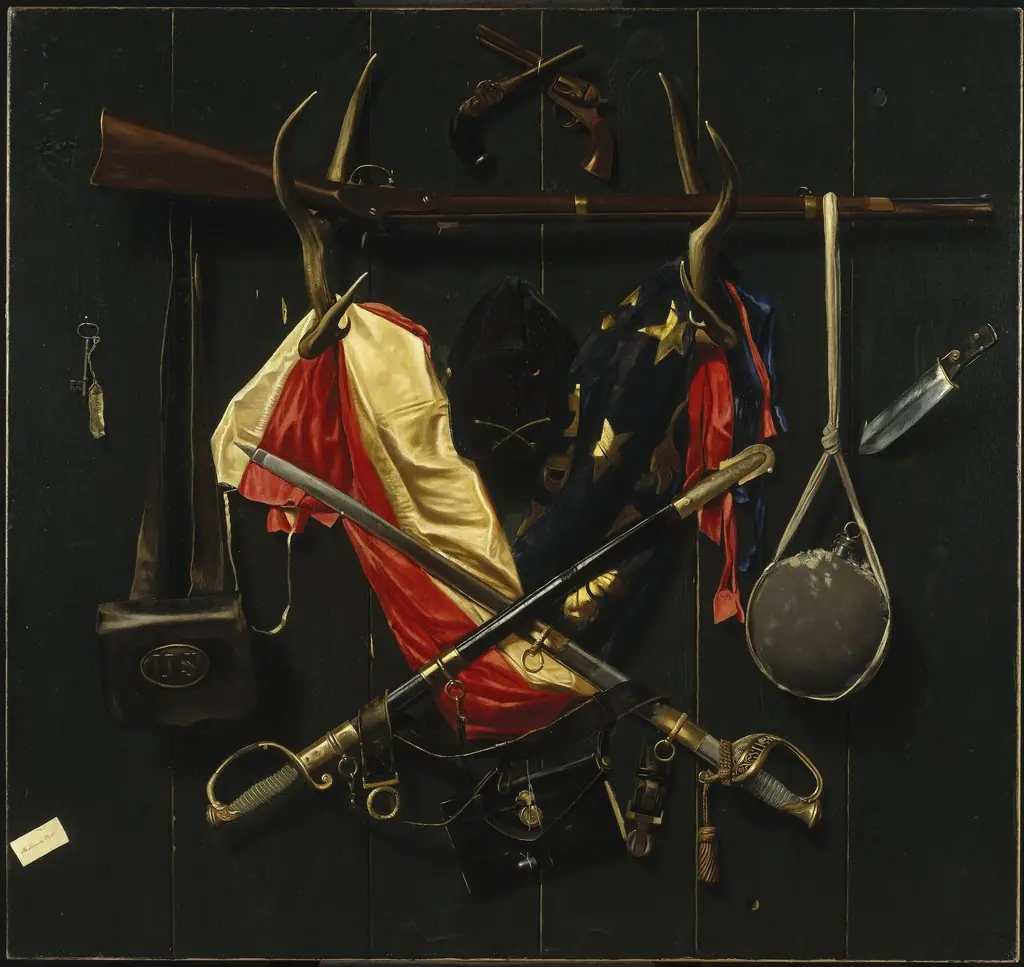 Emblems of the Civil War
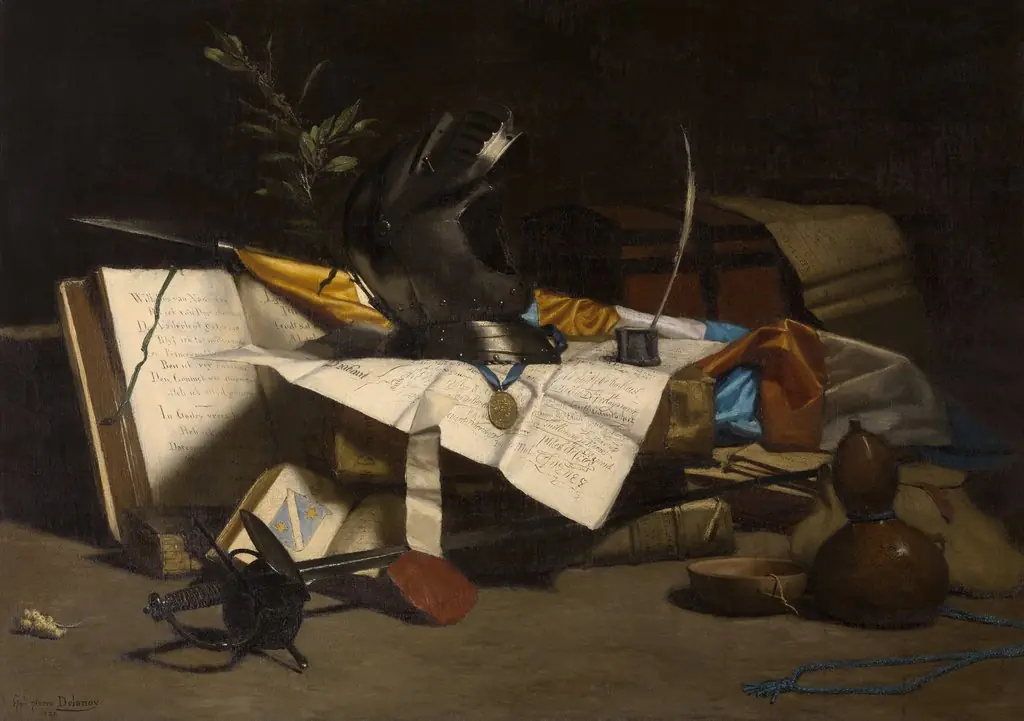 In Memory of Philips of Marnix, Lord of Sint-Aldegonde
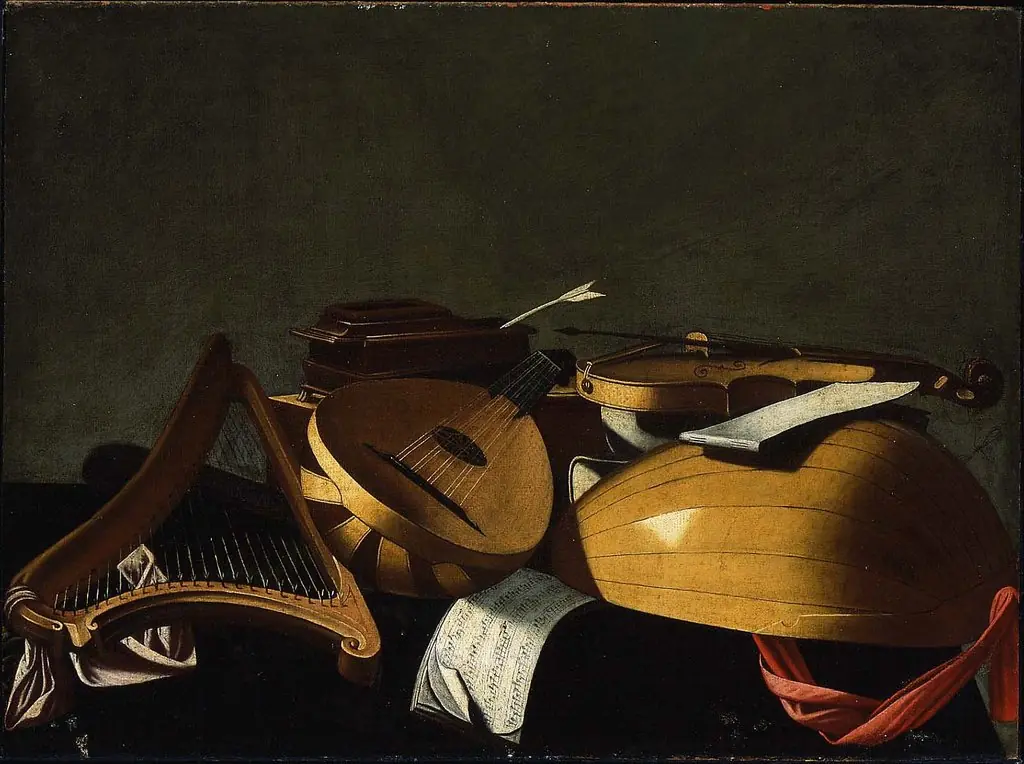 Musical Instruments
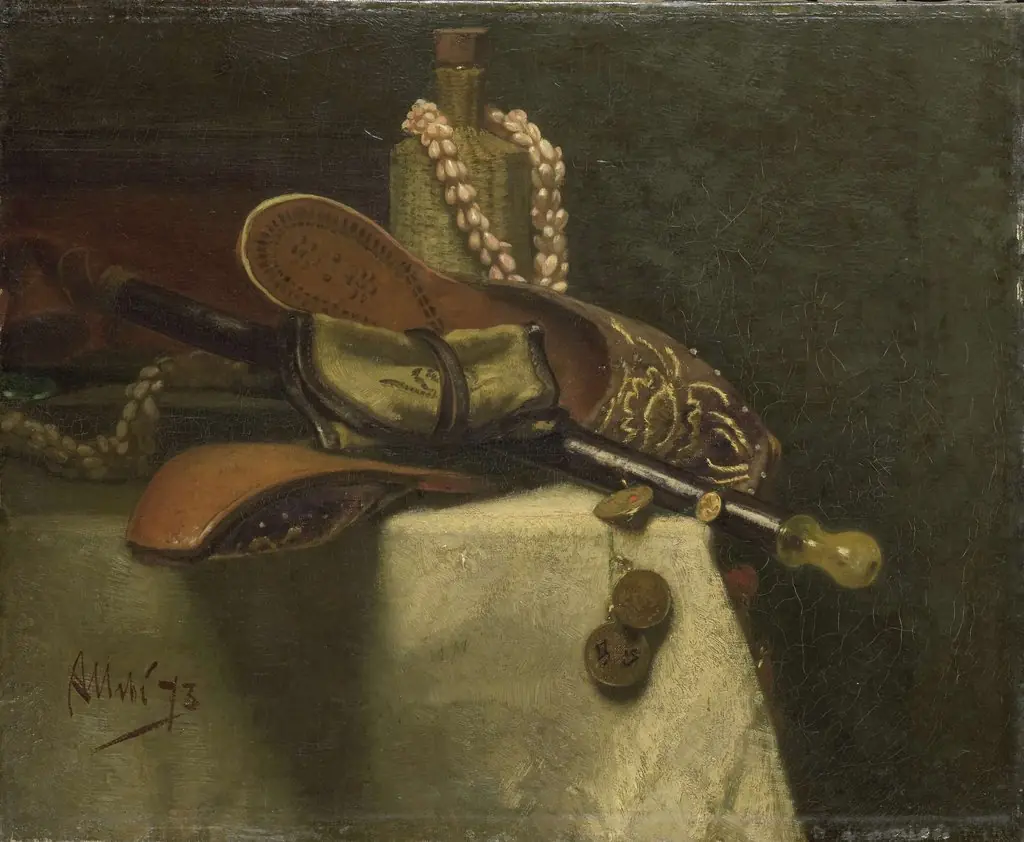 Still Life with Oriental Slippers
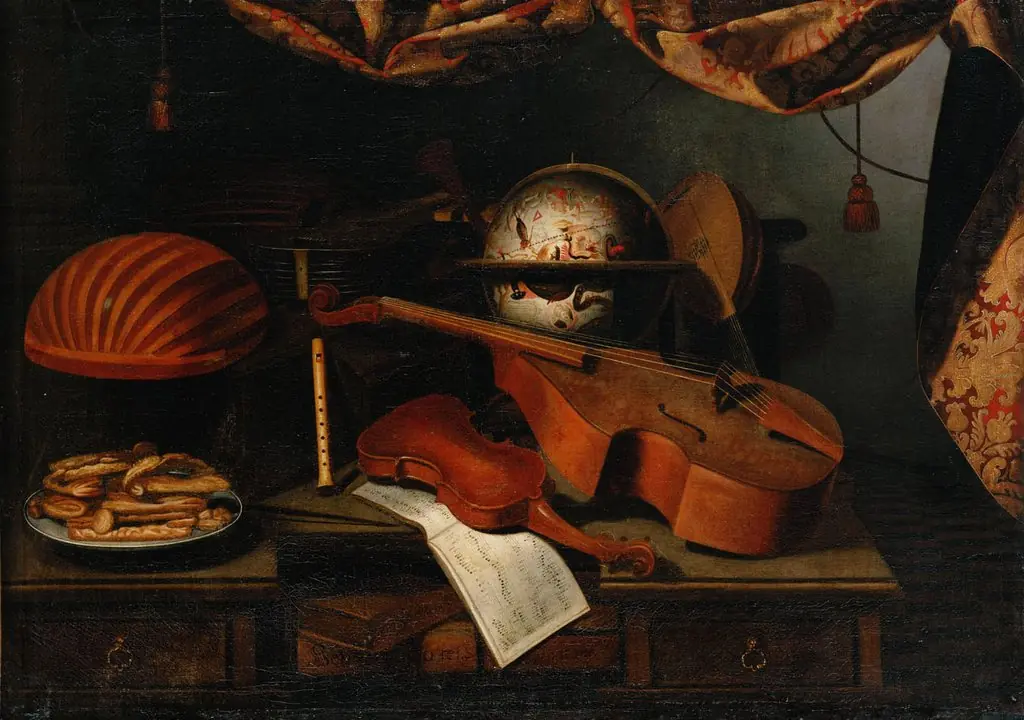 Stilleben mit Musikinstrumenten, Globus und einem Teller mit Gebäck
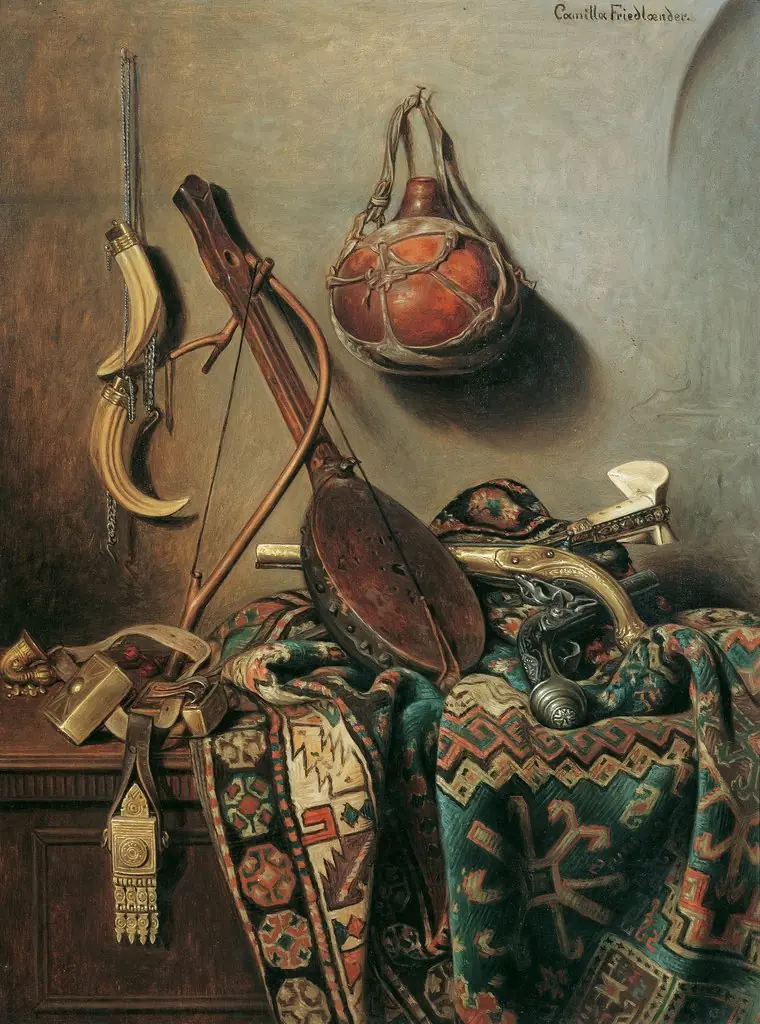 Orientalischer Hausrat
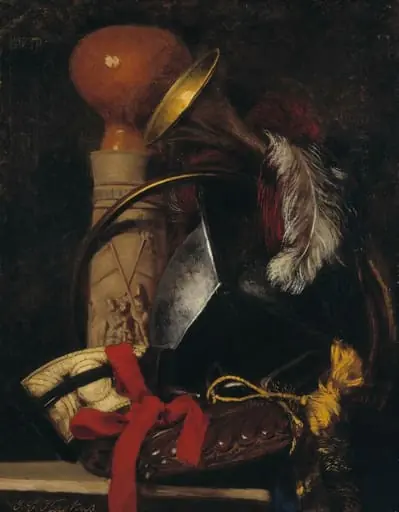 Asetelma, malja, metsätorvi, plyymejä sekä vyö
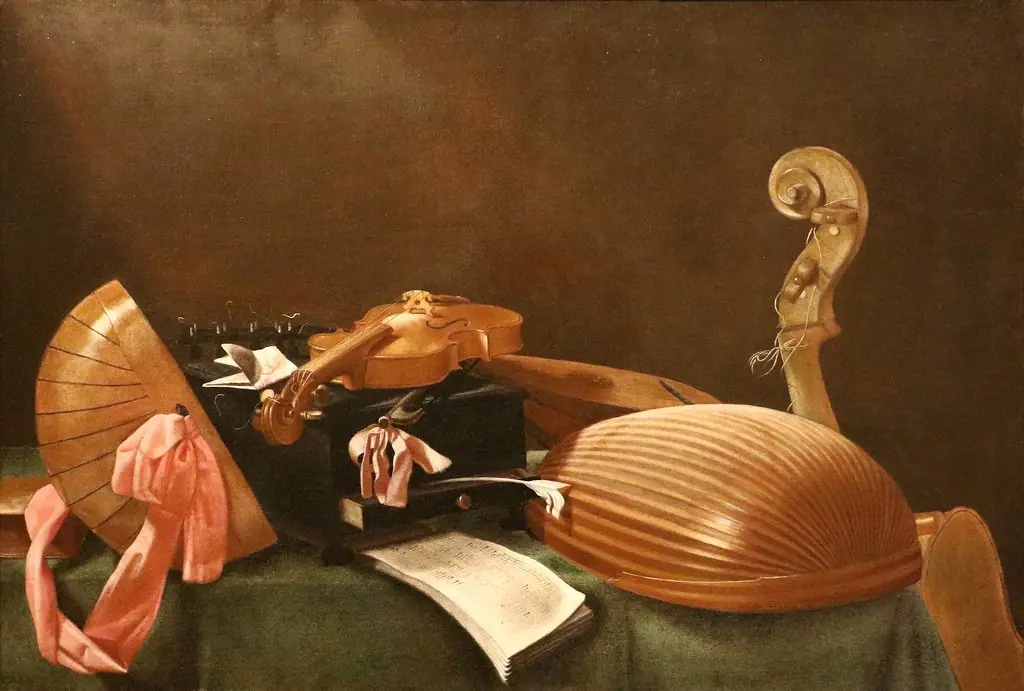 Music instruments
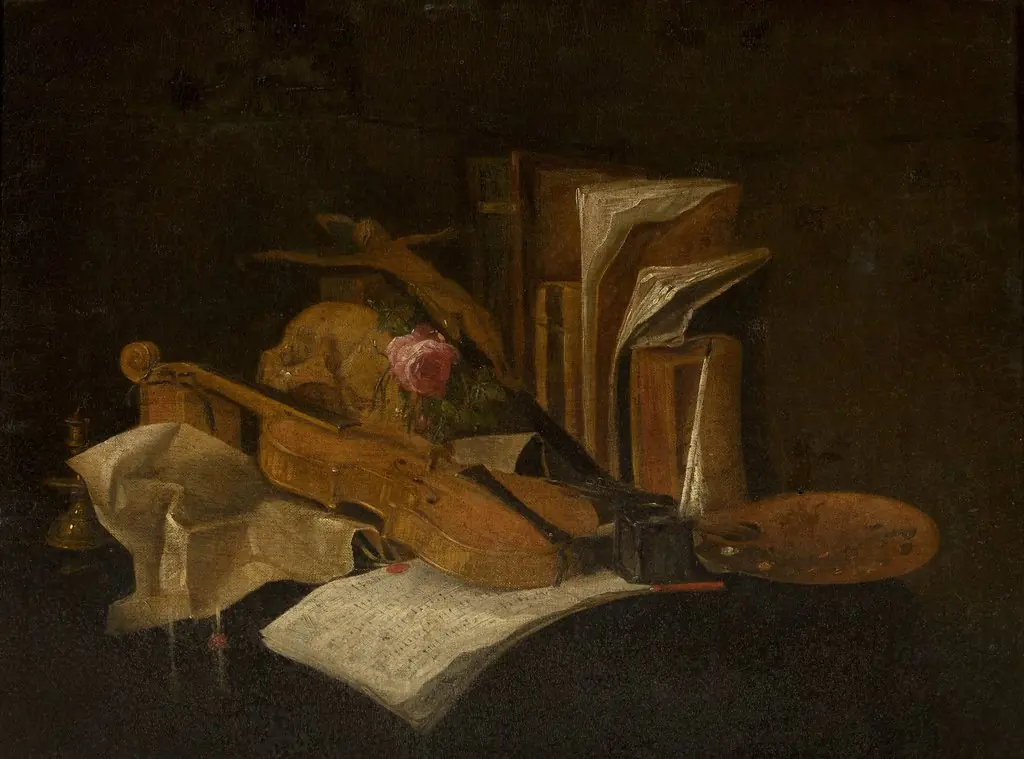 Vanitas