Artwork
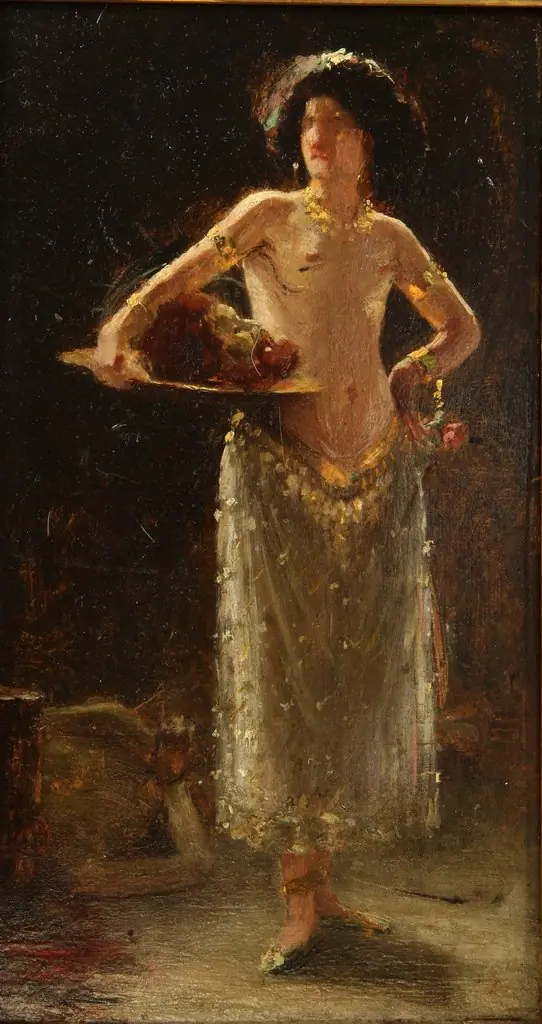
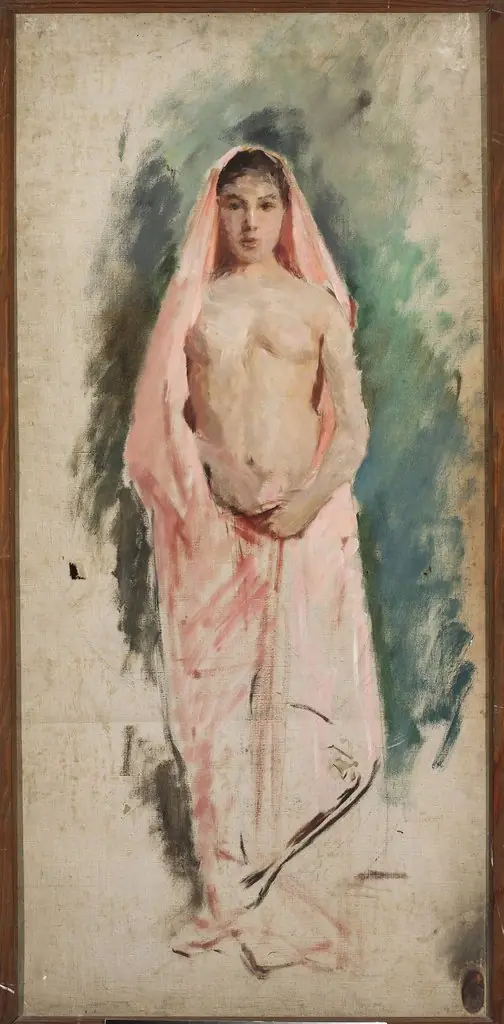
Egyptiläinen kuningatar, akatemiaharjoitelma
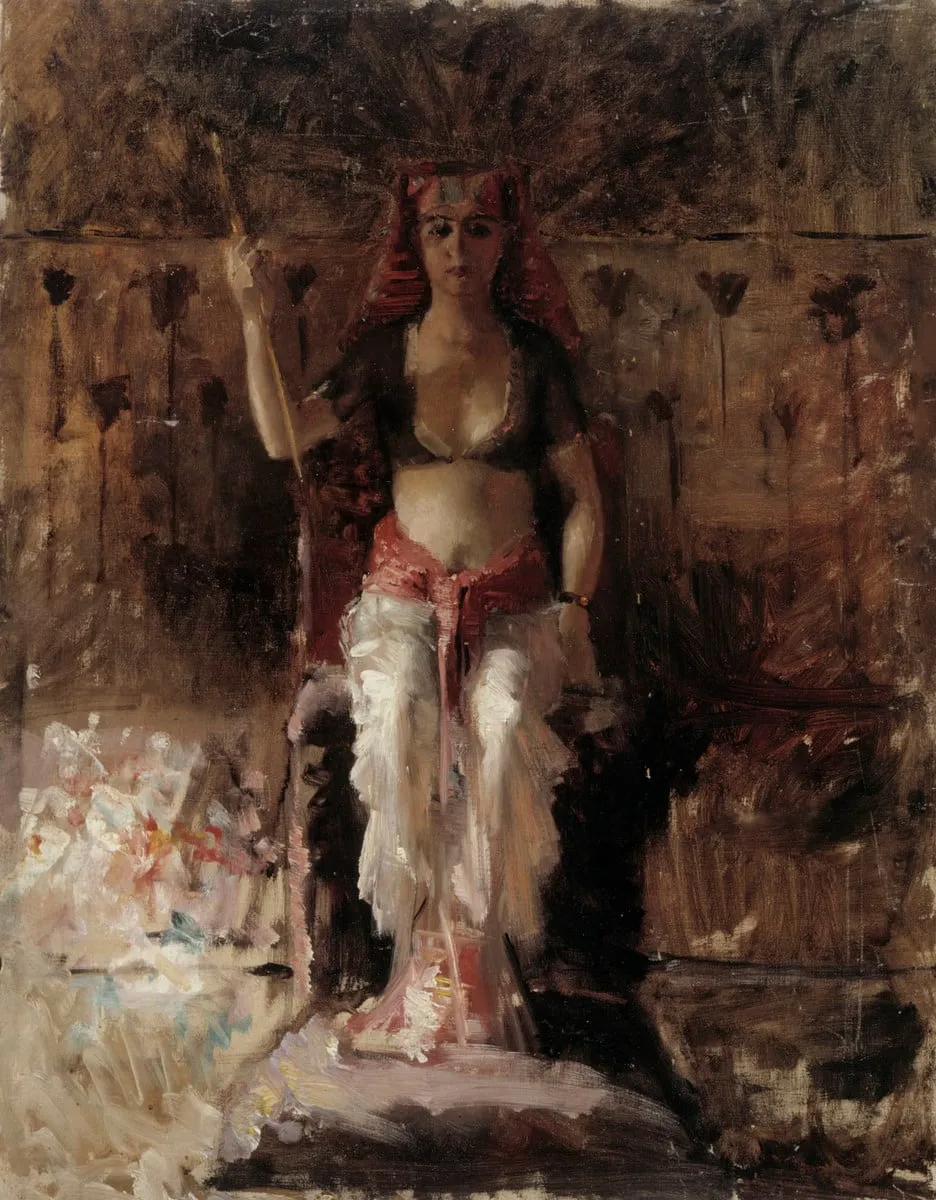
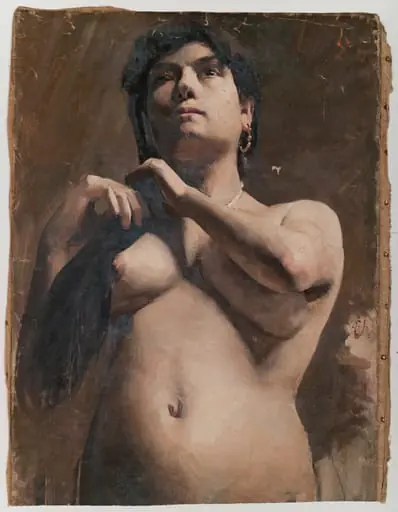
Egyptiläinen kuningatar, akatemiaharjoitelma is an unspecified painting by Albert Edelfelt. It dates from 1889 and is held in the collection of the Finnish National Gallery.
About this work
Overview
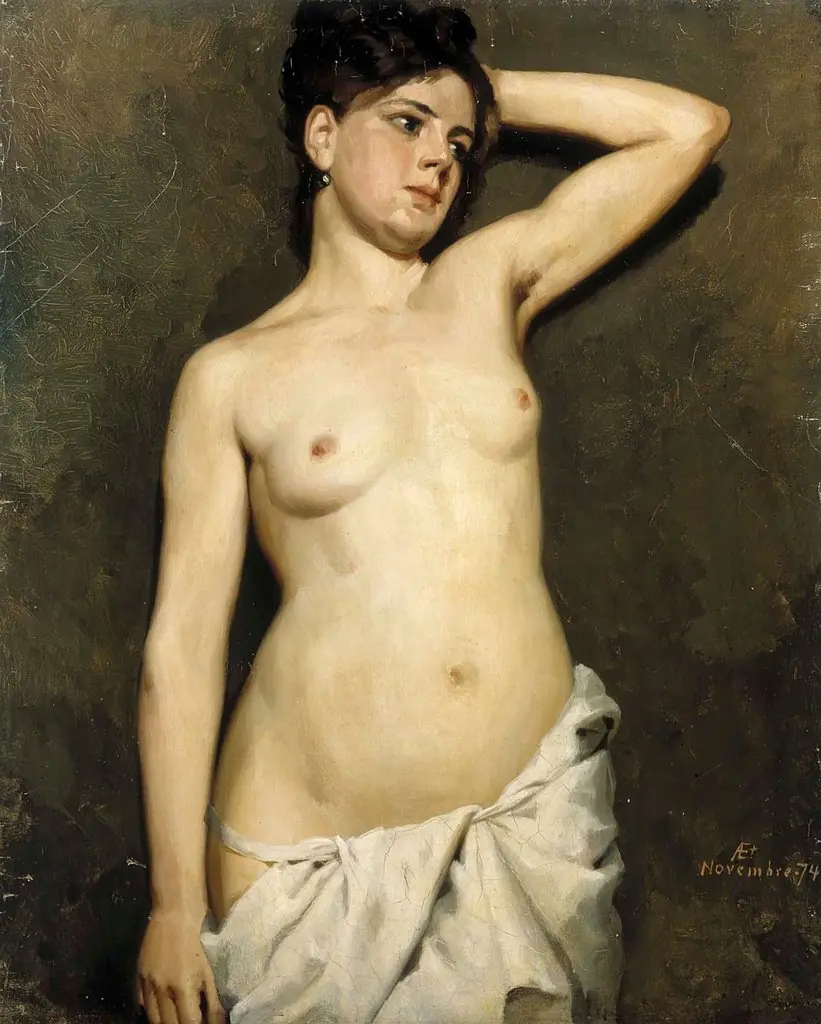
Painted around 1889 by Albert Edelfelt, this work is an academic exercise in historical costume, not a portrait of a real historical figure.
Painted around 1889 by Albert Edelfelt, this work is an academic exercise in historical costume, not a portrait of a real historical figure. It presents a woman clad in stylized ancient Egyptian attire, positioned against a dark, textured wall. The composition emphasizes form and drapery, reflecting the artist’s engagement with academic traditions of figure study and historical reconstruction during a period of heightened interest in Egyptology.
Subject & Meaning
The figure is not a specific queen but a constructed representation, likely inspired by contemporary archaeological discoveries and Orientalist imagery. Her regal posture, staff, and head covering suggest authority, yet the ambiguity of her identity invites contemplation rather than narrative. The work engages with the 19th-century fascination with ancient Egypt as a symbol of mystery and timeless grandeur, without asserting a concrete historical claim.
Technique & Style
Edelfelt employs chiaroscuro to model the figure with subtle gradations of light and shadow, enhancing the three-dimensionality of the form. The contrast between the woman’s pale garments and the deep background draws focus to her silhouette. Brushwork is controlled yet expressive, particularly in the rendering of fabric folds and the textured wall, demonstrating the artist’s mastery of tonal harmony and surface detail within an academic framework.
History & Provenance
Created during Edelfelt’s time in Paris, the painting was likely a studio exercise intended to explore historical costume and lighting effects. It remained in the artist’s possession until his death and was later acquired by the Ateneum Art Museum in Helsinki, where it is now held. Its status as an academic study rather than a commissioned work explains its limited public exposure during the artist’s lifetime.
Context
The painting emerged amid a European wave of Egyptomania following Napoleon’s campaign and the deciphering of the Rosetta Stone. Artists and scholars alike turned to ancient Egypt as a source of aesthetic and symbolic inspiration. Edelfelt’s work reflects this trend, aligning with academic practices that valued historical reconstruction, even when based on speculative or romanticized interpretations of antiquity.
Legacy
Though not among Edelfelt’s most widely known works, this piece illustrates his technical discipline and engagement with academic conventions beyond his realist landscapes and portraits. It stands as a quiet testament to the 19th-century artist’s role in navigating between historical inquiry and imaginative reconstruction, offering insight into how classical themes were reinterpreted in a modern studio context.
Artist & collection
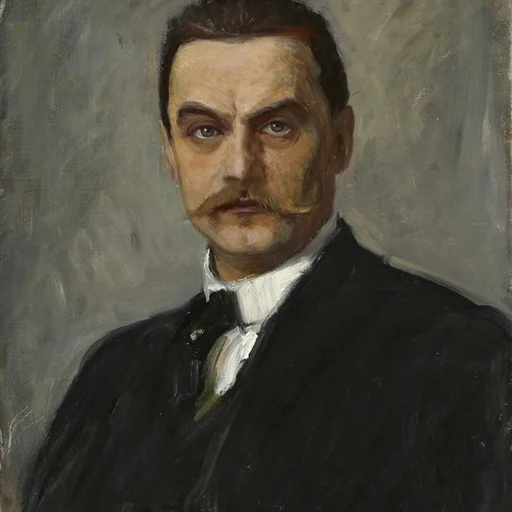
Artist
Albert Gustaf Aristides Edelfelt (21 July 1854 – 18 August 1905) was a Finnish painter noted for his naturalistic style and Realist approach to art.