Artwork
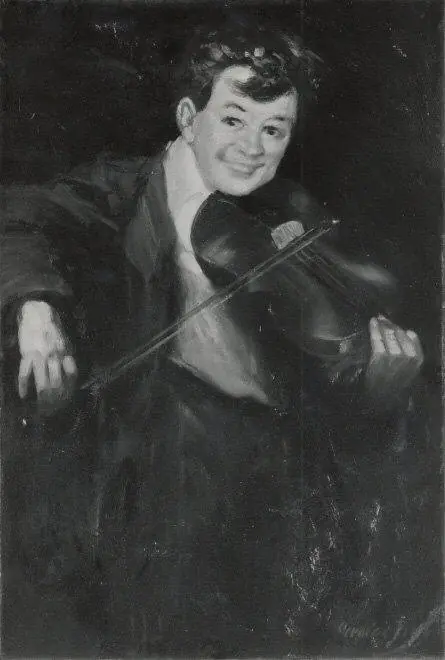
Băiatul cu vioara
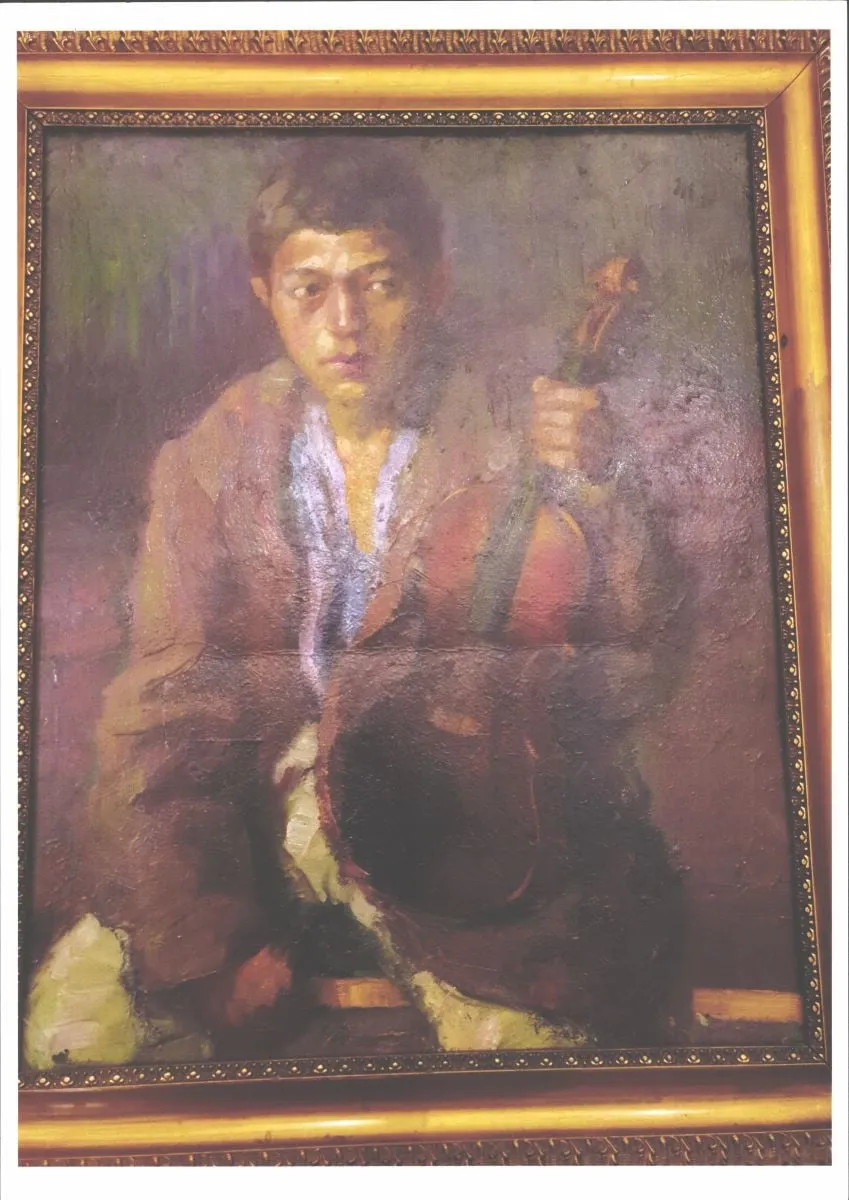
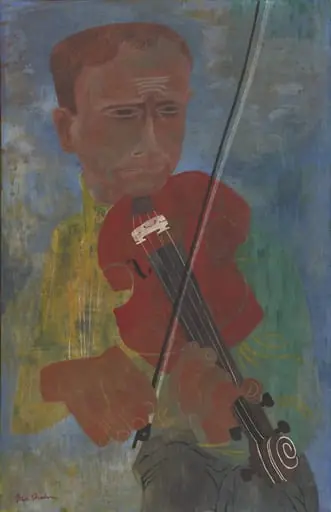
Băiatul cu vioara is an unspecified painting by Hans Eder. It dates from 1944 and is held in the collection of the Colecție particulară - Cluj.
About this work
Overview
Rendered in a restrained palette of browns and whites, the work avoids dramatic lighting or elaborate detail, emphasizing quiet presence over narrative.
Băiatul cu vioara is a 1944 oil painting by Romanian artist Hans Eder. It portrays a young boy seated with a violin resting against his left shoulder, his hands poised as if ready to play. The composition is tightly framed, focusing on the boy’s stillness and direct gaze. Rendered in a restrained palette of browns and whites, the work avoids dramatic lighting or elaborate detail, emphasizing quiet presence over narrative.
Subject & Meaning
The boy, dressed in a simple brown jacket and white trousers, holds a violin with quiet dignity. His neutral expression and upright posture suggest introspection rather than performance. The absence of context—no instrument case, no music stand, no audience—shifts focus to the individual, inviting interpretation of solitude, discipline, or the quiet weight of cultural tradition in rural Romanian life during wartime.
Technique & Style
Eder employs a realistic approach with careful attention to texture and form. The folds of the boy’s jacket, the grain of the violin’s wood, and the subtle modeling of his face are rendered with precision. The background is uniformly muted, eliminating distraction and enhancing the figure’s solidity. Light falls evenly, avoiding strong chiaroscuro, which contributes to the painting’s calm, unembellished tone.
History & Provenance
Painted in 1944 during a period of political upheaval in Romania, the work was acquired by the Museum of Ethnography in Bucharest, where it remains today. Its inclusion in an ethnographic collection suggests it was valued not as fine art alone, but as a document of everyday life. No record of public exhibition or private ownership prior to the museum’s acquisition is known.
Context
Created during World War II, the painting reflects a moment when Romanian artists turned inward, documenting local subjects amid national turmoil. While urban centers were disrupted, rural life persisted with quiet resilience. Eder’s focus on a single child with a violin may echo broader cultural efforts to preserve identity through music and tradition during a time of uncertainty and loss.
Legacy
Though not widely reproduced or studied outside Romania, Băiatul cu vioara endures as a quiet example of mid-20th-century Romanian realism. It contributes to the ethnographic record of rural childhood and musical practice. Its understated nature has allowed it to remain a subtle, enduring presence in the museum’s collection, valued for its sincerity rather than its spectacle.