Artwork
Sat de munte
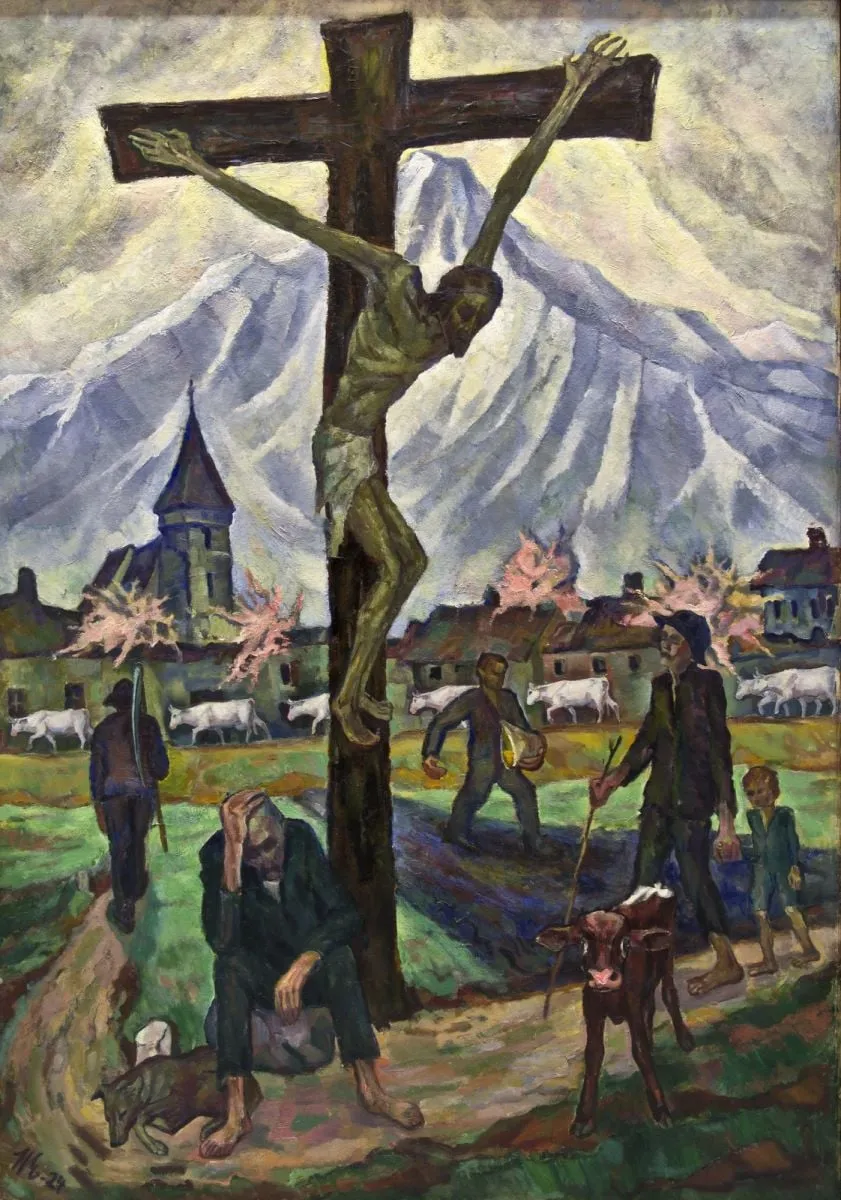
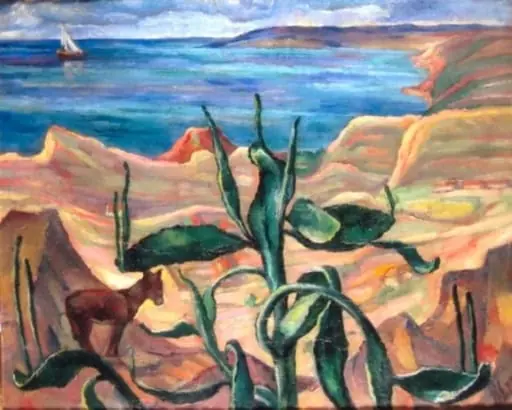
Sat de munte is an unspecified painting by Hans Eder. It dates from 1924 and is held in the collection of the National Museum of Art of Romania.
About this work
Overview
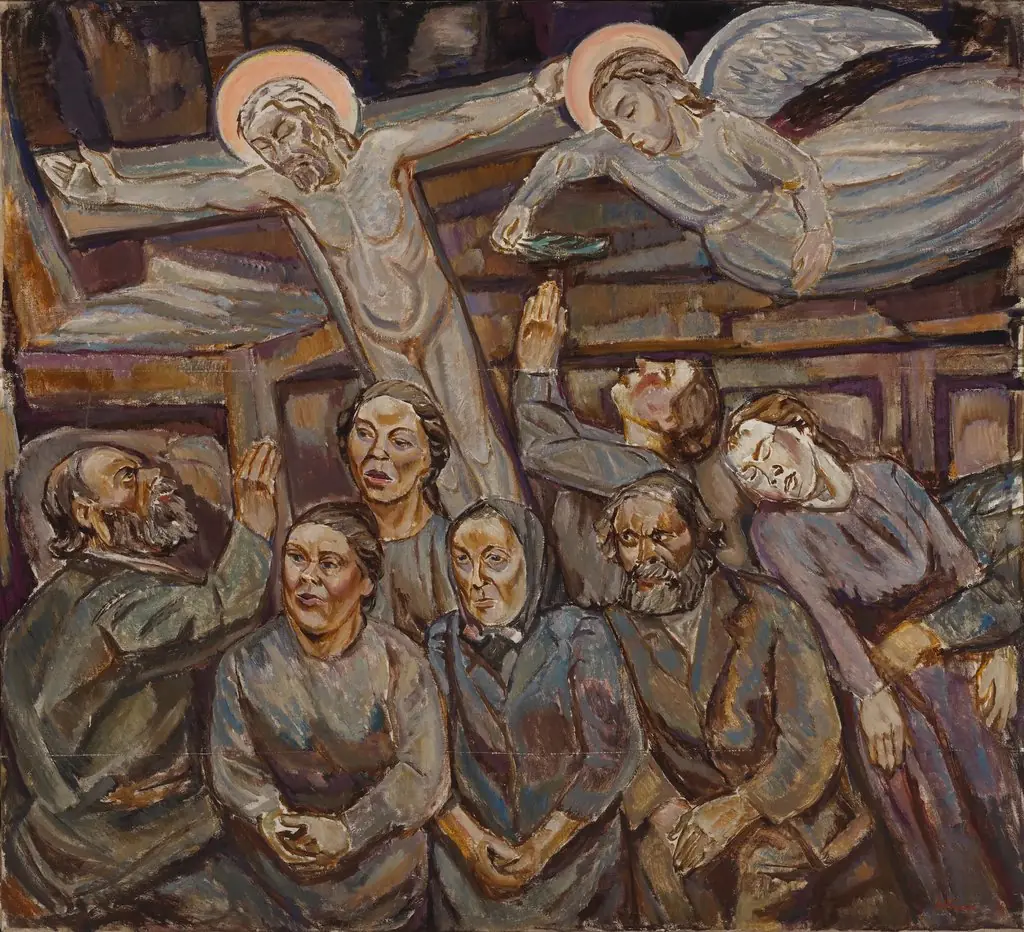
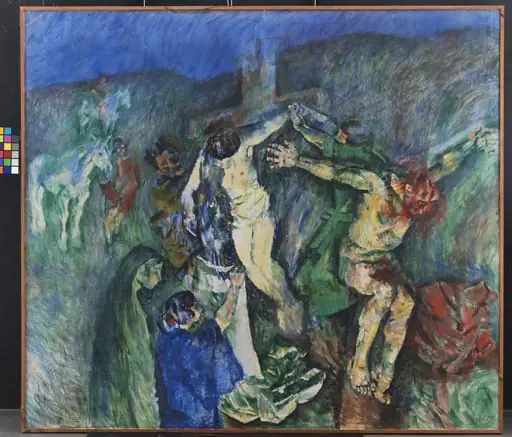
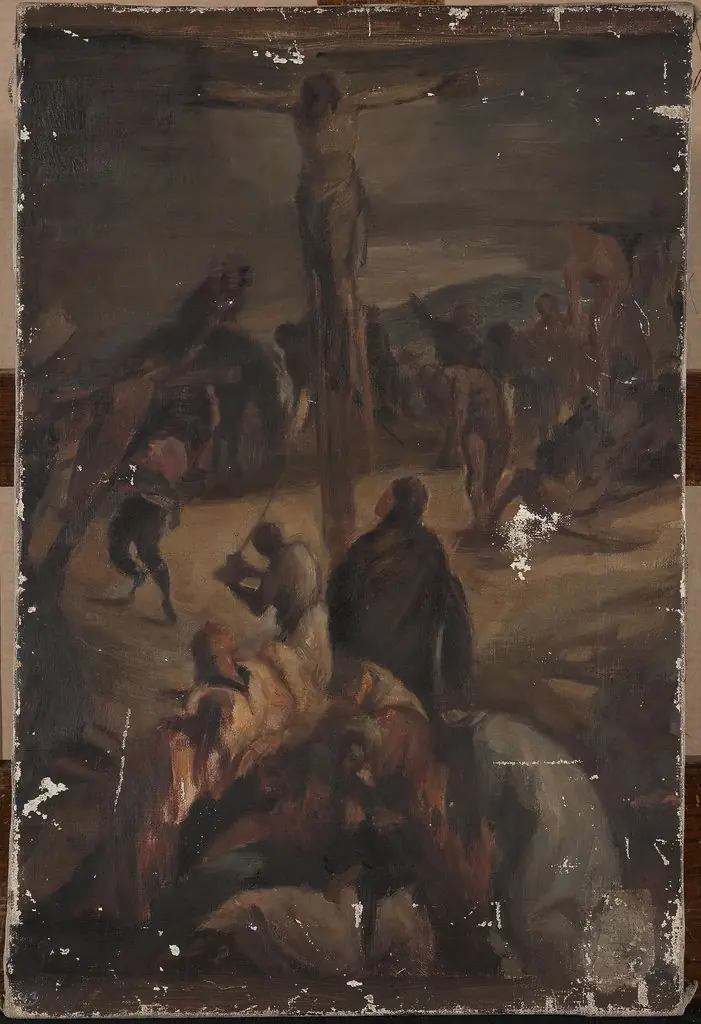
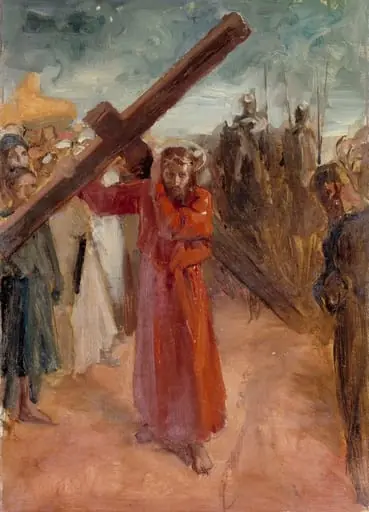
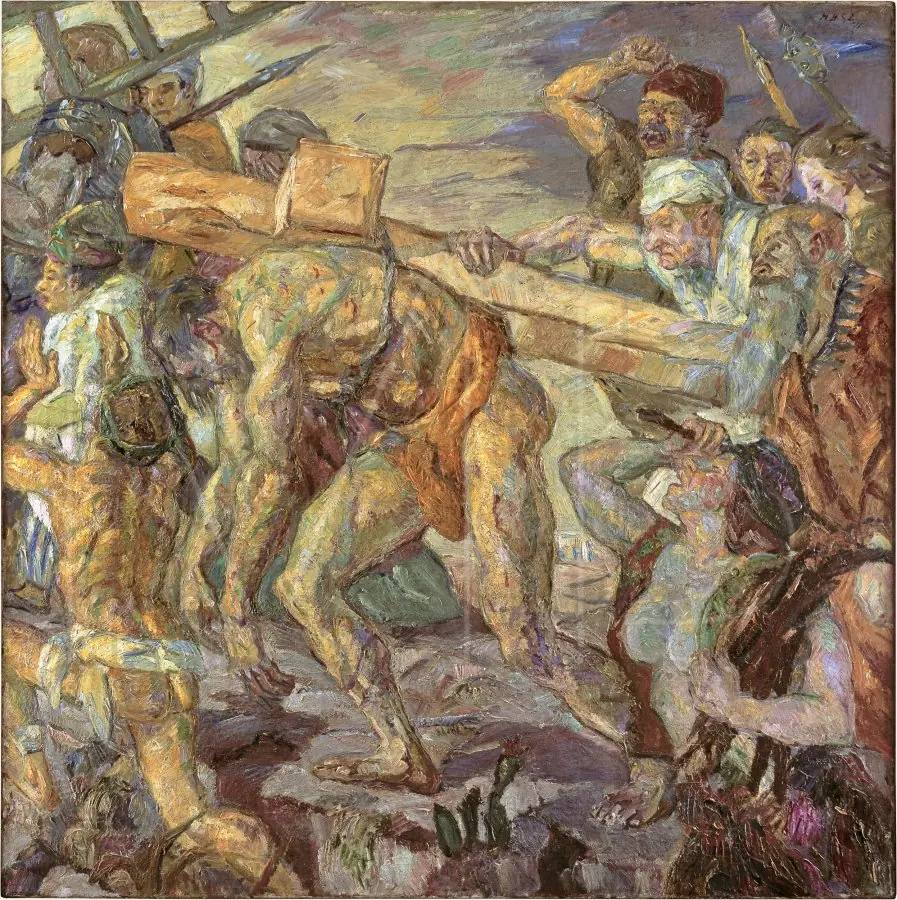
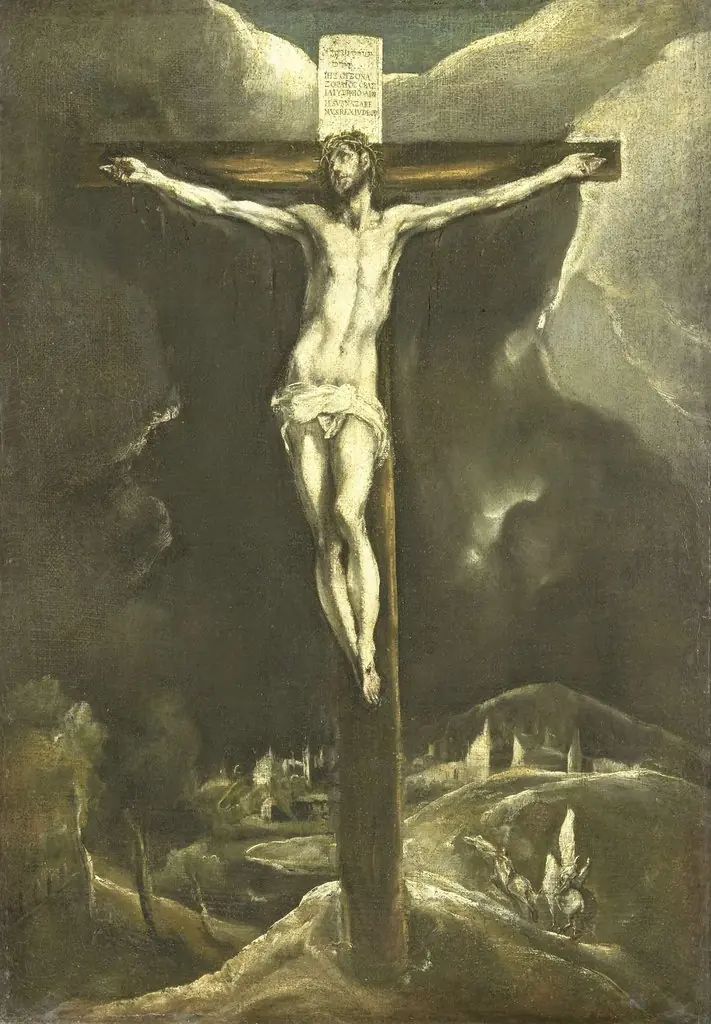
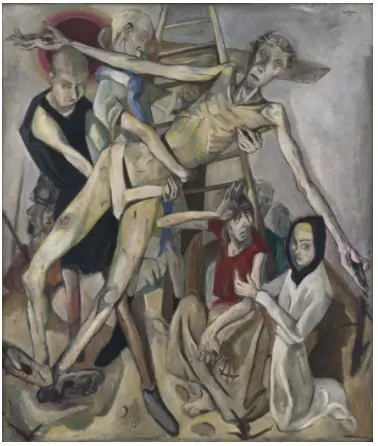
Sat de munte, painted by Hans Eder in 1924, is a religious composition depicting the crucifixion of Christ. The scene is rendered in muted greens, browns, and blues, with a focus on quiet, everyday details surrounding the central event. Unlike traditional depictions, the setting blends the sacred with the mundane, placing the cross within a rural landscape populated by figures and livestock.
Subject & Meaning
The painting portrays Christ on the cross, his body rendered in pale green tones, set against a backdrop of mountains and village structures. Figures go about their daily routines—walking, glancing, tending animals—suggesting indifference or routine acceptance of the event. This juxtaposition may reflect a meditation on the ordinary world’s coexistence with profound spiritual suffering.
Technique & Style
Eder employs a detailed, almost illustrative style with careful attention to environmental elements. The palette is restrained, dominated by earthy greens and browns, accented by cooler blues in the distant peaks. Brushwork is precise but not ornate, emphasizing texture in clothing, stone, and foliage. The composition avoids dramatic lighting, favoring a subdued, atmospheric tone.
History & Provenance
Created in 1924, Sat de munte emerged during a period of renewed interest in spiritual themes among Central European artists, often in response to post-war disillusionment. The work’s provenance is not widely documented, but its style aligns with regional modernist tendencies that sought to ground religious narratives in local, lived environments rather than idealized settings.
Context
In the early 20th century, many artists moved away from grand ecclesiastical imagery toward intimate, human-centered interpretations of biblical stories. Eder’s inclusion of animals, villagers, and ordinary architecture reflects this shift, situating the crucifixion not as a transcendent spectacle but as an event embedded in the rhythms of rural life.
Legacy
Sat de munte remains a quiet example of interwar religious painting that resists sentimentality. While not widely exhibited, it contributes to a broader dialogue among Central European modernists who sought to reconnect sacred narratives with the textures of everyday existence, offering a contemplative alternative to traditional iconography.
Artist & collection