Artwork
Golgotha
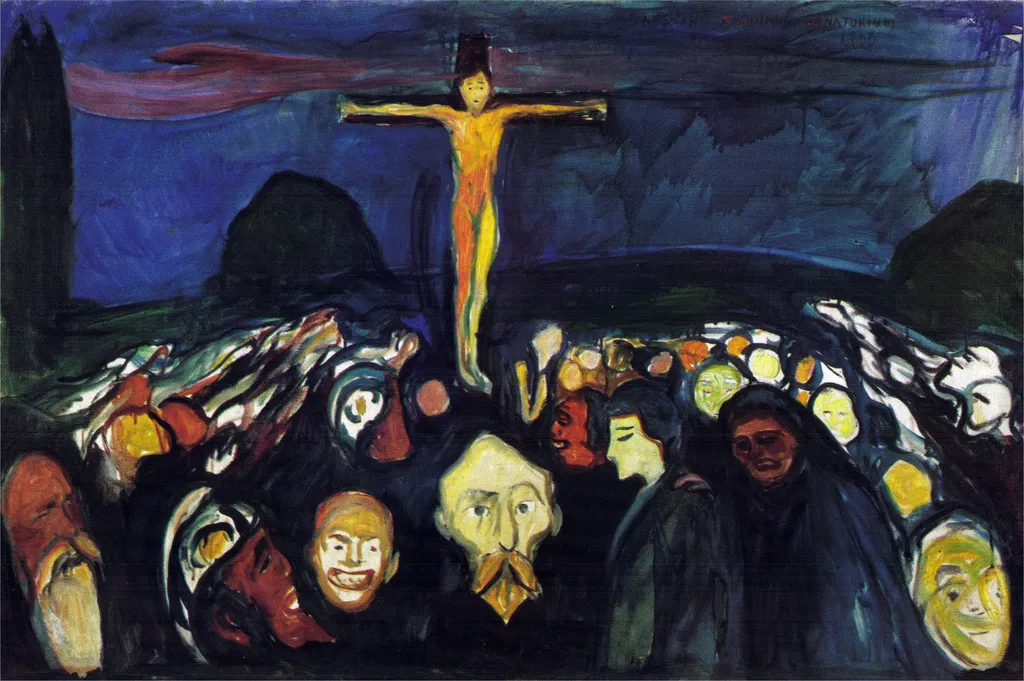
Golgotha is an oil painting by the Post-Impressionist artist Edvard Munch. It dates from 1900 and is held in the collection of the Munch Museum.
About this work
Overview
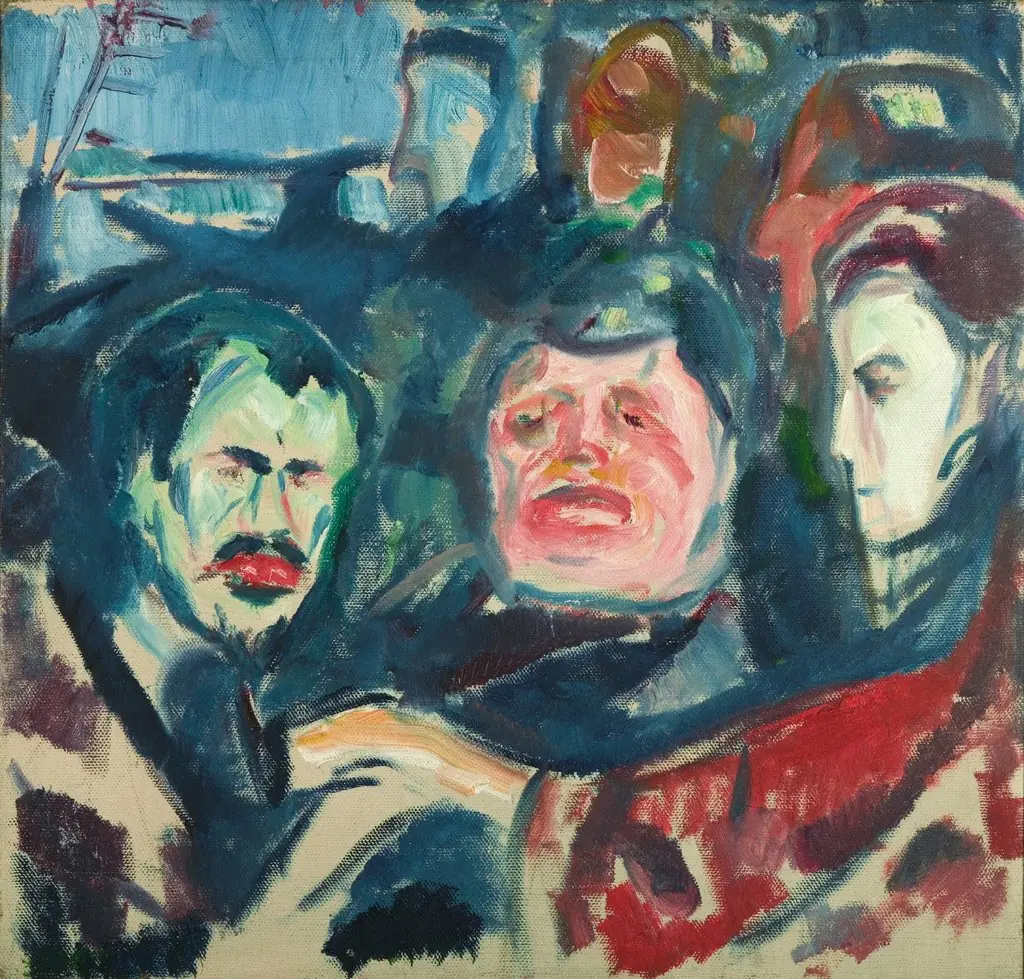
Created in 1900, *Golgotha* is an oil painting by Norwegian artist Edvard Munch. The work portrays the crucifixion scene with a luminous central figure against a turbulent sky, surrounded by a varied crowd. Executed in a post‑impressionist idiom, the composition combines stark color contrasts with expressive brushwork, reflecting the artist’s characteristic emotional intensity.
Subject & Meaning
This juxtaposition of divergent emotions underscores Munch’s interest in the psychological complexity of suffering and collective response.
The canvas centers on a bright, yellowed Christ figure nailed to a cross, set beneath a storm‑filled backdrop of deep blues and purples. Below, a multitude of faces—some smiling, others weeping—reach upward, their gestures suggesting a spectrum of reactions to the event. This juxtaposition of divergent emotions underscores Munch’s interest in the psychological complexity of suffering and collective response.
Technique & Style
Munch applied the paint in thick, impasto layers, allowing the pigments to stand out from the surface and give the colors a tactile, almost three‑dimensional presence. The bold palette—yellow for the central figure, vivid reds, greens, and whites for the crowd—creates a visual tension that heightens the drama. The brushwork is vigorous, reinforcing the painting’s emotional charge while aligning with post‑impressionist concerns for personal expression over strict realism.
History & Provenance
After its completion, *Golgotha* entered the holdings of the Munch Museum, which maintains a core collection of the artist’s oeuvre. The museum’s acquisition ensures the work remains accessible for scholarly study and public exhibition, situating it within the broader narrative of Munch’s career and the development of early twentieth‑century Norwegian art.
Context
Munch’s formative years were marked by personal illness and the loss of close relatives, experiences that informed his later preoccupation with existential themes. His training at the Royal School of Art and Design in Kristiania provided a technical foundation that he later transformed into a highly expressive visual language. *Golgotha* thus reflects both his biographical background and the broader post‑impressionist shift toward interior, emotive representation.
Own this work as a print
Artist & collection
Artist
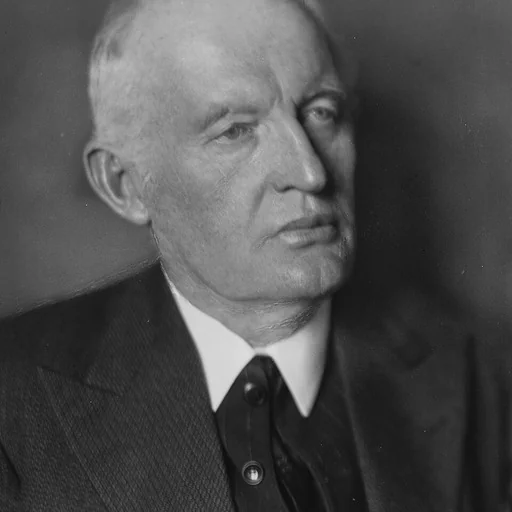
Edvard Munch ( MUUNK; Norwegian: ; 12 December 1863 – 23 January 1944) was a Norwegian painter.