Artwork
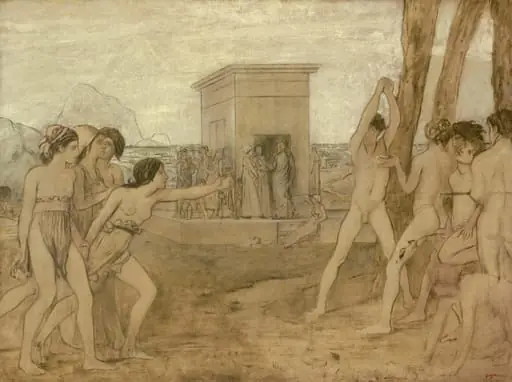
Young Spartan Girls Challenging Boys
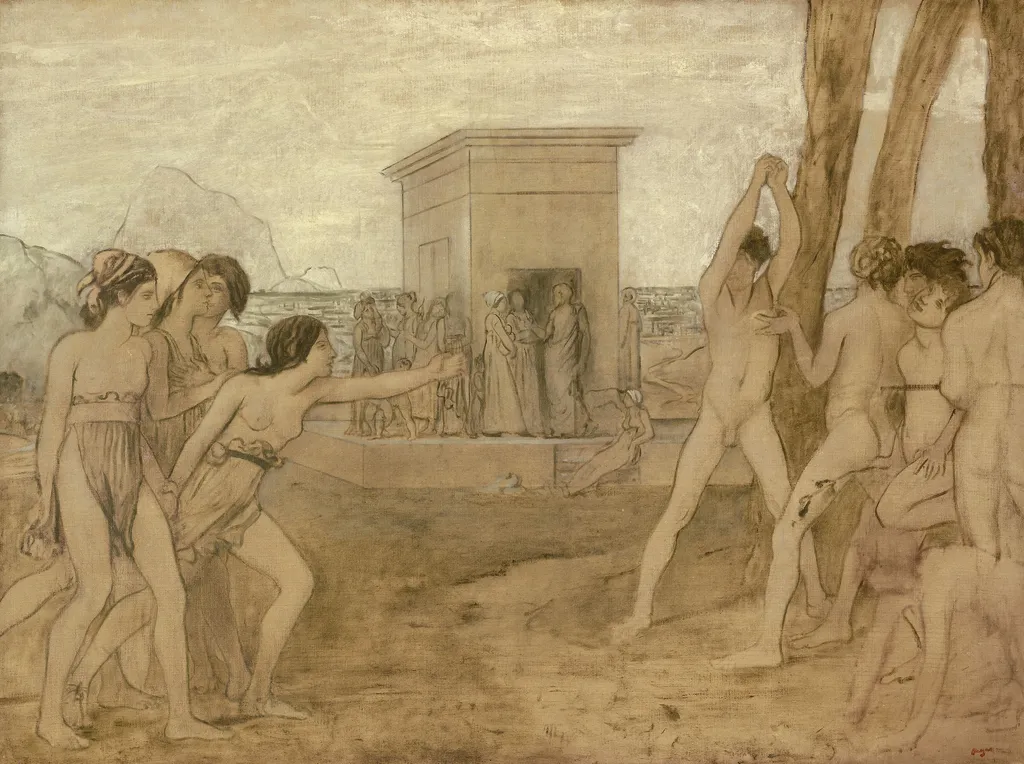
Young Spartan Girls Challenging Boys is an oil painting by the Realist artist Edgar Degas. It dates from 1860 and is held in the collection of the Art Institute of Chicago.
About this work
Overview
Created in 1860, this oil on canvas by Edgar Degas depicts a loosely assembled group of youthful figures in an outdoor setting. The composition is anchored by a central female figure extending her hand toward a boy, suggesting a moment of playful confrontation. The work resides in the collection of the Art Institute of Chicago.
Subject & Meaning
The scene presents several adolescent bodies, largely unclothed, positioned among trees and a distant architectural element. The central gesture— a young woman reaching toward a male counterpart—has been interpreted as a depiction of informal competition or challenge among peers, reflecting themes of youthful vigor and social interaction.
Technique & Style
Degas employs oil paint to render a nuanced sense of depth, using layered brushwork that models flesh and foliage with subtle tonal shifts. The varied poses, from relaxed reclining to upright stance, create a dynamic rhythm across the canvas, while the landscape background recedes through atmospheric perspective.
History & Provenance
The painting entered the Art Institute of Chicago’s holdings after changing hands in the early twentieth century, though precise acquisition details remain limited. Its presence in the museum’s collection situates it among other works by Degas that illustrate his early exploration of figure groups in natural settings.
Context
Executed during Degas’s formative years, the work aligns with mid‑nineteenth‑century French interest in genre scenes that capture everyday moments. While Degas later became renowned for his ballet subjects, this piece reflects his broader investigation of movement, anatomy, and the informal dynamics of youth.
Own this work as a print
Artist & collection
Artist
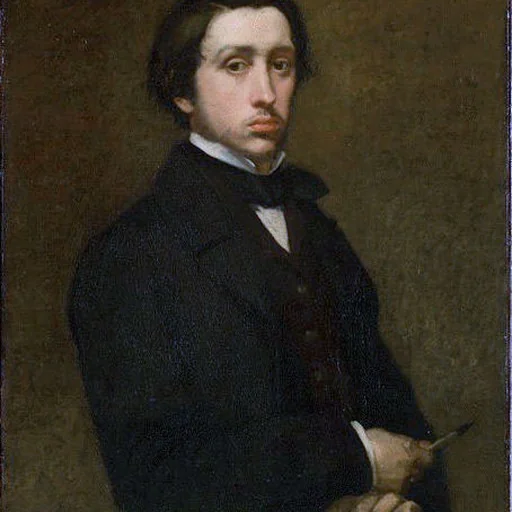
Born Hilaire-Germain-Edgar De Gas on 19 July 1834 in Paris, Edgar Degas came from an affluent banking family with aristocratic roots and spent his childhood among the cultivated circles of the French capital.


 The River
 Young Spartan Girls Challenging Boys
 Cider
Cider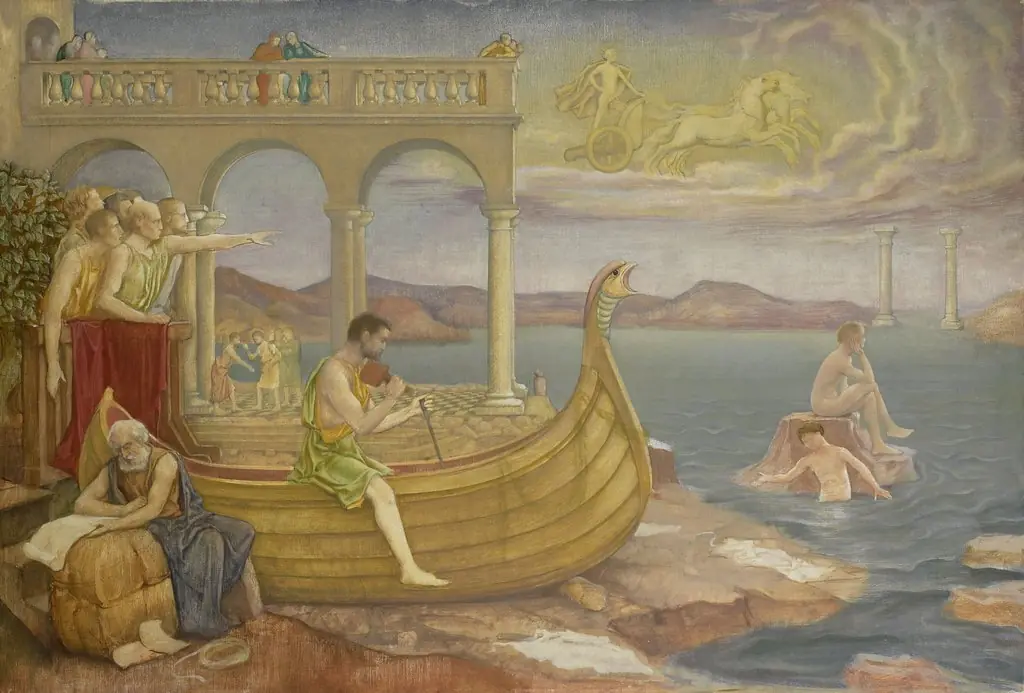 The Building of the 'Argo'
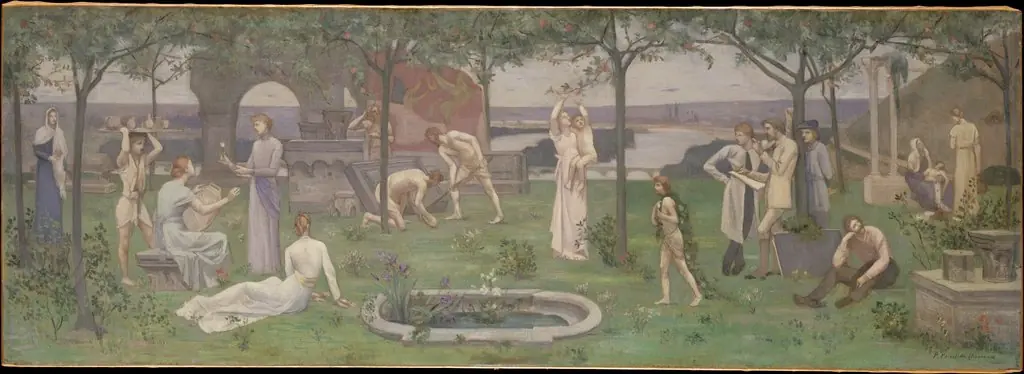 Inter artes et naturam (Between Art and Nature)
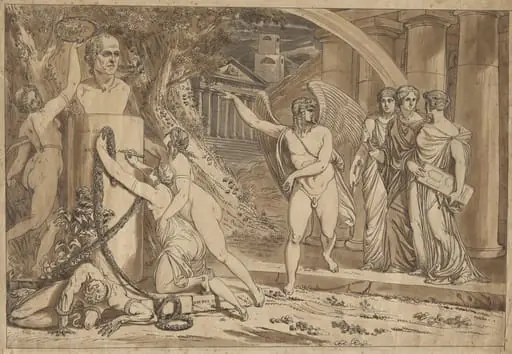 Virtues Crowning the Bust of Canova
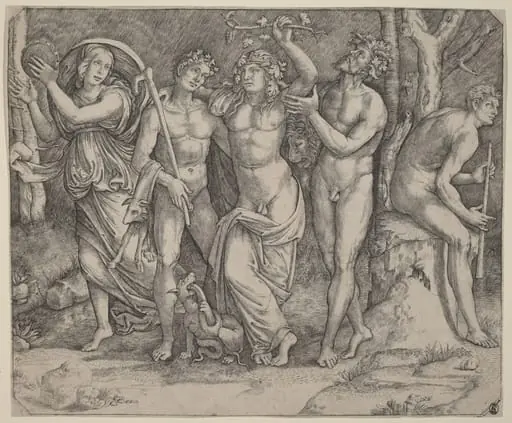 Bacchus and His Attendants
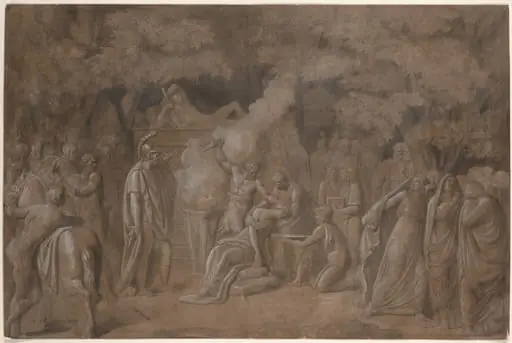 Death of Iphigenia (?)
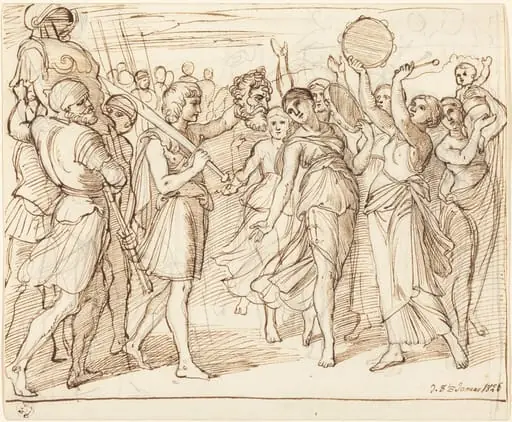 The Triumph of David
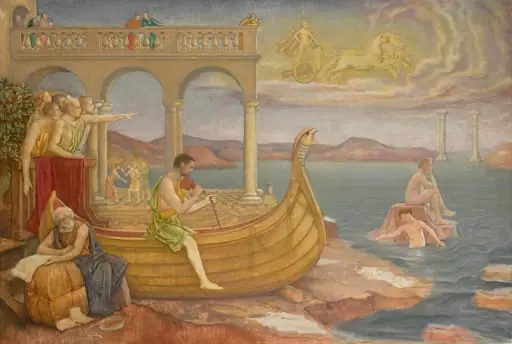 The Building of the 'Argo'
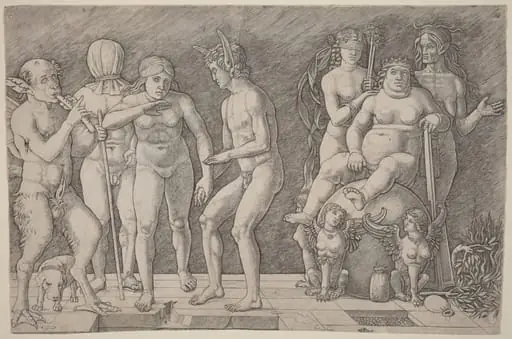 Virtus Combusta: An Allegory of Virtue
 The Martyrdom of Saint Sigismond and his Family