Artwork
Virtues Crowning the Bust of Canova
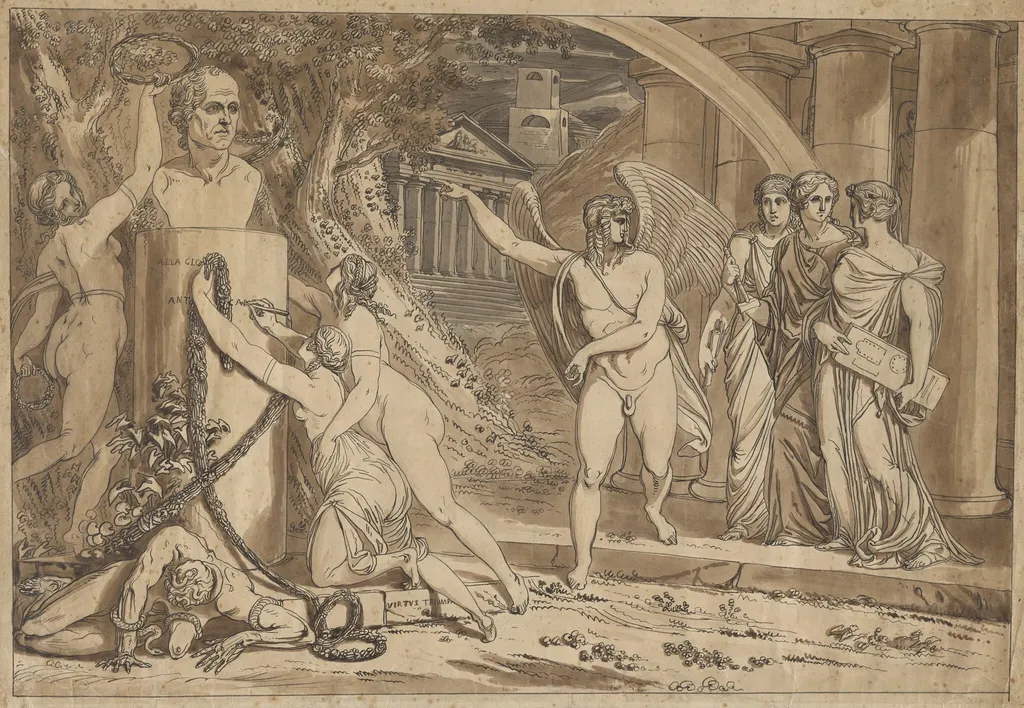
Virtues Crowning the Bust of Canova is a graphite drawing by the Romanticist artist Michele Sangiorgi. It dates from 1812 and is held in the collection of the National Gallery of Art.
About this work
Overview
Virtues Crowning the Bust of Canova is a drawing by Michele Sangiorgi, dated to 1812, executed in pen and brown ink with brown and gray washes over graphite on laid paper, and housed at the National Gallery of Art in Washington.
Subject & Meaning
The drawing depicts a classical scene where a bust, presumably of Antonio Canova, is being crowned by a winged figure (likely symbolizing Victory or Triumph) amidst a group of robed women. An older, toga-clad figure gestures towards the bust, set against a backdrop of a temple, columns, and a tree, with additional figures and elements (tools, a kneeling boy) enriching the narrative.
Technique & Style
Sangiorgi employed pen and brown ink for outlines, complemented by brown and gray washes over a graphite base, to achieve depth through carefully managed shadows and textures, characteristic of late neoclassical drawing techniques.
History & Provenance
Created in 1812, the work's provenance prior to its acquisition by the National Gallery of Art, Washington, is not detailed here, highlighting only its current institutional ownership.
Context
The piece reflects the neoclassical admiration for antiquity, honoring the renowned sculptor Antonio Canova through a scene that blends classical motifs (temples, togas, Victory figure) with the artist's contemporary acclaim.
Legacy
While specific influences of 'Virtues Crowning the Bust of Canova' on subsequent art are not highlighted, it contributes to the broader legacy of neoclassical artistic tributes, celebrating both the subject's (Canova's) artistic heritage and the era's aesthetic values.
Artist & collection

 Singers' Contest on the Wartburg
 Circe and Ulysses
 Landscape with a Satyr Family and Classical Sculpture
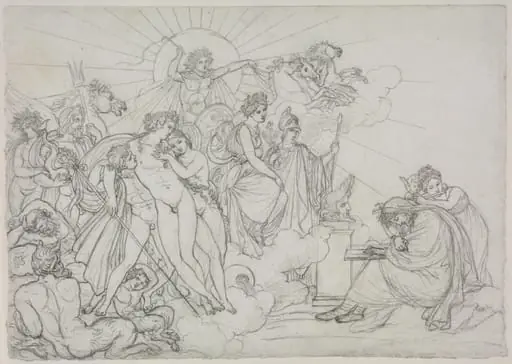 Invocation to the Divinities who preside over Agriculture from Virgil's "Georgics"
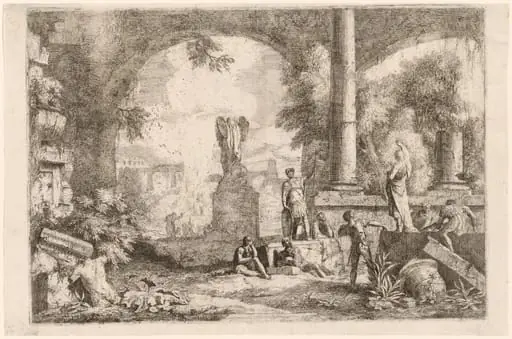 Capriccio of Antique Ruins with Men Gazing at a Classical Orator
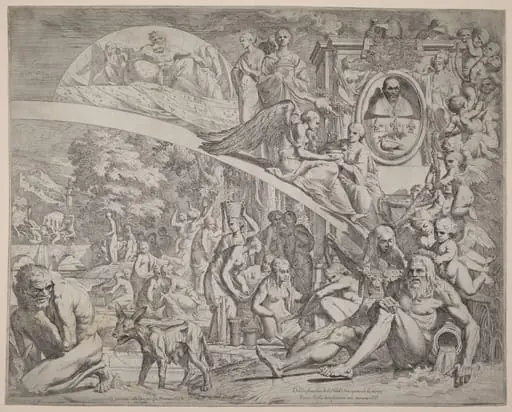 An Allegory in Honor of Innocent X
![Three Figures [verso], by Mather Brown](https://artifactworldgallery.com/img/mather-brown--three-figures-verso--d67cc3e7c0d36b3b-w320.webp) Three Figures [verso]
Three Figures [verso]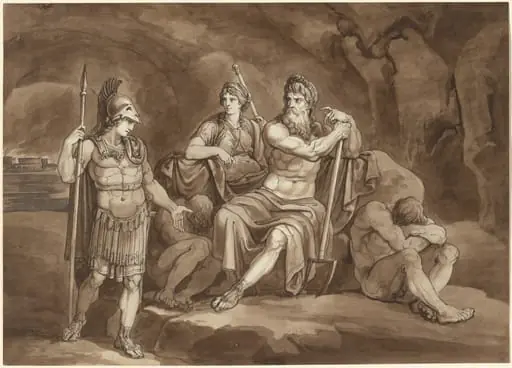 Telemachus Requests Permission from Pluto to Seek His Father in the Underworld
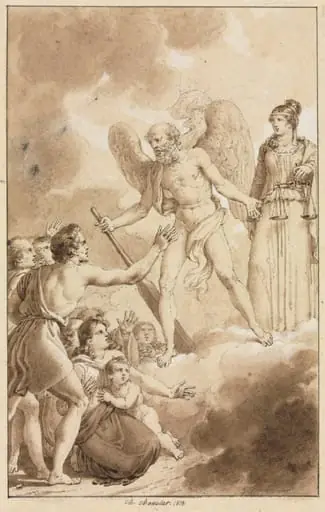 Allegory
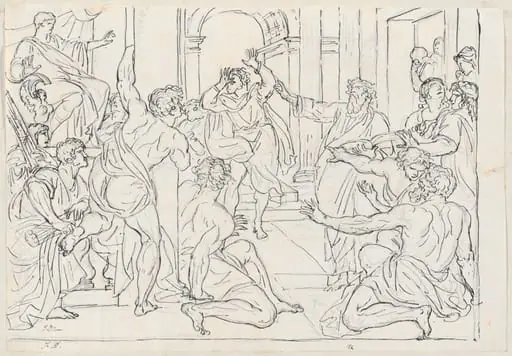 The Blinding of Elymas
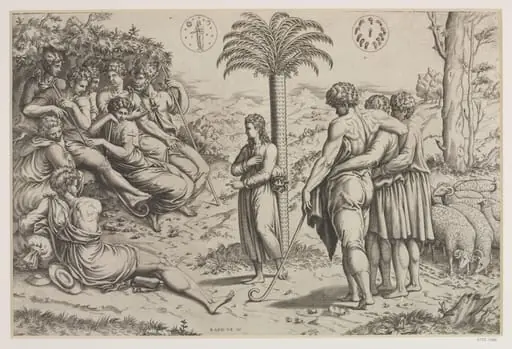 Joseph Interpreting his Dreams
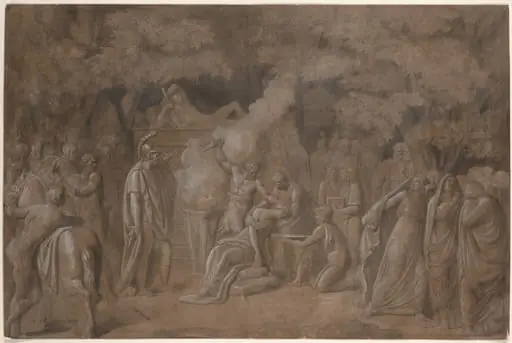 Death of Iphigenia (?)