Artwork
Bathing Children
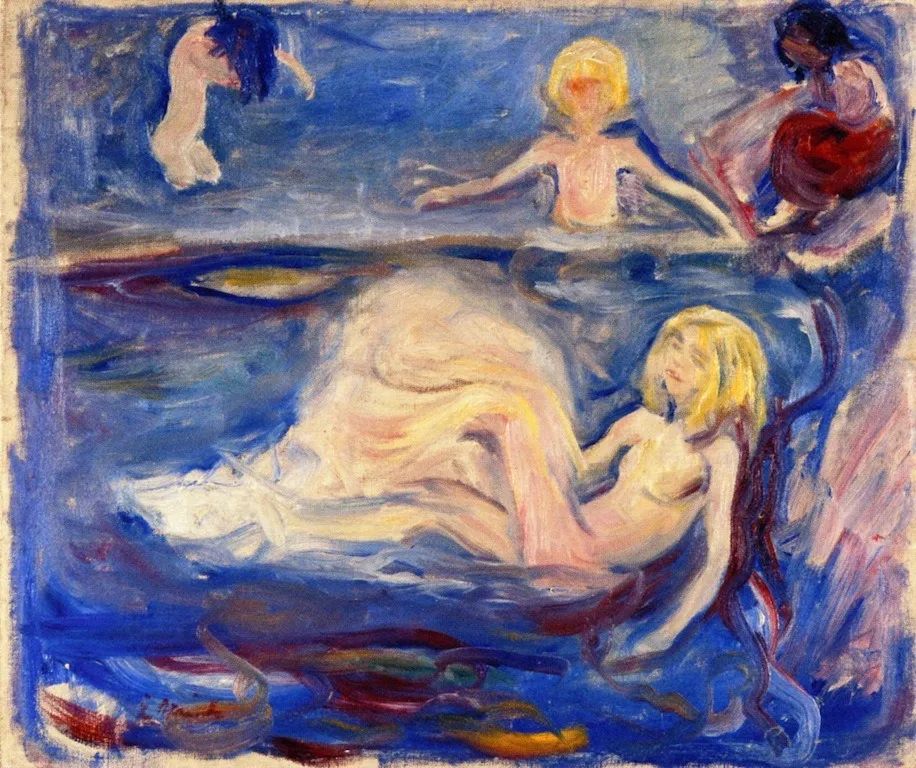
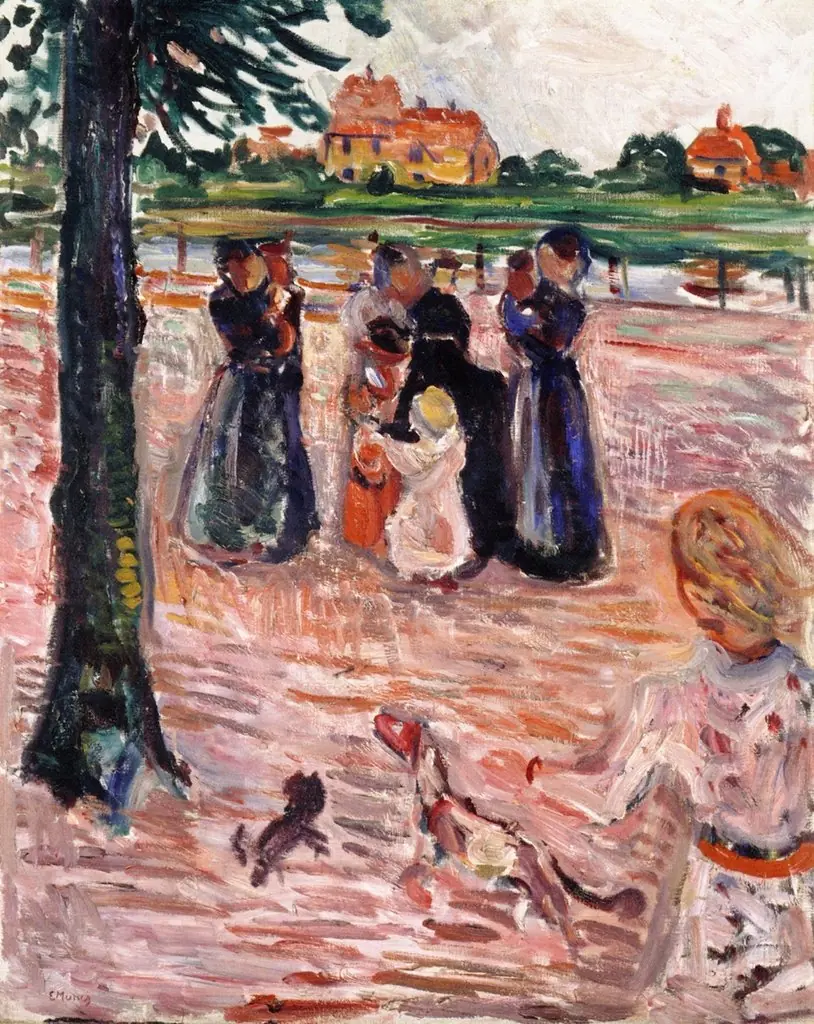
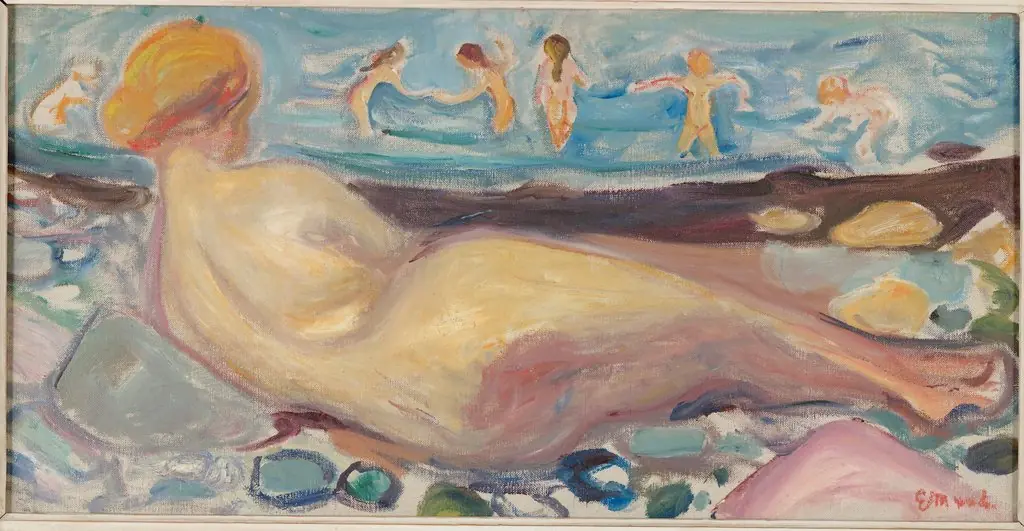
Bathing Children is an oil painting by the Post-Impressionist artist Edvard Munch. It dates from 1899 and is held in the collection of the Munch Museum.
About this work
Overview
Painted in 1899, *Bathing Children* is an oil work by Norwegian artist Edvard Munch, distinct among his more somber compositions for its lightness and vitality.
Painted in 1899, *Bathing Children* is an oil work by Norwegian artist Edvard Munch, distinct among his more somber compositions for its lightness and vitality. Unlike his famous depictions of anxiety and isolation, this piece captures a quiet, unguarded moment of childhood play. Executed in a loose, expressive manner, it reflects Munch’s engagement with post-impressionist approaches to color and form, emphasizing sensation over strict realism.
Subject & Meaning
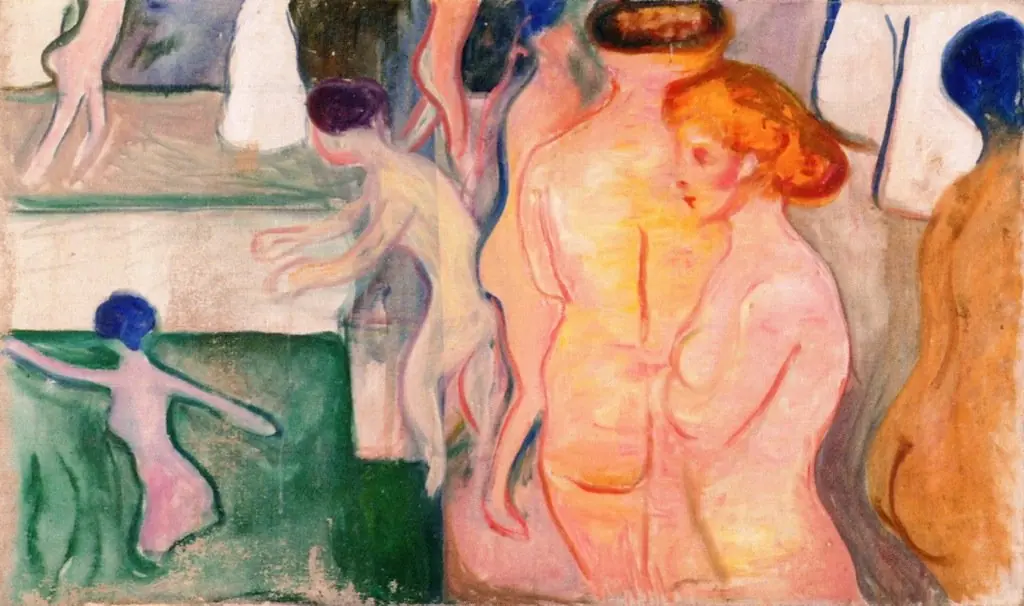
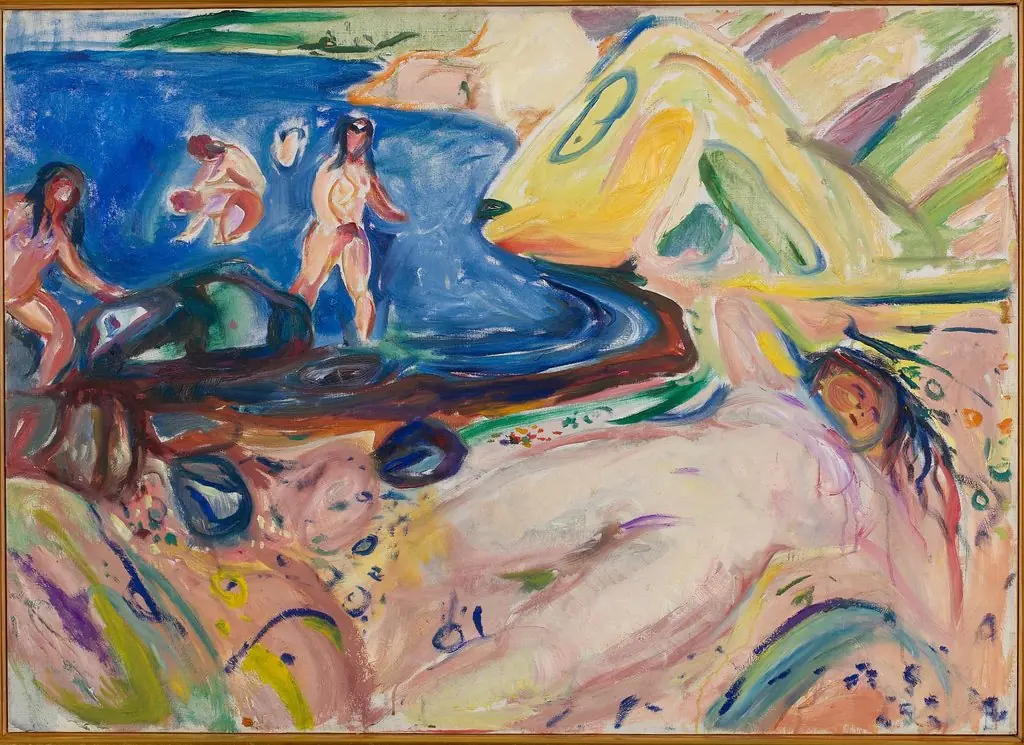
The painting portrays a group of children in a natural setting, engaged in the simple, unstructured activity of bathing. Their poses—standing, reclining, splashing—convey spontaneity rather than staged composition. There is no narrative or symbolic layer; the focus lies in the physical presence and unselfconscious movement of the figures. The scene suggests an observation of innocence, not an idealization, grounding childhood in its tactile, fleeting reality.
Technique & Style
Munch employed thick, visible brushwork and saturated hues to evoke movement and atmosphere. The water and skin tones are rendered with fluid, energetic strokes, avoiding smooth modeling in favor of emotional resonance. Light is suggested through color shifts rather than chiaroscuro, and the background dissolves into broad washes of green and blue. This technique prioritizes sensory immediacy over anatomical precision, aligning with his broader interest in conveying inner experience through form.
History & Provenance
Created during a period when Munch was exploring domestic and natural themes beyond his earlier psychological motifs, the painting entered the collection of the Munch Museum in Oslo, where it remains today. It was not widely exhibited during his lifetime but gained recognition later as part of broader reassessments of his lesser-known, intimate works. Its preservation reflects institutional interest in the full scope of his output, not just his most famous images.
Context
In the late 1890s, Munch spent time in rural Norway, observing family life and natural environments. This shift coincided with a temporary move away from themes of death and alienation toward quieter, observational subjects. *Bathing Children* reflects this phase, influenced by contemporary European trends in plein air painting and the growing interest in childhood as a subject worthy of artistic attention, though filtered through Munch’s distinctive emotional lens.
Legacy
While overshadowed by *The Scream* in popular perception, *Bathing Children* contributes to understanding Munch’s range as an artist who could convey tenderness and vitality with the same intensity he brought to anguish. It stands as a testament to his ability to find expressive power in everyday moments, influencing later artists interested in emotional realism and the depiction of private life without sentimentality.
Artist & collection
Artist
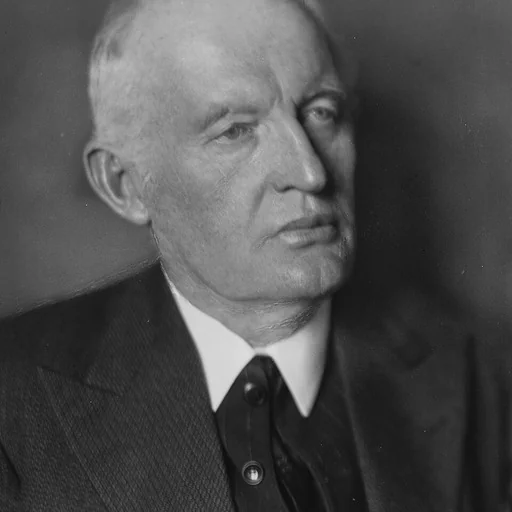
Edvard Munch ( MUUNK; Norwegian: ; 12 December 1863 – 23 January 1944) was a Norwegian painter.