Artwork
Symbolic Study
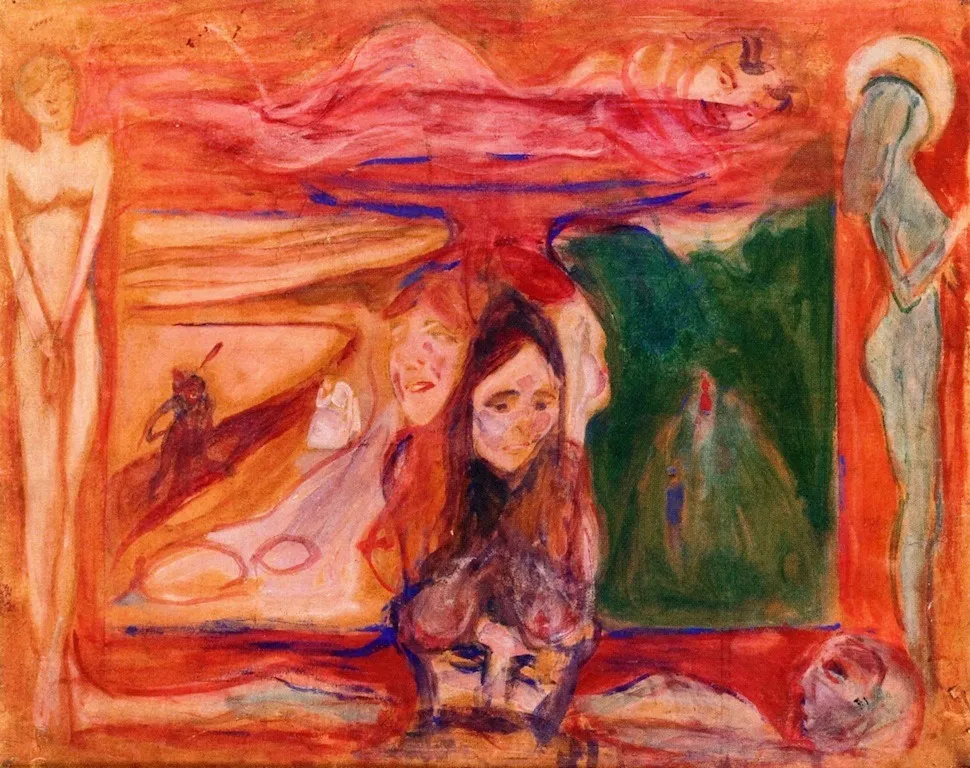
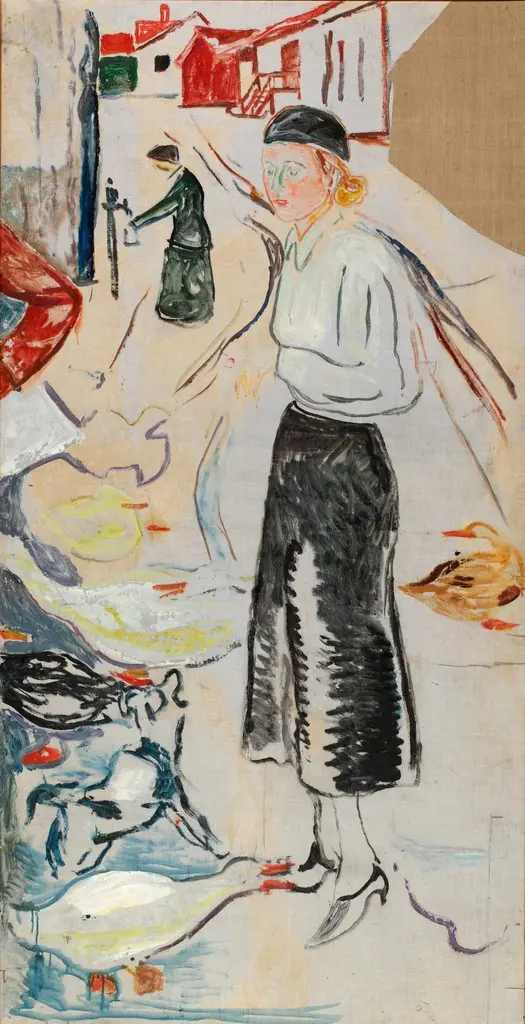
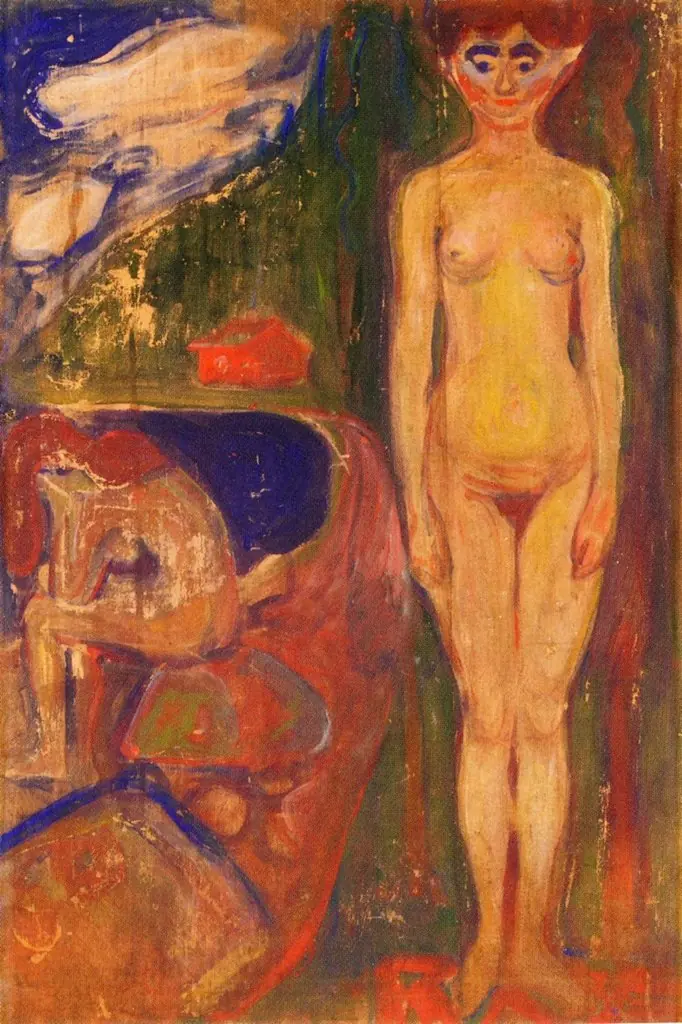
Symbolic Study is a tempera painting by the Post-Impressionist artist Edvard Munch. It dates from 1897 and is held in the collection of the Munch Museum.
About this work
Her blurred face adds to the enigmatic nature of the painting, leaving the viewer to interpret her emotions and thoughts.
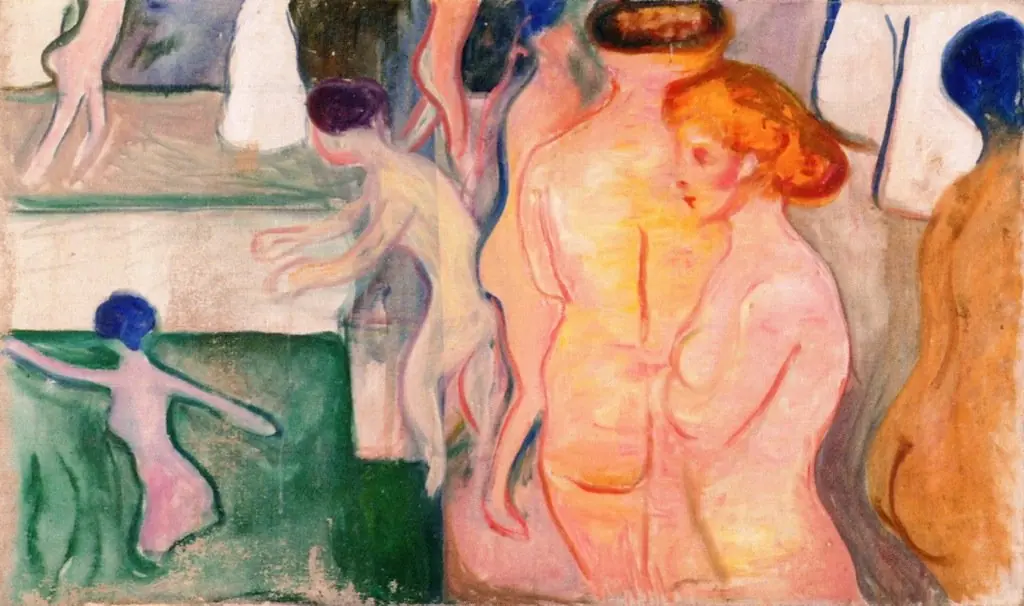
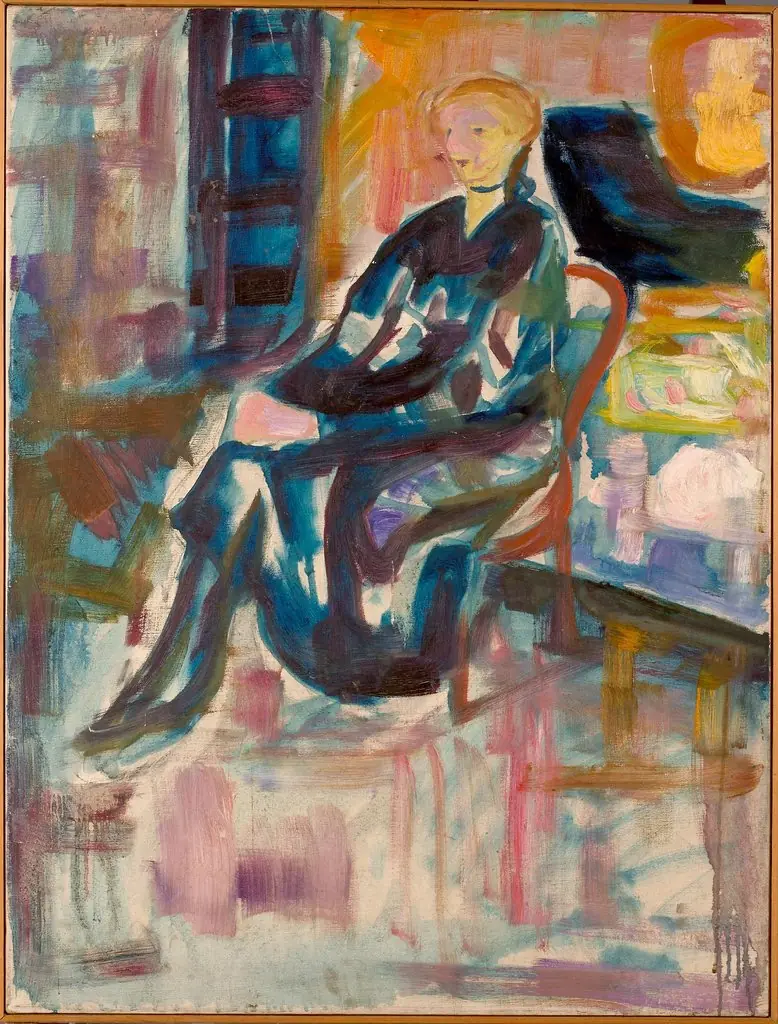
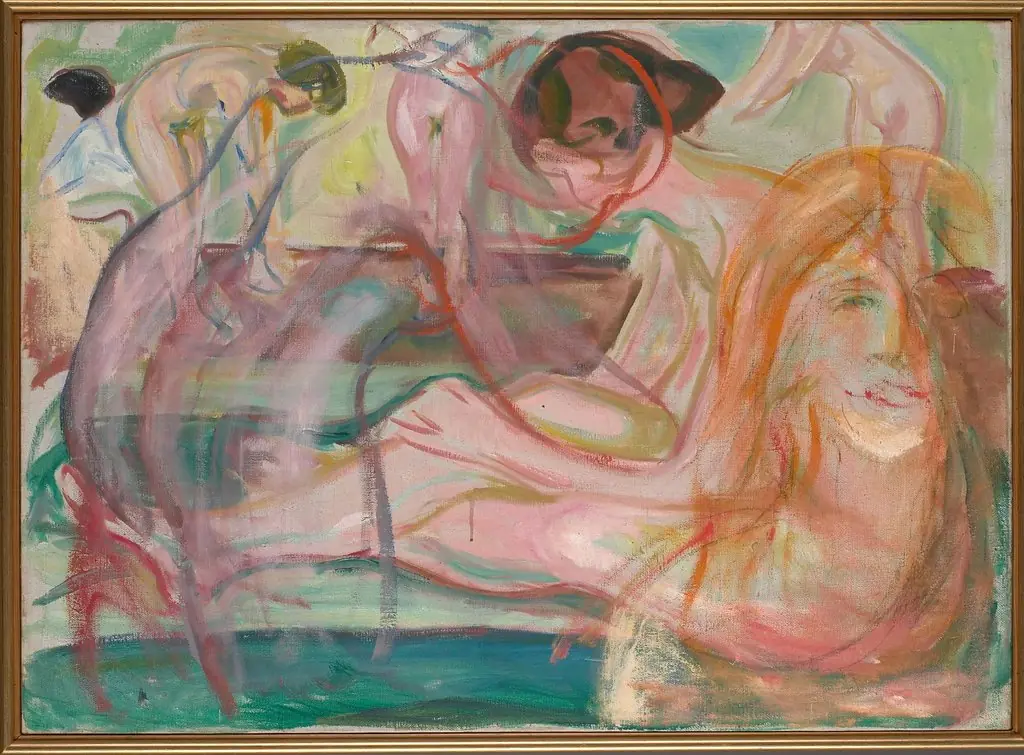
This painting is a tempera work by Edvard Munch, created in 1893. It features a woman with long hair, sitting in front of a green backdrop. The woman's face is blurred, and her body is partially obscured by her hair. The background is a mix of orange, red, and green hues, with some blue lines visible. The overall atmosphere of the painting is dreamy and symbolic.
The woman's pose and expression suggest a sense of introspection and contemplation. Her blurred face adds to the enigmatic nature of the painting, leaving the viewer to interpret her emotions and thoughts. The use of tempera as the medium gives the painting a unique texture and feel.
If you're interested in learning more about the artist behind this work, you can explore the art of Edvard Munch.
Overview
Created in 1897, *Symbolic Study* is a tempera painting by Norwegian artist Edvard Munch. The work portrays a solitary woman seated before a vivid, multicolored backdrop, her features softened and partially concealed by flowing hair. The composition conveys a dreamlike atmosphere, inviting contemplation of the figure’s inner state.
Subject & Meaning
The central figure, a woman with long hair, appears withdrawn, her blurred visage and obscured form suggesting introspection. The ambiguous expression and muted facial details leave her emotions open to interpretation, aligning with Munch’s interest in psychological depth and the symbolic representation of inner experience.
Technique & Style
Executed in tempera, the painting displays the medium’s characteristic matte surface and fine brushwork. Munch employs a palette of greens, oranges, reds, and subtle blue lines, creating a layered, almost luminous field. The stylistic approach reflects his post‑impressionist phase, emphasizing emotional resonance over strict naturalistic representation.
History & Provenance
Munch produced the work during a period marked by personal loss and illness, influences that shaped his focus on existential themes. After its creation, the painting entered the collection of the Munch Museum in Oslo, where it remains part of the institution’s permanent holdings.
Artist & collection
Artist
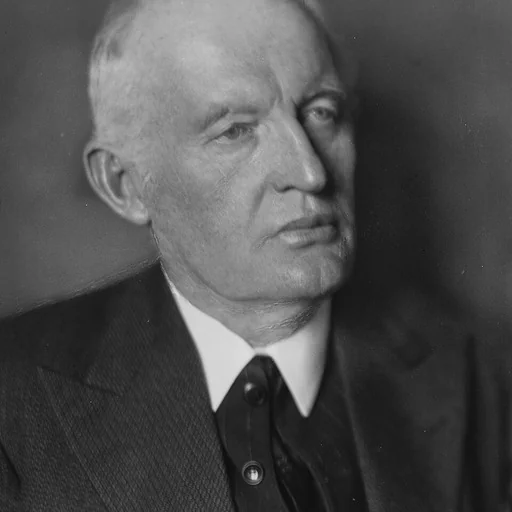
Edvard Munch ( MUUNK; Norwegian: ; 12 December 1863 – 23 January 1944) was a Norwegian painter.