Artwork
Bathing Woman
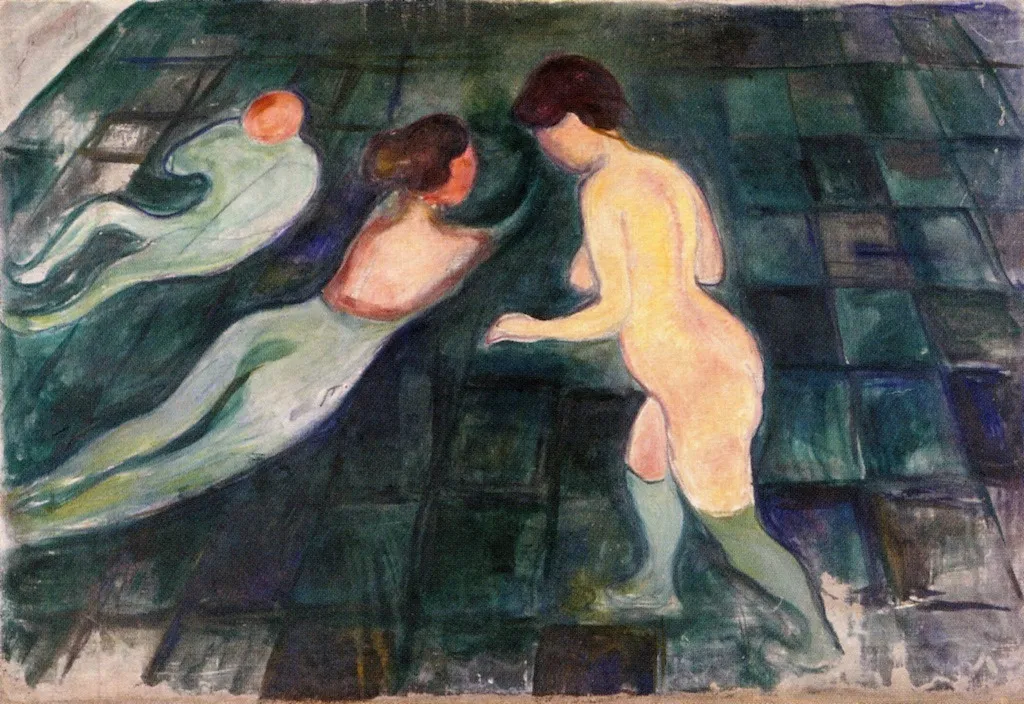
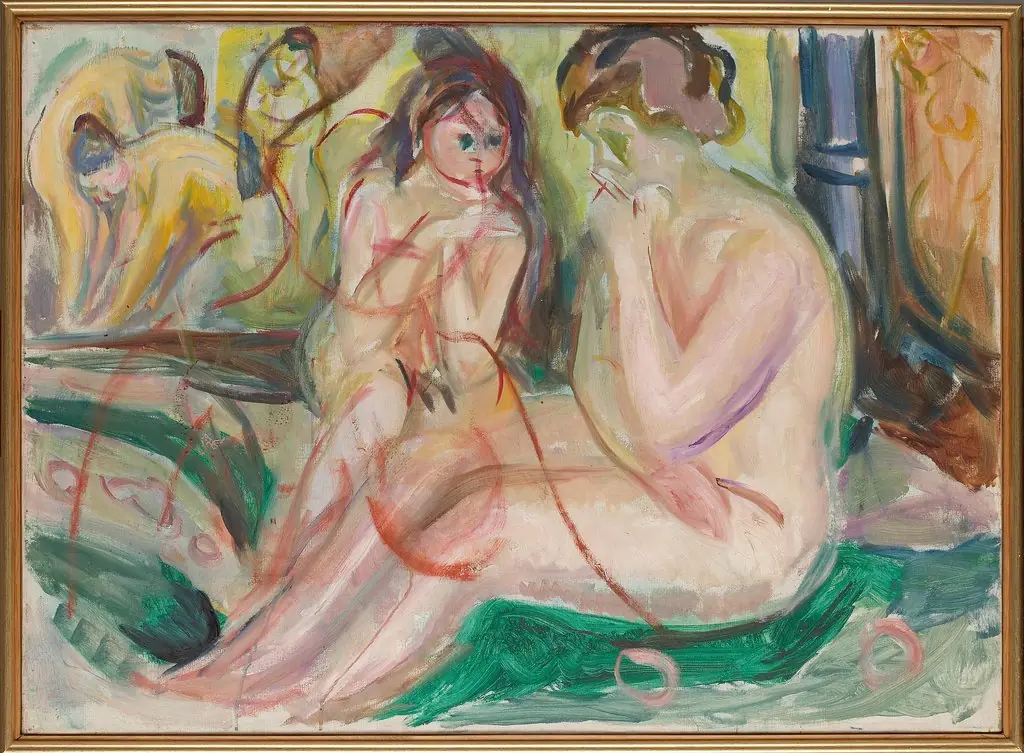
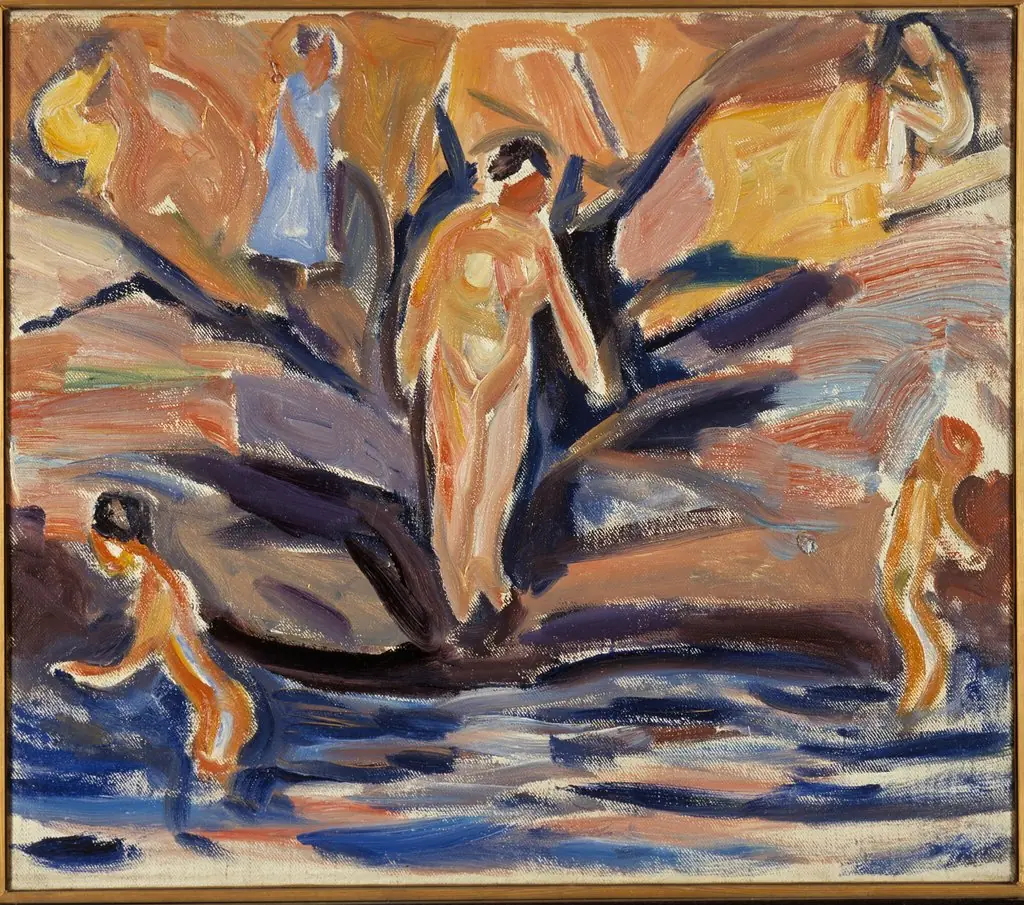
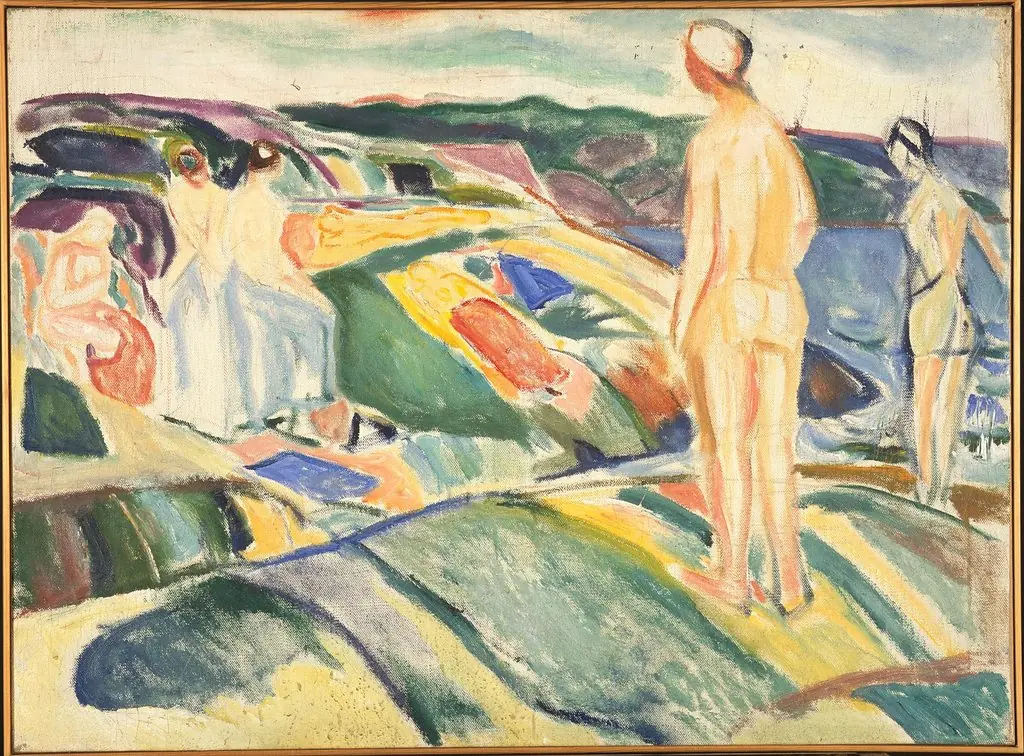
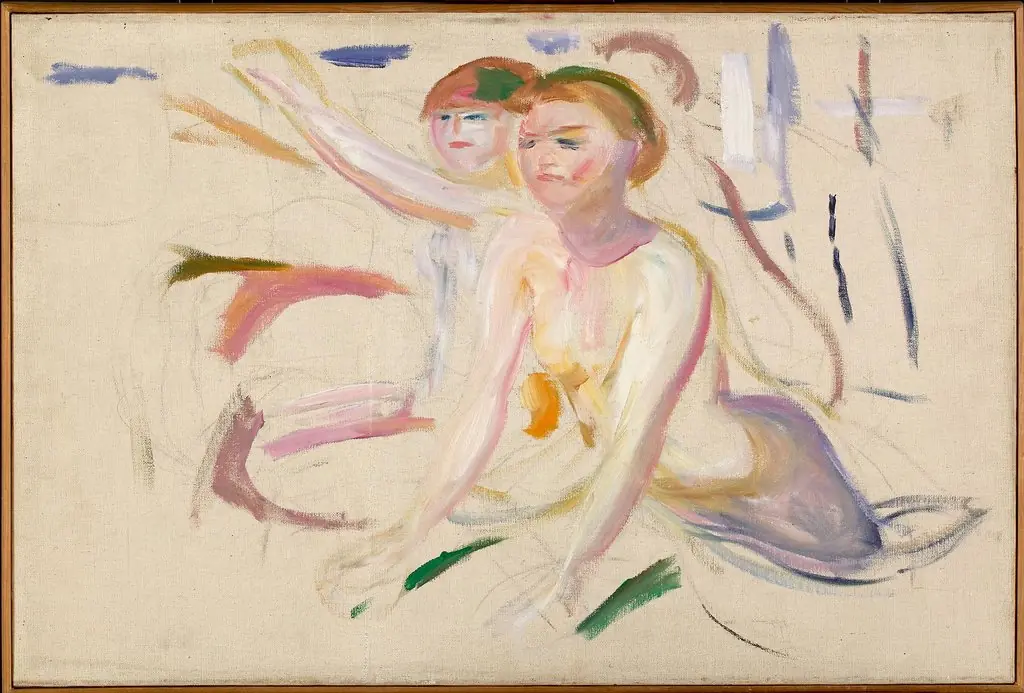
Bathing Woman is an oil painting by the Post-Impressionist artist Edvard Munch. It dates from 1898 and is held in the collection of the Munch Museum.
About this work
Overview
Bathing Woman is a 1898 oil painting by Edvard Munch, characterized by a simplified, abstract depiction of a nude female figure in a bathtub, set against a dark greenish-blue background that evokes calmness and serenity.
Subject & Meaning
The subject, a woman lost in thought with her head turned towards the viewer, embodies a state of quiet contemplation. This introspective portrayal aligns with Munch's exploration of emotional and psychological states during his post-impressionist period.
Technique & Style
Munch's distinctive post-impressionist style, influenced by his bohemian circle in Kristiania, is evident in the painting's abstracted forms and expressive use of color, particularly the dominant, soothing background hue.
History & Provenance
Created in 1898, Bathing Woman is part of the Munch Museum's collection, reflecting the artist's adherence to depicting inner experiences as encouraged by nihilist philosopher Hans Jæger.
Context
Emerging from Munch's early life marked by illness and loss, and nurtured by Kristiania's bohemian environment, the painting situates itself within the broader early 20th-century European movement exploring the human psyche through art.
Legacy
As a work from Munch's prolific period, Bathing Woman contributes to the artist's legacy of prioritizing emotional depth in his subjects, influencing subsequent generations of artists in exploring psychological introspection.
Artist & collection
Artist
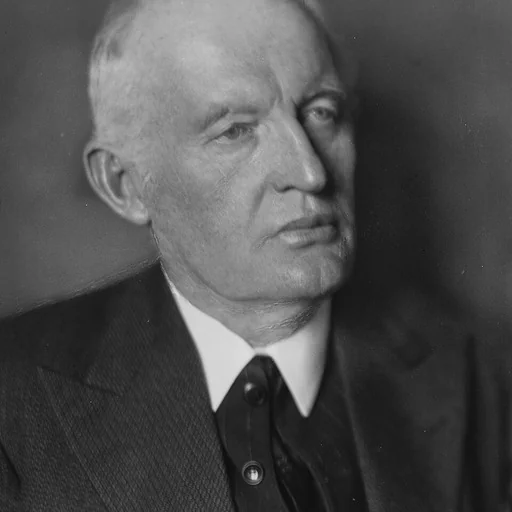
Edvard Munch ( MUUNK; Norwegian: ; 12 December 1863 – 23 January 1944) was a Norwegian painter.