Artwork
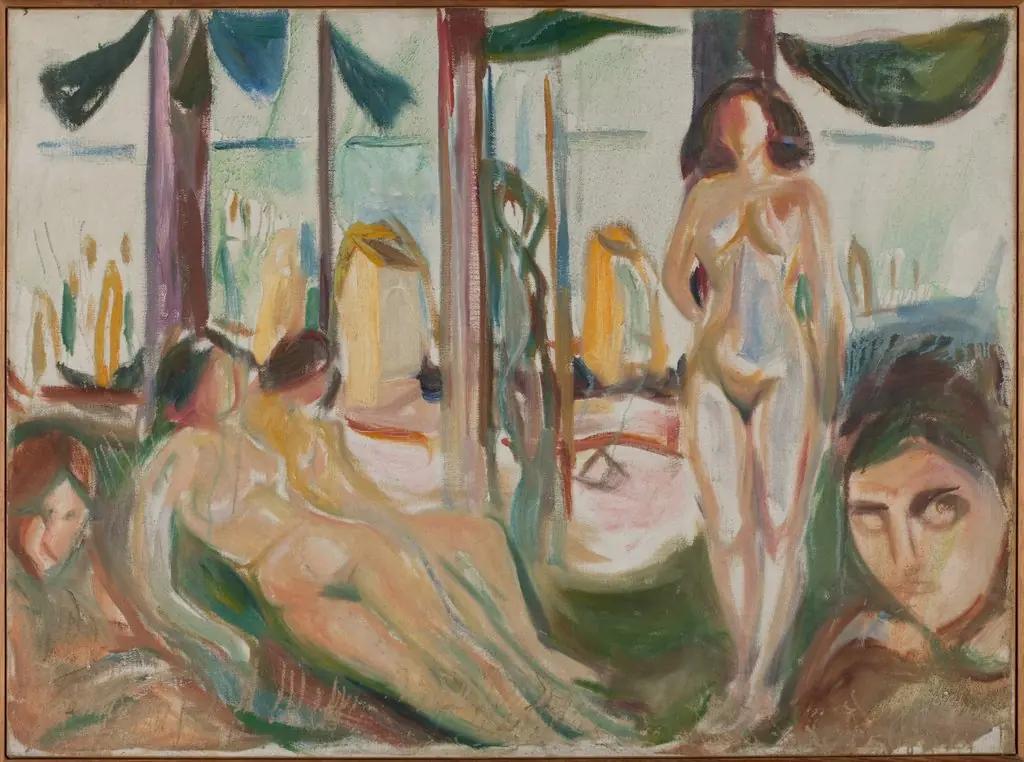
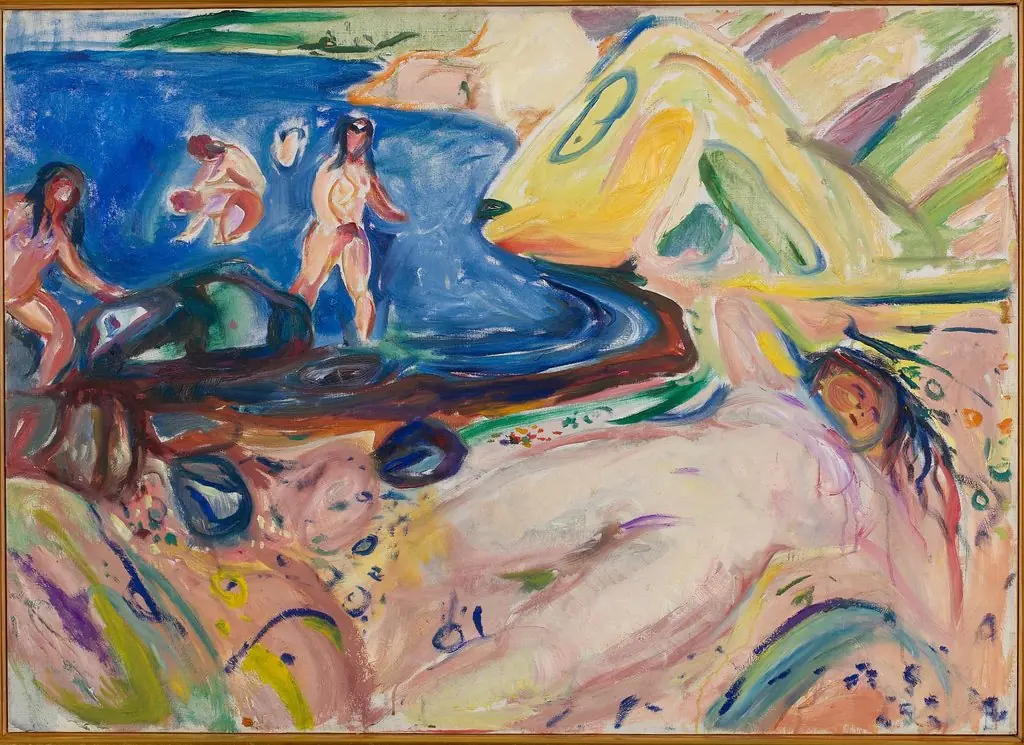
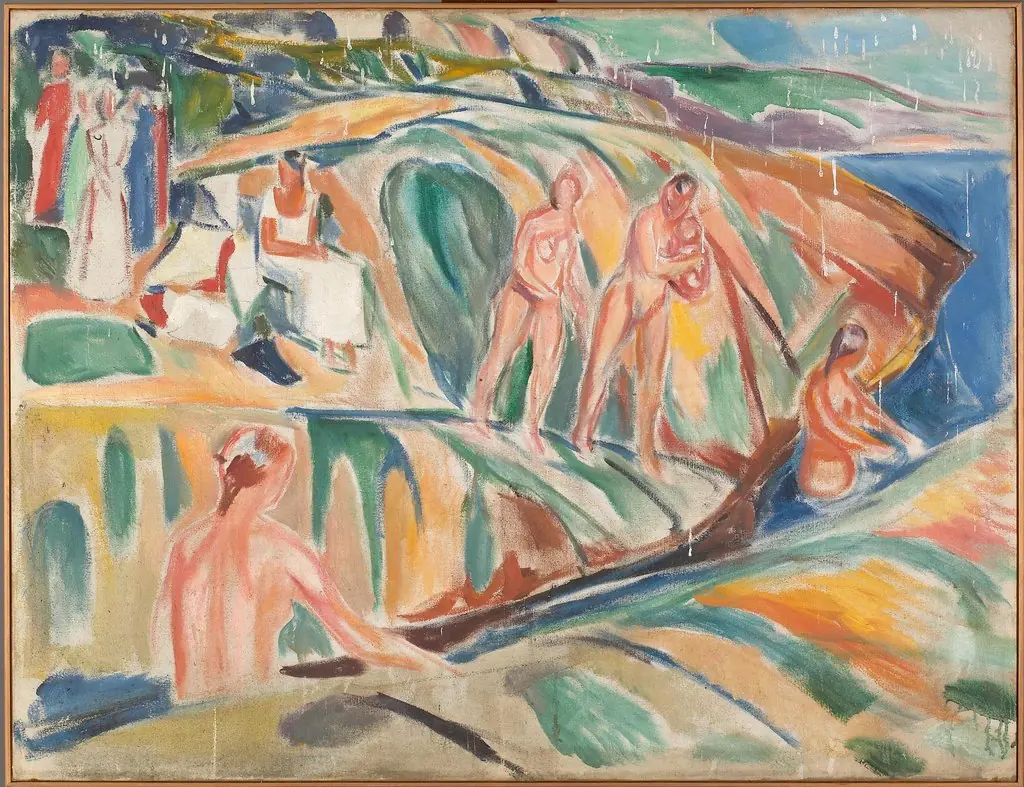
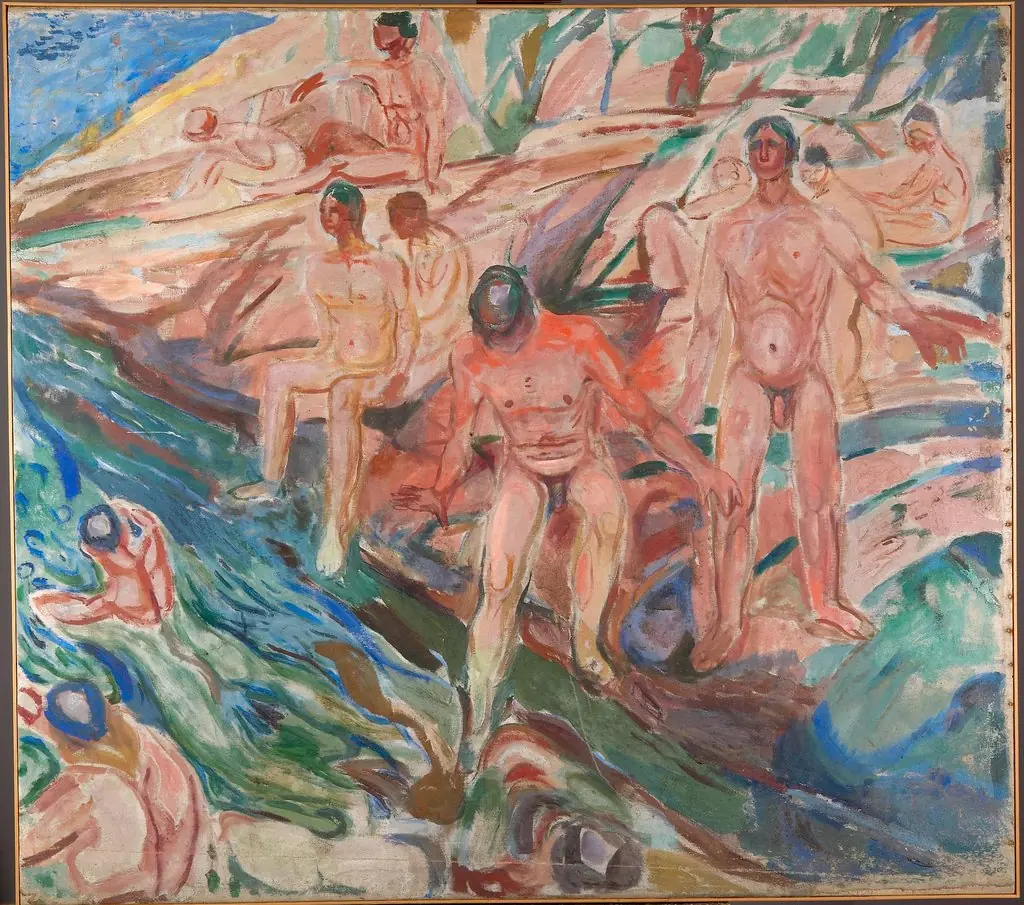
Bathing Women and Children
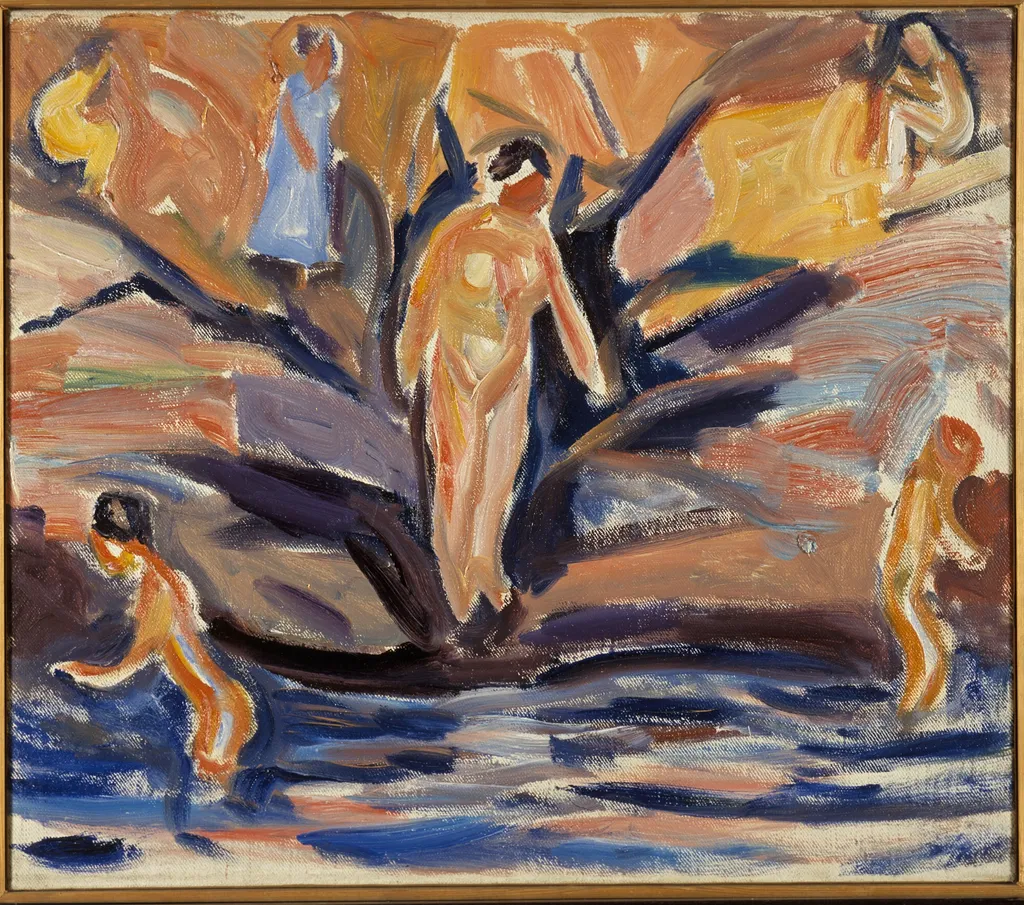
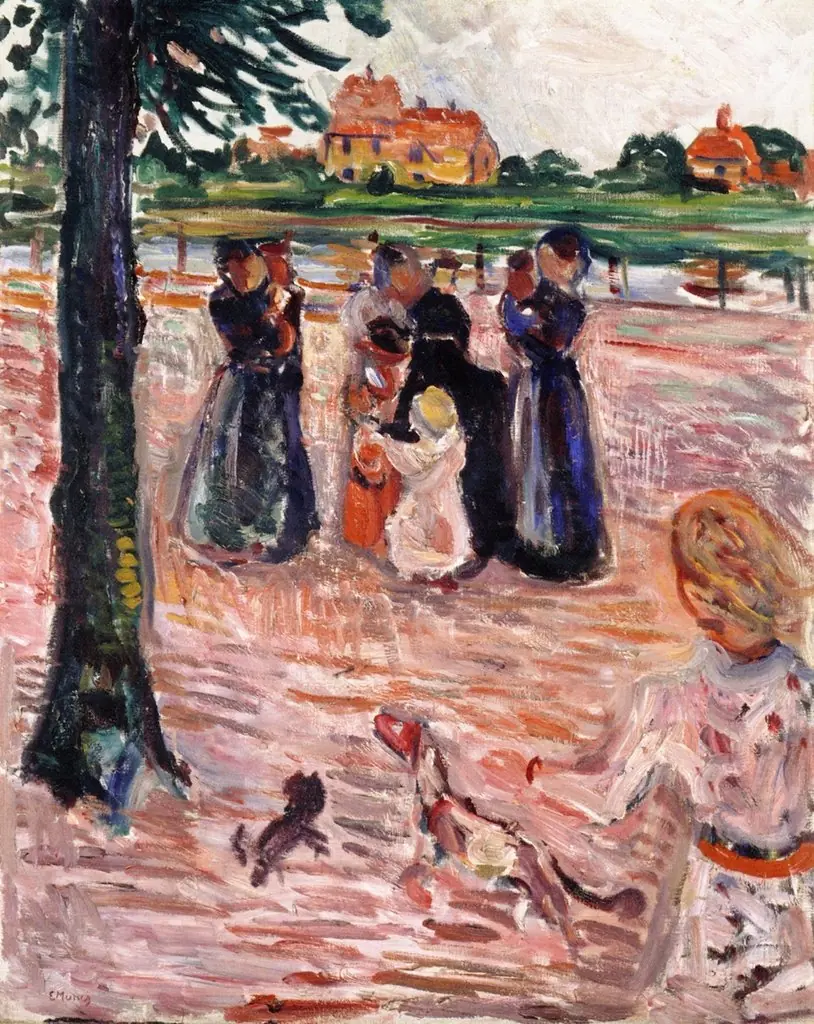
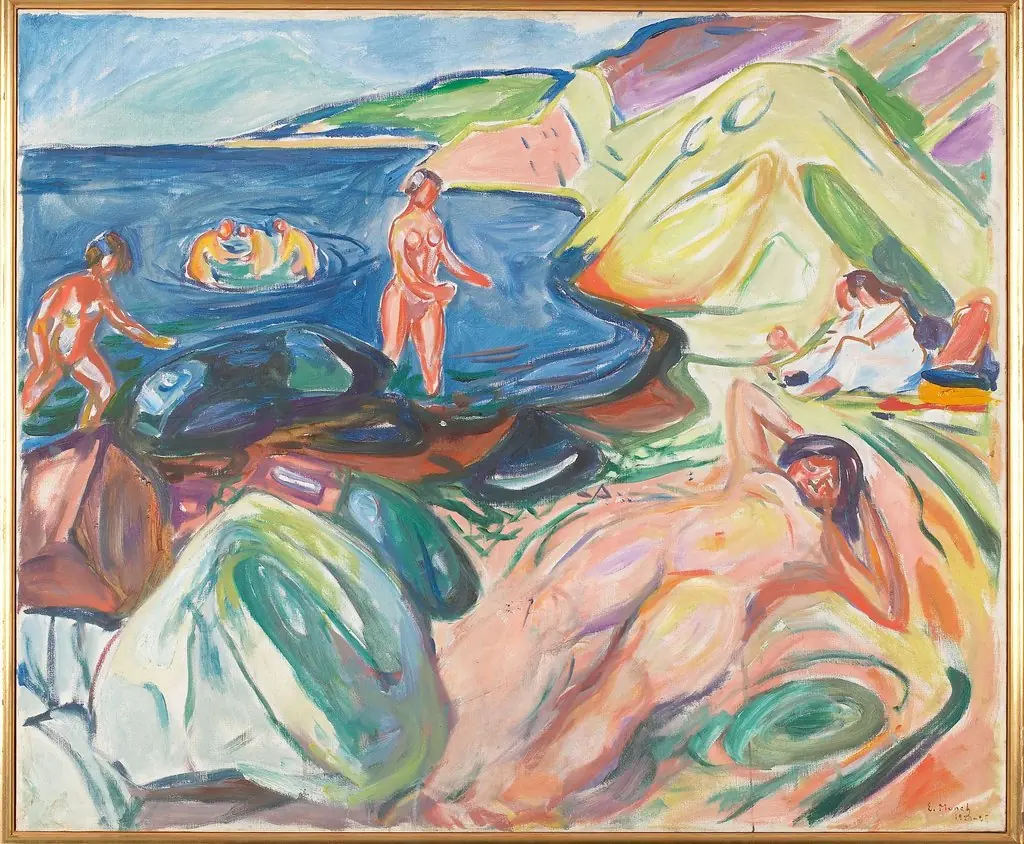
Bathing Women and Children is an oil painting by the Post-Impressionist artist Edvard Munch. It dates from 1914 and is held in the collection of the Munch Museum.
About this work
Overview
Bathing Women and Children, executed in oil in 1914, presents a modestly sized composition of nude figures at leisure. The work belongs to the collection of the Munch Museum in Oslo and is generally classified within the post‑impressionist vein of early twentieth‑century Norwegian painting.
Subject & Meaning
The canvas depicts a mother and child, accompanied by another woman, engaged in a quiet bathing scene. The figures are rendered without overt narrative, inviting contemplation of everyday intimacy and the subtle emotional currents that underlie ordinary moments.
Technique & Style
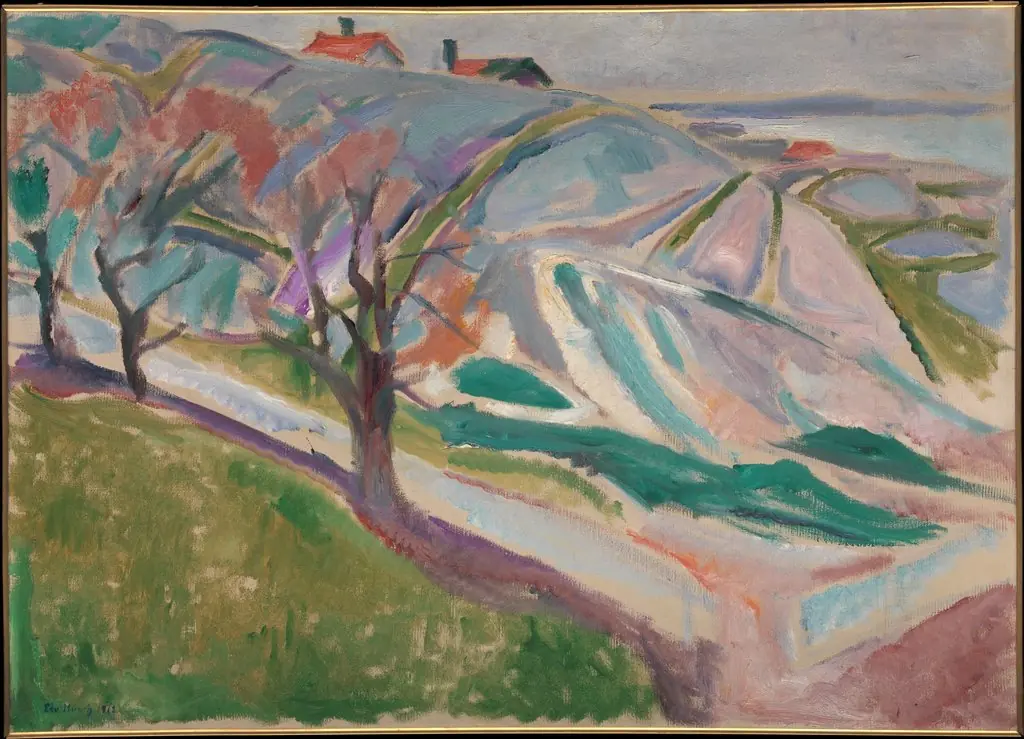
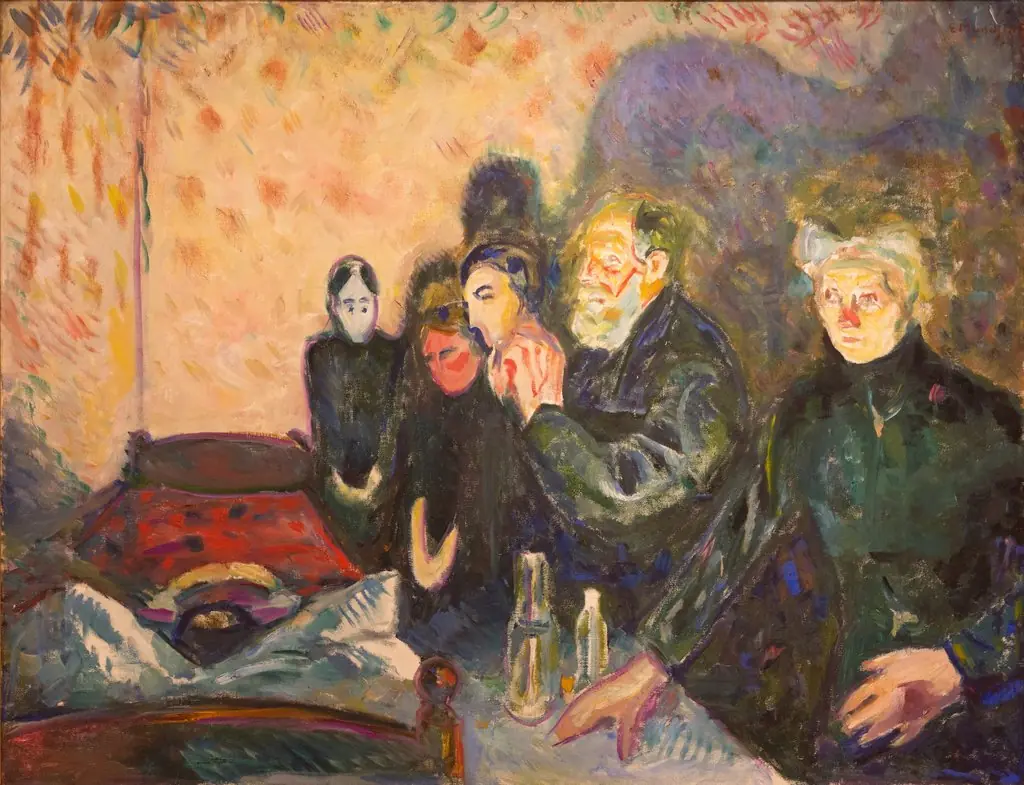
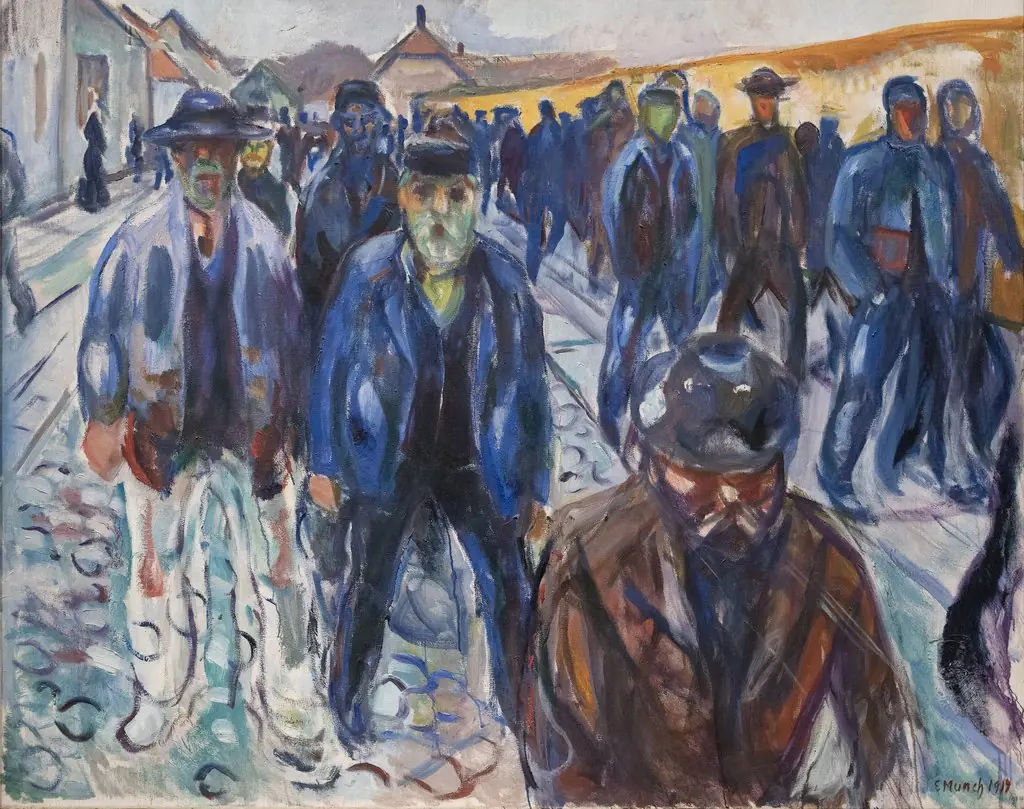
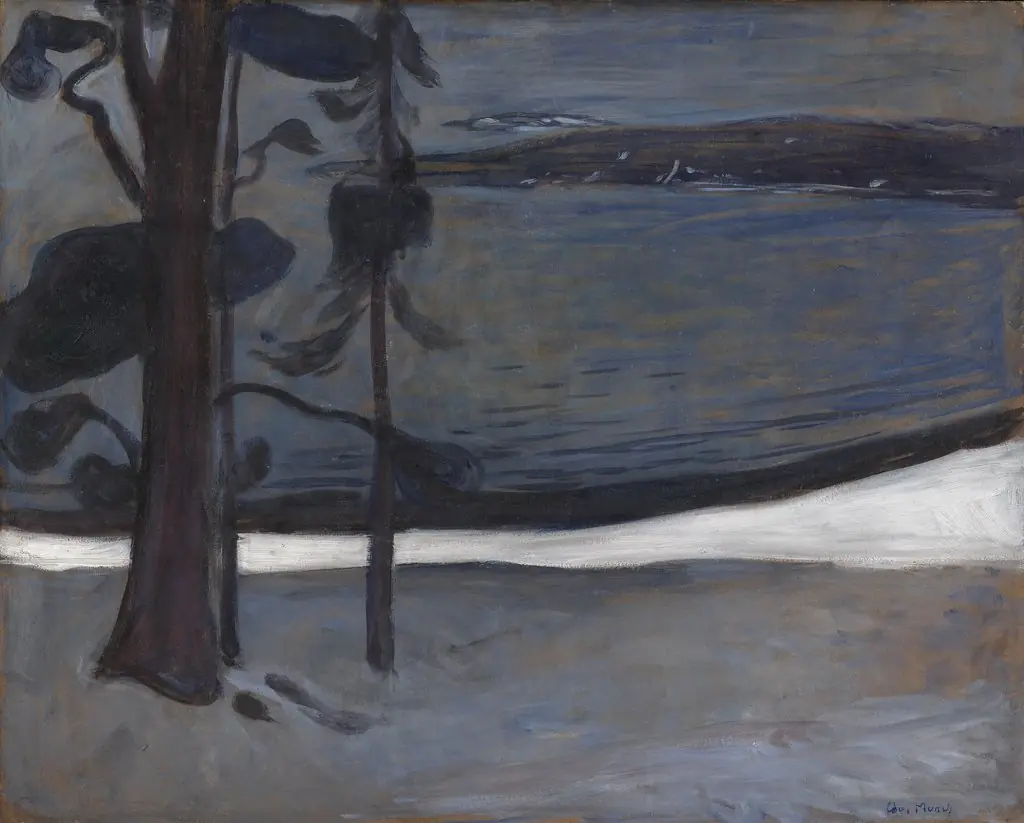
Munch employs a muted palette and loose brushwork characteristic of post‑impressionism, allowing forms to dissolve into soft tonal areas. The handling of light on skin and water creates a sense of atmosphere, while the simplified outlines emphasize the psychological over the strictly representational.
History & Provenance
Created during a prolific period for the artist, the painting entered the holdings of the Munch Museum, where it remains on view. Its acquisition reflects the institution’s focus on assembling a comprehensive record of Munch’s output across his career.
Context
Munch’s early life was marked by recurring illness and the loss of close family members, experiences that shaped his introspective artistic outlook. After formal training at the Royal School of Art and Design in Oslo, he moved within bohemian circles that encouraged experimentation, a milieu that informed the personal tone of this work.
Artist & collection
Artist
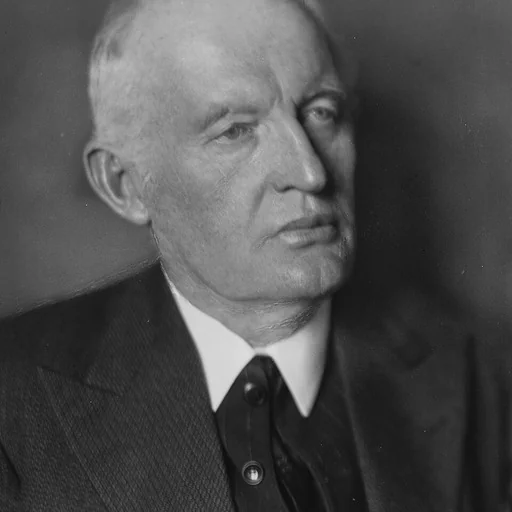
Edvard Munch ( MUUNK; Norwegian: ; 12 December 1863 – 23 January 1944) was a Norwegian painter.