Artwork
History: Study for the Old Man and Two Boys
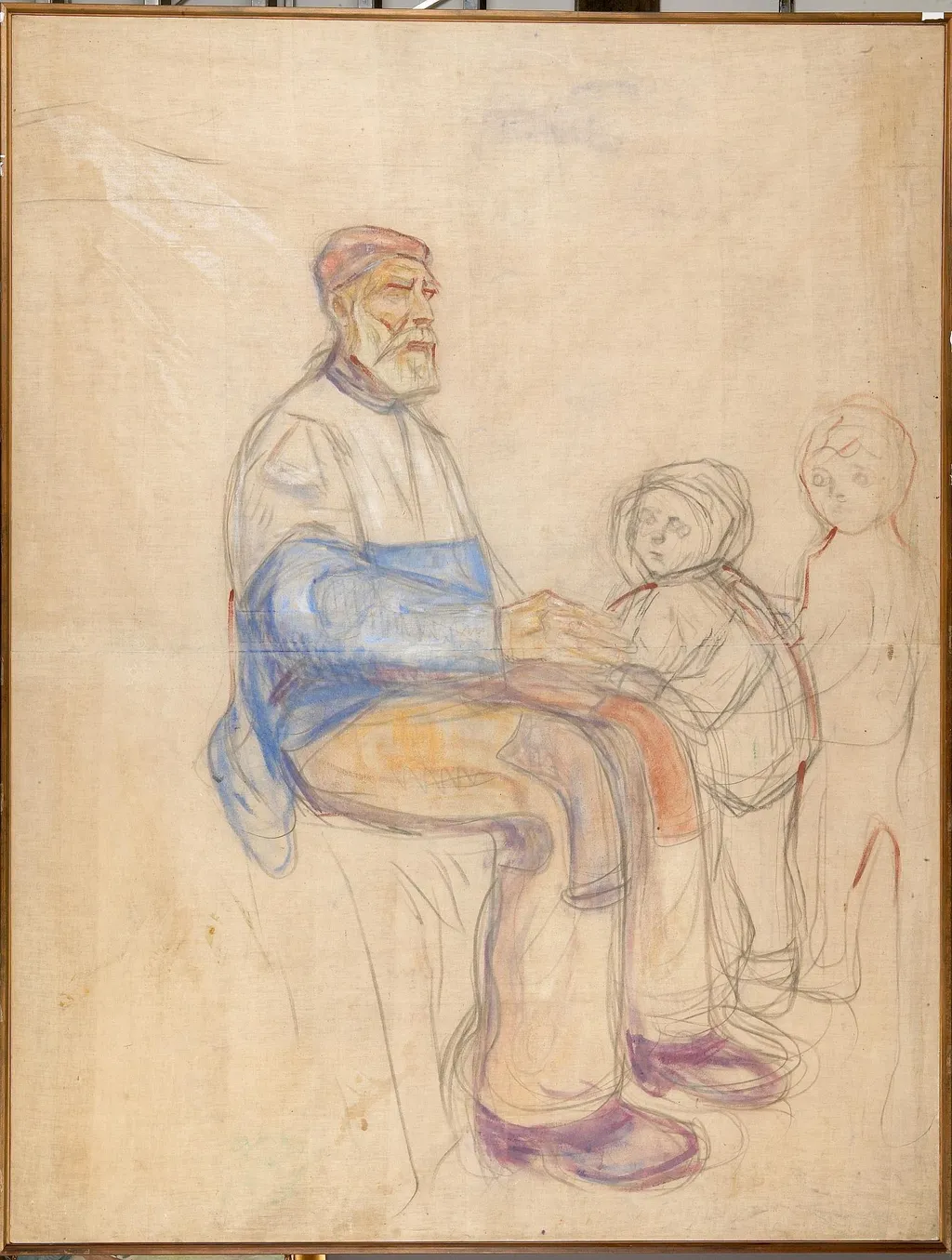
History: Study for the Old Man and Two Boys is a charcoal painting by the Post-Impressionist artist Edvard Munch. It dates from 1910 and is held in the collection of the Munch Museum.
About this work
Overview
Created in 1910, this oil study by Norwegian artist Edvard Munch serves as a preparatory work for a larger composition. It depicts an elderly man seated cross‑legged, clad in a blue robe and red cap, accompanied by two standing boys. The scene is set against a muted beige backdrop, emphasizing the figures and their interaction.
Subject & Meaning
The composition centers on themes of age and mentorship, with the aged figure’s detailed, wrinkled visage suggesting experience and authority. The presence of the two youths hints at a transmission of knowledge or tradition, inviting viewers to contemplate the relationship between generations within a quiet, domestic setting.
Technique & Style
Munch employs swift, expressive brushwork characteristic of his post‑impressionist phase, allowing visible strokes and textured surfaces to convey immediacy. The rendering of the old man’s face is particularly meticulous, with fine lines delineating wrinkles and beard, while the broader, looser handling of the surrounding forms creates a contrast between detail and atmosphere.
History & Provenance
The study belongs to the collection of the Munch Museum in Oslo, reflecting the artist’s practice of producing preparatory sketches for larger projects. Its acquisition aligns with the museum’s mission to preserve works that illustrate Munch’s development of psychological expression through painterly experimentation.
Artist & collection
Artist
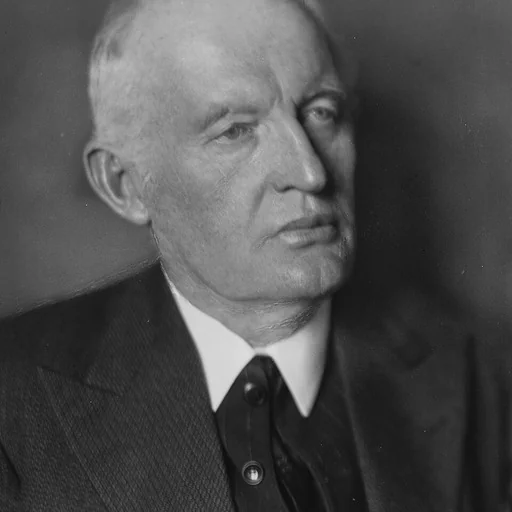
Edvard Munch ( MUUNK; Norwegian: ; 12 December 1863 – 23 January 1944) was a Norwegian painter.

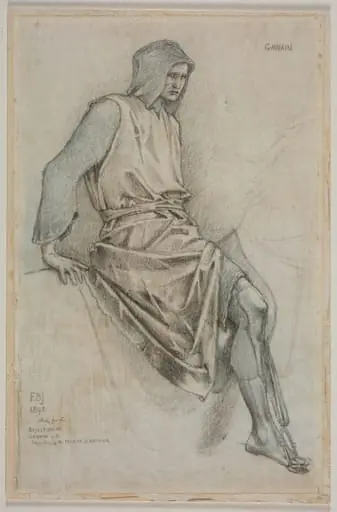 Study for the Failure of Gawain from the Holy Grail Tapestries
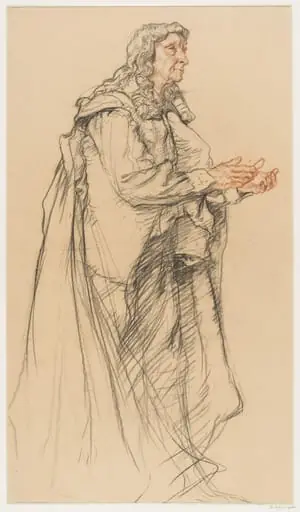 Prince Rupert receiving the Charter of the Hudson Bay Company from Charles II
![In the Omnibus [recto], by Mary Cassatt](https://artifactworldgallery.com/img/mary-cassatt--in-the-omnibus-recto--b86081a053670e27-w320.webp) In the Omnibus [recto]
In the Omnibus [recto]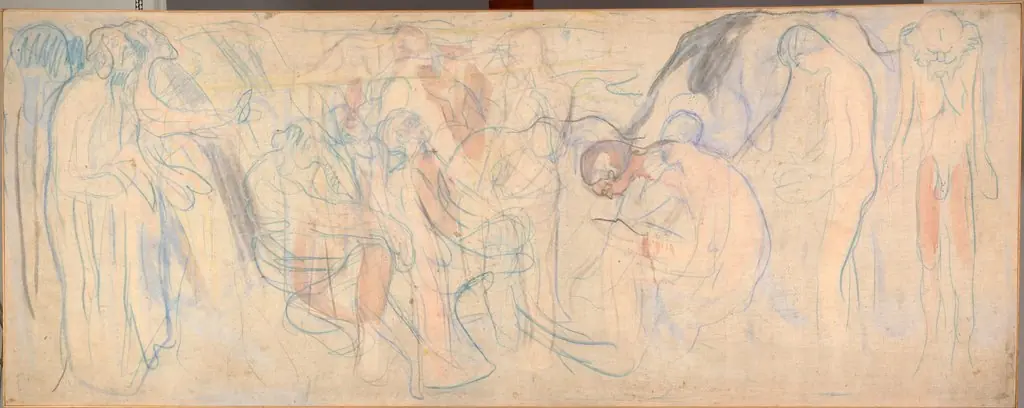 Naked Men in Landscape
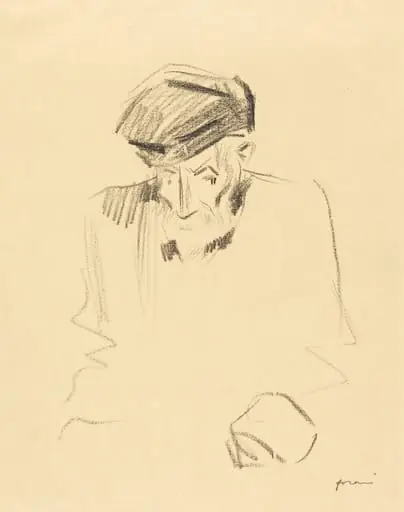 Portrait de Renoir (2e planche) (Portrait of Renoir) (second plate)
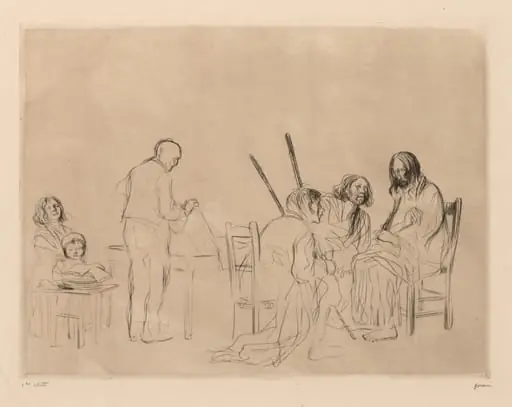 Before the Supper at Emmaus
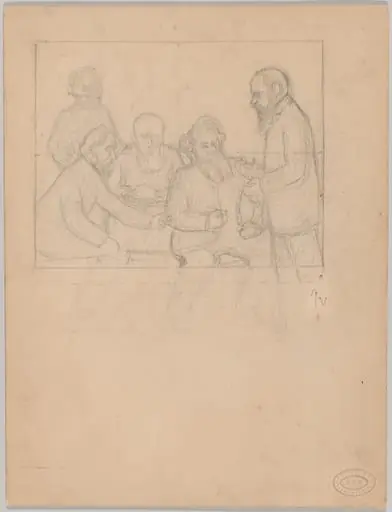 Study for 'Les cinq peintres' (The Five Painters)
 Hitz, Dora: Mother and Child
 Head of a Spanish Monk
![A Breton Woman and a Standing Man; Head and Hand of a Monkey [recto], by Paul Gauguin](https://artifactworldgallery.com/img/paul-gauguin--a-breton-woman-and-a-standing-man-head-and-hand-of-a-monkey--e35c46eb8cb6c297-w320.webp) A Breton Woman and a Standing Man; Head and Hand of a Monkey [recto]
A Breton Woman and a Standing Man; Head and Hand of a Monkey [recto]![Sheet of Studies [recto and verso], by John Flaxman](https://artifactworldgallery.com/img/john-flaxman--sheet-of-studies-recto-and-verso--92409dcb1ad1b47a-w320.webp) Sheet of Studies [recto and verso]
Sheet of Studies [recto and verso]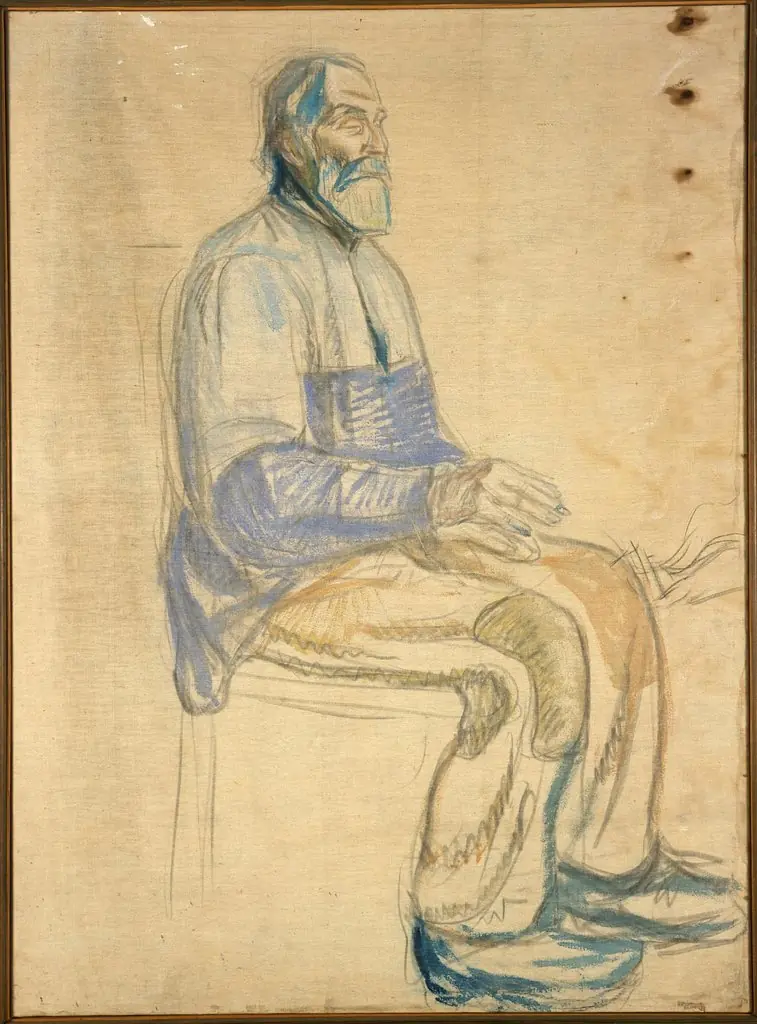 History: Study for the Old Man