Artwork
Jealousy
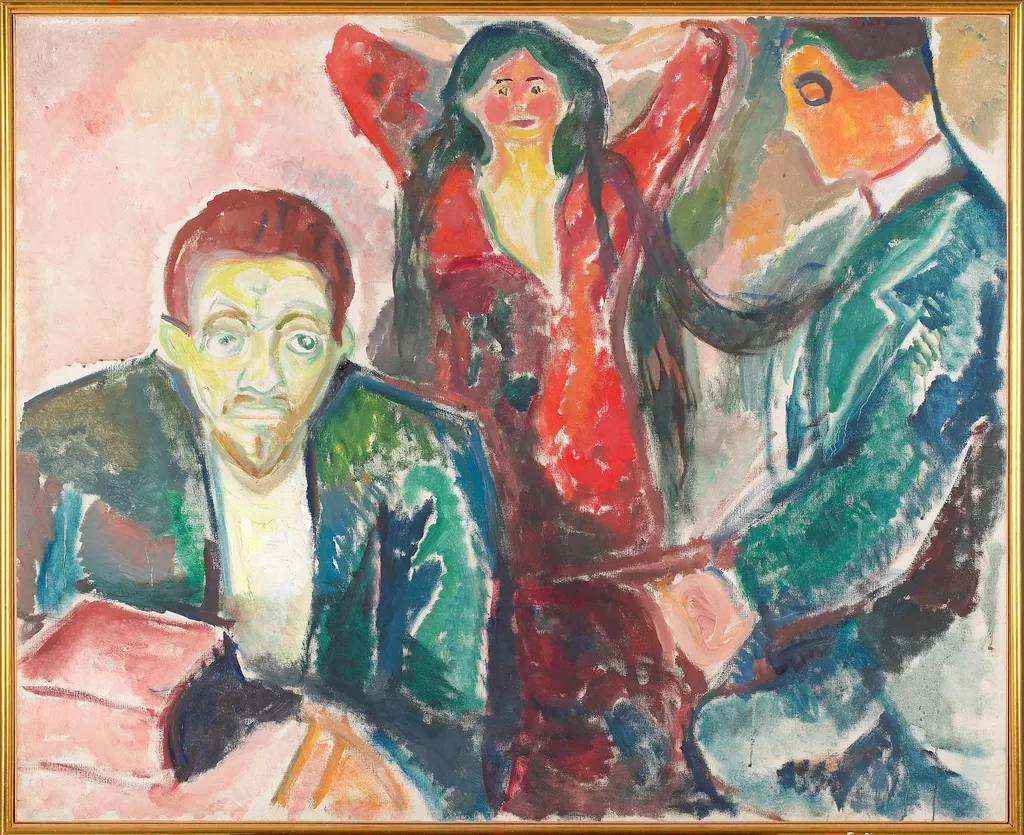
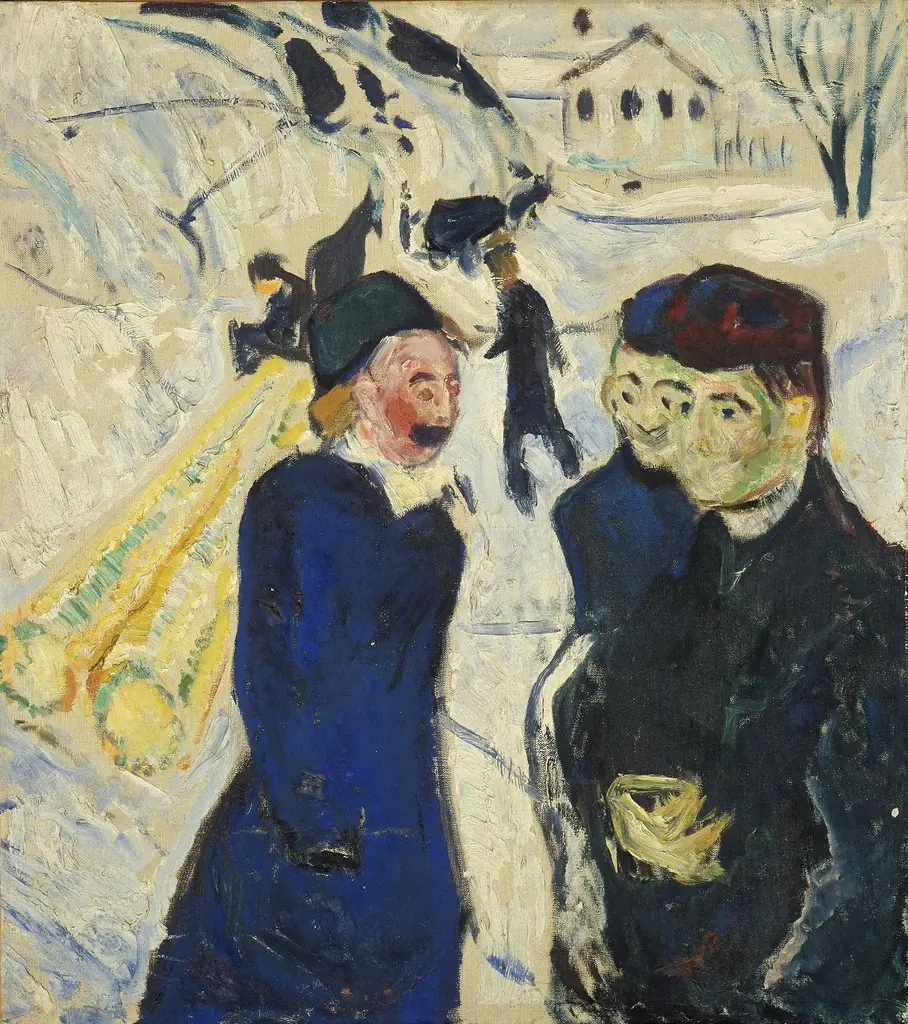
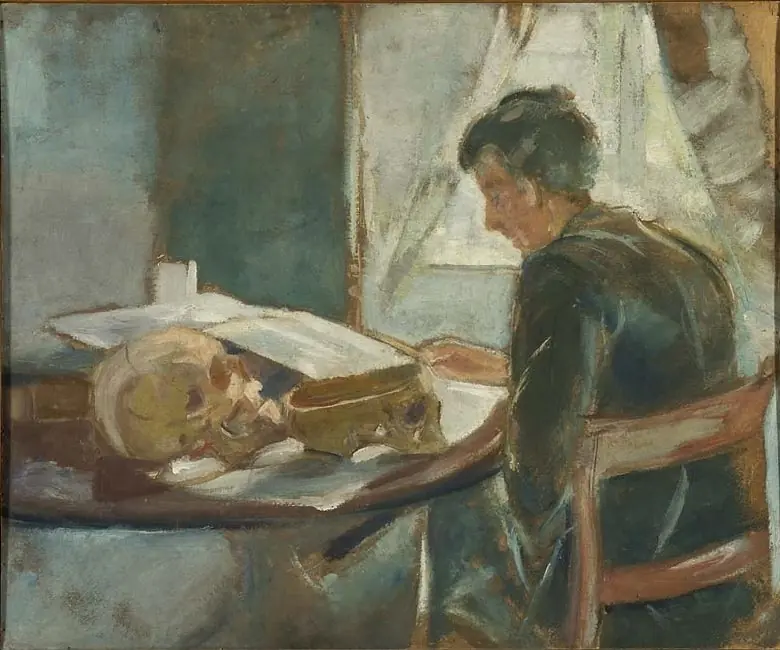
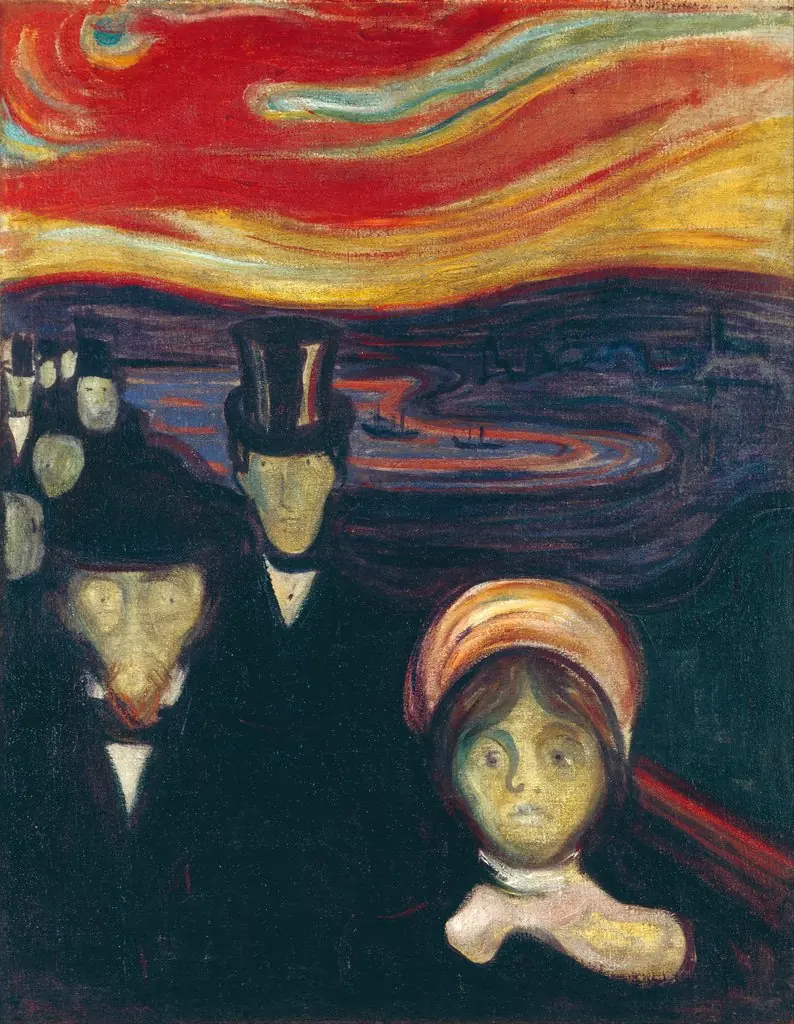
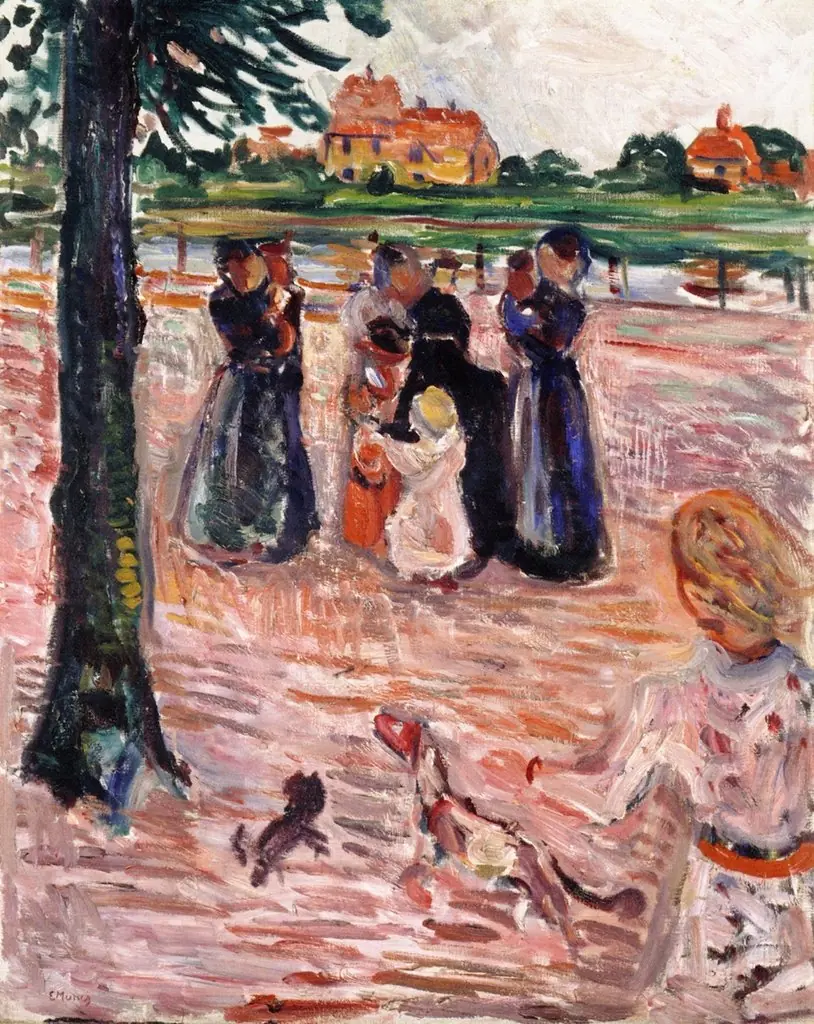
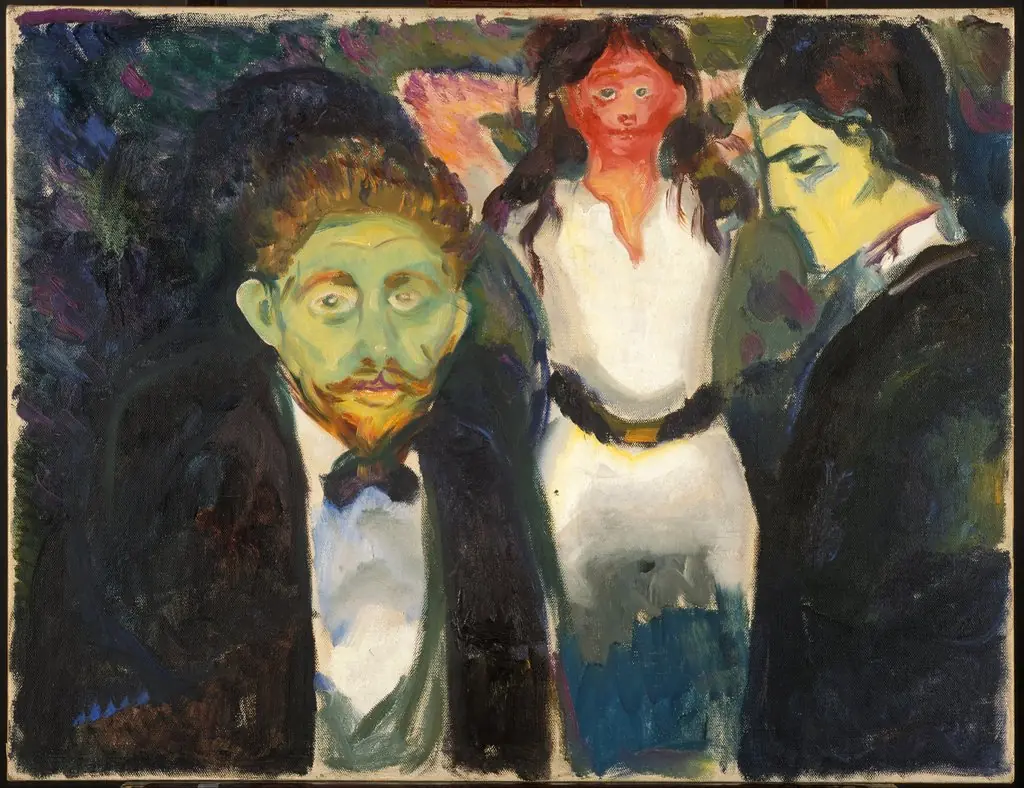
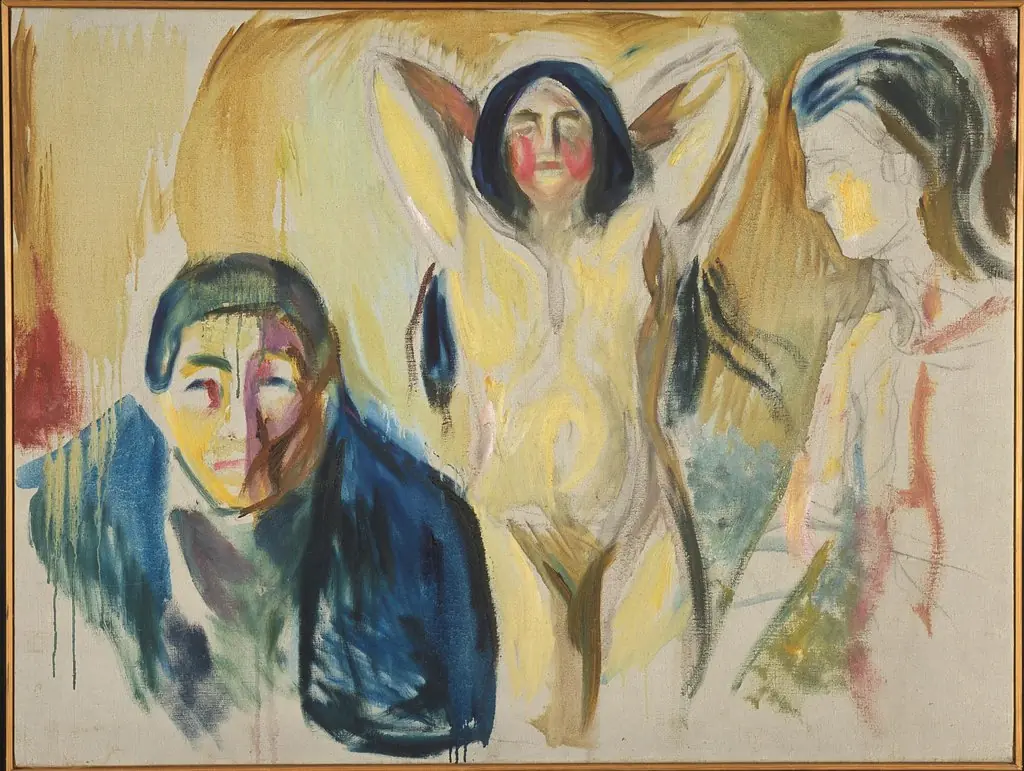
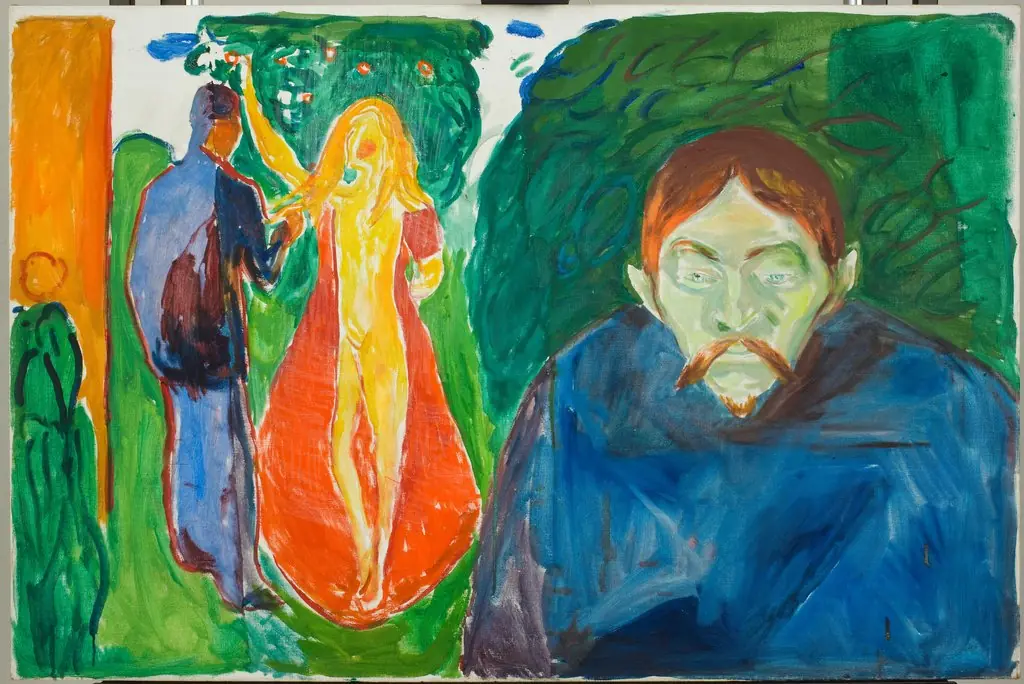
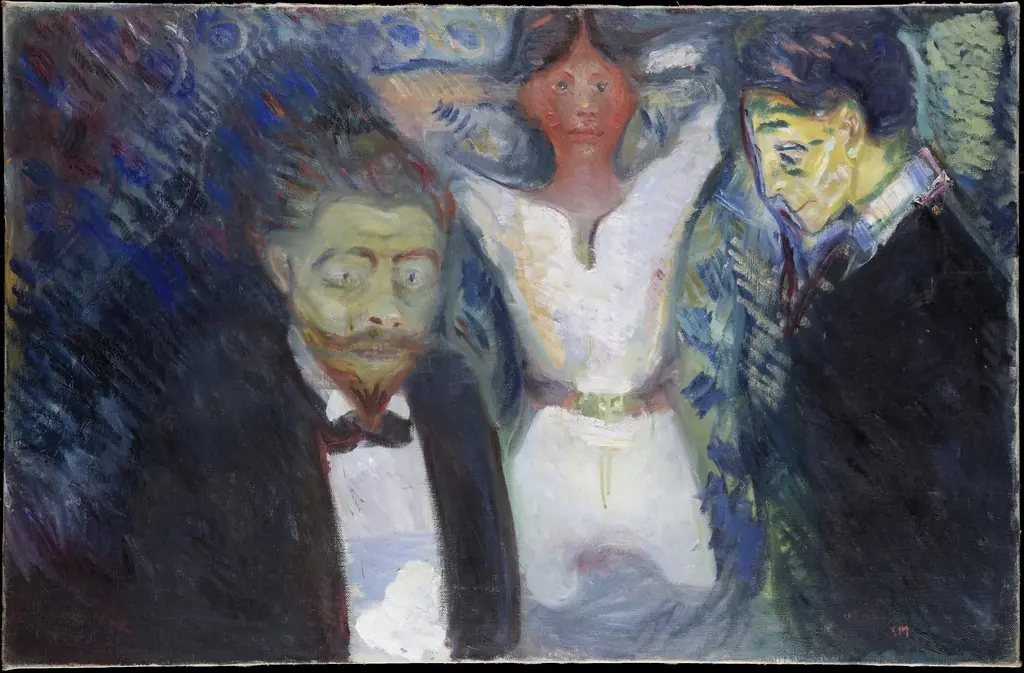
Jealousy is an oil painting by the Post-Impressionist artist Edvard Munch. It dates from 1913 and is held in the collection of the Munch Museum.
About this work
Overview
Painted in 1913, *Jealousy* is an oil-on-canvas work by Norwegian artist Edvard Munch, part of his sustained investigation into inner emotional landscapes. Though rooted in post-Impressionist traditions, the piece diverges from naturalism, favoring symbolic form and psychological tension. It resides in the Munch Museum, Oslo, where it is preserved among other key works from his later period.
Subject & Meaning
The painting depicts three figures in a tense, silent dynamic: a woman in a vivid red dress stands between two men, both dressed in dark clothing.
The painting depicts three figures in a tense, silent dynamic: a woman in a vivid red dress stands between two men, both dressed in dark clothing. The composition suggests emotional isolation and unspoken rivalry, with the woman as the focal point of an unspoken conflict. No narrative is explicit; instead, the scene functions as an allegory for possessiveness, emotional distance, and the quiet violence of jealousy.
Technique & Style
Munch employs simplified forms and flattened space to heighten emotional impact. The woman’s red dress contrasts sharply against the muted pink background and the men’s dark attire, creating visual tension without detail. Brushwork is restrained, avoiding texture in favor of flat planes of color. Facial features are blurred, emphasizing mood over individual identity, aligning with Munch’s interest in psychological abstraction.
History & Provenance
Created during Munch’s mature period, *Jealousy* emerged after decades of personal grief and artistic experimentation. It was likely painted in or near Oslo, where Munch had returned following years abroad. The work entered the Munch Museum’s collection through the artist’s own bequest, ensuring its preservation as part of his personal artistic legacy.
Context
Munch’s engagement with existential themes was shaped by his upbringing amid illness and death, as well as intellectual circles in Oslo that included the radical philosopher Hans Jæger. Jæger’s emphasis on raw emotional honesty influenced Munch’s turn toward symbolic representation. *Jealousy* reflects this milieu, aligning with broader European trends in art that prioritized inner states over external realism.
Legacy
Though less widely exhibited than *The Scream*, *Jealousy* remains a significant example of Munch’s later symbolic approach. It demonstrates his consistent focus on emotional architecture—how space, color, and posture can convey psychological states without literal storytelling. The painting continues to inform interpretations of modernist expressionism in Nordic art.
Artist & collection
Artist
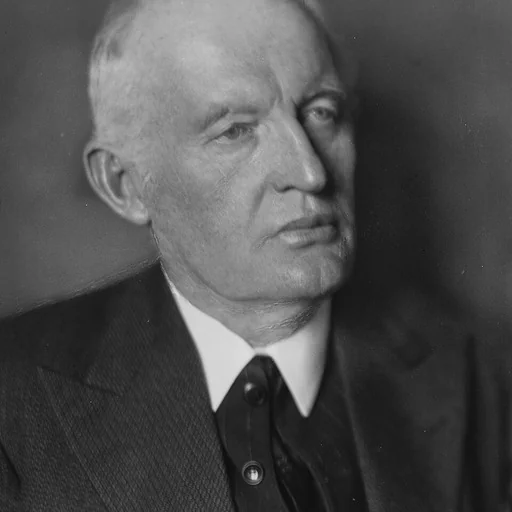
Edvard Munch ( MUUNK; Norwegian: ; 12 December 1863 – 23 January 1944) was a Norwegian painter.